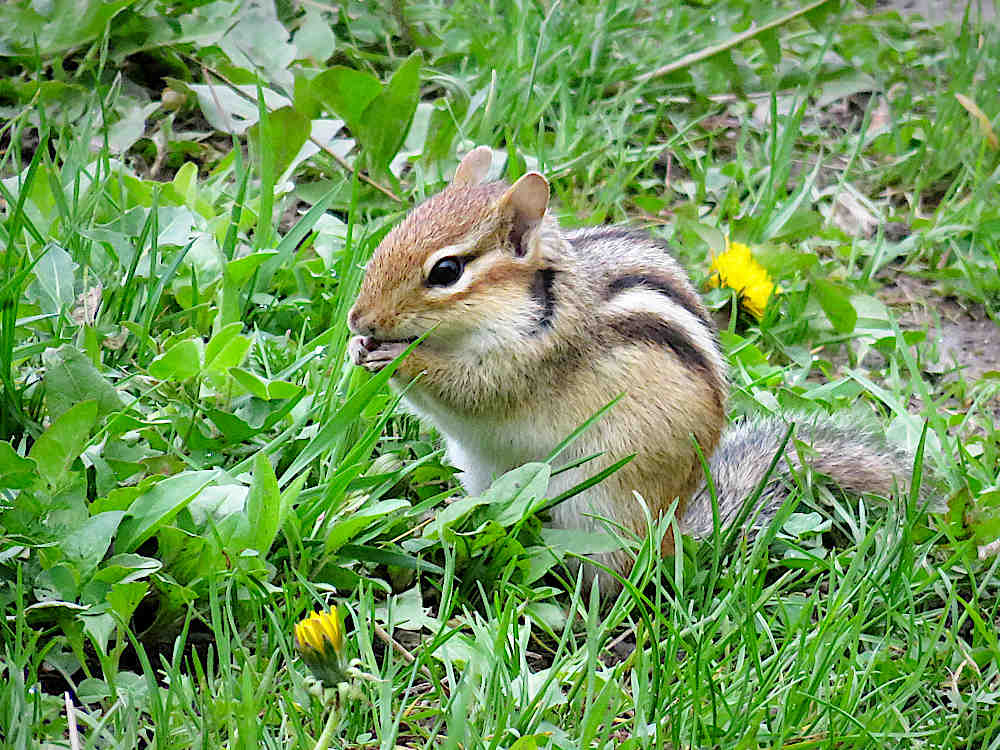
Ahh, my favorite rodent. Another member of the around-the-field cast of characters. Charismatic, curious, always busy, quite friendly—what more could you ask from a wild woodland creature. Oh yeah, no threat to the market garden, at least, not in my experience so far, which is the biggest point in my book! Chipmunks are in the ground squirrel branch of the squirrel clan, and I’ve met the tireless, relentless backyard garden-raiding urban squirrel, so no doubt the ‘munks have it in them to mini-ravage crops. But they seem to stay away from the open field, hanging out near buildings, so all good on this garden’s veggie threat list!
Animals
Orange-breasted, worm-eating buddy
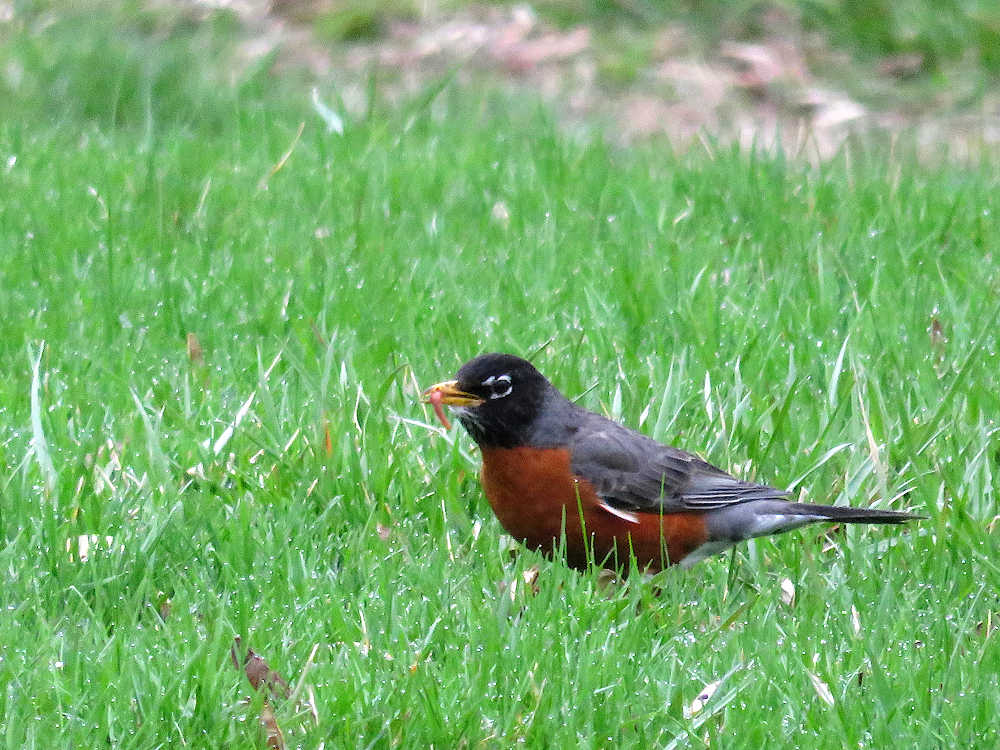
One of my annual garden companions. First met the American robin when I started veggie farming. I thought it was a sign. The bird was quite near me, darting a ways, then stopping, seeming to follow me, not looking worried when I turned towards it. Other than urban pigeons and scavenging seagulls, I wasn’t used to birds being so on grounded. It soon seemed clear that it was following me, probably resonating with my kindred earthy spirit, recognizing a fellow field worker, accepting me into the tribe. Turns out that spending a lot of time on the ground, running around looking for bugs and earthworms, especially in open, freshly tilled fields, is just what the American robin does. I was only a part of its landscape. Oh well.
These guys are here every year, keeping company in the field. Later in the season, I sometimes see the chicks zooming around, cuter than kittens. I read that American robins are known to gorge on berries that have fermented, get drunk, and topple over as they dart around. Hope they don’t drink and fly (but they apparently do)!
American crow
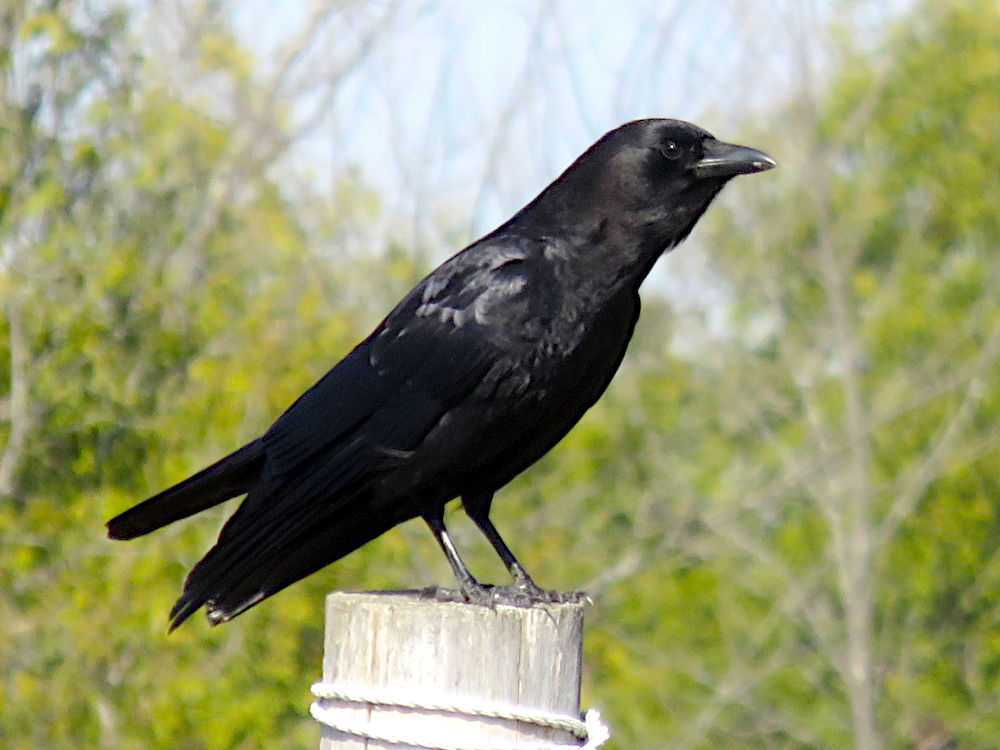
A crow on a post. This is called an American crow, I believe, to be specific. I kinda, well, not envy them, exactly, but would like to try it out. The flying and casually perching on high for a look around. I’m in the field for the better part of most days, and practically none of that time is spent feeling immersed in nature. It’s more about whatever the task at hand. When the work is repetitive, which it mostly is, thoughts are floating around in my head, or I’m listening to a podcast or music. All through the day, though, the everyday intricacies of nature nudge to the front. I’ll stop to gaze at a hawk lazily circling (and think about which veggie-devouring critter it might be eyeing for lunch). Or suddenly notice the busy hum of bees and sit back from weeding to watch them at work. Or be slightly startled by the way tiny zucchinis have grown to dinner-size literally overnight.
Turkey vulture on patrol
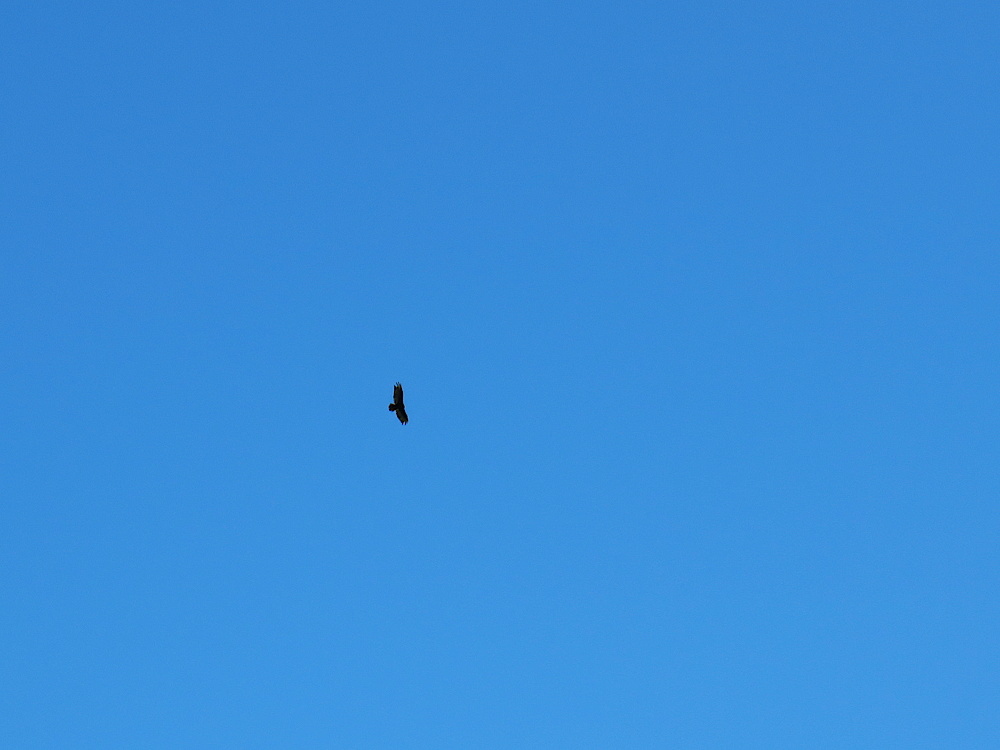
A turkey vulture lazily circling way up, looking for dead flesh. I’m not entirely sure of my bird ID, but pretty sure. These guys circle all the time, barely moving their wings. I used to happily imagine they were some kind of hawk, on patrol over the vegetable patch, the clear, weeded rows a perfect background for spotting rabbits, maybe even zeroing in on seedling-munching field mice and voles. It was a pleasant thought bubble, burst when I eventually looked into it. The overall boxy shape, the fingered wingtip feathers, the patient gliding loops with little flapping, all seemed to say, “Vulture! Turkey vulture!”
Wild turkeys in a field
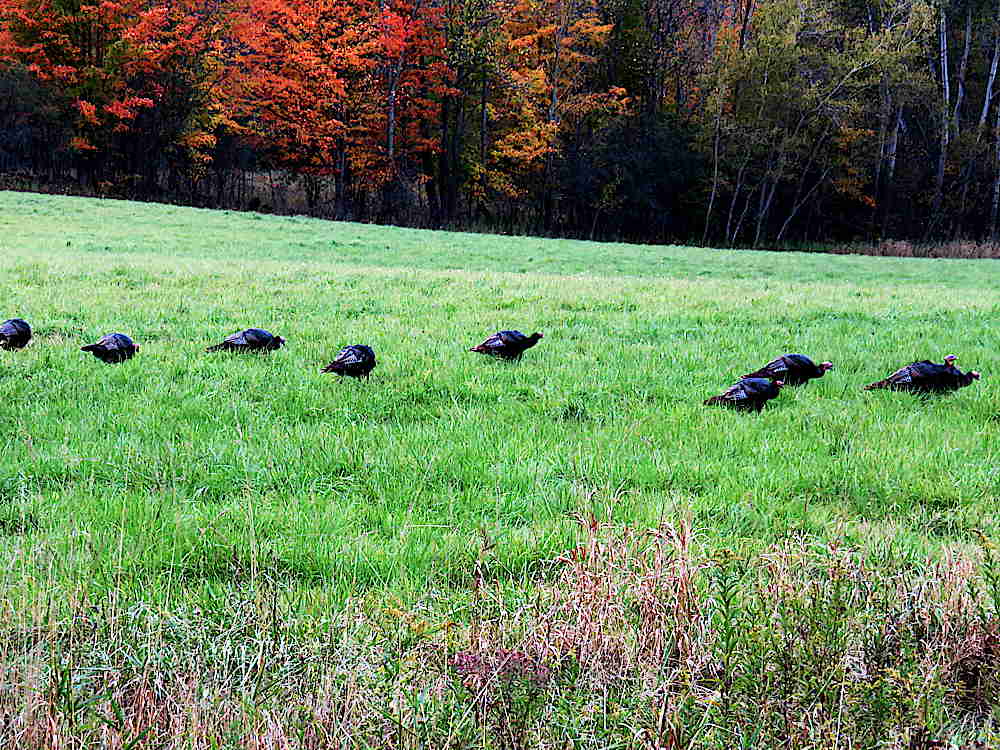
Wild turkeys foraging in a field. I see them all over, all seasons, always looking quite alien as they dart across the road, make their way in a straggling line across fields, take off on short bursts of flight for whatever reason. They haven’t bothered the veggie garden over the years, so I think of them as fellow travelers, their own separate tribe, in a near orbit that hasn’t intersected with mine. (I do hear their meat is excellent, lean and flavorful, though I haven’t properly tasted it, only in homemade meat pie.)
It’s a snake eats toad world
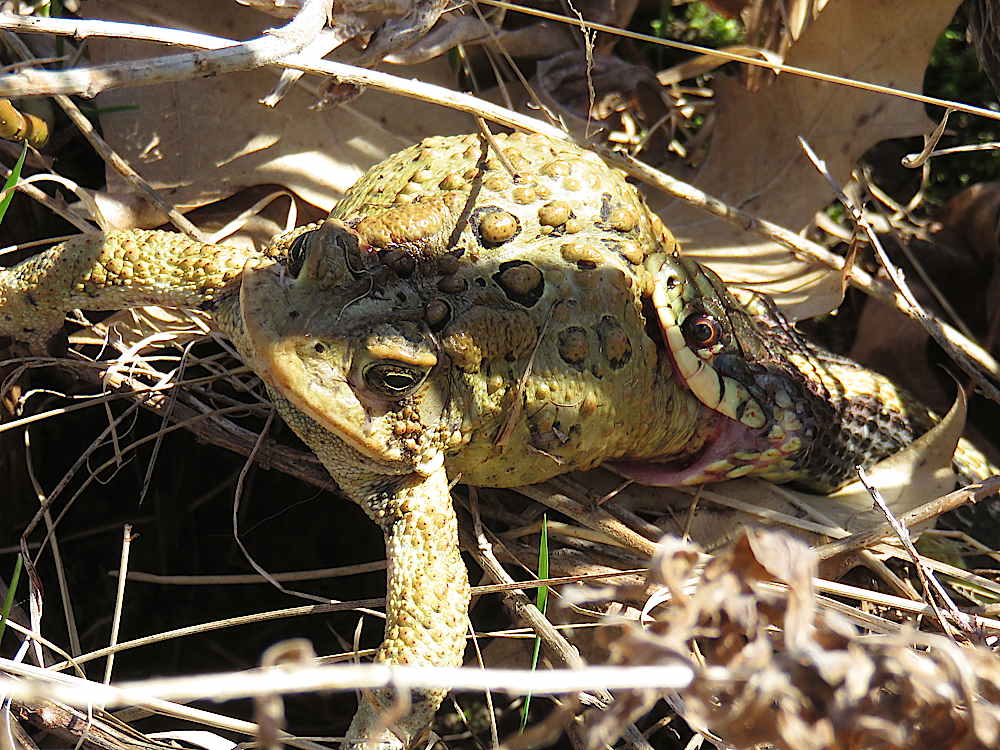
Spring is here, the air is mild, birds are madly chirping, and the intricate interplay of life at ground level is back in full swing. Exhibit A: a snake eating a toad! It takes a long while, could be hours, for the toad to get swallowed alive and eventually die by suffocation. Seems extremely unpleasant for the toad, but in Nature’s grand scheme of things, a snake has got to eat like the rest of us! We humans do the same with oysters, minus the big swallowing challenge.