How odd…

Watering in with a sprinkler

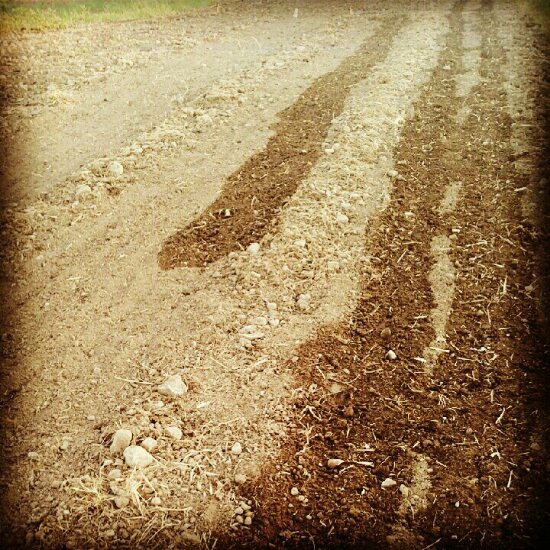
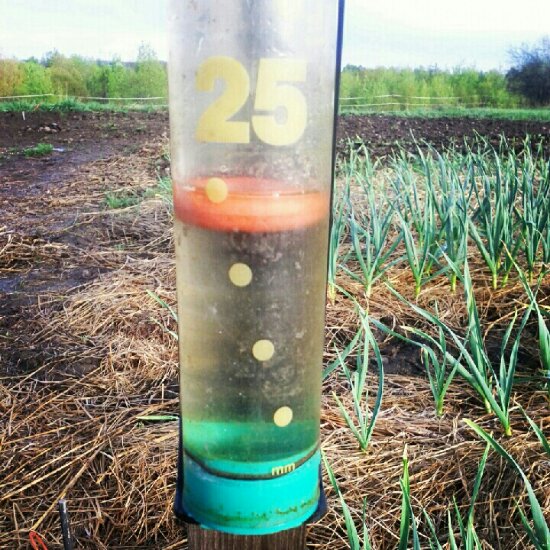
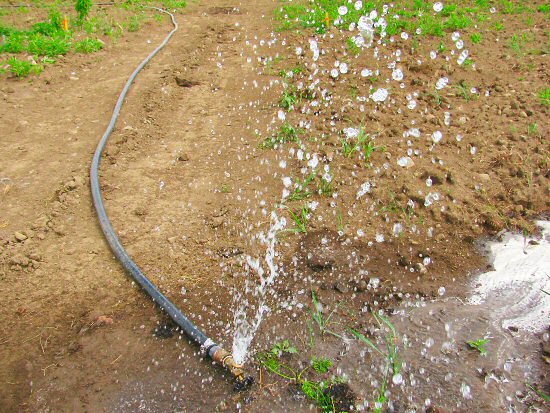
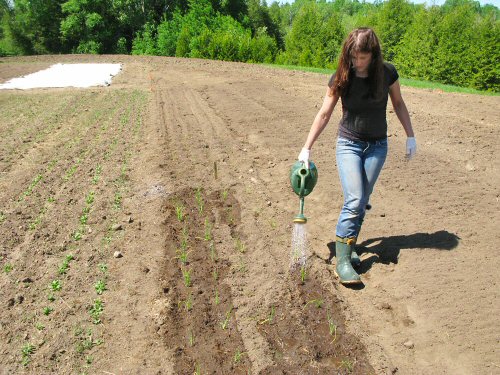
It’s like we’ve gone directly from winter to summer. Less than a WEEK since the ground dried out enough to walk on it and till it, I’m actually out there WATERING… This is really odd. I’m sure we’ve had unseasonably hot Aprils before, where watering in newly seeded crops was necessary, still, it’s only common sense to chalk this up as another of the consistently bizarre weather events we’ve been having in the last three years or so… In other words: global warming, I guess. “Normally,” April is a good month once it warms up, because our rather heavy clay-loam soil holds moisture well, and just post-snow, it’s wet enough that you don’t have to water in what you’ve seeded. A spring bonus! Instead, what’s going on here is, in a handful of days, the top inch or more of the ground has dried out completely in the unusual heat. That means shallowly-sown seed, like spinach, lettuce, radish, beets, and chard, is sitting in perfectly dry soil. I put in peas at around 1.5″ (4.25cm), and they were just barely in nice, moist earth. But these other guys, what can I do? I considered setting the seeder deeper, but that could just bury them too far for good, quick germination (I’ve messed around with too deep before…). Or, out with the sprinkler. I don’t like using sprinklers, I don’t have water to waste, but here, it’s much the more reasonable alternative to hand-watering a 50′x100′ area, when there’s so much else to do. The pond irrigation isn’t yet set up, so the water’s coming from the barn well, where there’s such low pressure that only the cheapest, most lightweight garden sprinkler will oscillate, where better quality, heavier duty ones shoot a stream of water straight ahead and won’t budge. Irrigation comes early, and cheap gear is every once in a while…good!

Comments (7)

Tangling with hoses

Sorting out hoses

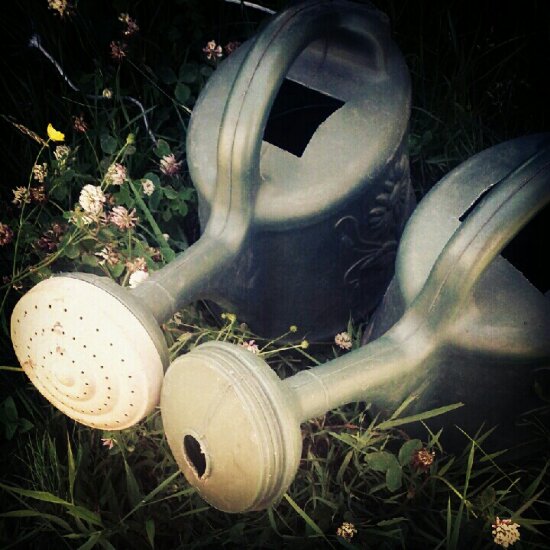
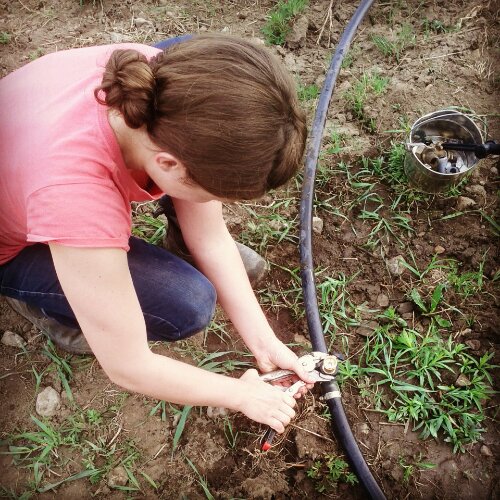
In smaller gardens (tinier farms!), hoses are generally a fact of life. On BIG veggie farms, “hoses” are usually pipes that’re 3-4″ inches (7.5-10cm) in diameter or more, and part of full-blown irrigation systems that suck up and spew MILLIONS of liters of water a season. Here on this tiny farm, I’m somewhere in the middle, but way closer to the garden hose end of the scale (in both water consumption and garden hose use!). The irrigation system itself is a work in progress, drip tape is the ultimate goal, but there are obstacles to work around, like the limited water available from the barn well, and the distance to and lack of electricity at the spring-fed pond. Right now, watering is about regular 5/8″ hoses, which are fed by a 1″ plastic pipe that runs from the barn well to the pond located WAY at the other end of the field, with taps at 100′ intervals. So, every spring, it’s time to check the fittings, uncoil the hoses, and get set to deliver water largely by hand. Actual watering is done with a combination of soaker hoses, sprinklers when there’s no wind, and various hand nozzles for watering in newly seeded beds. Quick connectors are a major convenience when hooking up the various combos of multiple hoses and other attachments. I try to find a balance between not too many hoses, because you can’t leave them lying around, and not too few that you’re moving around the same rig all over the plot. Accidentally tilling hoses that were left instead of being promptly put away has turned into a not rare occurrence, and a time-waster (untangling and splicing takes more than a minute). Just put away that 300′ of hose plus 500′ of soaker hose when you’re done! ;) It’s a bit tedious, but like everything else, you do get used to it, it’s part of the routine, and it gets the job done, which is satisfying in the end… That’s the state of the watering art around here as we head into a new season, and I’m promising myself advances on the drip side of things. Of course, it could happen to rain all the time, about an inch (2.5cm) once a week would be fine, and then hoses would largely vanish from the garden landscape. That’s not at all even remotely likely, but…YOU NEVER KNOW!

Comments (2)

Making water

Melting snow in water barrels

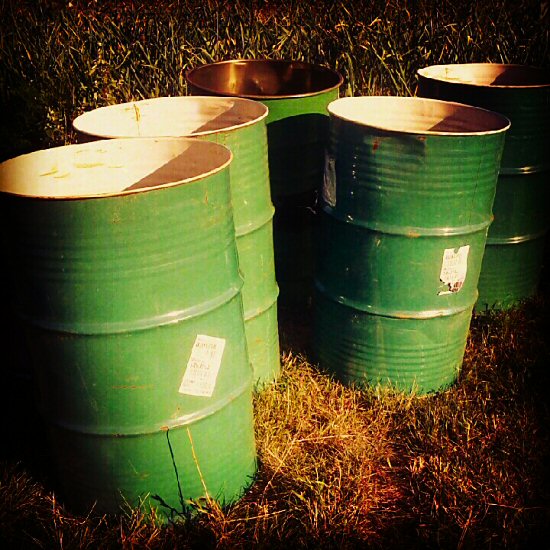
As far as winter irrigation in the greenhouse goes, melting snow in big barrels is the next best thing to a really long hose, a well and an electric pump. Fill ‘em up, cover with clear plastic, wait a day (even on a dull, cloudy day, it gets up to 60°F in the hoophouse). Repeat a couple of times, and you have 50 gallons of rainwater in a barrel! The alternative is dragging 200′ of hose through deep snow from the barn to the greenhouse, then reeling it in and draining it, every couple of days. The weather has put the kibosh on the early-March, barely heated greenhouse plan, the happy prospect until March actually came around. The nights have been regularly plunging to 10°F (-12°C), so it’s really not worthwhile to heat things up by 25°F. No worries. Adjusting expectations and schedules more or less by the day is all part of the fun… It’s never boring!

Comments (8)

Big beets

Huge beets

Something excellent and hard to pin down happened with the last planting of beets: they became HUGE. This was the fourth planting of the season, around mid-July (see them on the left), and the seedlings got caught in the near drought, although they were around the top of the irrigation list and got a decent share of water. In mid-September, the steady, plentiful rains started, along with continuing warm weather, but that was well into their growth (they’re all 50-60 day varieties). And thinning was good, though just the usual. Whatever the cause, all of them—Scarlet Supreme, Golden Detroit, Bull’s Blood, Chioggia—blew up, most weighing in at 1.5-2.5 lbs (700-1100 gms). Maybe I don’t get out enough (to check out other people’s produce around the country and the world :), or maybe more irrigation would do the trick, but to me it’s somewhat of a mystery how these got to double and triple size. I’ve tasted them all, raw and cooked: they’re firm, tender, with great color and flavor. Smaller beets are more convenient for some purposes, but these big guys are versatile and…easy to harvest and pack… Two to a beet!

Comments (1)

Winter squash

Assorted winter squash

The Friday harvest finally included winter squash, and a tiny little harvest it was. These guys were on their own when it came to water, we just didn’t have time and gear to irrigate—given a bit of a rain break, they’ve tended to make out. Unfortunately, the timing of this year’s drought caught the plants later on in the season, late July into August, as they tried to fill out. Bottom line: super low yield and small squash this year, drip irrigation a must…next year. In any case, we did get enough for two rounds of CSA. Typically, the acorn squash came through best (Table Ace, Table Gold, Cream of the Crop), the butternut (Early Butternut) are…minuscule. Delicata was a first this year, I’m not sure how large they are usually, but likely bigger than this. And so on. Even the usually prolific and reliable, bright orange Uchiki Kuri, a Hubbard-type (Japanese Kabocha), didn’t do so well. Only the Sweet Mama buttercup came through with some decent dry weather size! So, off to the farmers’ market with an assorted 50 or so, none for sale, all for the CSA shares!

Comments (3)

Watering till the end!

Sprinklers in September

Although there’s still plenty of moisture in the ground from recent rains, there’s no harm in supplying a little more to take advantage of the relative abundance of heat and sunshine that we’re getting, even as the days get shorter. After a couple of near-zero nights last weekend, it’s all spring and summer conditions now, and forecast for the next week at least: warm, sunny days and oddly warm nights. More freak weather: it’s conceivable that the first killing frost, averagely due tomorrow, doesn’t show up for…another month! Weird…

Comments (1)

Pumpkins’ progress

Neon pumpkins ready to go

The pumpkin patch, recently a soothing sea of green, is now a mess of dried out leaves and expired plants. Most varieties were all but obliterated by the last month’s heat and lack of water—no rain, no spare irrigation. Still, they’ve all done quite well. It’s always fun to have fat orange and pale green-white pumpkins assembled on the grass in the field in the fall. So far, I haven’t had much other use for them, most are too bulky and low-priced to haul to market (we load in a pick-up truck, a trailer is the next step), or fit into off-farm CSA shares. This year, maybe a one-day “organic pumpkin” mini-sale on the farm stand… And there are some small pie and seed pumpkins (Small Sugar, Snack Jack), more portable at 3-5 pounds (1.4-2.3kg). Here, a row of larger Neon, looking nice!

Comments (2)

Water in the air!

Evening sprinkler action

It’s supposed to rain tomorrow… I’m as skeptical as ever, still, as illogical as it is, you figure it’s gotta rain EVENTUALLY, so the longer it’s been, the more accurate the latest “60% chance of showers” forecast must be. Until then, we continue the piecemeal irrigation effort, with a combination of sprinklers and soaker hoses. The pond level is noticeably down, but bottom still isn’t in sight…and it’s gotta rain soon, right!?! :) Here, the latest beds of mesclun and spinach get their daily sprinkle. You can see by the fine mist in the air how easily much of the water can be lost to even a slight breeze, and to evaporation under a hot sun. Still, soaker hoses are only practical for larger standing crops, and pretty near useless for keeping newly seeded beds moist. From the pond pump, we get enough pressure to run four or five sprinklers and have 500′ of soaker hose set up, which means two or three of 40 sections can be covered at once. It takes a couple of hours to put down maybe 3/4-1″ of water. And the majority of days, we have to do early morning and evening sprinklers only, because of wind in the day. So, lots of moving hoses around… Next year, I’ve gotta figure out a drip irrigation solution…

Comments (4)

Farmer in field

Hand watering in the field

Conall watering in mesclun in the late afternoon. Even on busy harvest Friday, plants need water if they’ve had no rain. Guest photo by Erin, with a different than usual, no less…realistic, view of the field. There’s nothing like being there to see for yourself! I cropped the photo to fit the format, but it’s the original that just catches a certain tiny farm feeling… More »

Comments (2)

« Previous entries

TFB & the Web

Locations of visitors to this page

Best Green Blogs

Home and Garden Blogs - Blog Catalog Blog Directory

Add to Technorati Favorites

Foxkeh banners for Firefox 2