
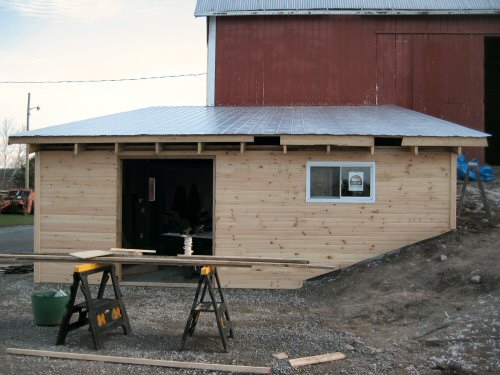
Build a little, learn a little about building materials. Screwing on the roof took two of us about four hours. It’s made of Galvalume, which was recommended by (and gotten at a bit of a deal from) a friend working in construction. I looked it up. Galvanized steel is made by dipping steel in molten zinc. The two metals bond on a chemical level, resulting in pure zinc on the outside, a mix of zinc and steel as you go in, and a center of pure steel, making for a highly corrosion-resistant final sheet metal product. Fascinating! Galvalume is an advanced galvanized steel, with a zinc-aluminum fusion going on. Well, well!
Mike (tfb)
Walls!
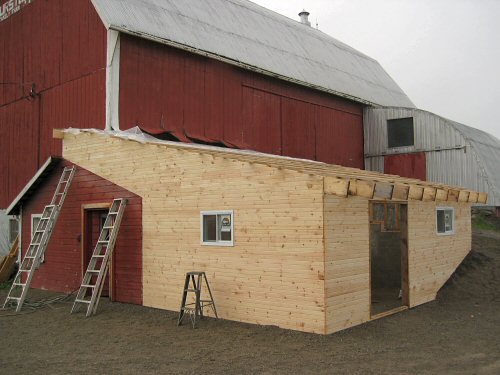
The outside walls are pine tongue-and-groove from a local sawmill. A little pricey, but what isn’t, and it looks pretty good. Now, the wait for the roof steel, on order and coming in a week.
Framed!
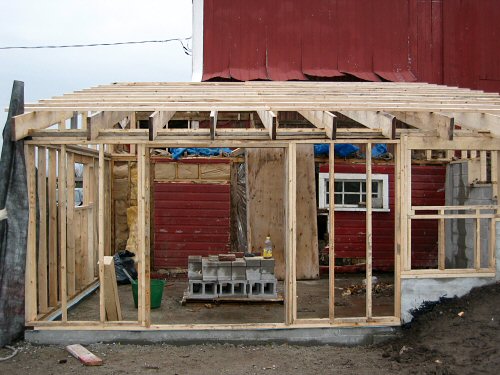
With the rafters in place, the wood framing is done, and it’s on to wrapping the frame with an insulating fabric (Typar, the gray stuff leaning on the left) and closing up the outside walls with tongue-and-groove siding. We’re working to get the space enclosed before any really cold weather and snow hit. As you can see, the inside wall of the previous Milkhouse is still intact—demolition to come.
What a difference a day makes
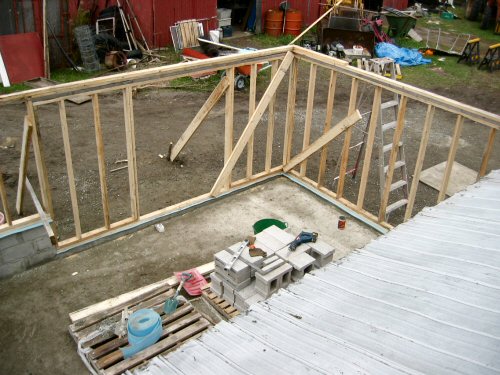
With the foundation in place, wood framing is surprisingly quick. In a few hours, the walls are framed up, and it’s on to the roof… Rough carpentry is interesting, you’re working not from a blueprint or even a real sketch, instead, there’s only an ongoing materials list assembled from plans in your head. Well, not my head. This is all quite new to me. Things go a little awry or something unexpected comes up, and it’s fixed on the way. So long as the basic plan is workable, you can always bang your way through the details.
Foundation
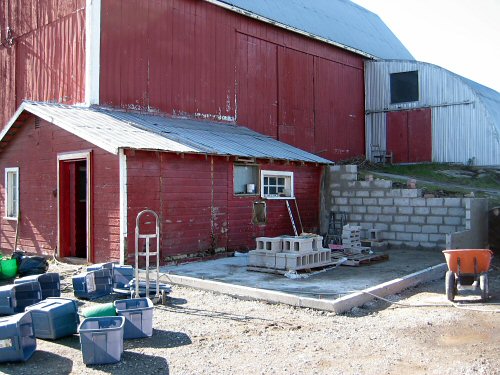
A concrete mixer pulled into the farmyard and poured a 6″ concrete pad on top of the firmed up gravel. Then we built a concrete block retaining wall against the gangway to the barn. The Milkhouse Extension’s ready for framing and well underway!
Starting over…
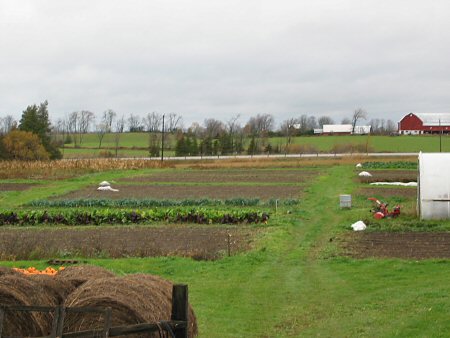
Cloudy, wet and cold, here we are right at the end of the season. The summer and daily farm blogging didn’t quite work together this year…it’s time for take two, starting over. This is when the new year begins, with field clean-up, and, of course, planting garlic.
Milkhouse makeover
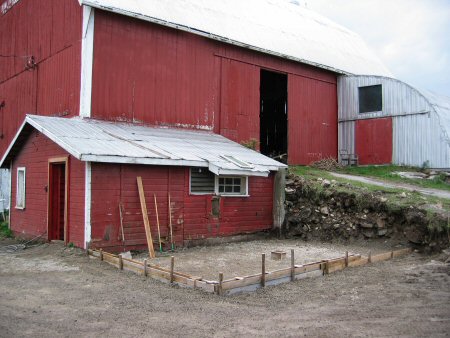
Autumn usually ends up being construction time. This year’s project is by far the biggest yet on the Tiny Farm, as we set out to more than double the area of the old milk collection room known as the Milkhouse. This was the only outbuilding that could be heated during the winter. After the upgrade, it’ll be a year-round multi-use space: office, seedling room in spring, overnight veggie storage in summer, the farm stand in the chilly days of late fall, maybe even the venue for the occasional, um, tea party… At this stage, it’s waiting for the concrete floor to be poured.