Veggie sleuthing

Asian veggies at the supermarket

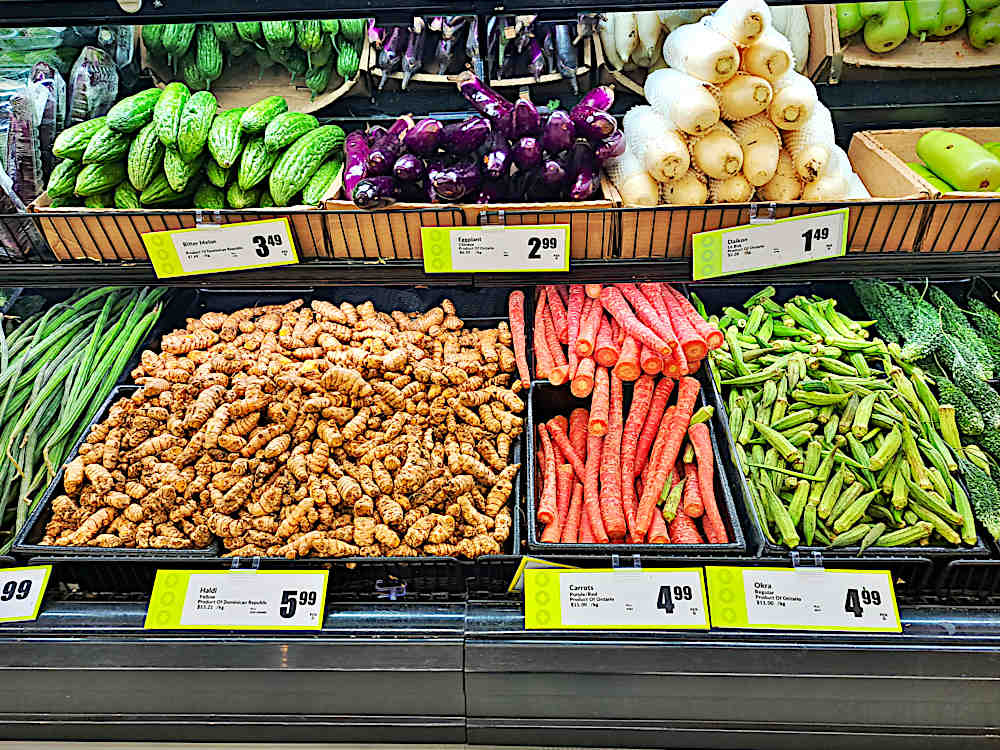
Part of the Asian/Southeast Asian veggie section at one of the local supermarkets. Most of these vegetables are unfamiliar, some I recognize. I usually scan for unusual shapes and textures when I roll by, but my curiosity is never that high. I suppose you could see them in an exotic, different cultures way; to me, they’re just…more veggies! This time, I decided to take a closer look, and took a pic on my phone (which was also my shopping list!). So what do we have?

ID-ing everything from the labels in photo and searching the interwebs for info, here goes. Top row, left to right: I couldn’t make out what that first plastic-wrapped veg is. Next, bitter melon, my mom grew this in her community garden. Used in Chinese cuisine. Remove seeds, keep skin, slice, use in stir fries. Or steam, or stuff. Next, eggplant, and daikon radish, both familiar, I’ve grown these. Then, squash (long) is what the label says, but this one has several names: opo squash, calabash, bottle gourd, and others. It comes in different shapes, like the decorative hourglass-shaped dried gourd version, or really long, or this stumpier look. For cooking, it’s another summer squash, like zucchini, so raw, steamed, boiled, sautéed, or grilled!

Bottom row, from the left: This long, skinny veg is labeled drumstick (label cropped out of photo), and it’s also called moringa. They’re the pods from the moringa tree, from Southeast Asia, India. Lots of superfood claims. When used as a veg, there are these pods, and also moringa seeds on their own. For the pods, cut up, put in soups and curries. Next, haldi, is another name for turmeric, which I have as a ground spice and use in my standard breakfast red lentils spice mix. Relative of ginger, native to Southeast Asia. Use fresh the same as powdered turmeric, grate or slice and add to soups, rice, whatever you like. Also, pickle (one way: lemon juice, salt, jar, fridge), use in marinades, blend. Then, carrot, purple/red, prepared a little differently with the tops and tips sliced off. And okra, also familiar. Last, the bumpy-textured veg is labeled karela, which turns out to be one of many names for bitter melon, so same as above!

And where are they from, fresh not frozen in the dead of winter? Carrot, daikon, eggplant and okra are from right here in Ontario, the drumstick is from India, and the rest were grown in the Dominican Republic. All of them I think can be grown here in colder country, except turmeric, which needs many months of warm weather (it apparently can be done here with a few months of indoor growing, then moved outside).

Now that I’ve finally LOOKED CLOSER, I’ll probably try some of the new veg. Of particular interest: drumstick and (remembering mom) bitter melon!
Bonus onions!

Volunteer onions

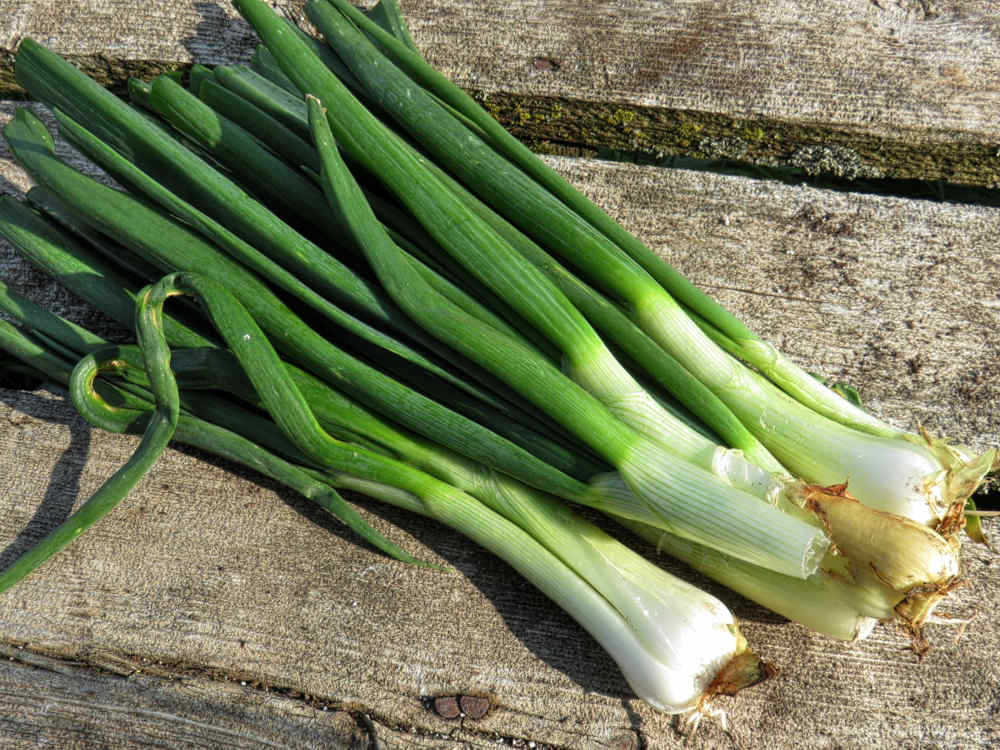
Leftovers from the previous season can turn into a delicious spring surprise! These onions grew from ones that were overlooked during fall harvest, and in a spot that hasn’t yet been tilled. There’s an official name for this: volunteering. Strictly speaking, I think a volunteer plant means it comes from seed dropped by a previous crop, or carried in by wind, birds or otherwise. These onions are new growth this year, from mature onions left in the ground over winter, kind of like leaves coming back on a tree. In any case, I think of them as volunteers, but mostly as a tasty treat.

Wild turkeys in a field

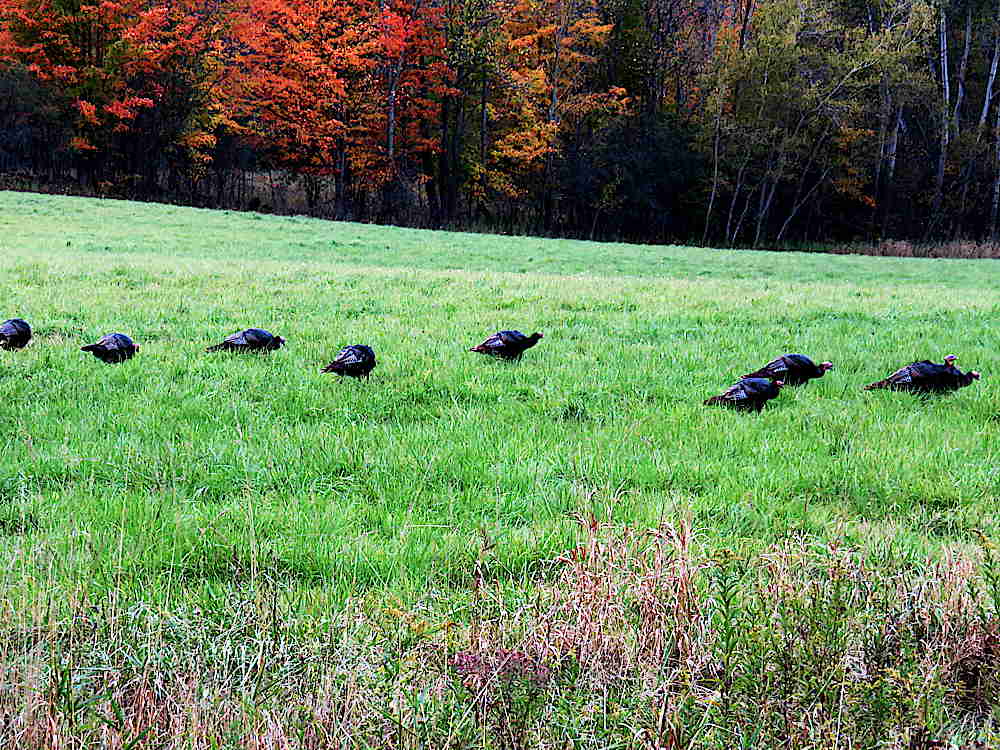
Wild turkeys foraging in a field

Wild turkeys foraging in a field. I see them all over, all seasons, always looking quite alien as they dart across the road, make their way in a straggling line across fields, take off on short bursts of flight for whatever reason. They haven’t bothered the veggie garden over the years, so I think of them as fellow travelers, their own separate tribe, in a near orbit that hasn’t intersected with mine. (I do hear their meat is excellent, lean and flavorful, though I haven’t properly tasted it, only in homemade meat pie.)

Carrots front and center

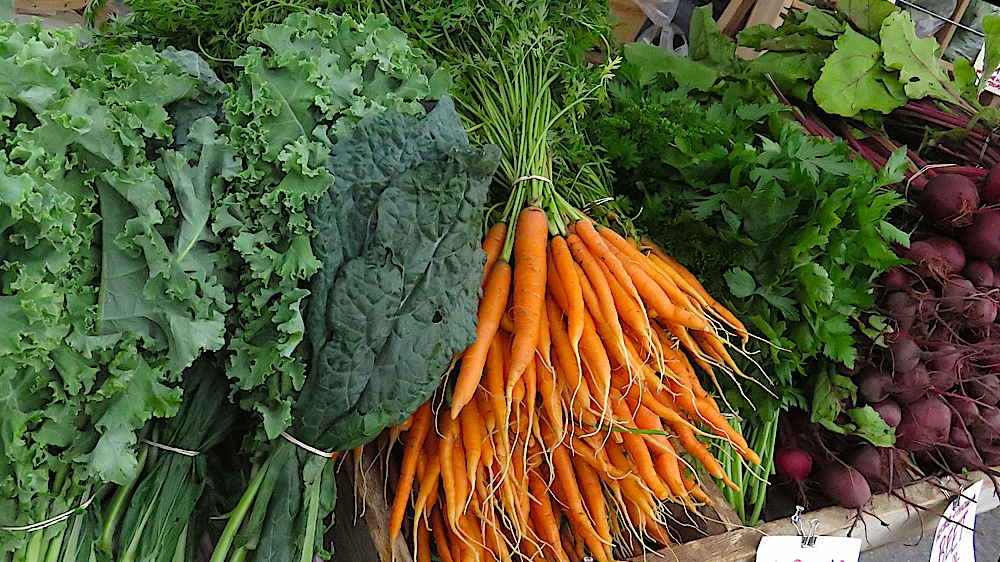
Some of the veggies at today’s farmer’s market. The intense orange of rinsed off carrots tends to really pop, like some sort of neon beacon, especially in the flat light of overcast, grey days. Here they’re flanked by mixed bundles of curly, flat-leaf, and strap kale—the trifecta of kale—flat-leaf parsley, and…beets!

Stored carrots for stew

Assorted stored carrots

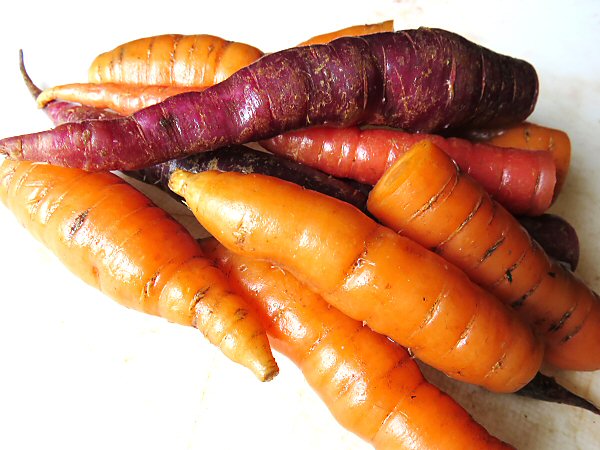
Long-term veggie storage can get fairly involved, with root cellars, sticking things in piles of sand, adjusting humidity, spotting and culling the spoiled, that sort of thing, or it can be as simple as tossing a plastic bag of small carrots, little guys that wound up at the bottom of an empty market bin, into the fridge’s crisper drawer, and forgetting about them until they’re found four months later while rooting around for ingredients for stew. These carrots represent exactly the latter, a few handfuls of Nelson (orange), Red Samurai, and Purple Sun. They’re in perfect shape, crunchy and tasty—the plastic bag maintains the humidity that keeps them hard—so a quick rinse, chop-chop, and in they go. (They’re partly cut because I’d already started slicing them when I decided to take a pic.) Another whatever-veg-is-around beef stew. What could be simpler?!

Beef meets kale

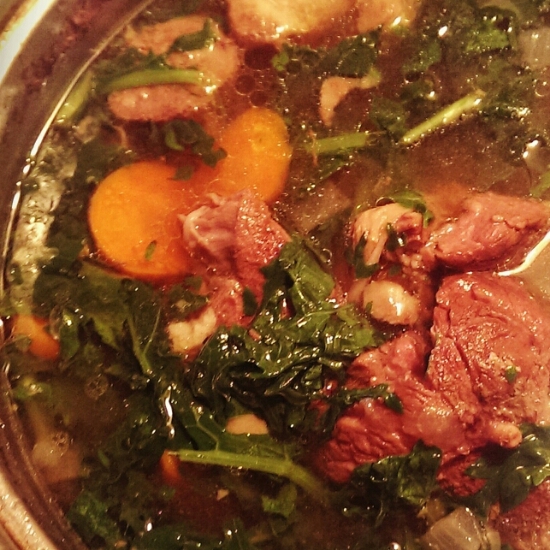
Yes, yet another thing to do with KALE! In a small fit of inspiration, I tore up a few fistfuls of baby Red Russian, and tossed ’em into the pot with carrots, onions, grass-fed beef shank, salt, pepper, garlic and water, slow-cooked for quite a while, six hours or more, adding brown rice towards the end. Voila, Beef and Kale Stew. The kale contributes just a hint of seaweed taste, but maybe that’s just me. Anyhow, excellent. Will do again.