
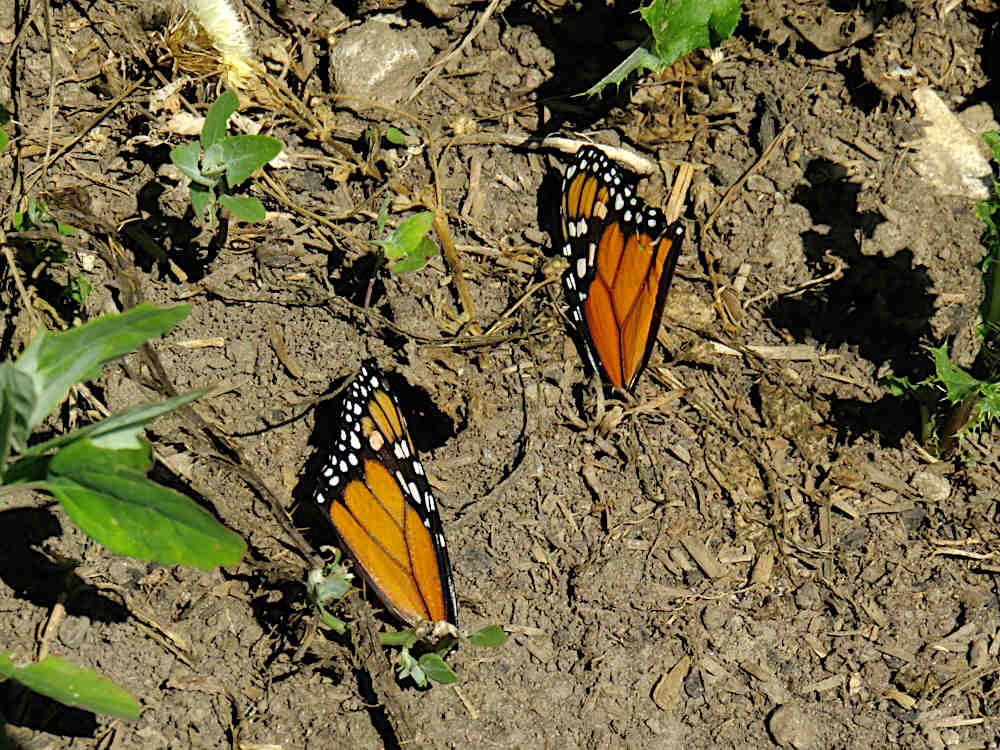
Glancing down, I thought it was two Monarch butterflies taking a break together. Turned out to be two Monarch wings, with no body to connect them. Probably a nutritious protein snack for some predator. Looking into it a bit more, I discovered from photos that these are only the big wings. Monarchs have two fully independent pairs of wings, the big ones for power, and little ones tucked in back for steering and whatnot. When their wings were torn off, the much more delicate little ones probably got shredded, partially eaten, or just blew away. And so Nature goes. The big wings still carry the brand! :) RESEARCH: Monarchs exclusively eat milkweed, which contains a heart attack toxin that they concentrate in their wings. Enough of it can cause heart seizure by disrupting a creature’s electrical system. But the poison is also super sharp and bitter, so if a whole butterfly is eaten, it’s usually violently vomited up, discouraging future Monarch eating. Psychological defense through non-lethal pain, like deer and the electric fence. So smart Monarch predators rip off the wings. These specialists include some birds, praying mantis, field mice. There’s nothing about Monarchs that isn’t hardcore and fascinating.
Animals
On the right side of the fence
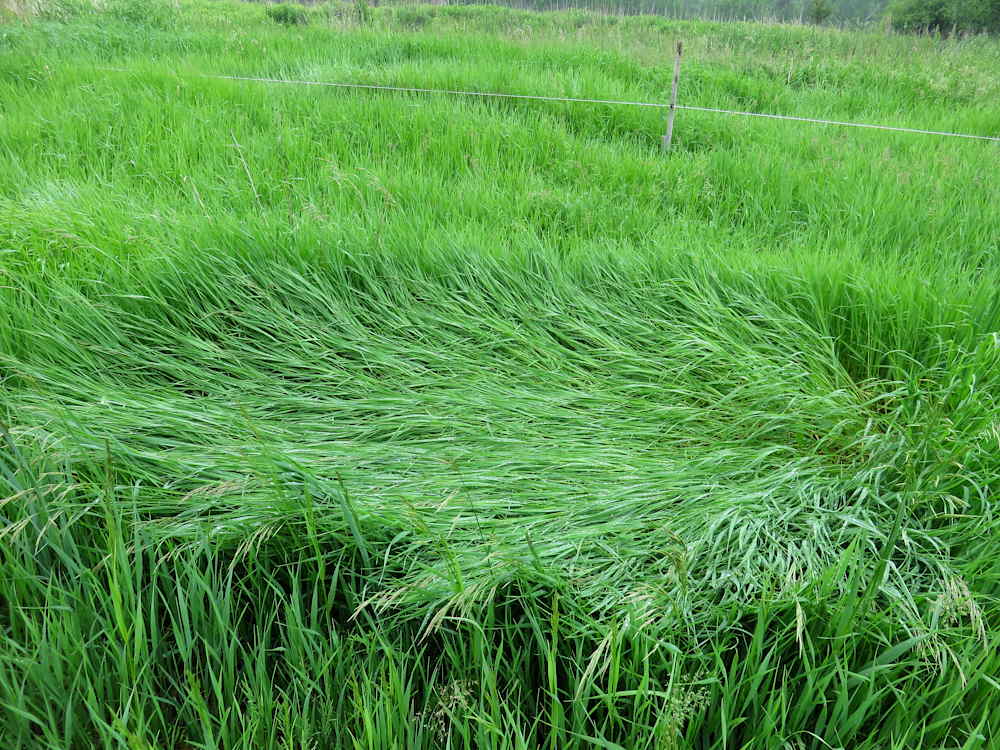
Wonder who spent the night here in the tall grass, so close to all those veggies. At least they stayed on the right side of the fence! It’s endlessly satisfying how that single white line and its steady pulse of intense electrical jolts have managed to keep the veg plot clear of deer. I can’t say for sure that’s what’s doing it, but deer are definitely all around, traveling through these fields, and they were a big garden forager before and during various lighter-weight fencing attempts. They only completely stopped devouring after that single line of defense went up. No electric fence guides I’ve read suggest just a single line, and yet, the plot’s been deer-free for years now. Can’t say the same for groundhogs, that extension of the electrical defense was a fair bit of work and a fail. But, still no deer!
Butterfly man
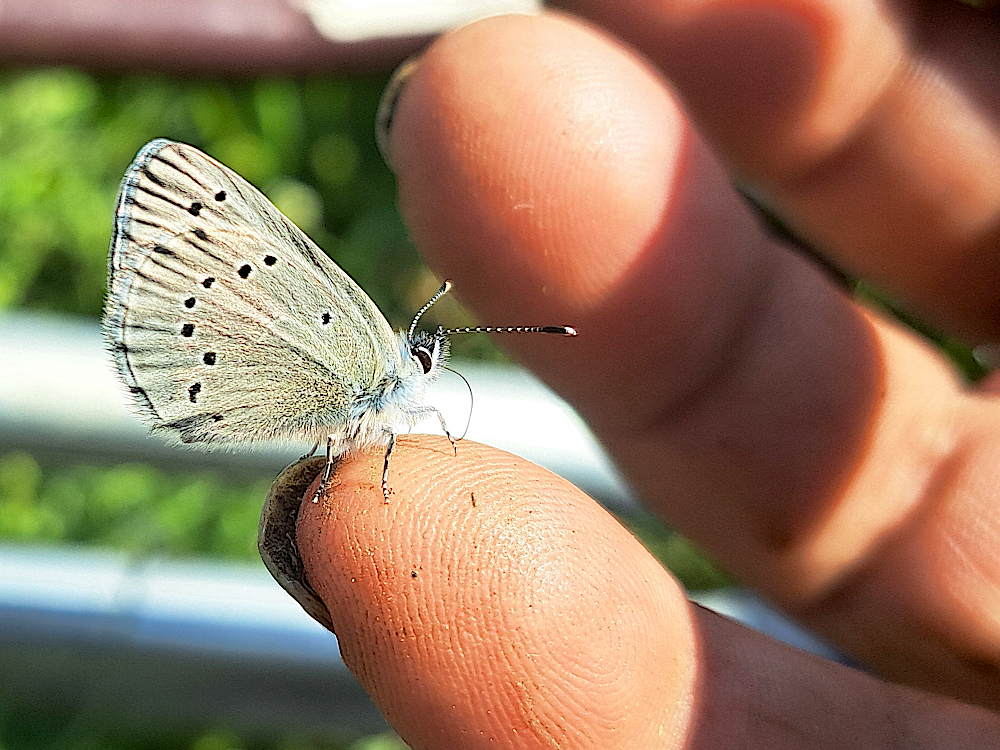
Sure, I know it’s there to suck up the minerals from my sweat. That doesn’t stop my moment of irrational wonder, feeling in harmony with all of Nature. Butterflies land on me!
These guys are always around the wet soil after watering in. They descend in a flutter of half a dozen or more, and land on the wet ground. Today, my hand was damp from the hose, so I slowly extended it toward them. And that’s when I received this sure sign that I’m one with the universe. To prove its intention, it gave me all the time in the world to get my camera from a bucket of gear nearby and capture the moment using my wrong hand!
As far as names for things, I’ll go with it’s a Silvery Blue (Glaucopsyche lygdamus), from my generally accurate or at least ballpark iNaturalist app. I looked into it at some point: they’re apparently after minerals and other nutrients they don’t get from nectar, and the behavior is called “puddling”. Hm.
Cows across the way
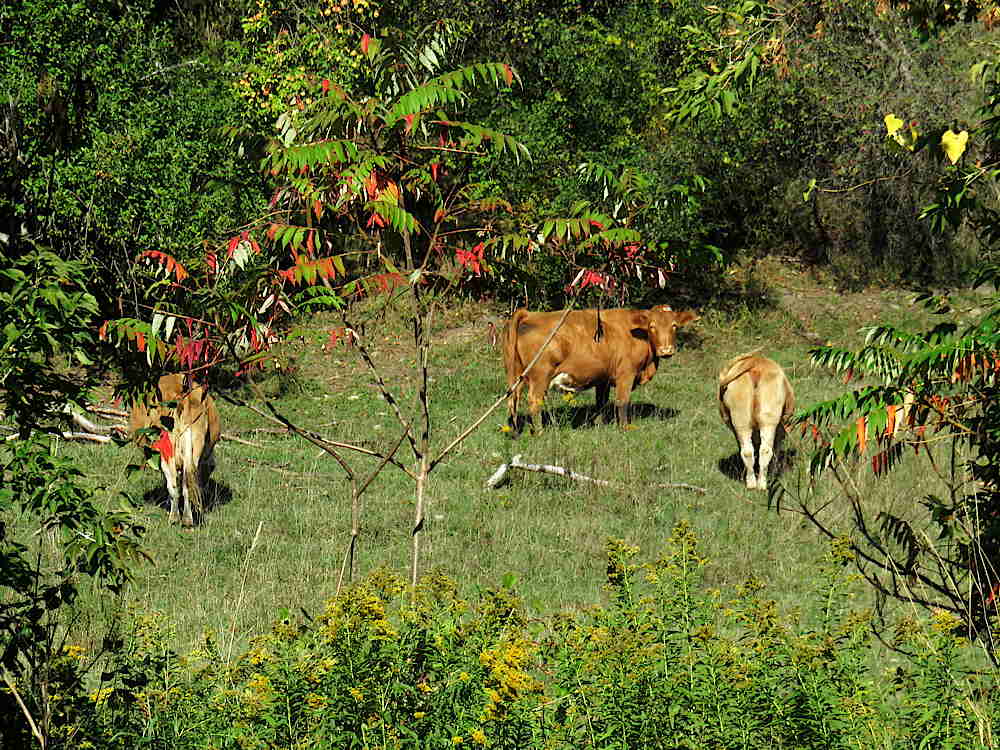
Cows grazing away from their home on rented pasture, on a delightful, newly-seasonable warm and sunny end of September day. You can’t tell from the zoomed photo, but they’re around 400′ (122m) away, seen through an opening in the trees. Being calmly stared at by cows at a distance is a fact of life that I finally just looked into. Cows apparently have amazing, better-than-human motion detection, near 360° vision with eyes on the sides of their heads, and an exceptional sense of smell that literally works for miles. They detect you from afar, then turn to stare with both eyes (binocular vision), so they can check you out in three dimensions to better decide what you’re up to. Peacefully grazing, always aware!
Best not to touch!
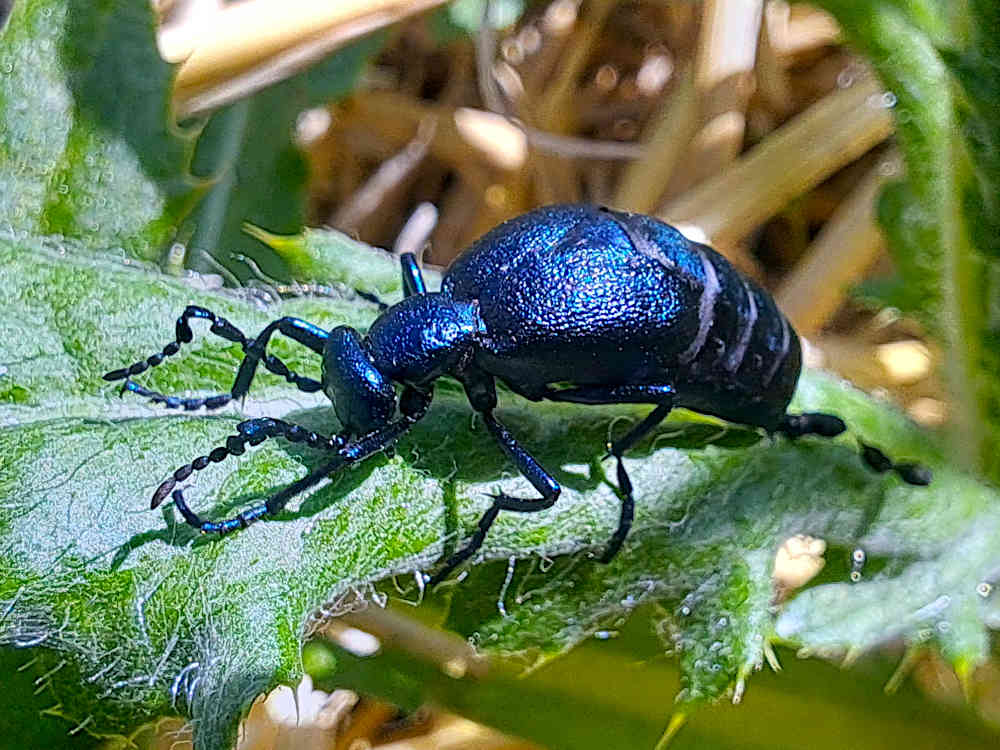
Meet the oil beetle! When I see new insects that I don’t immediately recognize, there’s an automatic, “Who goes there?!” challenge in my head. So many little critters can do so much veggie damage, one can’t help a “you’re either with me or against me” reaction to the unknown. In this case, I have to identify this fairly spectacular, sparkly beetle, sitting on a thistle that will soon be tilled under. (More to follow… Think powerful blistering agent, voracious beehive raider,… I doubt there’s a single insect species that doesn’t have it’s own odd and elaborate quirkiness )
Robin at the window
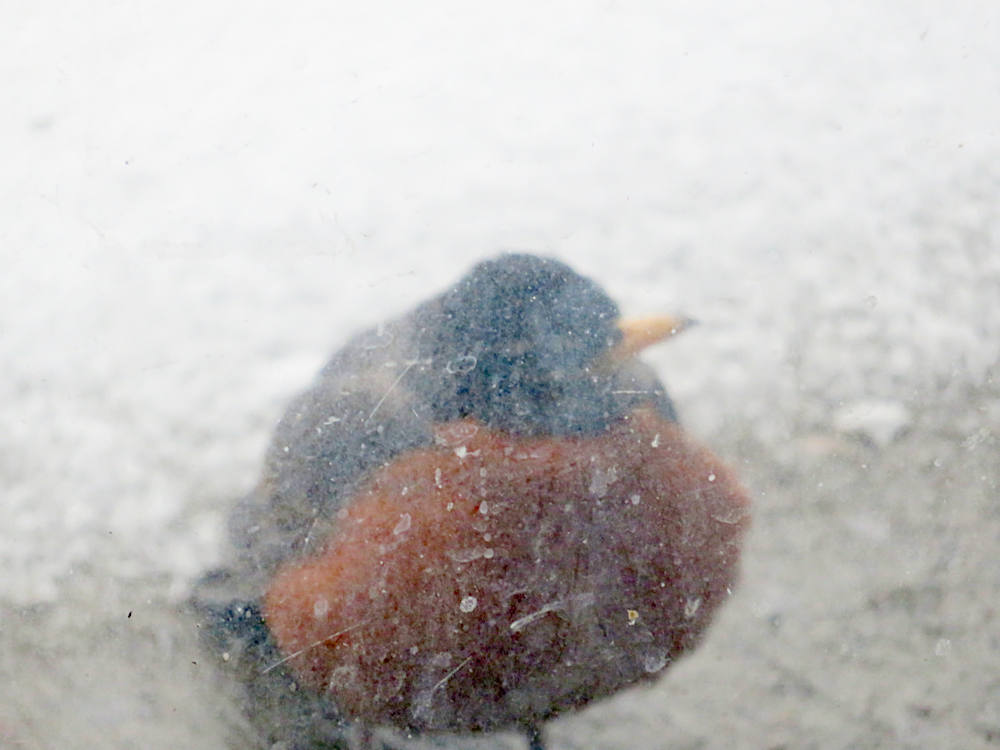
Looked down at the patio door and what did I see? A robin on the outside, standing right up to the glass between us, kind of looking back at me. Or maybe (more likely) seeing its reflection as another robin. It’s a bit of a surprise. Robins are usually summer company in the field, darting around, searching for bugs as I weed or harvest, not hopping around in near zero weather, in snow and freezing rain. It’s like being let into another part of their life. In any case, this guy or gal looks pleasantly plump and unperturbed. I’m glad to see they are quite all-weather and doing fine in the off-season.
Munching and mating
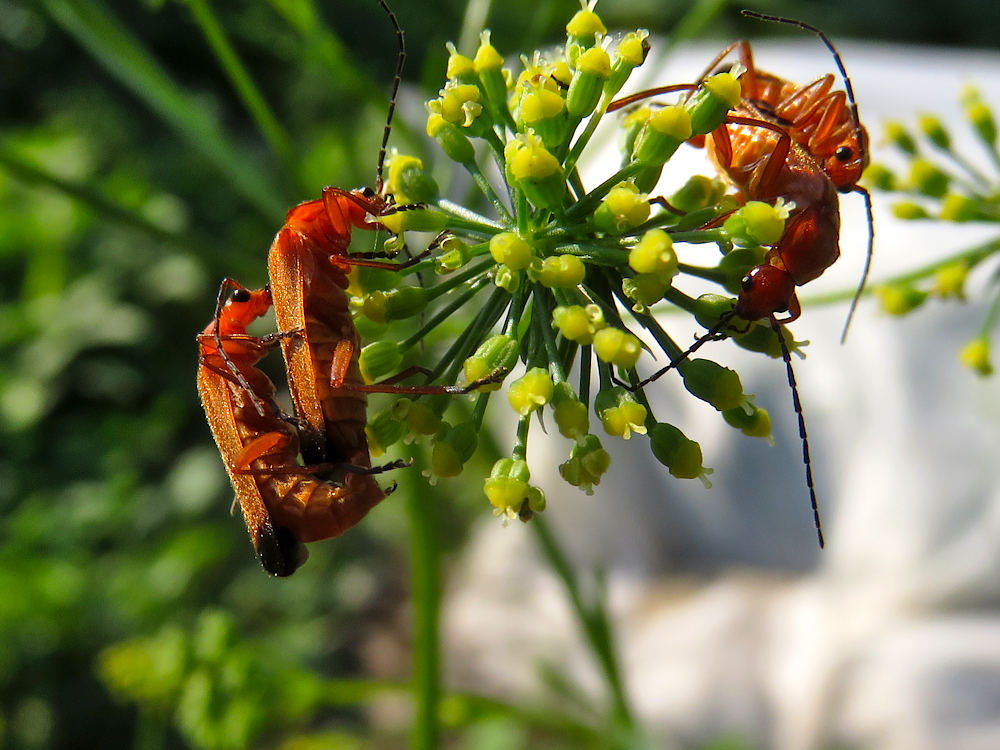
Definitely on the good bug list, these common red soldier beetles are happily multitasking, munching on the pollen and nectar from flowering parsley, while mating. Now that’s procreation! A quick background check comes up all good for these guys in the garden: the adults are great later-season pollinators, and in addition to feasting on flowers, they eat aphids and other small, pesty insects. Plus, their predatory larvae feed on insect eggs, snails, slugs, and more. Welcome, my friends, to the show that never ends!