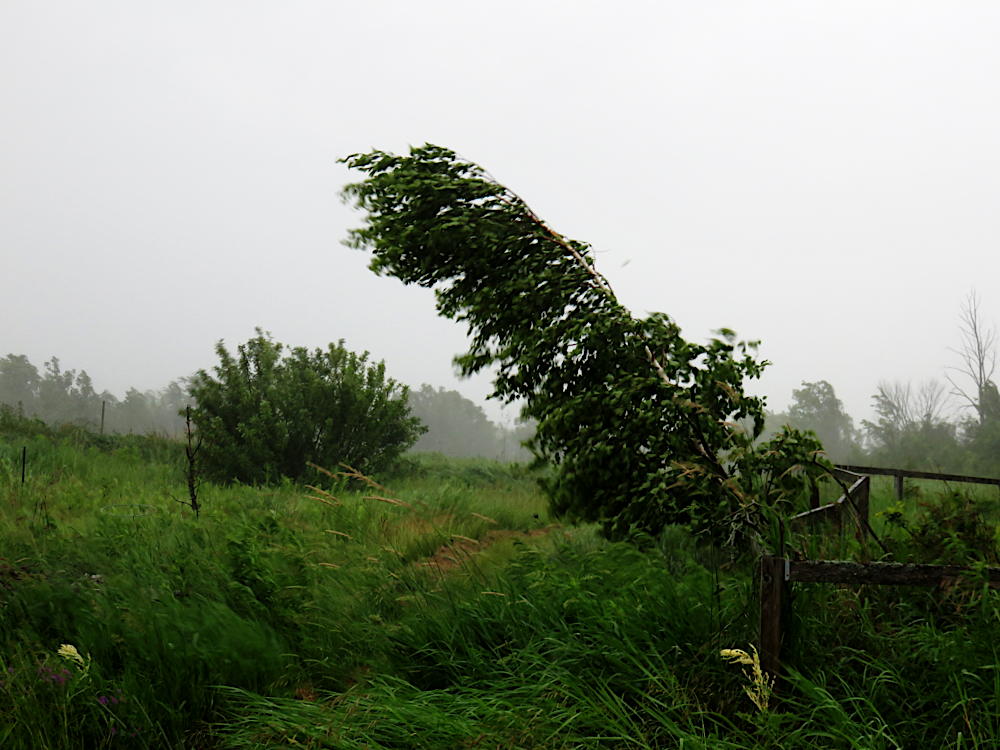
Tree in the wind

Tree bending in heavy pre-thunderstorm wind

It’s Day 2 of our little heat wave, and apparently time for the daily thunderstorm. This is the second one, same pattern. Heavy wind and darkness roll in for a while, shaking things up and looking ominous. Then rain, building up, pounding down for a few minutes, easing off again, then it’s gone. The whole thing happens in half an hour or so.

The whole thing is a little alarming, especially the wind, mainly because you don’t want the power to go out. But it’s not the storm itself, it’s these short periods and odd combinations of weather that there’s no settling into—a week or a month of one thing, then a quick switch to another. Like now, where after the storm, the air feels cool and fresh for a bit, then it’s back to oppressively heavy, humid heat wave heat.

Weather has become a regular news event, even around here where we haven’t had the extremes I read about. No months long drought with temps above a 100F (35C). No atmospheric rivers dumping massive floods. No wildfires that black out the sun at noon and cause their own local weather systems. No asphalt cracking in the street. No frying eggs on the sidewalk. Just this heat/storm combo for now. I’ll take it!
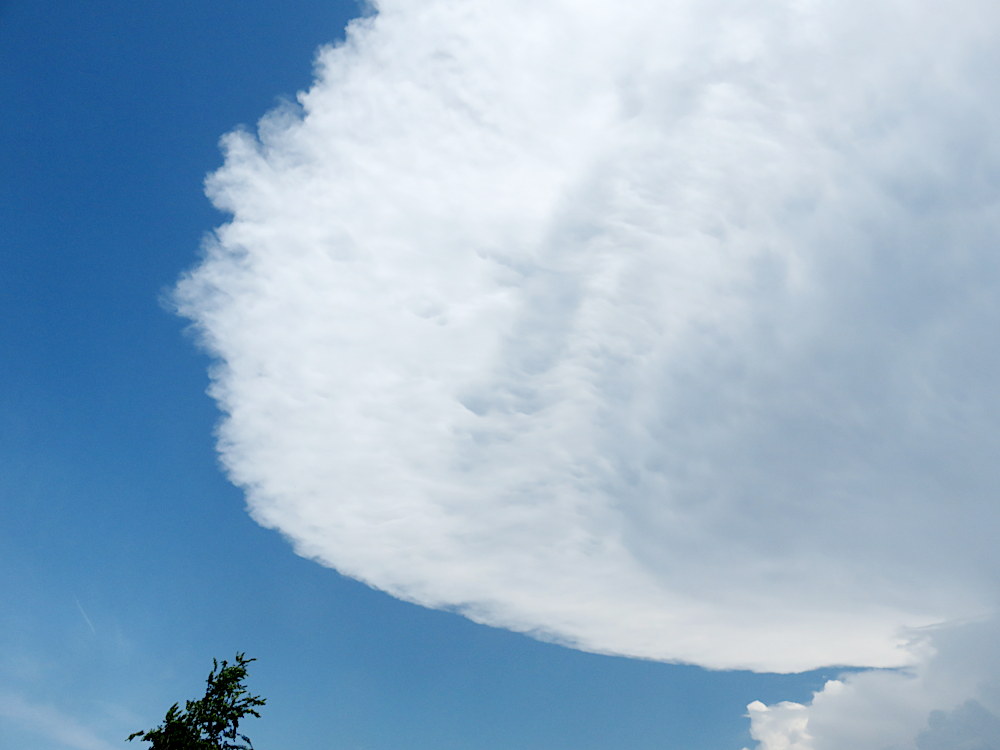
Need a wider lens

Giant disc-shaped cloud

Stepped out into Day 3 of our heat wave, happened to look up and, WHOA! The immediate impression was exactly like the movie scene where the giant alien spacecraft slowly slides over the city. And you know what happens next. After a second, this wasn’t nearly that menacing, just pretty cool. Unfortunately, my fixed lens couldn’t squeeze in the full picture, the complete half-disc emerging from a mass of foreboding dark grey cloud. Nature!

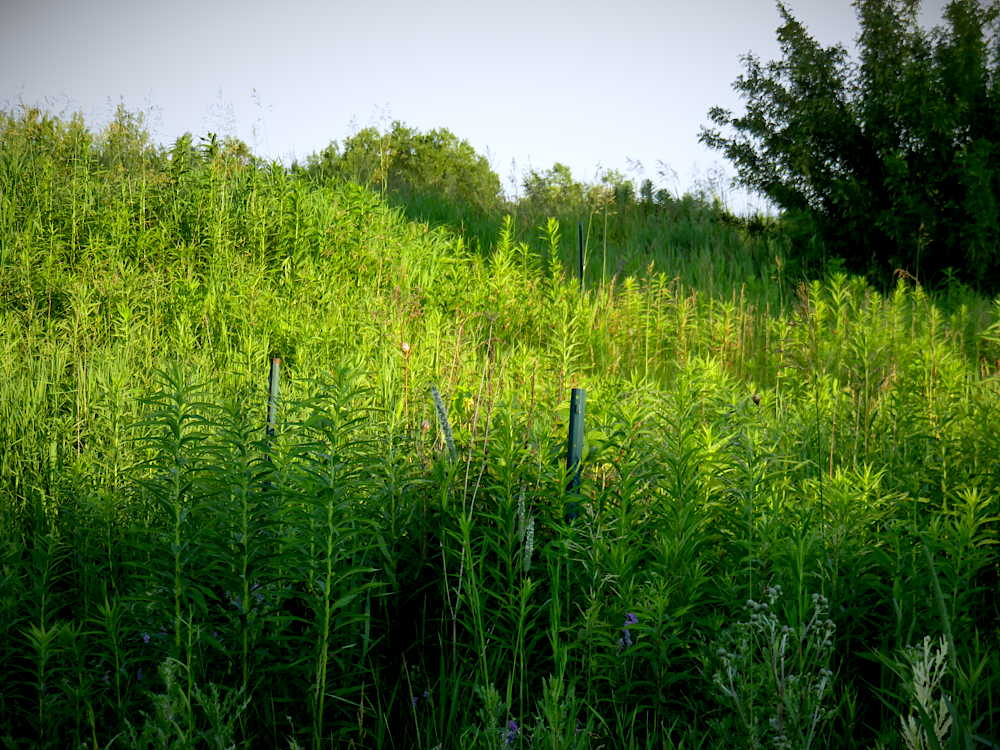
The anti-garden

Field of goldenrod and tall grass

A field of goldenrod and tall grass—what the garden would look like, left to its own devices. It’s Day 4 of the first official heat wave of the season, coming to an end. I’m headed to the veg plot, a couple hundred feet slightly up and to the left, to turn on the electric fence for the night. Earlier in the afternoon, it probably hit around 34°C, which isn’t quite up to the crazy new highs we’ve been getting in recent years. Still, it was exhausting because of the thick, oppressive humidity, so spent much of the day indoors with a fan. Uncomfortable, but here at least, not as scary as the scrolling list of warnings and advice on the weather app made it seem, mixed with equally dire details of a possible sudden, severe thunderstorm. All the weather alerts get kind of annoying when most aren’t as bad as the extremes they describe, but I guess they’re overall useful, especially in cities. We’re being looked out for! And the heat is supposed to end overnight. As the sun goes down, it’s already quite cool and relaxing and the mosquitoes aren’t even bad!

Melon tendrils twine

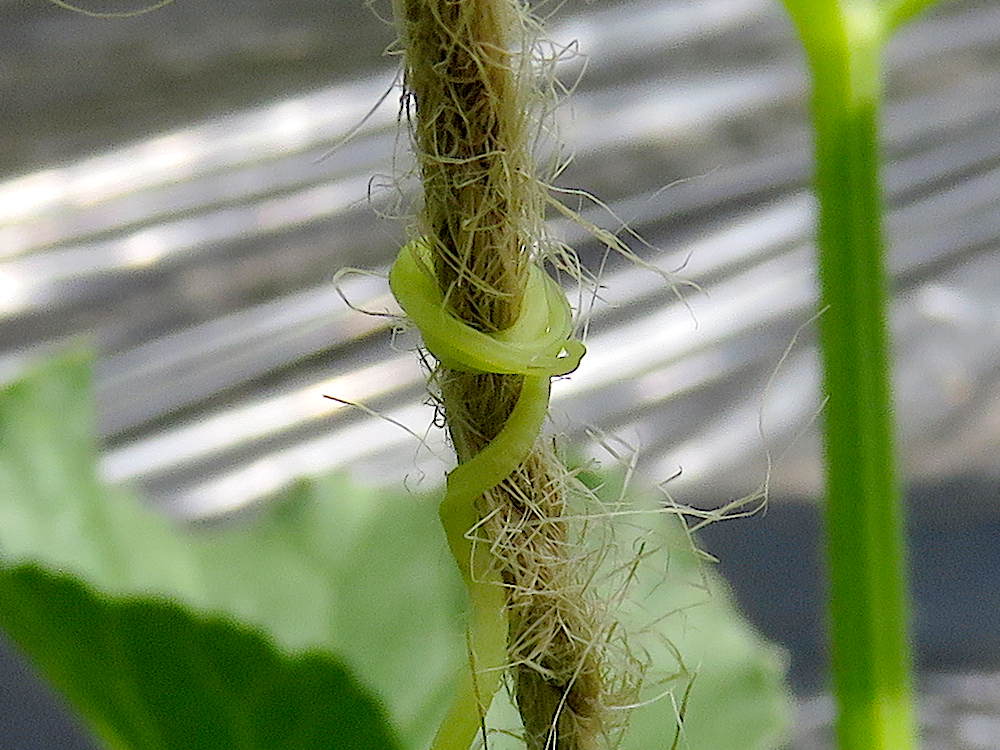
Melon tendril coiled around twine

This is what I’d been waiting for: a melon tendril at last took the offer and coiled itself firmly around the conveniently positioned twine. It’s part of my misguided trellising idea for a few cantaloupe plants. I haven’t grown melons often, and always let them sprawl on plastic, so I guess I’d forgotten that trellising melons is not a great idea. Just the thought of heavy fruit hanging doesn’t make sense. But rather than think about it, I built a little A-frame, and then started crisscrossing twine in a vague 3D grid. Well, I’ll reclaim my screws and scrap wood at the end of the season, and the jute twine can return to the earth.

Proof: Beet seeds are really tiny dried fruit

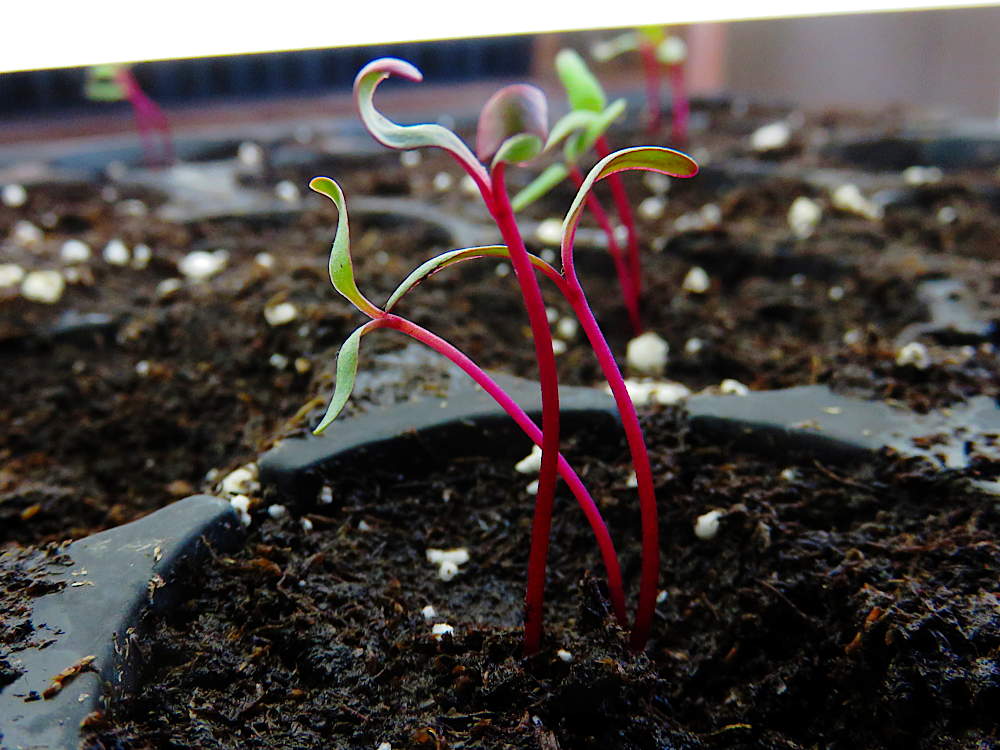
Beet seeds germinated

One of the basic things you learn about growing beets is that the seed isn’t actually seed, it’s small dried fruit that contain up to three or four tiny seeds. You’ll often get a tight little cluster of seedlings emerge, which could be a problem if you were precision seeding, going for exact spacing and no thinning. That sort of preciseness has never been a factor on this tiny farm—dealing with the vast volume of tiny carrot seed poured out by Earthway seeders in early years totally eclipsed any thinning issue one may have had with beets. Still, here’s PROOF. Beets aren’t transplant crops, but in this gardening year, I decided to try some in plug sheets. One shriveled fruit per cell. And here you can see, one “seed”, three seedlings! Could’ve also cut one open, but what’s the fun in that! They’re looking quite stretched under the fluorescents. Carrots definitely don’t like to be casually transplanted—they grow, but in my one experiment, they produced stubby little carrots. Probably something to do with the tap root being disturbed. Beets could be the same!

White and green onions, weeded

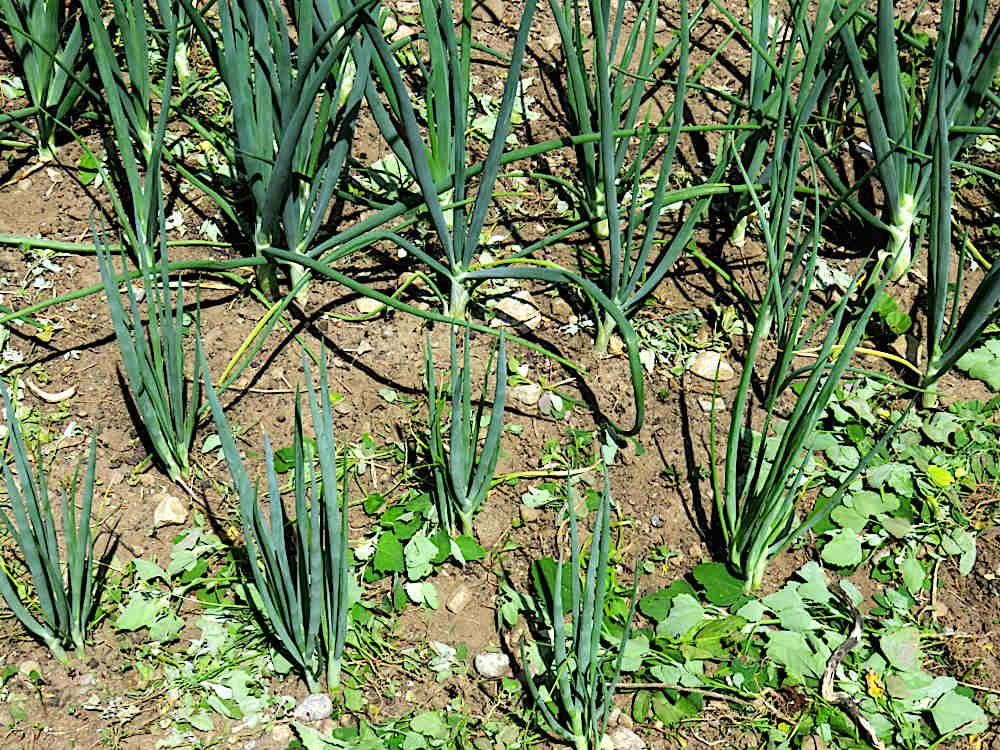
Weeded onions

Freshly weeded white (top rows) and green onions. Lots of uprooted lamb’s quarters lying around, enough for a big salad (they are quite tasty, nutritious, too, as you can count on me to say). I haven’t really looked at the white onions to see how they’re starting to size up. It’s the first time growing them, and I’m curious about how they turn out, and how they’ll taste! They all seem to be doing great, with a little weeding to help them along.

As the leaves die back

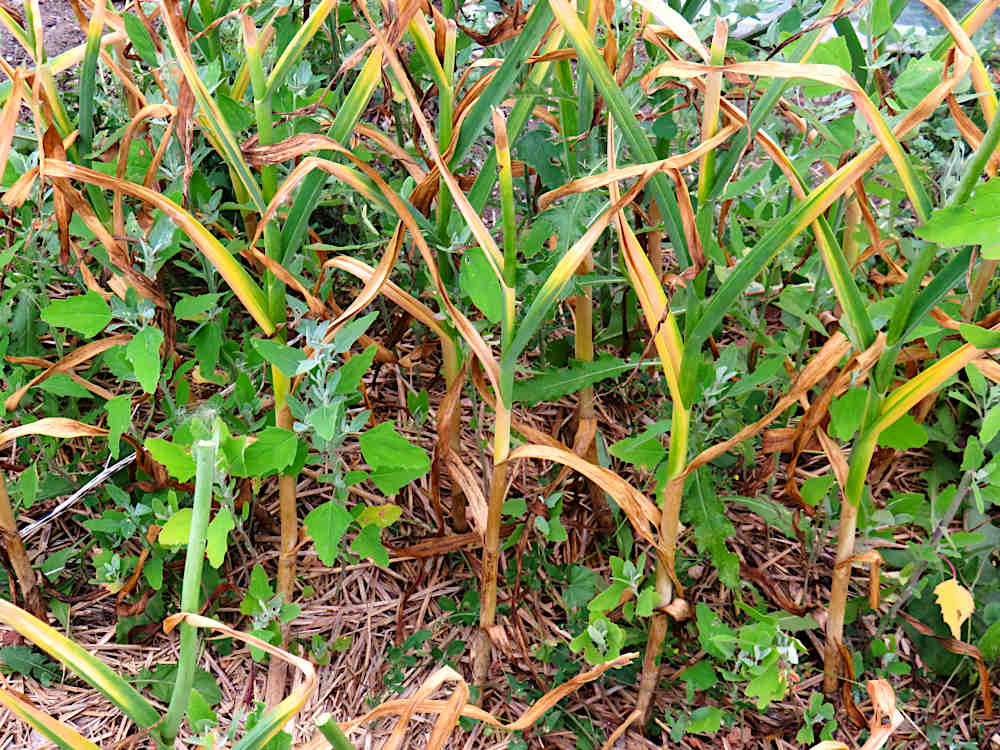
Garlic ready to harvest

The rule of thumb for garlic harvest, as far as I’ve gathered, is they’re ready to come out when the bottom third of the leaves, or 2-3 leaves, start dying back. I’ve always sort of followed that, but mainly checked by harvesting two or three from different spots every couple of days, starting when the first leaves begin to yellow, how often depending on the weather. This year, because they’d been under row cover the whole time—the anti-leek moth strategy—getting 15% less sun according to the cover specs, I decided to wait longer. They were uncovered into full sun about 10 days ago, and I decided to let them do all the clove growing they could do.

There may be a more scientific, measured way of timing the harvest on big commercial garlic farms. Sensors could be involved! On this smaller scale, an educated guess and harvesting samples has been my approach. If the last month was very wet, an earlier harvest is a good idea. One extraordinarily wet June, rainy and always overcast, left the garlic sitting in pretty damp soil all the time. Even harvested early, at least half had swollen and split the skins at the bottom, making them not great for through-the-winter storage.

Garlic apparently does most of its clove growth as the leaves start to die off—a change of focus. This continues till about half the leaves have started dying back, which makes sense of the rule of thumb. Once the yellowing starts, it goes pretty fast. The idea of not letting them yellow too far is that every leaf blade is a layer of the papery skin that holds the bulb together. The leaves extend right down around the cloves, and once they’re dead on top, they could rot underground. But, if it’s not real damp down there, the buried leaf just starts to dry out. So if it looks alarmingly dead up top, it shouldn’t be a problem, more like the bulbs have started curing—drying out—in the ground. I’ve been checking.Doesn’t sound very precise, in this precisely measured digital world. And these field guesses can be wrong. Overall, though, going by simple experience, topped up by reading and chatting, continues to work out just fine!