
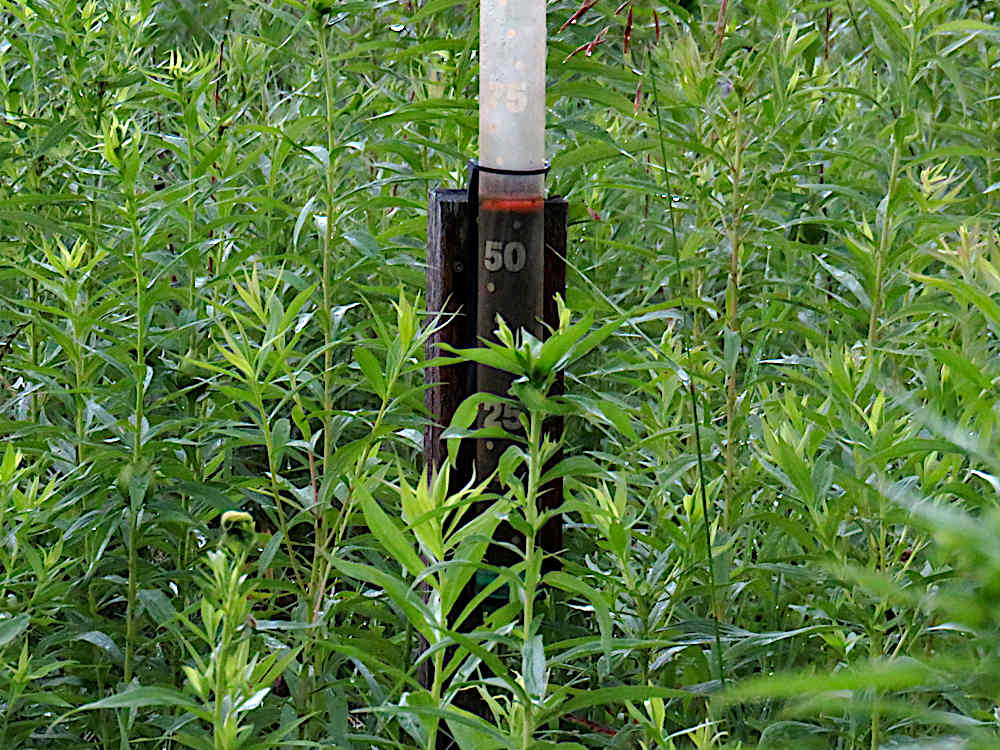
The jumbo rain gauge really can be seen from 50′ (15 m) away. That plus a decent zoom on my camera meant I didn’t have to wade into tall wet goldenrod to see how much today’s thunder and rain added up to. Two inches at least, accounting for the little that hadn’t been emptied out from a sprinkling last night. Erratic weather means some nice patches as well as extremes. After our second mini-heatwave, it’s been just beautiful. Sunny, low to mid-20s, with breezes and no humidity. And now, some rain. Well, a lot of rain. Still, weird for being old days normal, and great! Another week like this in the forecast. And then, what’s next?!
Weather
The anti-garden
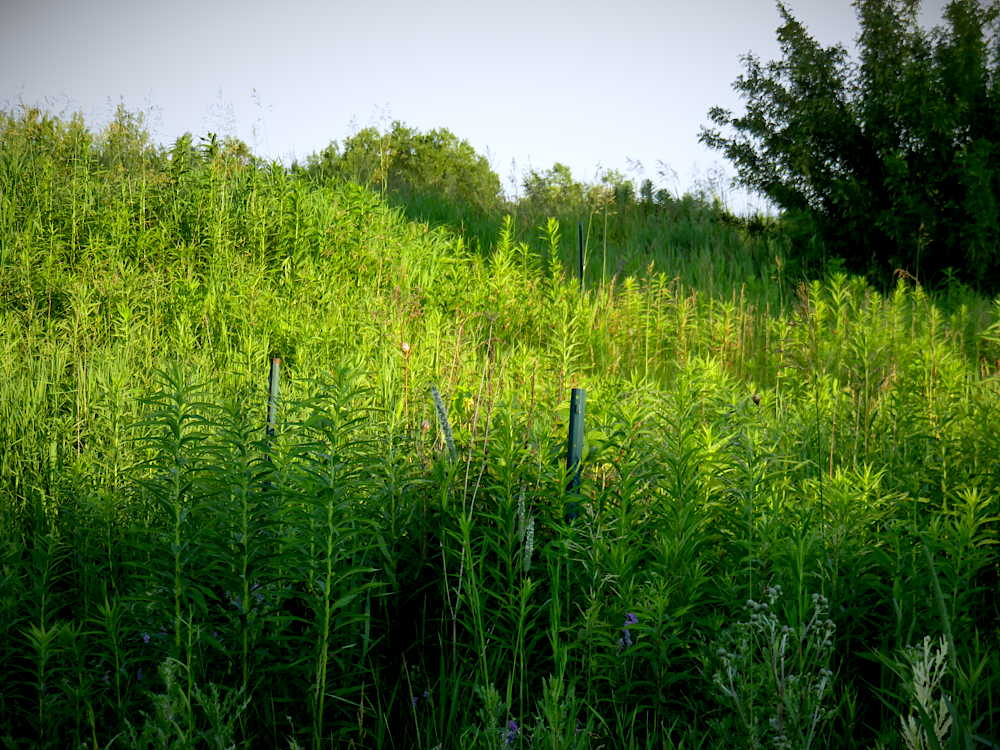
A field of goldenrod and tall grass—what the garden would look like, left to its own devices. It’s Day 4 of the first official heat wave of the season, coming to an end. I’m headed to the veg plot, a couple hundred feet slightly up and to the left, to turn on the electric fence for the night. Earlier in the afternoon, it probably hit around 34°C, which isn’t quite up to the crazy new highs we’ve been getting in recent years. Still, it was exhausting because of the thick, oppressive humidity, so spent much of the day indoors with a fan. Uncomfortable, but here at least, not as scary as the scrolling list of warnings and advice on the weather app made it seem, mixed with equally dire details of a possible sudden, severe thunderstorm. All the weather alerts get kind of annoying when most aren’t as bad as the extremes they describe, but I guess they’re overall useful, especially in cities. We’re being looked out for! And the heat is supposed to end overnight. As the sun goes down, it’s already quite cool and relaxing and the mosquitoes aren’t even bad!
Need a wider lens
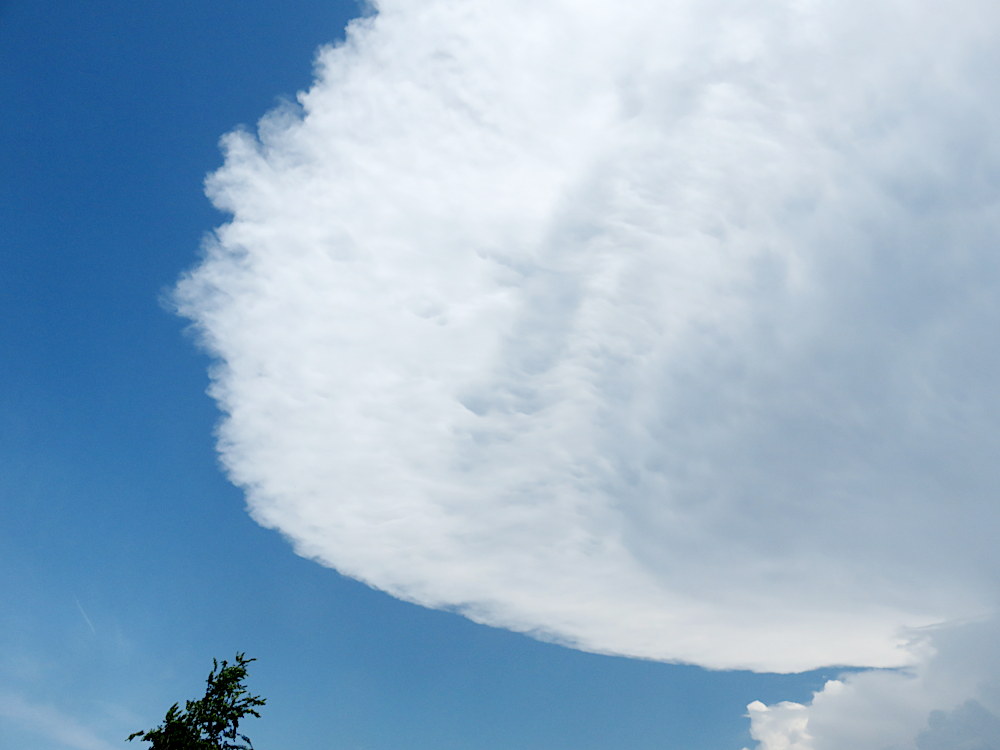
Stepped out into Day 3 of our heat wave, happened to look up and, WHOA! The immediate impression was exactly like the movie scene where the giant alien spacecraft slowly slides over the city. And you know what happens next. After a second, this wasn’t nearly that menacing, just pretty cool. Unfortunately, my fixed lens couldn’t squeeze in the full picture, the complete half-disc emerging from a mass of foreboding dark grey cloud. Nature!
Tree in the wind
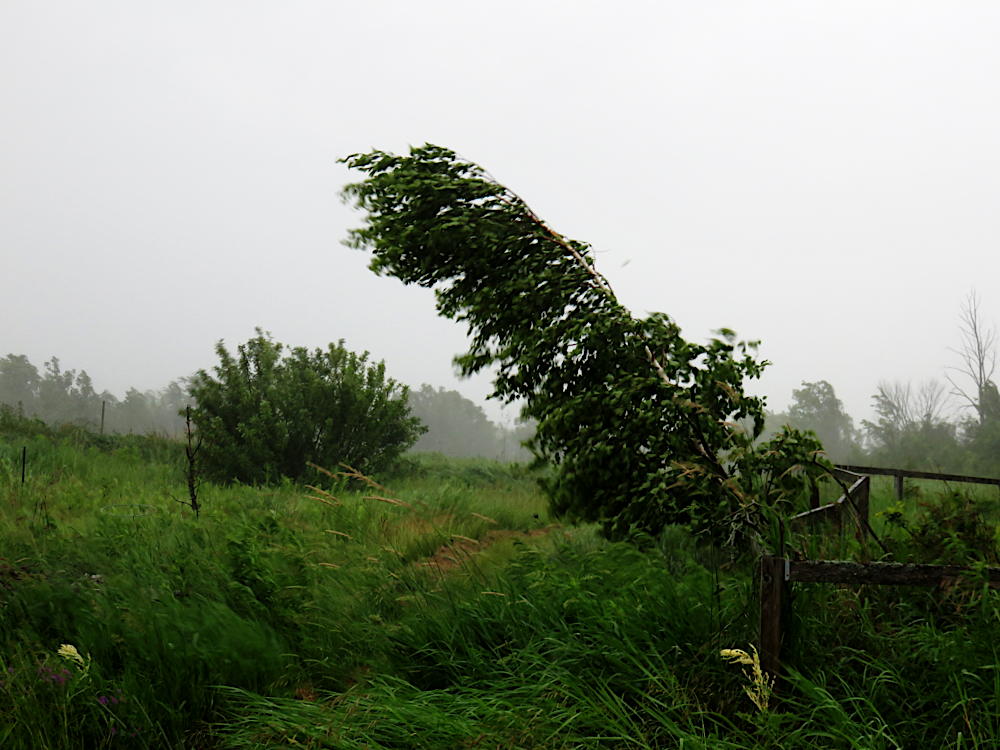
It’s Day 2 of our little heat wave, and apparently time for the daily thunderstorm. This is the second one, same pattern. Heavy wind and darkness roll in for a while, shaking things up and looking ominous. Then rain, building up, pounding down for a few minutes, easing off again, then it’s gone. The whole thing happens in half an hour or so.
The whole thing is a little alarming, especially the wind, mainly because you don’t want the power to go out. But it’s not the storm itself, it’s these short periods and odd combinations of weather that there’s no settling into—a week or a month of one thing, then a quick switch to another. Like now, where after the storm, the air feels cool and fresh for a bit, then it’s back to oppressively heavy, humid heat wave heat.
Weather has become a regular news event, even around here where we haven’t had the extremes I read about. No months long drought with temps above a 100F (35C). No atmospheric rivers dumping massive floods. No wildfires that black out the sun at noon and cause their own local weather systems. No asphalt cracking in the street. No frying eggs on the sidewalk. Just this heat/storm combo for now. I’ll take it!
The puddle returns!
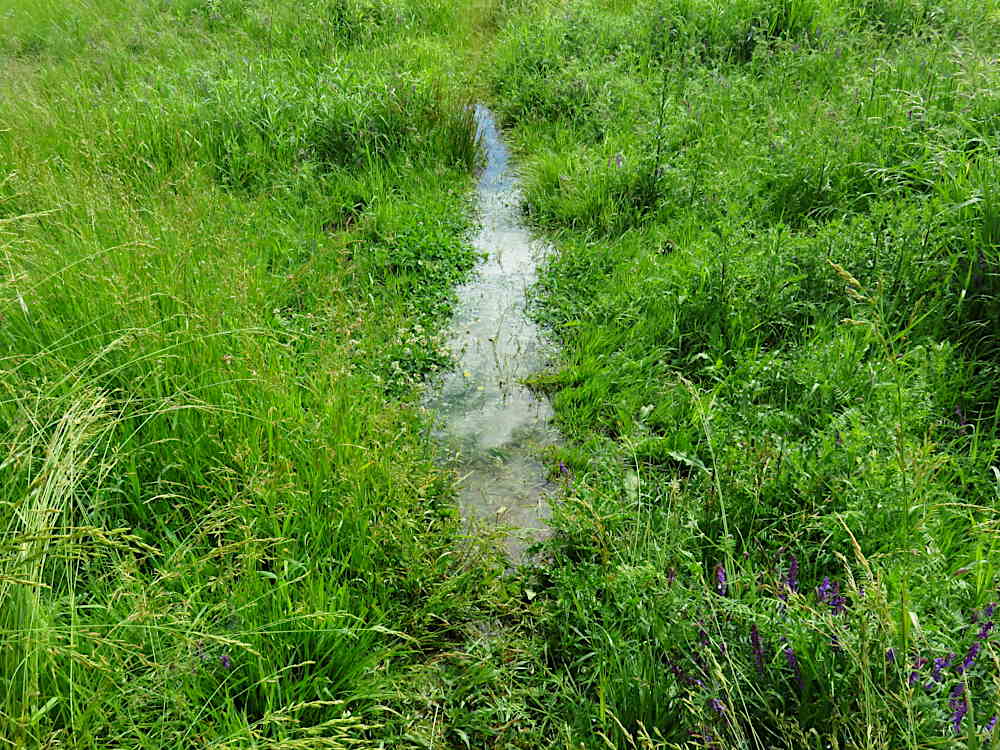
After a pretty impressive inch and a half (3.75 cm) of overnight rain, my water table indicator puddle is back. Not usual this far into June, but there has been a lot of falling water recently. You can see the water in the tamped down route of my path to the veg field, but it also extends into the grass on both sides. A mini-Everglades. If the veggies were planted right here, it would be a problem: plants breathe through their roots, so they’d be spluttering for air, in danger of drowning! Luckily, the veg patch starts not far off, but up a gentle slope, so, pretty much high and drier. With the clouds and rain of this May extending into June, and a few days of a heat wave-ish break, the weather pattern of the last 20 years holds true—there is no pattern!
Plants just wanna have sun
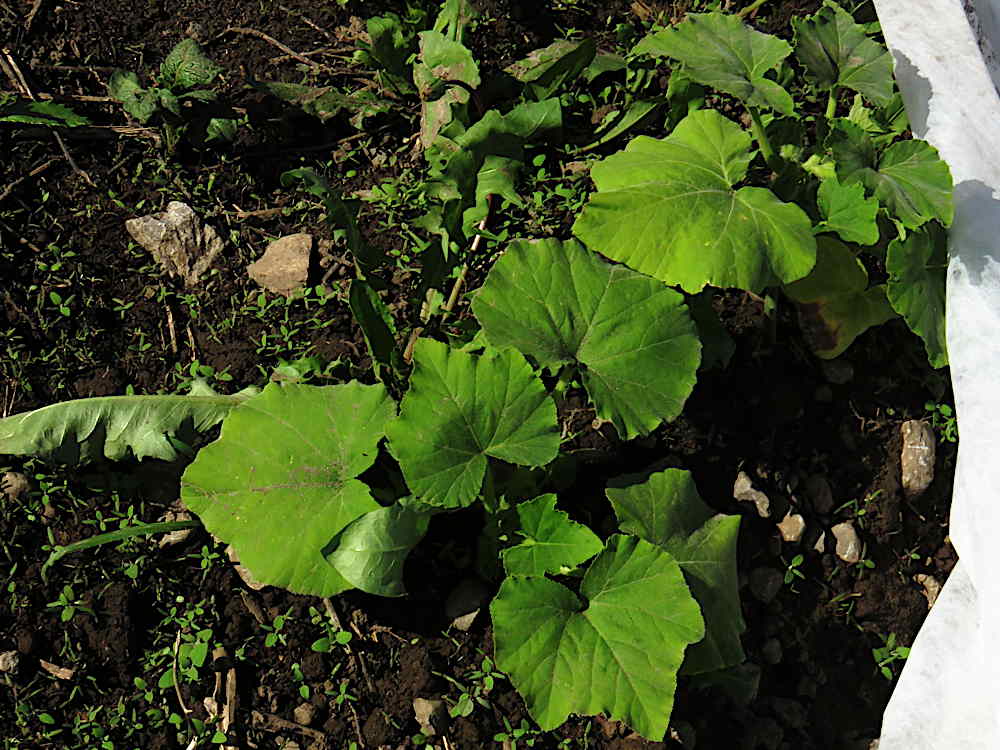
These winter squash are looking a little pale and thin, with those deprived-looking almost lime green leaves. No wonder, to go along with all the rain, most of the last few days have been cloudy. The garden veg really aren’t demanding. All they want is decently fertile soil—composted cow manure and a handful of alfalfa pellets will handle that—ample water, warm but not searing temperatures, and sun. Also, not being devoured by animals, insects or disease, or smashed to tatters by golf ball-sized hail, of course. This season so far, all conditions met. Except for the sun. The forecast continues cloudy with chance of rain for the next week. If that holds up, no rich, deep green leaves and satisfyingly sudden growth spurts for a while.
Quick storms and rainbows
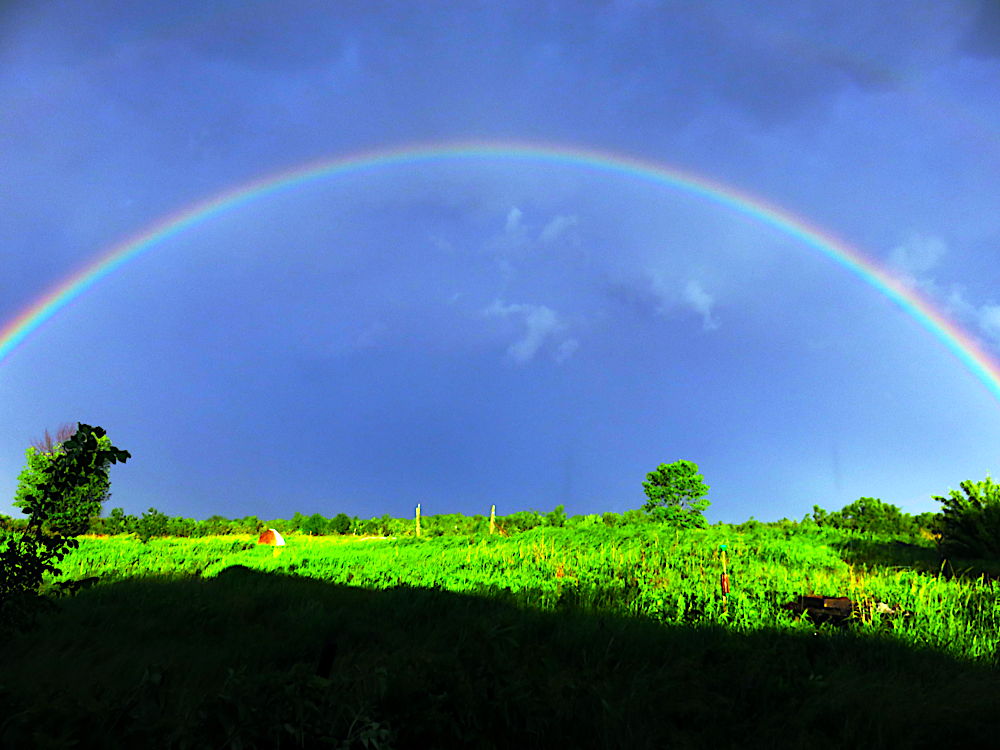
Seems to be a little weather pattern repeating over the last few weeks: ominous darkness rolls in with gusting wind, a short, sharp storm with lighting but usually no thunder, half an inch to an inch of rain drops in just a few minutes, then the sun suddenly pops up and…a rainbow. Quite the little show. There’ve been several storms like that recently, and although this is only the second rainbow I’ve seen, I wouldn’t rule out others I missed. This one was a full arc, treeline to treeline. Didn’t have a wide enough lens or enough backing up room to get it all on digital film. Overall, the rain is welcome, even if not the slow and soaking in kind, and the pretty massive rainbow was cool, good for letting your sci-fi imagination wander for a few minutes!