

There’s definitely a kind of cheerful dark humor in the relentlessness of it all. When you settle in and observe, the calm and peaceful veggie garden is in a constant push-and-pull of competition and ways to get what they want. Everything’s hungrily chomping, from microorganisms in the soil, all the way to the deer who are hopefully getting zapped by the electric fence (it keeps them on their toes!). Weeds and crops sneak their solar panels to the front, trying to hoard light. The plants, the animals, the powdery mildew, you name it, they all just want to eat and grow, and they have no problem clearing each other out of their way. Wow! But maybe it’s not a battle royale, it’s a wondrously vast, seamless balancing act that can’t be properly described with words. Relax. Don’t overthink. Enjoy the invasive box elder, brutally cut back a couple of weeks ago, regrouped and now trying to eat the work table. Once again.
Wondering
Ploughman’s lunch?
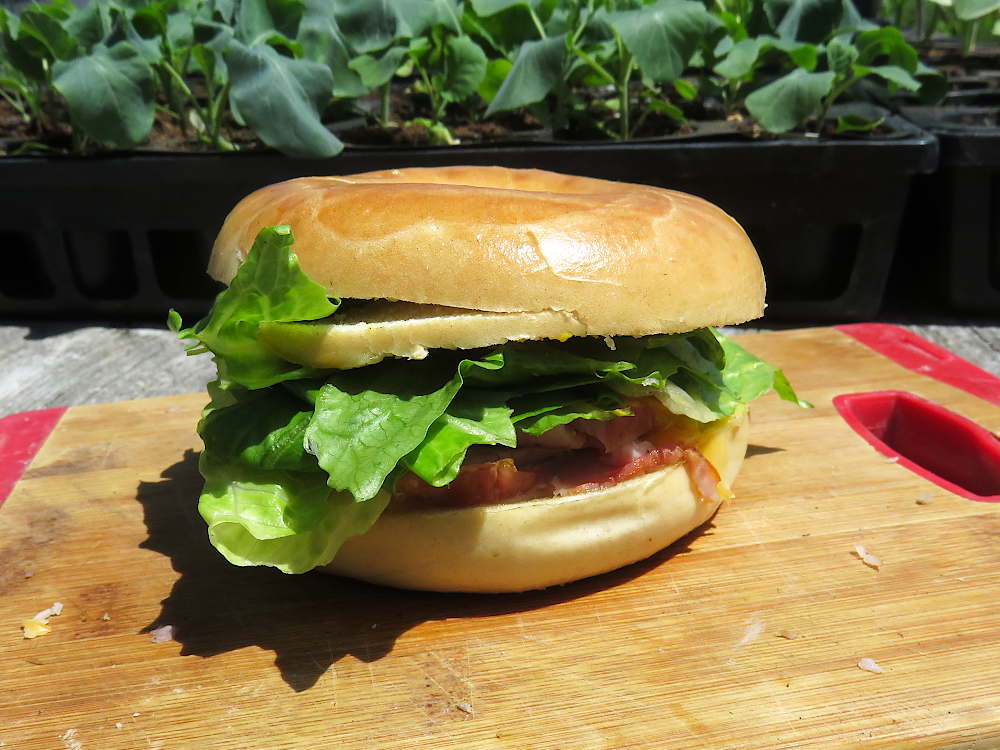
Here we are growing food, so it stands to reason that what we eat while working in the field matters. Like today’s midday meal, a slightly updated ploughman’s lunch I suppose, minus the beer. It’s an entirely supermarket-sourced concoction. Ham, cheese, and romaine lettuce on a bagel, with regular yellow mustard (French’s style, and French’s in fact). There’s no reflection of what’s growing in the garden. And future prospects of adding in the homegrown only really includes lettuce. Substantial, tangy, full-sun field grown lettuce would be magnificent. Other than that, getting hold of local baking isn’t hard, but costly. As for ham and cheese, prices are stratospheric for true small-farm local meat and dairy. One way or the other, we’ve all gotta eat—things will look up as the field fills out, as it always does!
The future of weeding!
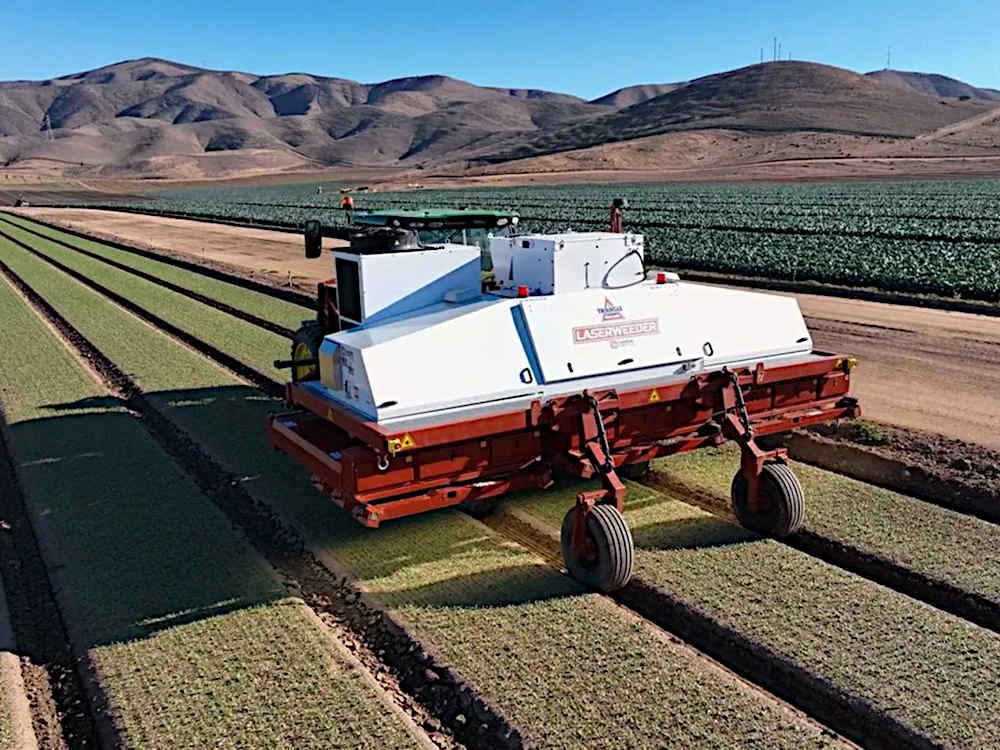
This 40-second LaserWeeder video I think speaks for itself. What more could I say? Wow, technology! The madness continues? Imagine the efficiency! What are we thinking? AI, of course. Hendrix (for some generations, shades of a jungle war on weeds)!
Here’s what’s under the hood: “AI-powered precision weed control. Featuring high-resolution cameras and cutting-edge computing, LaserWeeder can instantly differentiate between weeds and crops, targeting and eliminating weeds with precision lasers. This chemical-free solution operates 24/7, boosting crop yields, lowering farming expenses, and supporting sustainable agriculture.”
It can identify 4.7 million images an hour—sounds…frantic, processing all those images, ID-ing the weeds, passing coordinates on to the lasers, or whatever exactly the AI has it doing. LED lighting four times brighter than the sun. Sub-millimeter laser accuracy. Targets 5,000 weeds a minute.
Smart miniature laser cannons, deployed to the farming field. What will they think of next?!
No doubt the LaserWeeder will come to mind now and then when I’m crawling around hand-pulling weeds. Either that or the song.… Read the rest
Food factory
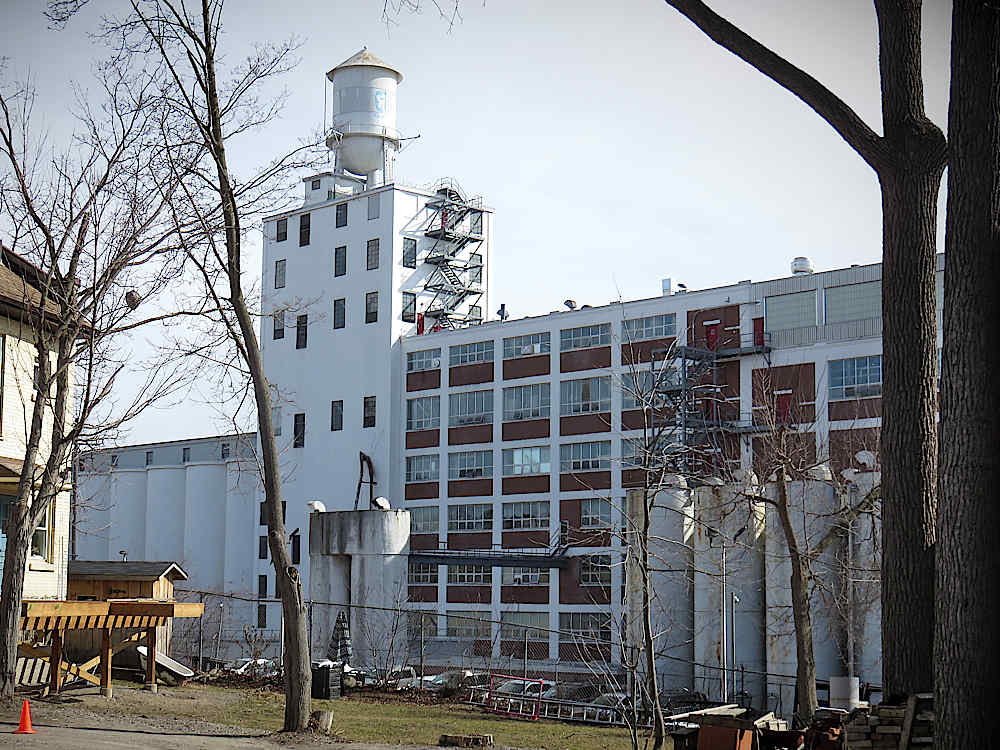
In town today, on my regular supply run every three or four weeks, this view caught my eye. The big food factory, seen through an open lot between two houses. Not sure what stood out, or moved me to take a photo. It’s not beautiful architecture, yet still somehow striking. The huge old Quaker Oats plant is on a whole other scale of food production to the Tiny Farm veggie plot, there’s no real comparison… So maybe the photo is there just to gaze at as the mind wanders through thoughts about food. Anyhow, quite a nice walking around day, for early March!
Veggie sleuthing
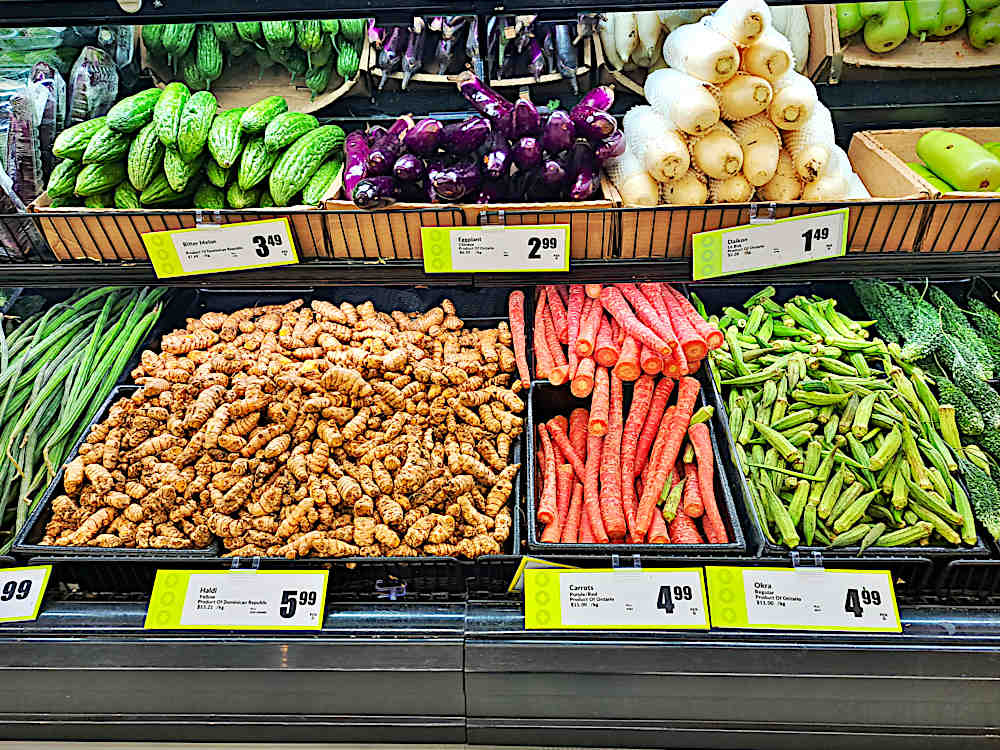
Part of the Asian/Southeast Asian veggie section at one of the local supermarkets. Most of these vegetables are unfamiliar, some I recognize. I usually scan for unusual shapes and textures when I roll by, but my curiosity is never that high. I suppose you could see them in an exotic, different cultures way; to me, they’re just…more veggies! This time, I decided to take a closer look, and took a pic on my phone (which was also my shopping list!). So what do we have?
ID-ing everything from the labels in photo and searching the interwebs for info, here goes. Top row, left to right: I couldn’t make out what that first plastic-wrapped veg is. Next, bitter melon, my mom grew this in her community garden. Used in Chinese cuisine. Remove seeds, keep skin, slice, use in stir fries. Or steam, or stuff. Next, eggplant, and daikon radish, both familiar, I’ve grown these. Then, squash (long) is what the label says, but this one has several names: opo squash, calabash, bottle gourd, and others. It comes in different shapes, like the decorative hourglass-shaped dried gourd version, or really long, or this stumpier look. For cooking, it’s another summer squash, like zucchini, so raw, steamed, boiled, sautéed, or grilled!
Bottom row, from the left: This long, skinny veg is labeled drumstick (label cropped out of photo), and it’s also called moringa. They’re the pods from the moringa tree, from Southeast Asia, India. Lots of superfood claims. When used as a veg, there are these pods, and also moringa seeds on their own. For the pods, cut up, put in soups and curries. Next, haldi, is another name for turmeric, which I have as a ground spice and use in my standard breakfast red lentils spice mix. Relative of ginger, native to Southeast Asia. Use fresh the same as powdered turmeric, grate or slice and add to soups, rice, whatever you like. Also, pickle (one way: lemon juice, salt, jar, fridge), use in marinades, blend. Then, carrot, purple/red, prepared a little differently with the tops and tips sliced off. And okra, also familiar. Last, the bumpy-textured veg is labeled karela, which turns out to be one of many names for bitter melon, so same as above!
And where are they from, fresh not frozen in the dead of winter? Carrot, daikon, eggplant and okra are from right here in Ontario, the drumstick is from India, and the rest were grown in the Dominican Republic. All of them I think can be grown here in colder country, except turmeric, which needs many months of warm weather (it apparently can be done here with a few months of indoor growing, then moved outside).
Now that I’ve finally LOOKED CLOSER, I’ll probably try some of the new veg. Of particular interest: drumstick and (remembering mom) bitter melon!
With a little snow

What a difference a little snow makes. Winter has changed around here over the last 20 years, It’s hard to really remember how it was exactly, except that I’m pretty sure there was a lot more snow. And it was a lot colder. Right through the winter months. Nowadays, the snow comes and it goes. The temperature hops up and down. The seasons are still here, you can tell by the sun, but they feel kind of…approximate. That pile of firewood hasn’t yet been stacked, a task for the next warm and snow-free winter day. Or maybe it can wait until spring.
Cherry toms and pandemic
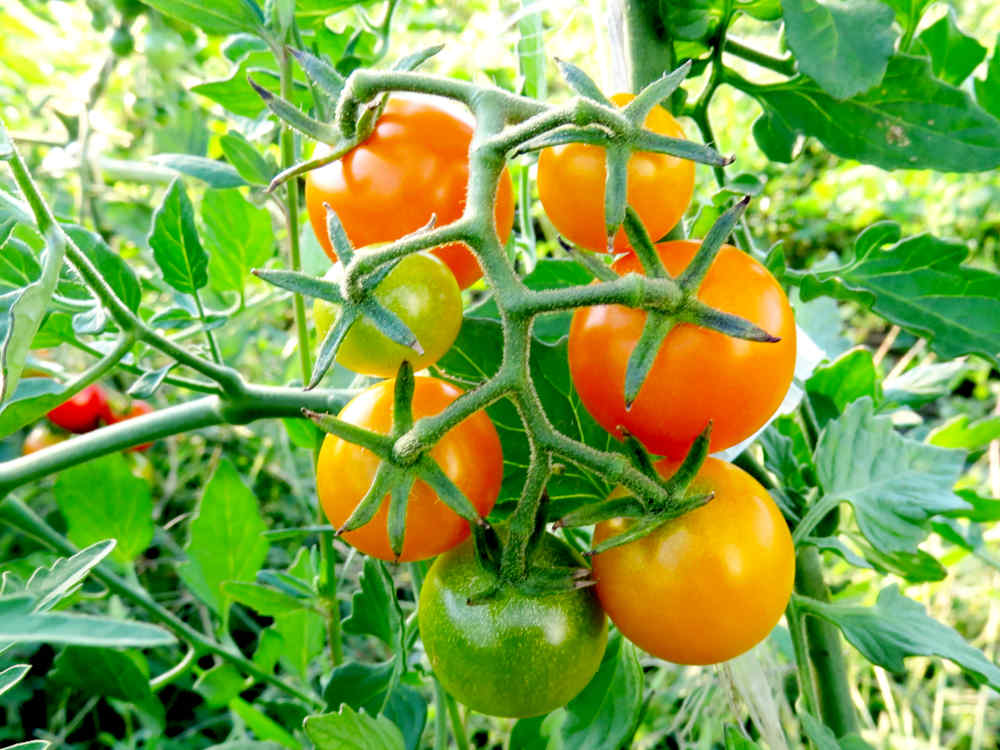
It’s mid-August, the heights of summer, and the cherry tomatoes are doing their thing. I wonder if there’s an endless interconnectedness between all plants, a real, tangible networking, as with cellphones or the internet, and if there is (seems to me as likely as not), what these cherry toms might be hearing about our great pandemic… Here in the field, it all feels to me quite distant, nothing has changed except in my thoughts. I can only imagine cities. Empty stores and restaurants. Few cars. A scattering of people, masked and hurrying away.