
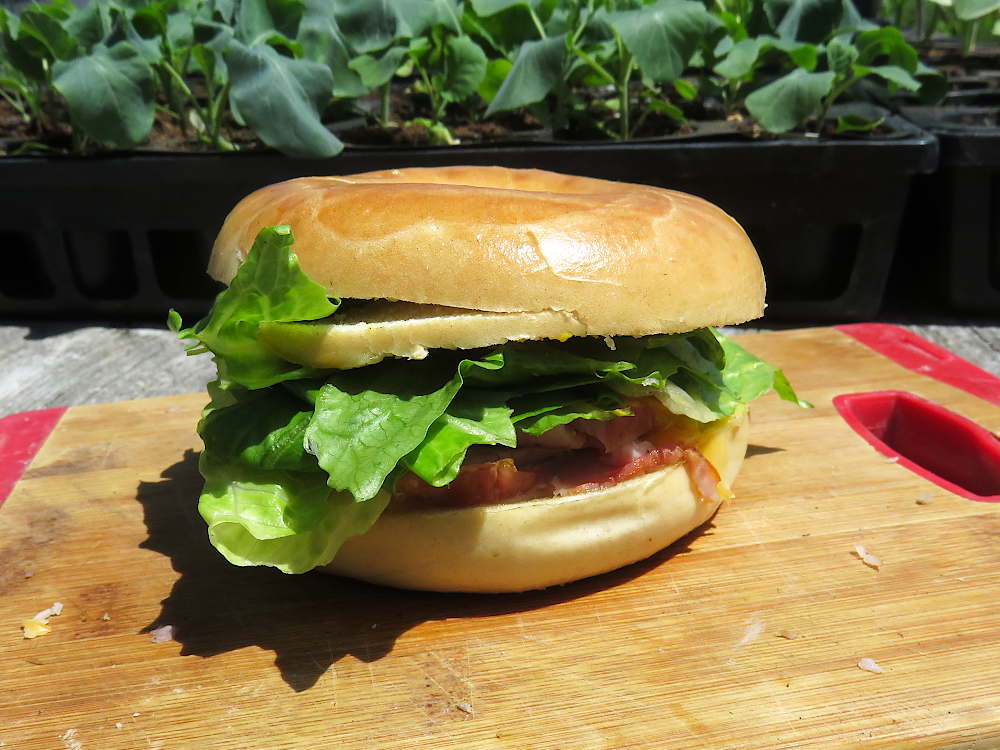
Here we are growing food, so it stands to reason that what we eat while working in the field matters. Like today’s midday meal, a slightly updated ploughman’s lunch I suppose, minus the beer. It’s an entirely supermarket-sourced concoction. Ham, cheese, and romaine lettuce on a bagel, with regular yellow mustard (French’s style, and French’s in fact). There’s no reflection of what’s growing in the garden. And future prospects of adding in the homegrown only really includes lettuce. Substantial, tangy, full-sun field grown lettuce would be magnificent. Other than that, getting hold of local baking isn’t hard, but costly. As for ham and cheese, prices are stratospheric for true small-farm local meat and dairy. One way or the other, we’ve all gotta eat—things will look up as the field fills out, as it always does!
Cooking & Eating
Burying Gold
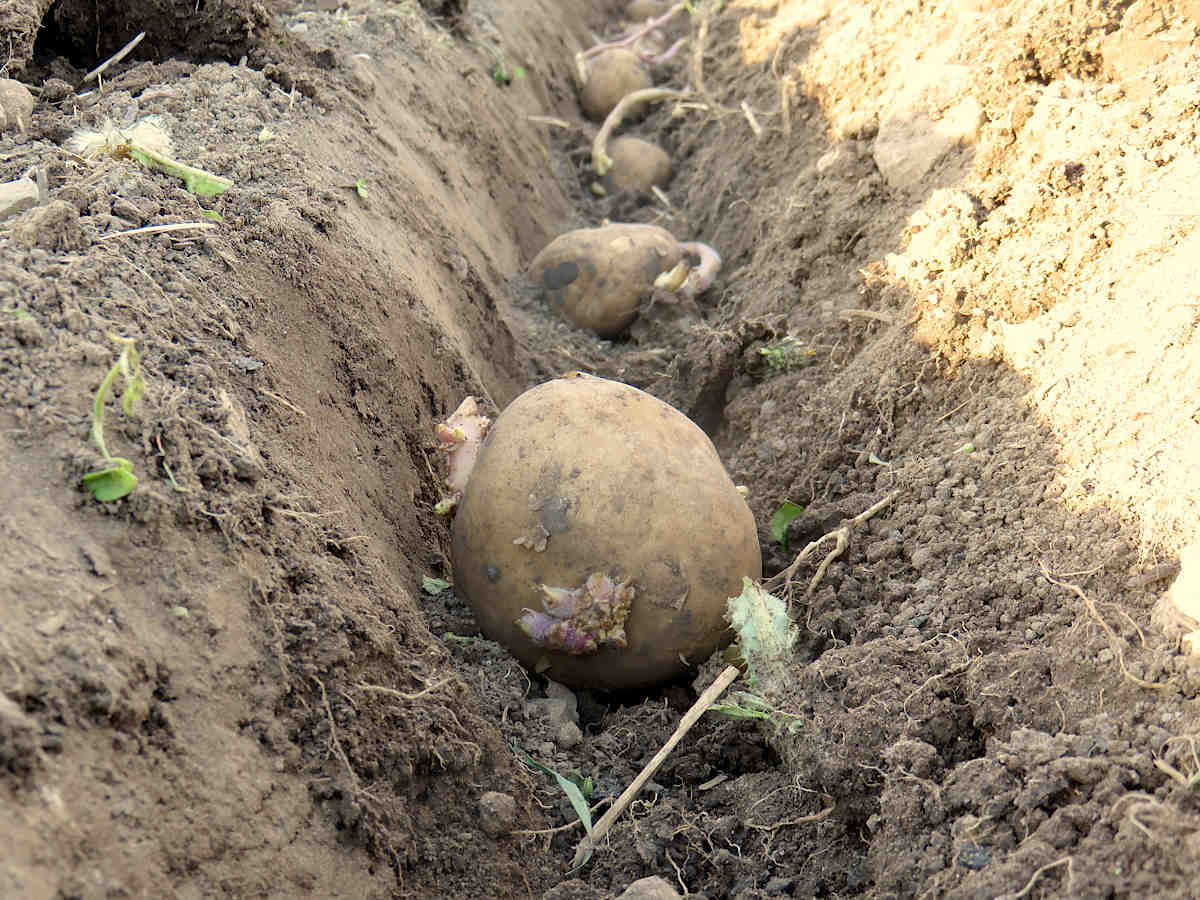
Yukon Gold seed potatoes, placed in a trench, covered with a layer of on-farm compost made from cow manure, and carefully tended—watered and weeded, and hilled up with earth as the potatoes form upwards. In seven or eight weeks, scrabbling around in the dirt underneath the plants is rewarded by the first golf ball-sized new potatoes. So delicious. Yukon Golds were the first potatoes I planted—I almost remember reading about them and thinking of them as a kind of super-potato. “All-purpose” was the magical attribute. Starchy enough for fluffiness when fried, roasted or mashed, yet still with the firmness to hold up quite well in potato salad or a stew. These guys are spaced a foot apart, close enough to commune with their tribe, not so close they start to eat each other’s dinner. With decent weather, this batch will be a mouth-watering harvest just down the line!
Growing in the dark
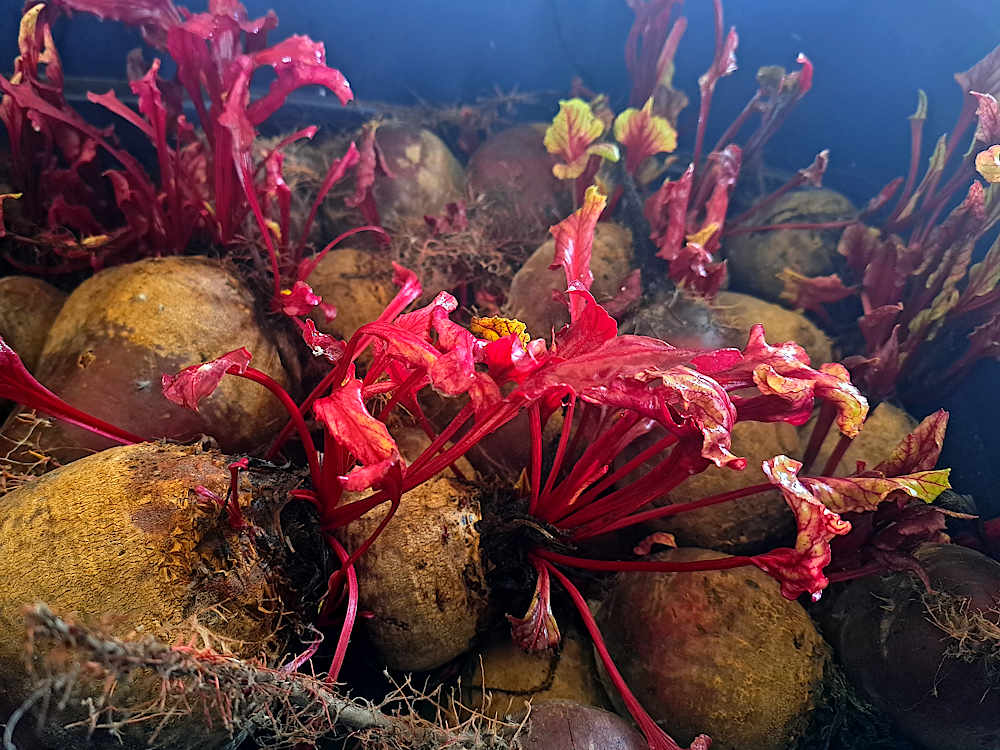
Beets, harvested last fall, stored for six months in a covered bin in a cool room, have been busy growing in the dark. This is a familiar early season sight, there are always leftover beets from last year. They’re still firm and tasty, though a lot less sweet. The new growth has a nice crisp texture and a slightly sweet, beet-y taste, what you might expect! They’re headed to the compost heap, part of the spring clean-up. You could call it wasted food, but I think of it as recycling.
Food factory
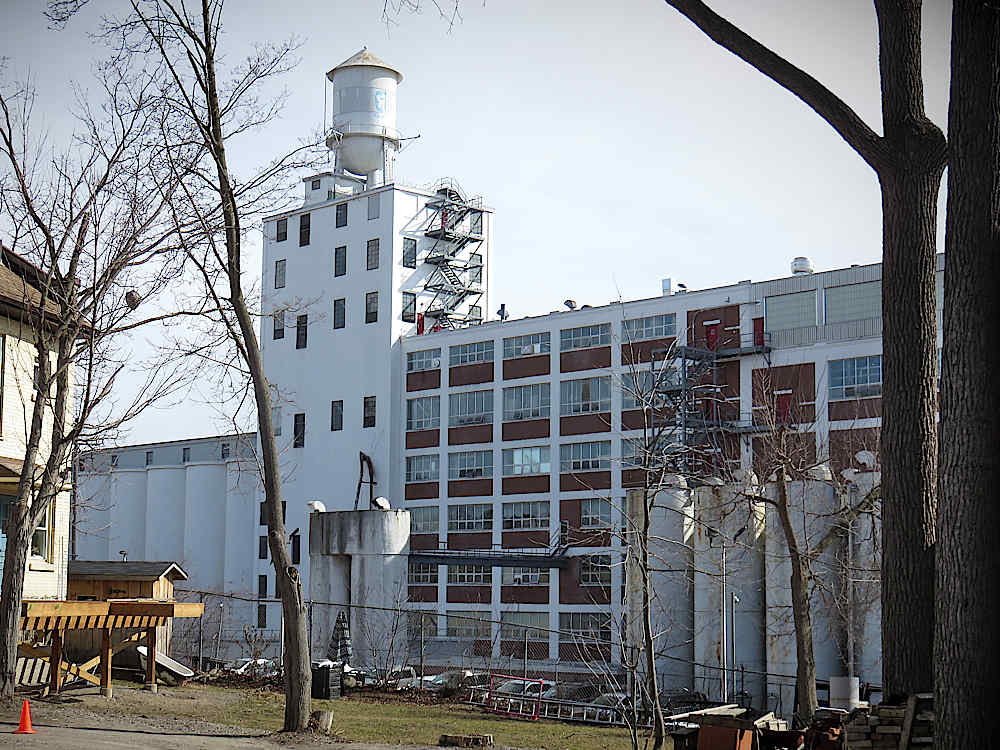
In town today, on my regular supply run every three or four weeks, this view caught my eye. The big food factory, seen through an open lot between two houses. Not sure what stood out, or moved me to take a photo. It’s not beautiful architecture, yet still somehow striking. The huge old Quaker Oats plant is on a whole other scale of food production to the Tiny Farm veggie plot, there’s no real comparison… So maybe the photo is there just to gaze at as the mind wanders through thoughts about food. Anyhow, quite a nice walking around day, for early March!
Flatbread ritual
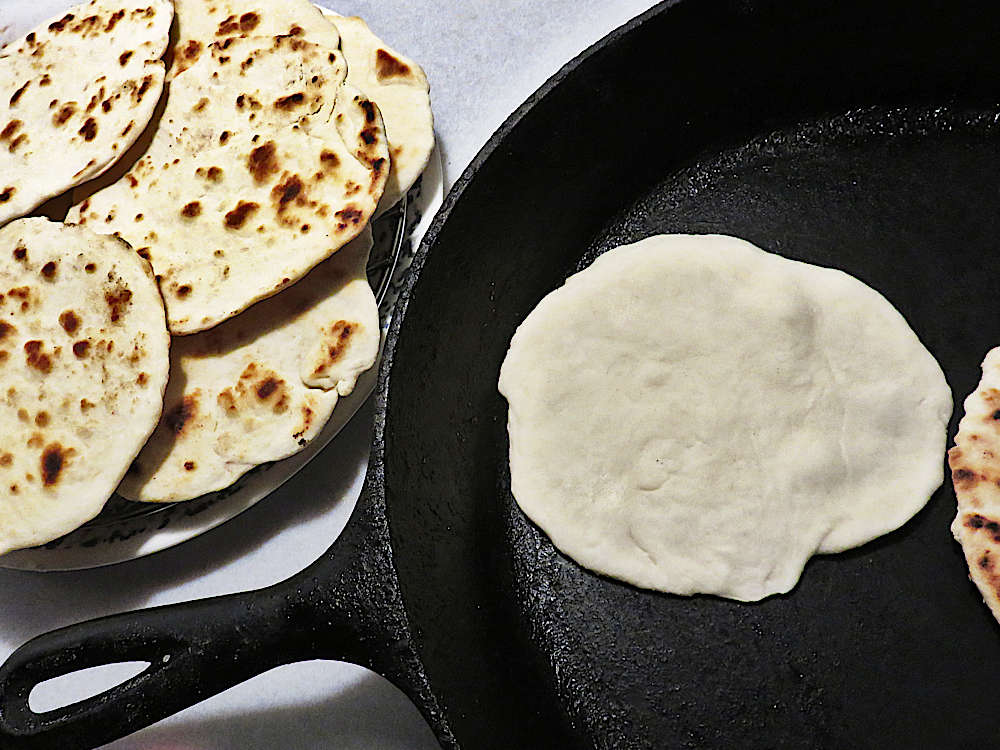
It’s a weekly slow and peaceful ritual, making a batch of flatbread. Pretty similar to doing some mindfully-drifting or podcast-listening weed pulling on a balmy summer’s day. Been making flatbread for my regular bread needs for maybe a couple of years now. Before that, it was quite a long stretch with sourdough loaves, but that suddenly seemed too complicated. This is simple: flour, water, salt, olive oil, baking powder. Rest for 10 minutes, roll out with rolling pin, place in pan. Does the baking powder mean it’s not strictly a flatbread? Don’t know–they’re still pretty flat!
I think I enjoy this primitive form of bread as much as a perfectly light and buttery croissant, or a still warm baguette… There’s some deep basic attraction to the taste and texture of cooked flour dough. As a kid craft activity, I remember making playdough with flour, salt, and water, and thinking how the same that was to the dumplings (that I loved) that we had in stew. Wonder where that might have gone if I’d been allowed to use the stove…
Upcycled food
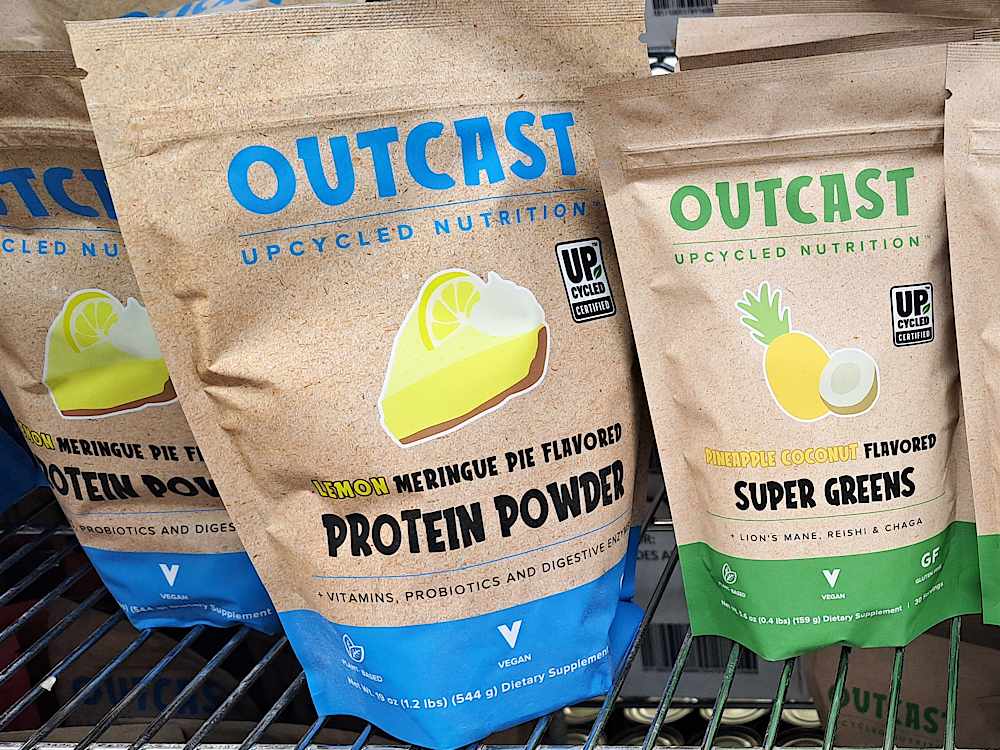
On my last stop-in at the luxury grocery discount outlet* around three weeks ago, the “upcycled” on these labels caught my eye. “Certified Upcycled”? Don’t think I’d heard upcycling applied to food in that direct way, but it made sense. It has an automatic eco-conscious, palatable ring to it that “recycled food” certainly wouldn’t. My immediate thought was that it referred to using cosmetically damaged and unsold fruits and vegetables to make things—damaged meat and meat scraps isn’t as appealing, and we already have hot dogs. I imagined the piles of veggies that at times went onto the compost heap on my tiny farm. I took the photo, figuring I might want to know more…
The big number that is hard to imagine is 35% of food goes to waste around the world. That’s the rough figure I see everywhere I look. Sometimes it’s 25% or 40%. In any case, let’s say, a third of all food is somehow made, then not eaten. How does that work? I finish a harvest, then toss a third of it on the compost heap? Every time I buy three bags of groceries, I immediately dump one in a bin conveniently located at the supermarket exit? There’s an oversupply of some food crop and boxcar loads get left unsold by the tracks? There are lots of ways food can get wasted, and they all add up. It’s one of these modern problems we have that’s so sprawled through supply chains, it’s hard to see a big picture of how we got here, let alone how to do something significant about it.
In that mix, we have upcycled food. Here, protein powder and something called Super Greens. Checking out the company’s web site doesn’t yield much info, and no surprises. Seems they gather various unsold crops and…process them. Assuming the nutritional quality is the same as non-upcycled, is the upcycled product cheaper to buy? Or is the main advantage the feeling as a consumer that you’ve done something good for the environment, for the planet? It’s easy, only a search or an AI buddy away, to get more info. For me, for now, I’m satisfied. Upcycled food means companies out there are making otherwise going-to-waste food into…more food. Got it!
*Luxury grocery discount outlet is what I call the local discount food outlet with a line-up that includes an everchanging assortment of big brand names and specialty organic labels. Great deals, around a third of the normal price or even less (I haven’t done actual price comparisons, but that’s what it seems like). Excellent finds aren’t guaranteed, but it’s always worth a stop. One of my all-time favorite scores: certified organic chicken gravy and brown gravy cubes, 50¢ for a box of four. I stocked up on soooo many! (I don’t think that much of the certified organic stamp in general, there’s all the lawyering and lobbying going on by the big food manufacturers to massage the rules, who knows what exactly it represents, but when it comes to processed products, and for 50¢, why not?!)
The veggies are alright
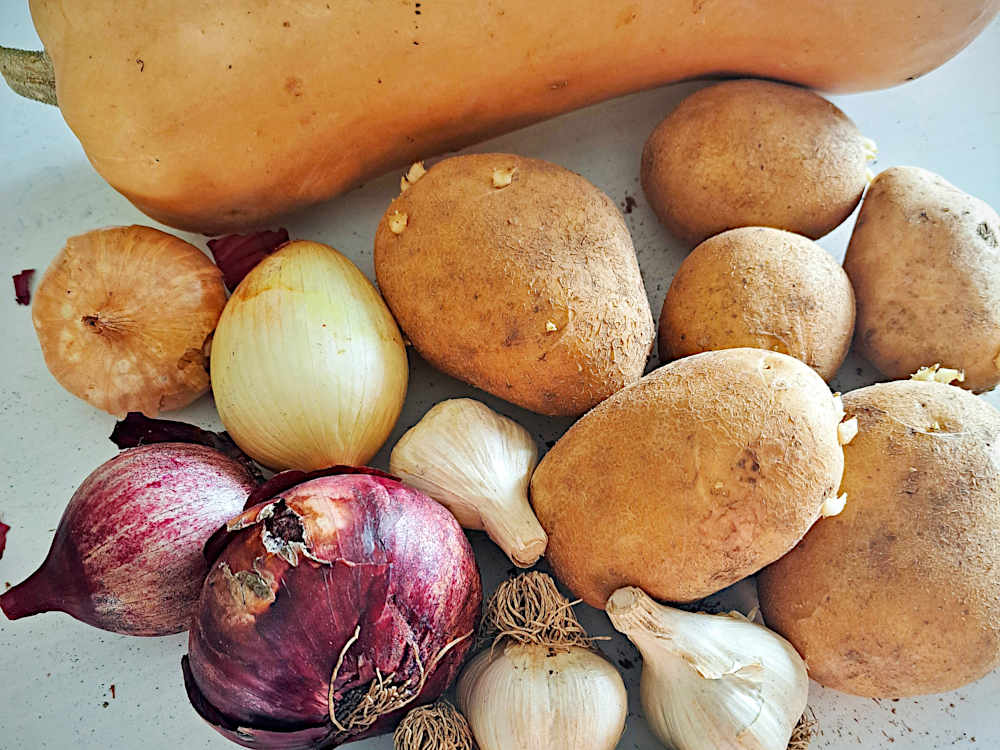
Checking in again with the veggies in storage, about a month after the last inspection, and they’re all still doing fine! The potatoes are starting to sprout. The red onions, not recommended for long storage, are losing their color on the outside, but still firm, and colorful a couple layers in. Garlic: check! Butternut squash, even with the healed nicks from last summer’s intense hail attack: check! Months since harvest, casually tucked away in a closet/pantry, still delicious!