
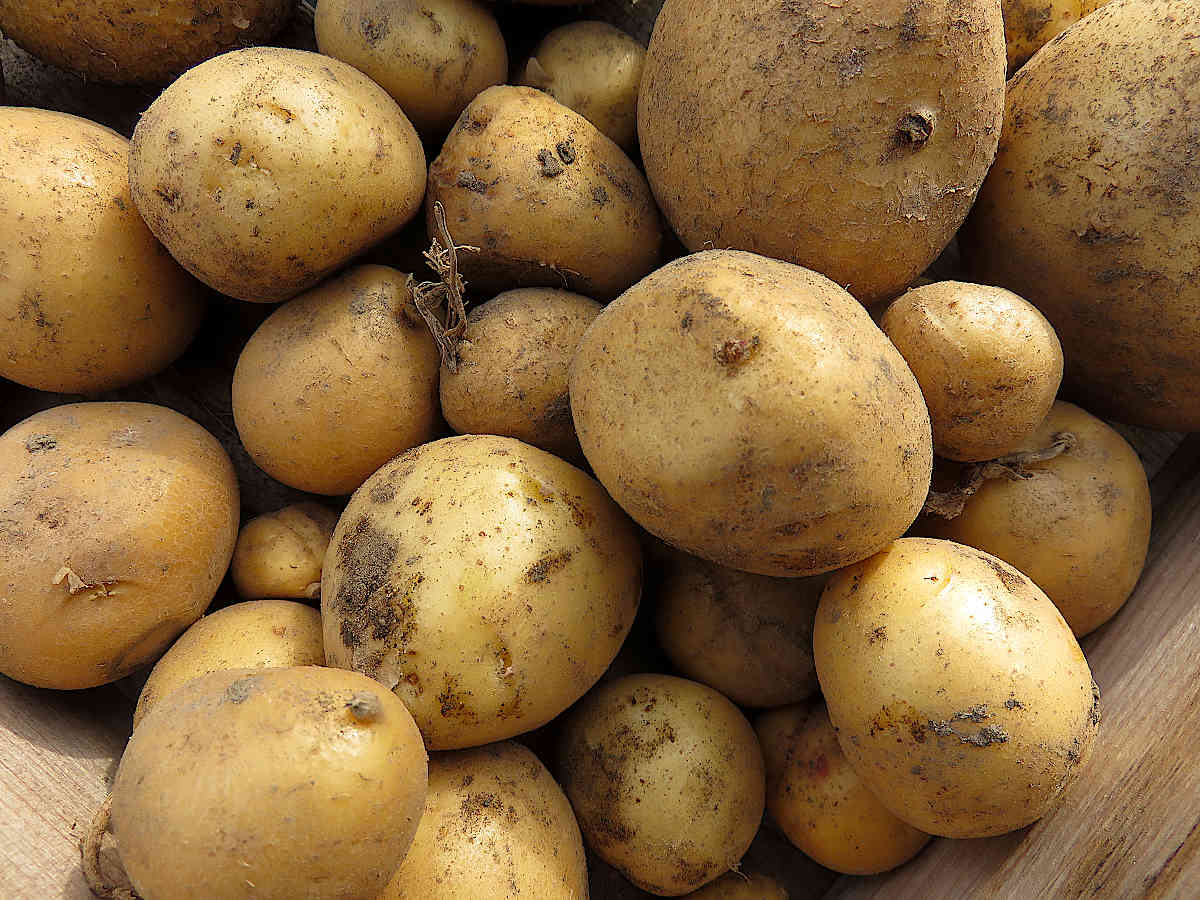
At the end of a brutally dry and hot summer, late planted potatoes manage to come through, tasty though overall quite tiny. Intended for personal use, a little winter stash that won’t last long!
Cows across the way

Cows grazing away from their home on rented pasture, on a delightful, newly-seasonable warm and sunny end of September day. You can’t tell from the zoomed photo, but they’re around 400′ (122m) away, seen through an opening in the trees. Being calmly stared at by cows at a distance is a fact of life that I finally just looked into. Cows apparently have amazing, better-than-human motion detection, near 360° vision with eyes on the sides of their heads, and an exceptional sense of smell that literally works for miles. They detect you from afar, then turn to stare with both eyes (binocular vision), so they can check you out in three dimensions to better decide what you’re up to. Peacefully grazing, always aware!
Curing garlic
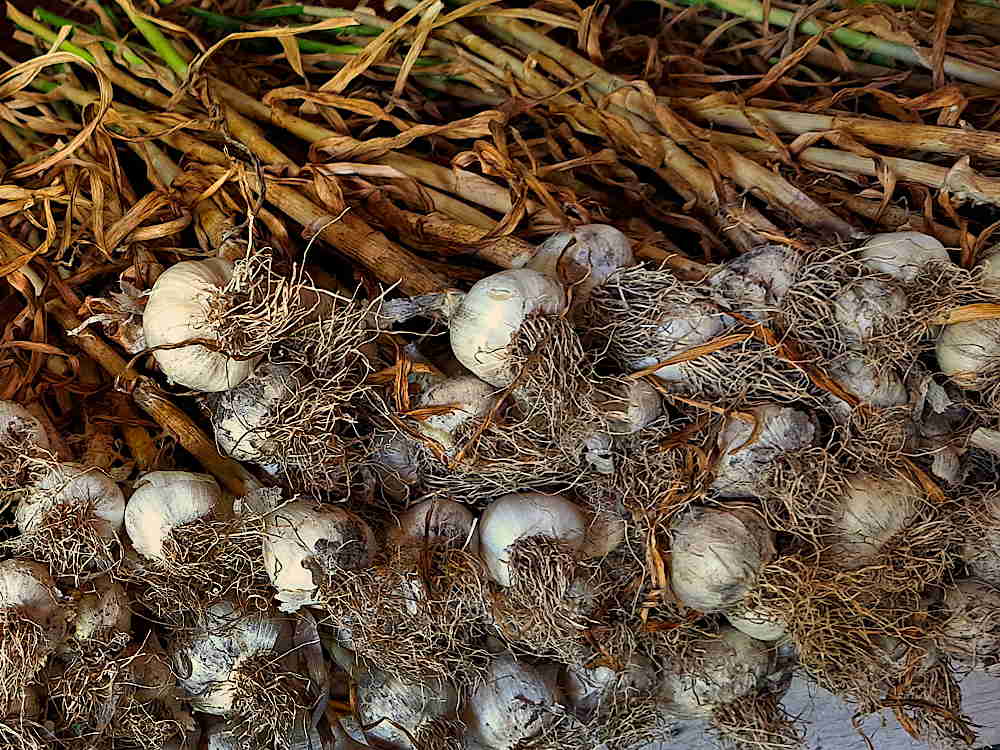
The invasion of the leek moths a few weeks back left the garlic somewhat ravaged but unbeaten. The moth larvae seem to have been stopped up top, snipped and pinched and dug out before they had a chance to tunnel their way down through the stems, reaching the bulbs, and eating into them as well. Instead of that, the harvest has turned out just fine. The bulbs overall are a bit on the smaller side, but the cloves are nicely filled out, so…all’s well. A few weeks of air drying till everything’s woody and brown, then done!
Best lettuce!

Just watered heads of Mezquite lettuce, doing well given all the heat they’ve had to deal with over the last weeks. This is a great, fast-maturing romaine lettuce. It’s sweet and crunchy, even in full summer heat that makes most lettuces strong flavored, with a slightly bitter edge.
I grew up with mild lettuce, the standard supermarket fare that’s sourced from wherever the crop grows most abundantly. Here in the mixed veg world of the tiny market garden, no crop can expect its own perfect conditions. That doesn’t mean inferior vegetables, instead, you get a full range of tastes. Grown in summer heat, lettuce often develops a full-bodied flavor and a pleasing hint of bitterness—with a little oil and vinegar, salt and pepper, or in a sandwich, it’s a whole new, elevated taste bud experience!
Anyhow, this Mezquite variety combines full flavor with sweetness, holds up well in all conditions, matures a week or two faster than most other romaines, and is even open-pollinated so you can save the seed. As long as a roving critter doesn’t breach the defenses, like the row cover these guys spend much of their time under, they’re a treat in the making! I harvested a couple today for early tasting purposes…
Leek moth invasion update!
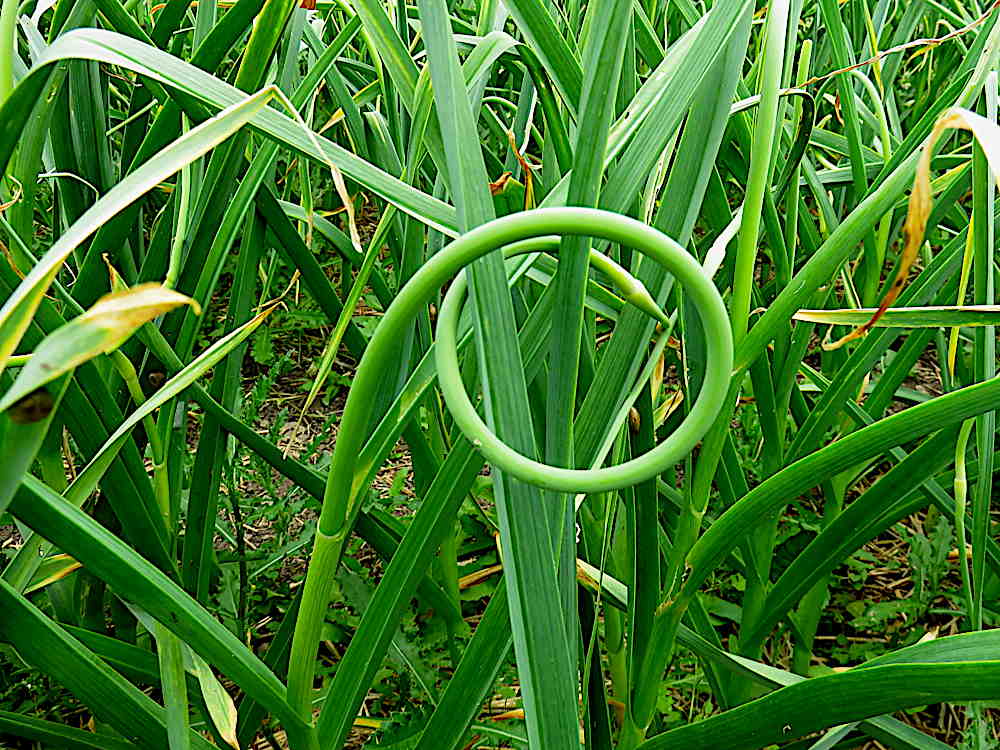
Here we are, a week after leek moths invaded the garlic, gazing at a healthy scape. If you’re not familiar, scapes are the curling tips that emerge as the garlic gets close to harvest. They’re also clearly a favorite target of the moth larvae: they chew their way in and start tunneling down. All of the attacked scapes had to be snapped off, right as they were emerging. Happily, many also survived. Snipped when tender—they get woody if left too long—scapes are filled with a full, delicious garlic flavor, a preview of the garlic to come. Let your imagination decide how to use them! (It’s also said that removing the scapes directs more plant energy to making the bulbs bigger, though I haven’t seen that for myself.) As for the bulbs and the leek moths, this is my first encounter, so we’ll only know for sure if all that hand-picking and scape snipping worked when the garlic comes out next month.
Brassicas waiting in the wings

Another wave of brassicas, mostly cabbages and cauliflower, are getting a little big as they wait indoors under lights. In recent years, decent fall weather has extended a whole extra month from what used to be. So I’ve been planting later to extend the harvest. (More text to come…)
Tomatoes just want to root
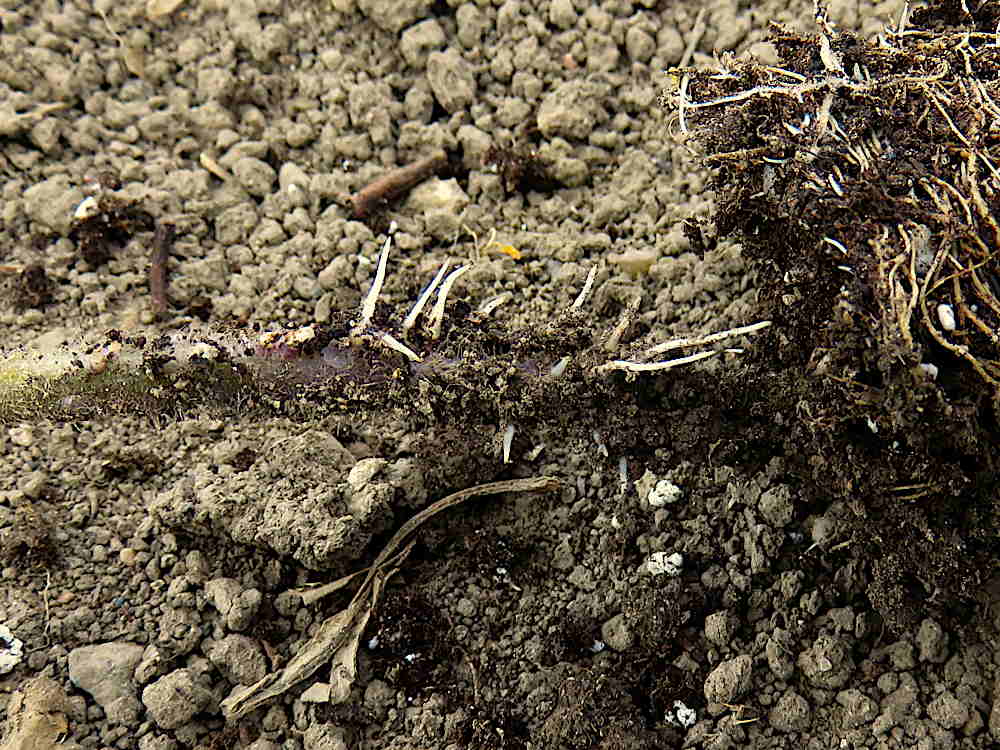
Most of us don’t spend much time at all looking at plant roots. Meanwhile, the things going on underground are quite wondrous. Take this humble tomato seedling, demonstrating a special power: adventitious rooting—a catchy way of saying they can grow new roots from their stems. Tomatoes, potatoes and peppers, all relatives from the nightshade family, have this ability. And? Well, if you have leggy tomato transplants, stretched from too much time indoors in tiny plug sheet cells, this ability allows for a neat trick. You can dig a little trench instead of a hole and lay the seedling on its side. Then, bury the root ball and most of the stem, gently curving up the last bit. Ta-da, a sturdy little transplant. I did this for a few leftover tomatoes two days ago. Today, I found one snapped off—wind? rabbit?—so I pulled it, revealing roots that had already started pushing out. It’s just another little bit of all that goes on in the hidden part of the garden!