
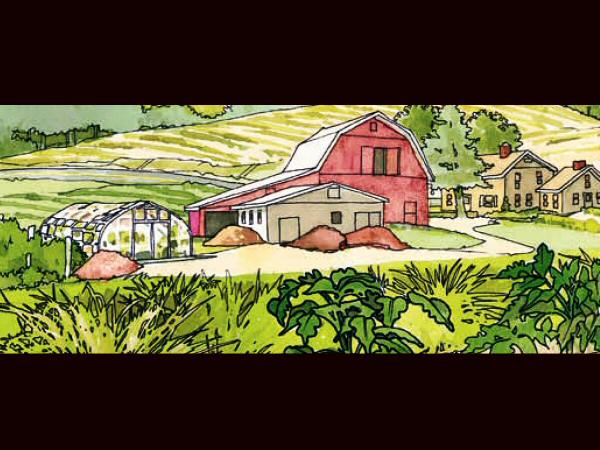
A reminder: Building Soils for Better Crops: Sustainable Soil Management is an excellent, book about soil for growers, free to download, or you can buy a hard copy. Follow the link, or read a bit more where I posted about it quite a while ago. The image above is cropped from the cover, a very specific type of old school farm view and set-up, which happens to be the one I’m familiar with; where you are may be totally different, as may be the soil, but the idea of growing is the same, and chances are this book is useful!
reference
Building Soils for Better Crops
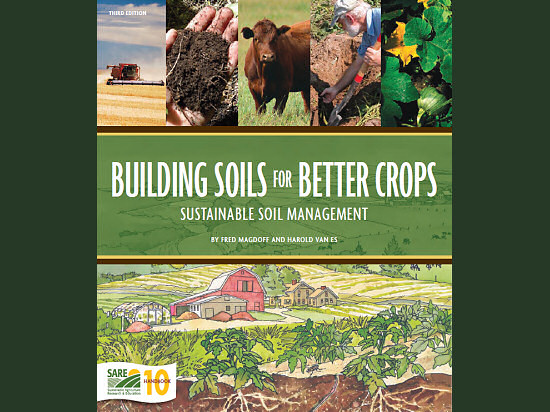
Had the downloaded digital version of this book since the 2nd edition, for at least a couple of years now, dipped into it, but still haven’t read it through. I should and I will. This winter! The 3rd edition of Building Soils for Better Crops: Sustainable Soil Management came out last year and it’s even better, full of practical science for the upward-looking tiny farmer and veggie gardener. Here’s the blurb: “A one-of-a-kind, practical guide to ecological soil management. It provides step-by-step information on soil-improving practices as well as in-depth background—from what soil is to the importance of organic matter. Case studies of farmers from across the country provide inspiring examples of how soil—and whole farms—have been renewed through these techniques. A must-read for farmers, educators and students alike.” The PDF version is a free download, the printed version is about 20 bucks. There’s a fair number of soil books and books that cover soil out there, but for the tiny farmer, this is pretty much one of a kind.
Reading about building stuff
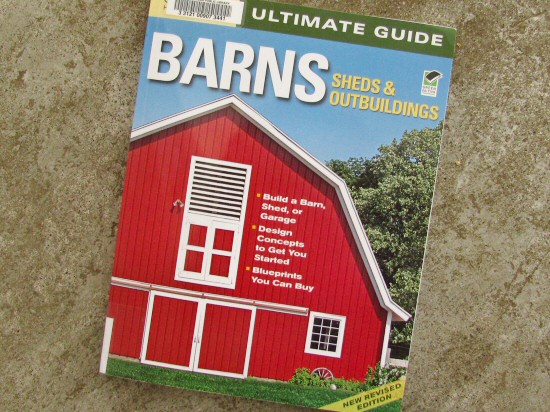
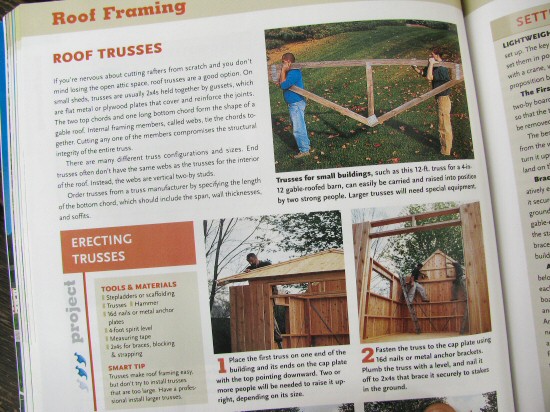
A great chance find at the library, lying there on top of a returned-book cart. This isn’t a book review or recommendation, although Barns, Sheds & Outbuildings is a cool browsing volume, full of clear explanations, instructions, and photos. What it did was remind me, as my year of living mainly in town has its effect, how little most of us (I’m talking about the majority of North Americans, at least, living in cities and towns) have to do with actually building things. And how kinda HELPLESS we are, not knowing how to put together and repair the structures we need. I read somewhere that in the 1950’s, around half of the houses in Toronto (so, I assume, in other big cities as well) were built by the owners. Who’d think of doing that now?
The interesting thing is, like growing food, building basic structures IS NOT HARD. For me, working alongside Bob to put up a wood-framed, winterized, 450 sq. ft. barn extension clued me in to that a few years back. Not a huge project, but it was basically a tiny house constructed to withstand cold Canadian winters. We leveled land and poured a concrete pad, built a concrete block retaining wall, framed, installed a metal roof, windows and doors, insulated and wired…everything. Being warm and dry in the middle of winter inside a structure I knew literally down to the nuts and bolts was satisfying and fundamental. Working alongside someone with old-school farmer skills, following his lead, doing whatever he did, made it…simple.
There aren’t that many old-school farmers left to learn from, but we do have books! :)
Fill your head!!
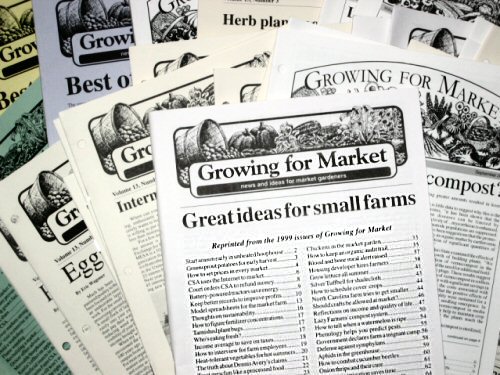
My box of back issues finally arrived. Reading through it may cause my head to explode (so many things to try, so little time :), but I’ll take the chance! This is the entire collection, seven years worth, of a fantastic market gardeners’ monthly newsletter called Growing for Market. Tiny farming lies in a kind of information nowhere land between gardening and large-scale agriculture. Most of what I do is straight from gardening methods, but the scale is a little…bigger, with things to do and problems to solve that just don’t happen in even a very large personal garden. Meanwhile, commercial farming info is all about tractors and agrochemicals and acres of one crop at a time. All wrong. So where do you learn the best way to stake 500 tomato plants, or how to keep veggies fresh for half a day at a hot outdoor summer market?
Tiny Farm Bookshelf, Part 1
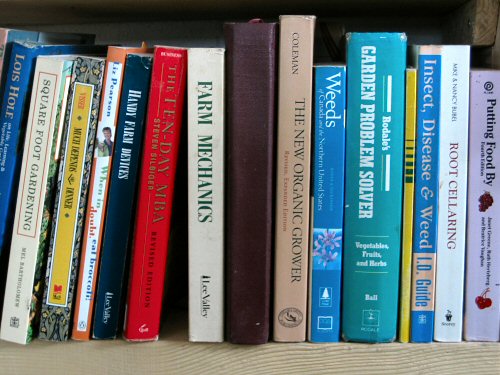
This is about a quarter of my farming bookshelf. I get a ton of info from the Web, particularly in winter when I have more time to cruise around online, but books I’m still most fond of. Let’s see what we have…
For one-stop shopping, you could take Rodale’s Garden Problem Solver and a bunch of seeds and that’s all you’d need to get started. This book wasn’t an early acquisition, I think I got somewhere into my first year, but it’s turned out able to answer just about every organic production question I’ve had, from cultivation to irrigation. It’s a little sun-bleached from trips to the field. And then, The New Organic Grower is probably required reading if you’re selling what you grow: practical and also kinda inspiring on the microfarm marketing side.