
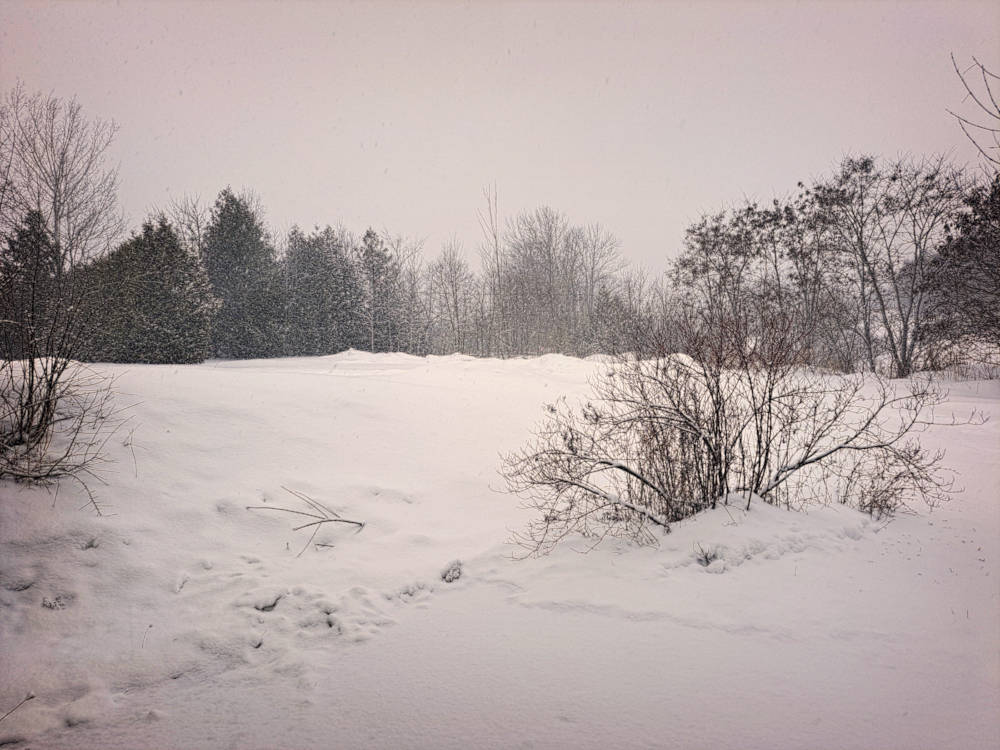
The new year’s view. Snow from week to week in winter is practically a 50-50 proposition in recent years. Go back a couple of decades, though, when weather was more regular and predictable, and this is what it was like around here for four or five months solid. The snow got deeper, the drifts piled higher, as winter wore on. It’s the exact opposite of veggies growing in a field!
2023 from the start
March field peek
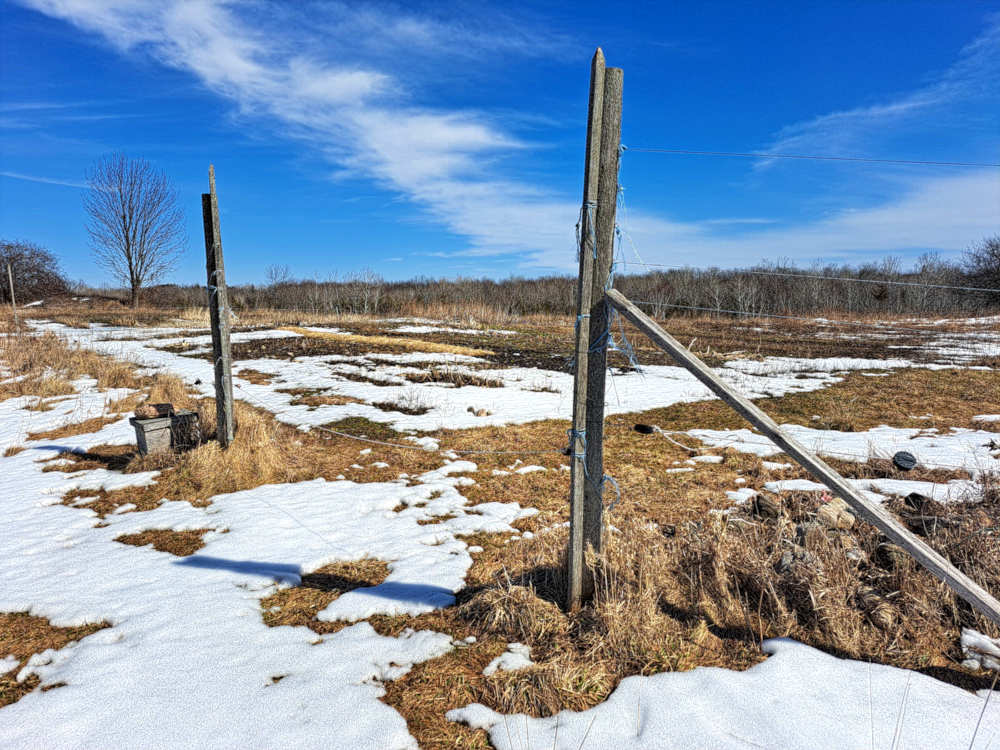
An early spring look at the field, as the snow recedes and the soil takes over. This is the exact moment when the new season begins for me. Seedlings are already growing indoors, planting plans put to paper, things are underway. Still, it only all makes sense out here, with the musty wet smell of decayed vegetation, my boots sinking into the sticky clay mud, wondering when it will dry out enough to work. I see the single strand of electric fence, all that stands between garden and pillaging deer, stayed up! (You can see part of it strung between the gate posts.) Some winters it falls and critters chew through it in a spot or two. Not having to fix it means one less thing to do!
Baby brassicas
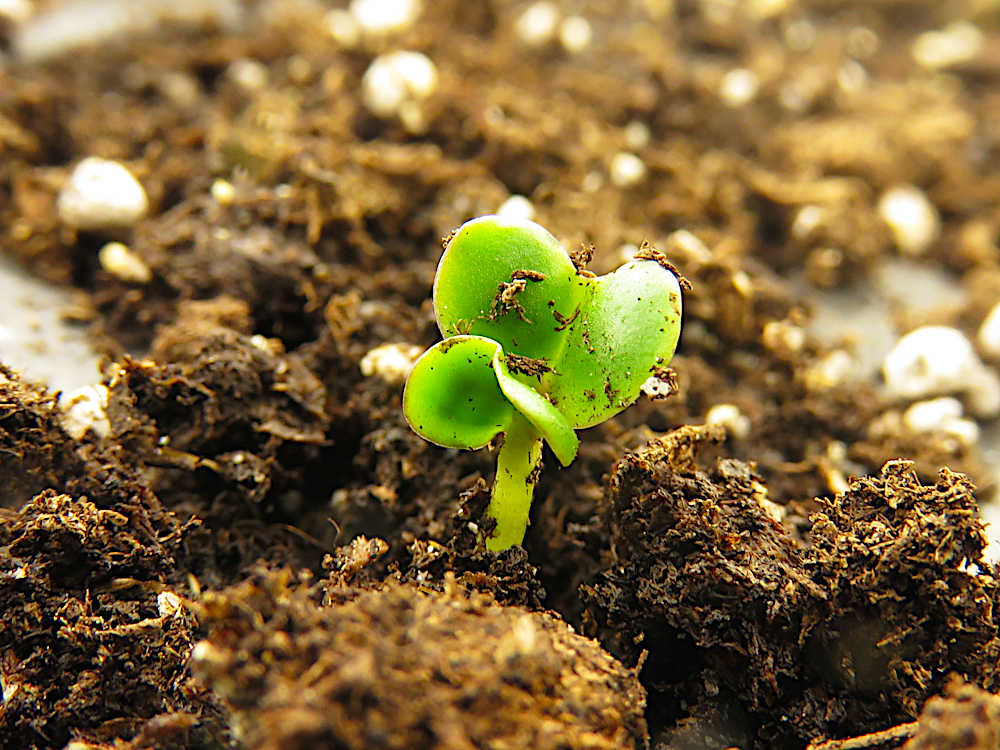
Broccoli? Brussels sprouts? I forgot to check the tray after taking the pic, so I can only narrow it down to one of the two based on size. They’re both in the quite vast garden veggie branch of the brassica family, that also includes cabbage, cauliflower, kale, mustard, bok choi, radish, lots more. The first pair of seed leaves look pretty much all the same. Next leaves take on their own look. At this point, they’re all similar, tiny and pushing up…
American crow
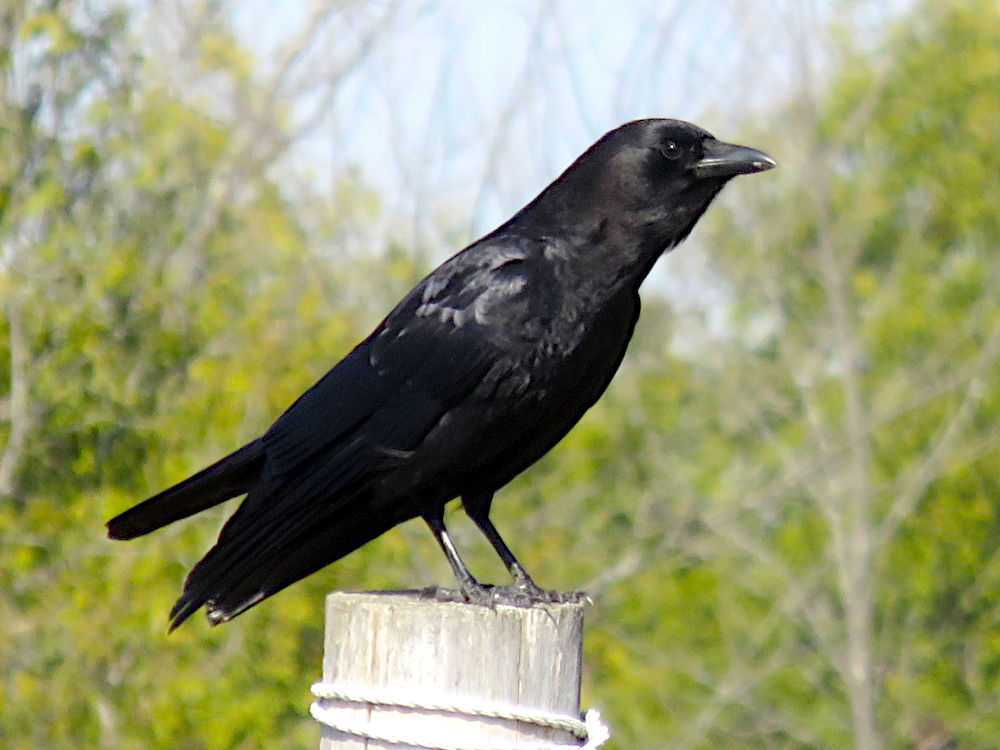
A crow on a post. This is called an American crow, I believe, to be specific. I kinda, well, not envy them, exactly, but would like to try it out. The flying and casually perching on high for a look around. I’m in the field for the better part of most days, and practically none of that time is spent feeling immersed in nature. It’s more about whatever the task at hand. When the work is repetitive, which it mostly is, thoughts are floating around in my head, or I’m listening to a podcast or music. All through the day, though, the everyday intricacies of nature nudge to the front. I’ll stop to gaze at a hawk lazily circling (and think about which veggie-devouring critter it might be eyeing for lunch). Or suddenly notice the busy hum of bees and sit back from weeding to watch them at work. Or be slightly startled by the way tiny zucchinis have grown to dinner-size literally overnight.
Onion sets
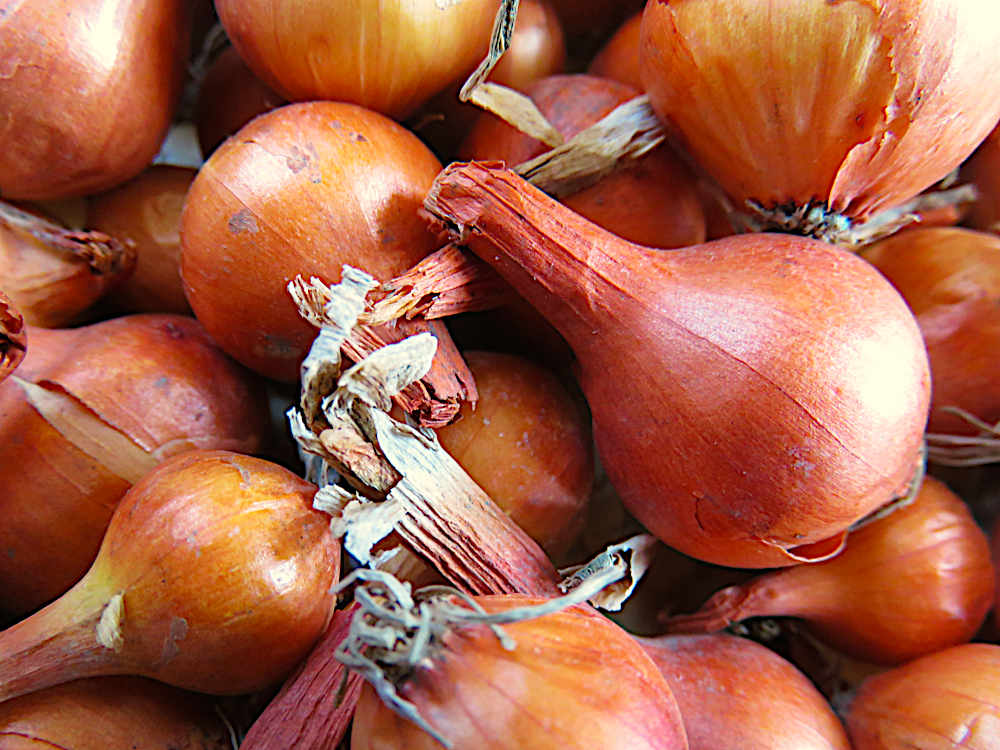
Tiny onions, grown the year before, pulled up early and dried out, are known as onion sets. They’re a bit of a shortcut. Pop them in the ground, and they begin growing again. Starting onions from seed gives you a lot more choice in variety, but it also means taking up indoor space under the lights to produce seedlings. When you simply want…onions, in the tiny market garden, onion sets is a quick and easy way to go!
Simple system
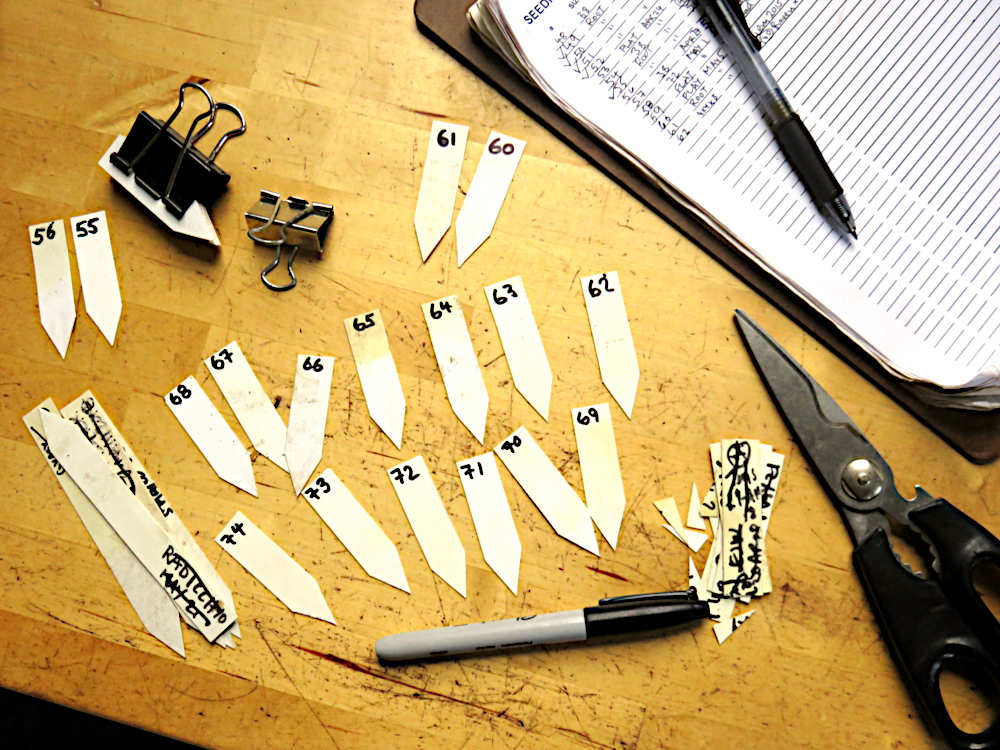
Nothing like improving a way to keep organized! This may look like some sort of craft-y looking set-up, when in fact it’s my new, state-of-the-art seedling tracking system. For years, I’d print the variety and seeding the on these tiny plastic stakes with a trusted Sharpie fine point, and stick them in the plug sheets. You can see the old approach on some of the stakes I’m reusing (old-fashioned recycling). Recently, I started instead to use a number code, writing the variety, date, and notes on a form I printed up. Why the change? Who knows, it just suddenly seemed like the thing to do.
It’s so much better! With only a number to read, the stakes can be half the height and don’t stick up and get in the way. It’s also a lot easier to see what’s going on overall by looking at the sheet. I always kept a list anyway, but now I’m doing half the printing and labeling work. I can also reuse the numbers season to season. The biggest advantage is psychological: I find that, when doing repetitive manual work, like seeding a few plug sheets, the less steps, the smoother the process, and less mental resistance. Rather than find a clean stake, print the info, pierce the plastic covering the plug sheet to stick it in, and rewrite the info on paper, I just insert the next number at almost soil level (no holes in the plastic wrap covering) and fill out the form! If this doesn’t resonate with you with a feeling of simple satisfaction, well, I guess you never had to keep track of a bunch of seedlings! :)
Bonus onions!
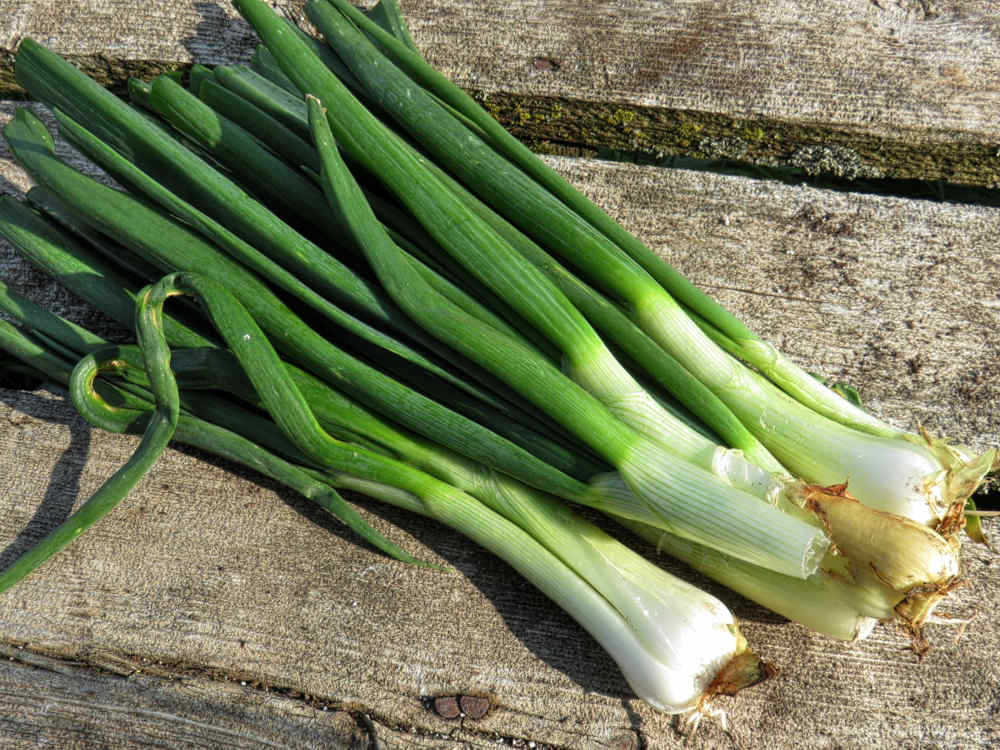
Leftovers from the previous season can turn into a delicious spring surprise! These onions grew from ones that were overlooked during fall harvest, and in a spot that hasn’t yet been tilled. There’s an official name for this: volunteering. Strictly speaking, I think a volunteer plant means it comes from seed dropped by a previous crop, or carried in by wind, birds or otherwise. These onions are new growth this year, from mature onions left in the ground over winter, kind of like leaves coming back on a tree. In any case, I think of them as volunteers, but mostly as a tasty treat.