
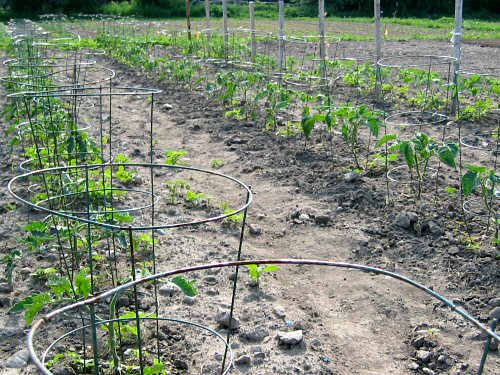
Prune, sucker, stake and cage—there’s a lot of (brutal-sounding!) stuff to do with tomatoes. On the other hand, as I’ve done in past years, simply by not having enough time to support them all, you can let ’em sprawl. I’ve always wanted to have the toms neatly assisted by the basket-weave method. This involves pounding in stakes every second plant (maybe every third would also work), then weaving twine in and out, in front then behind every other plant in one direction, then back again, weaving the opposite way, this done every 12″ or so of growth. This way, each plant is then supported by twine on both sides. You also have to prune and sucker (remove the shoots that grow at the intersection of new branch and stem), so that you have one main stem. This year, we should have several beds set up this way. There are also around 250 home garden-style tomato cages, which are quick, but don’t provide that much support when the plants get heavy. An advantage of caging: you don’t have to be as strict with the suckering. For at least a few plants, I’d also like to try caging with cylinders made of 6″ mesh concrete reinforcing wire, a heavy duty (and fairly expensive) approach… This year’s mix of methods is underway. More as it happens!
tomato
Late frost warning
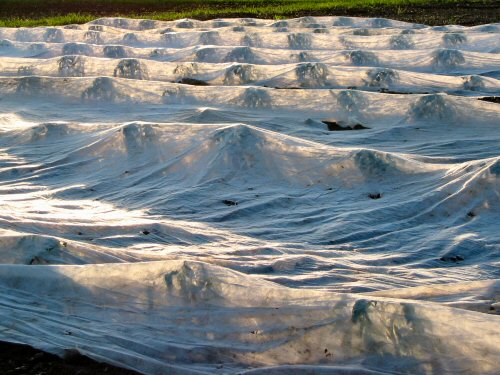
The frost warning for last night didn’t come to anything, but it’s on again for tonight. Yesterday, we covered about 500 tomatoes, some of the peppers, eggplant, and beans, and even the basil. I don’t really think there’ll be a deadly hard frost, so this is only partial insurance. Covering half the field seemed a little much. Here, the tomatoes are somewhat safer than if they were exposed, but the delicate tops are taking a beating from the cover, and if it does freeze up, frozen dew on the row cover fabric will toast the parts of the plants directly in contact. It’s a rough little bit of weather insurance. It’ll be great to have it over tomorrow. Cross fingers!
Tomatoes to the field
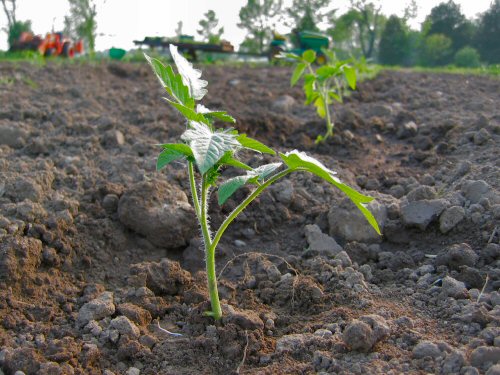
Go team… Set out another 400 tomatoes today: add a fistful of compost, bury to topmost leaves, water in. Along with the peppers and eggplant transplanted yesterday, most of the early seedlings are now in. There is still a lot to go, but it’s all coming along…!
Tomatoes go in
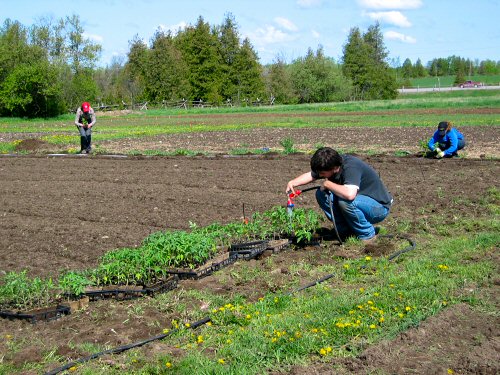
The first of the tender, warm season transplants—tomatoes—hit the field today! About 175 seedlings went in: Juliet, Striped German, Stupice, Emerald Evergreen, Mule Team, Yellow Stuffer. On the transplant team: Conall, Sherry and, new to the season’s crew, Jo. Compared to doing transplants alone or with one other person (my experience so far), this was quite the operation. Teamwork!
Juggling the weather and part-timer scheduling, I took a bit of a risk transplanting today, with patchy frost forecast for tonight. Still, the plants have been through highs and lows in the greenhouse, row cover will help, and tomatoes have…never let me down. I’ll be up at dawn to see how it went. Everything’s a gamble!
More seedlings to the greenhouse
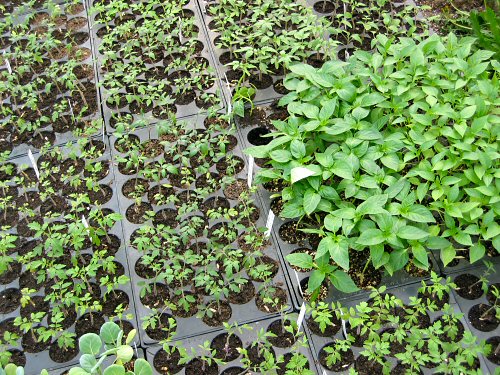
The spring seedling starting days are rapidly winding up. Moved about half of the remaining trays from the Milkhouse to the greenhouse, including most of the experimentally late-started tomatoes. Based on the marginally useful long-range weather forecast, I’m aiming to begin the main field transplants around the end of this week…
Tinier tomatoes
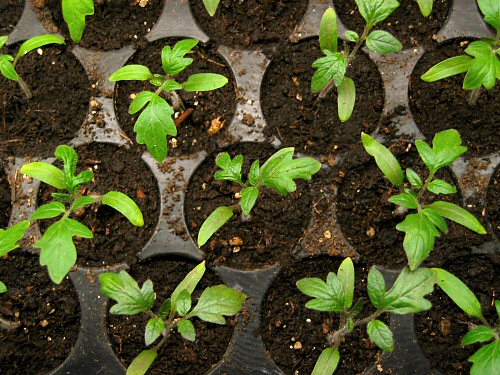
Big experiment. The last 200 tomato seedlings were started only three weeks ago, way late compared to starting dates in the past. They were also quite crowded in 200-cell trays. Now, I’m transplanting them to 38-cell plug sheets, maybe a little over half the volume of the usual 3″ pots. The experimental part is whether they’ll produce as fast as the rest, which were started earlier and are now in bigger pots. I suspect so (or I wouldn’t be trying it!), but you never know. You can get only so much info and advice before you just have to see for yourself (I’ve read that only special extra deep pots makes a difference, a few weeks of extra growth before transplanting doesn’t). I think I’ve been spending too much time producing seedlings that look great if they were for sale, but are unnecessarily big for setting out in the field. If this works out, I’ll save a ton of time next year.
Off to the hoophouse
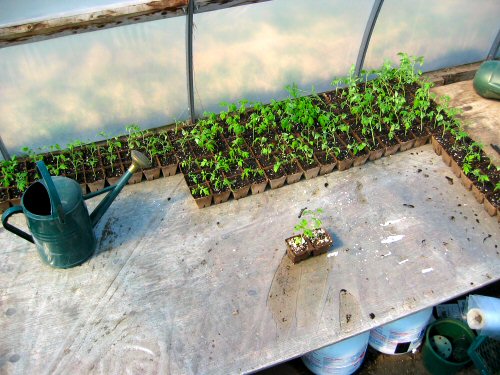
The first set of tomatoes is now in the unheated (but heatable!) hoophouse. They’re freshly installed in 3″ Jiffy pots (peat pots that can be planted), watered in, and awaiting the first night’s cold. It’s supposed to go down to 3°C (37°F), which isn’t bad, but it’s always chillier in the field than in the forecast. Peeking out from under the table, two fat little propane tanks: round about midnight, I’ll be on temperature patrol, ready to fire up the propane construction heater if it looks like a freeze. Working the night shift. Farming after dark!