
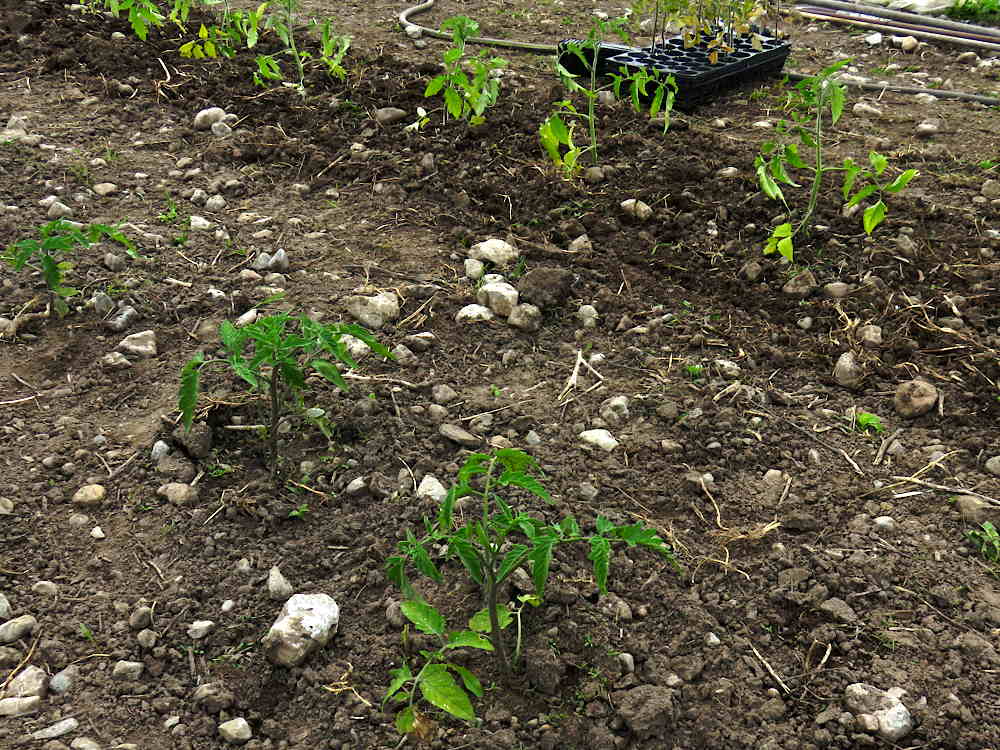
Here it is, the final phase of the tomato pot size experiment: side by side and in the ground. It’s a little hard to compare, so far apart and in this weird semi-overcast sunlight. The deep pot toms across the way went in late yesterday, and the plug sheet seedlings, up close, were transplanted 10 days ago. It’s a bit of an odd match-up for an experiment, but this was all an afterthought. The plugs have a big headstart in getting fully rooted, while the potted toms are starting in pretty much twice as big, with a lot more root mass. And they’re off…!
transplant
Potatoes settle in
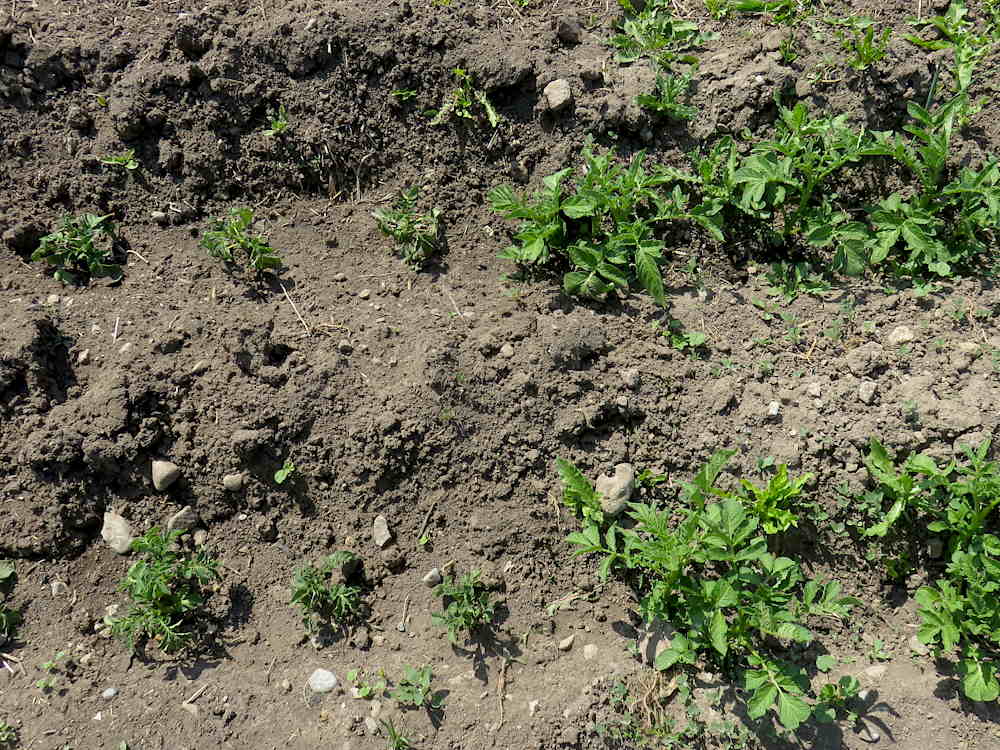
The volunteer potatoes from elsewhere in the garden, dug up and transplanted a couple of days ago, sit side by side with the original settlers in these trenches. Guess which! The transplants seem to be doing fine, but the directly overhead high-noon view is the harshest. They do look a little huddled and scrunched, not like the expansive riot of green growth of their neighbors. The roots of the new guys haven’t reestablished enough to pump a full measure of water to the stems and leaves, that’s my simple guess. Give them time to settle in.
Tomatoes just want to root
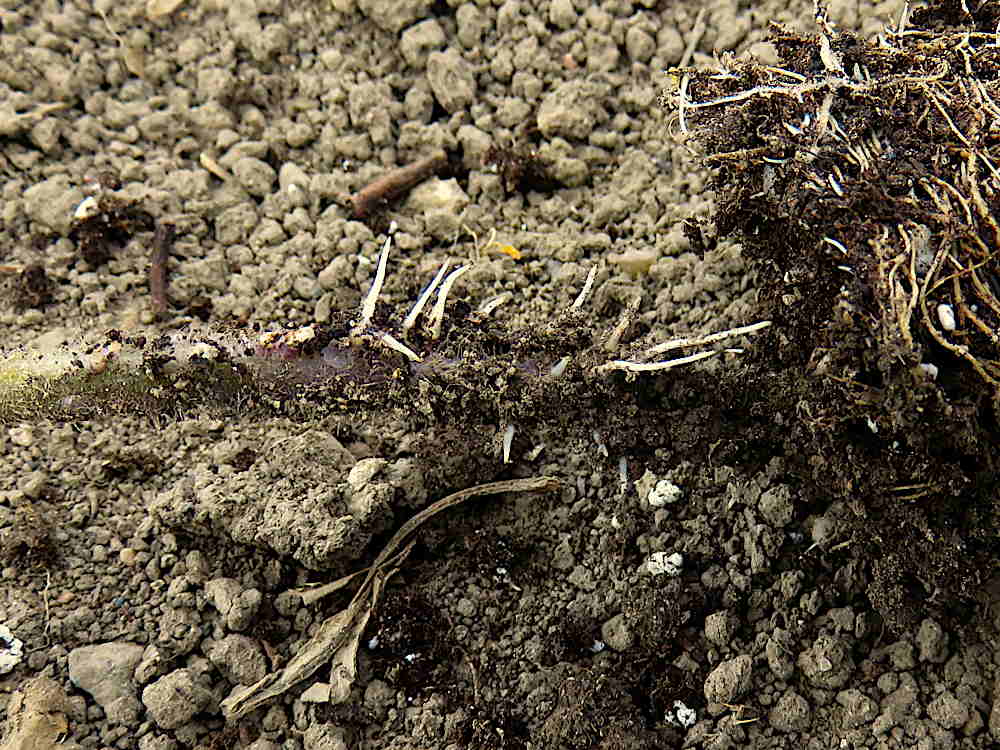
Most of us don’t spend much time at all looking at plant roots. Meanwhile, the things going on underground are quite wondrous. Take this humble tomato seedling, demonstrating a special power: adventitious rooting—a catchy way of saying they can grow new roots from their stems. Tomatoes, potatoes and peppers, all relatives from the nightshade family, have this ability. And? Well, if you have leggy tomato transplants, stretched from too much time indoors in tiny plug sheet cells, this ability allows for a neat trick. You can dig a little trench instead of a hole and lay the seedling on its side. Then, bury the root ball and most of the stem, gently curving up the last bit. Ta-da, a sturdy little transplant. I did this for a few leftover tomatoes two days ago. Today, I found one snapped off—wind? rabbit?—so I pulled it, revealing roots that had already started pushing out. It’s just another little bit of all that goes on in the hidden part of the garden!
Winter squash green
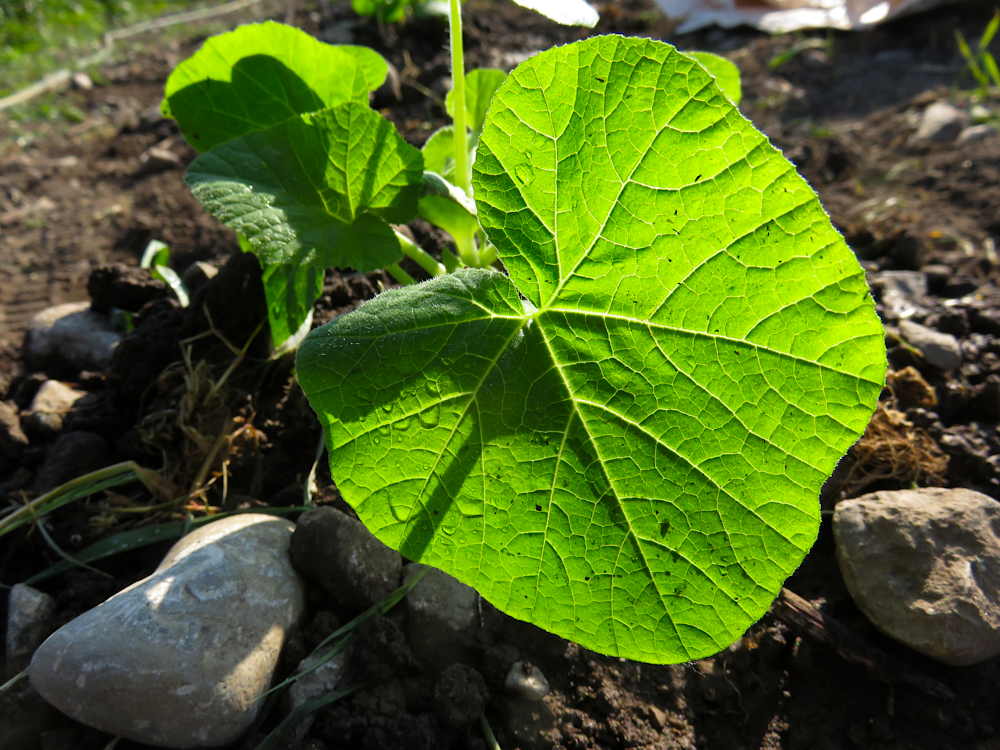
Broad, fast-spreading, richly green winter squash leaves, especially in their first few weeks, are kind of the emeralds of the vegetable patch. They’re poster plants for healthy garden growth. Unfortunately, that charm is hidden under row cover until they get well-established, to protect them from cucumber beetles. At flowering time, the cover comes off so bees can feed and collect pollen, and pollinate in passing all those future butternut and acorn squash. Here, with the cover pulled back for hand watering and a bit of weeding, you can see how squash do a great job of self-weeding by creating lots of shadow that keeps the competition down!
Establishing peppers
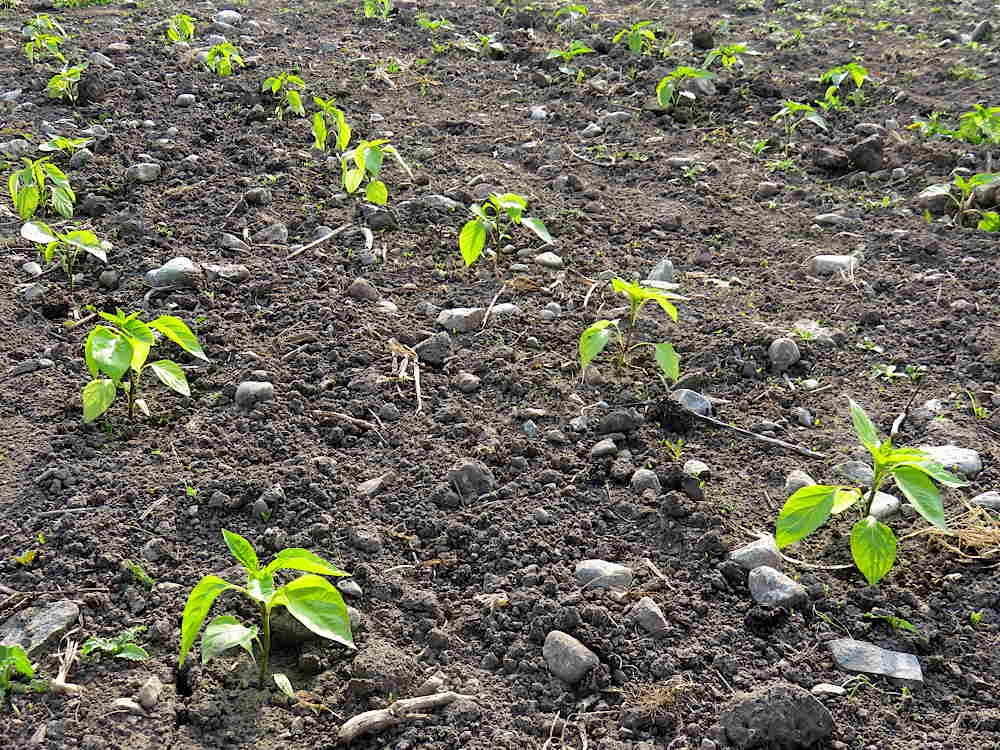
Pepper transplants, backlit by the late afternoon sun, are still looking quite pale and somewhat fragile, but upright and healthy, after a couple of weeks. This is the veg garden equivalent of the suspenseful, hold-your-breath-before-the-big-reveal stage that happens here in June. Transplants and directly seeded crops are showing steady growth, but impatient eyes find it…slow. I think of it as the creep phase. I first heard the gardening “sleep, creep, leap” rule of thumb to describe, not vegetables, but how bamboo transplants get established. First year, nothing to see as they set down roots. Year two, some modest growth. Then—ta-da!—in year three, they shoot up. While none of the veggies in this field follow that three-year plan, I find myself thinking that way about how the crops grow over the season. Waiting for the leap!
Tiny jungle
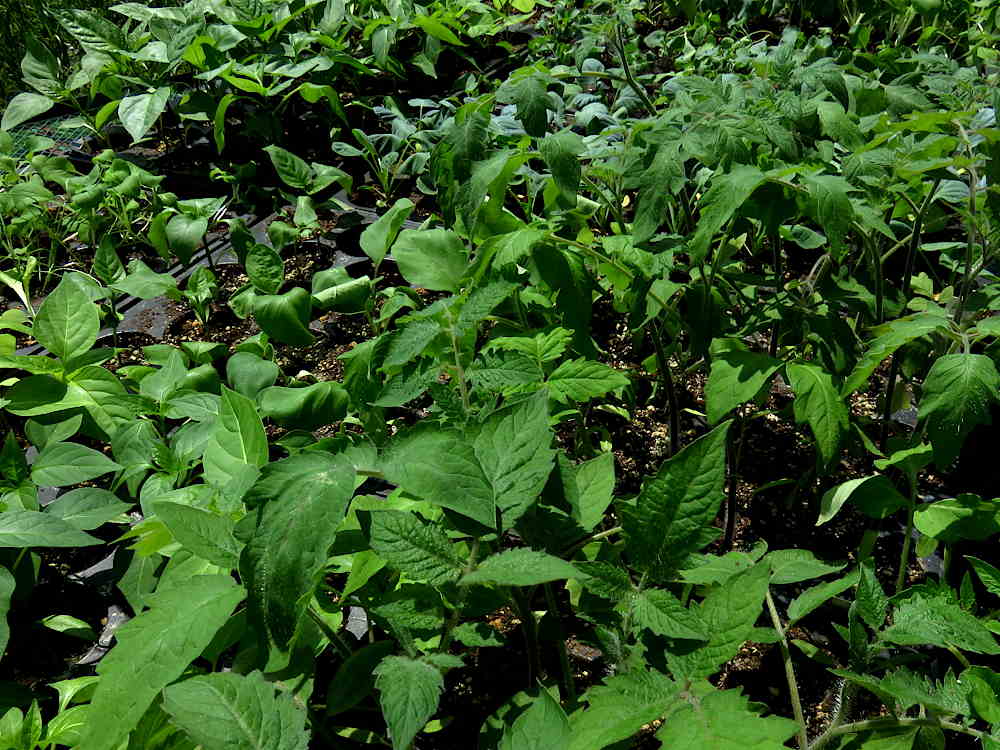
Hardening off seedlings on a mainly sunshiny day. I can see tomatoes, peppers, eggplant, Brussels sprouts, and bok choi. Some are for now, some a little down the line. I’ve been transplanting steadily bit by bit, rather than all out at one time, as a hedge against erratic weather changes. Same with direct seeding. It’s another experiment, and given our short season and the generally unpredictable weather, it’s risky. Then again, depending on the crop, I’ve seen plantings a week or two apart more or less even out. It’s always a gamble!
Transplants love drab weather
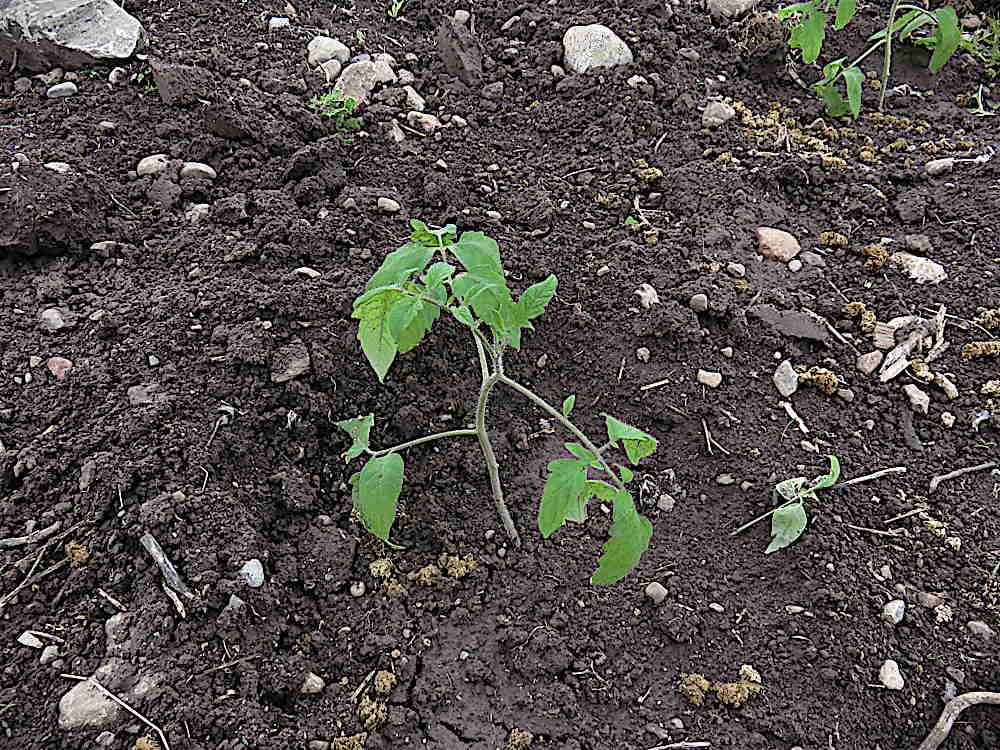
Transplants, like these tomatoes, do well in mostly overcast, even rainy weather for the first two or three days. Funny the way things in life can turn in an instant. One minute it’s put them in the sun, the next, welcome some cloud cover. My transplants start out under fluorescent light, a weak imitation of the sun: putting them out for a few hours, for at least two or three days, and back in to weaker light of the grow rack every night, gets them used to the sunlight. Once transplanted, though, they’ve got more to adjust to than sun. Their roots have been exposed and jostled. The nights usually get pretty cool in May, 20°F below what they’ve been used to. Maybe they sense the general vastness they’ve suddenly found themselves in, with a plant version of, “Oh my.” Whatever all is going on, it’s an adaptation. Full days of hot sun add the stress of having to pump more water into their leaves to keep from wilting. Although they’ll generally survive that sort of thing—as I’ve observed firsthand…—it’s easy to see the difference when the first few days have a good amount of cloud cover, and they really get rolling, stems thickening, the leaves turning a deep green. There are all sorts of ways, often way closer to ideal, to start seedlings indoors. For my simple, low-tech, rough-and-ready approach, this is how it seems to work!
In the photo: The little golden brown blobs scattered around are alfalfa pellets, used as fertilizer. They start of as hard pill-like cylinders, and expand to crumbly little blobs after being wet, then continue to break down as they join the soil food web.