
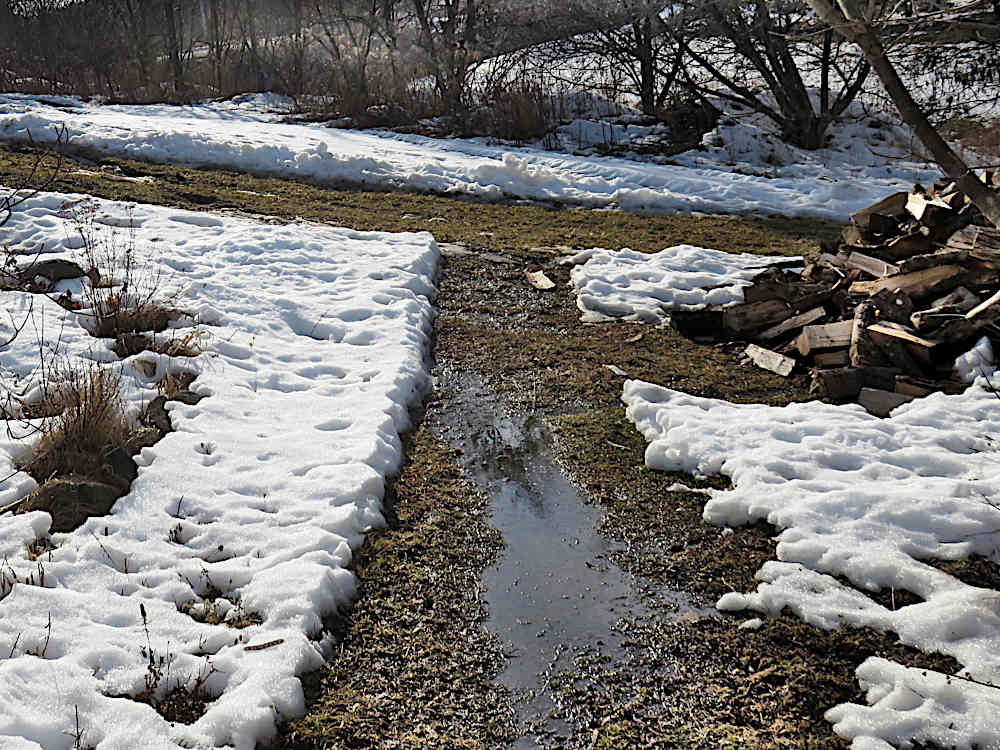
It looks messy in the outdoors. The snow is melting off again, the ground’s still frozen but the surface is mushy grass and squishy mud. Not the most pleasing, pretty picture, but now there’s a hit of real warmth in the air, that feeling you got as a kid waiting for summer. The days are gradually getting longer and the sun, old reliable, is rising higher in the sky!
2024 from the start
All the posts from 2024, in Jan to Dec order…
To winter or not to winter
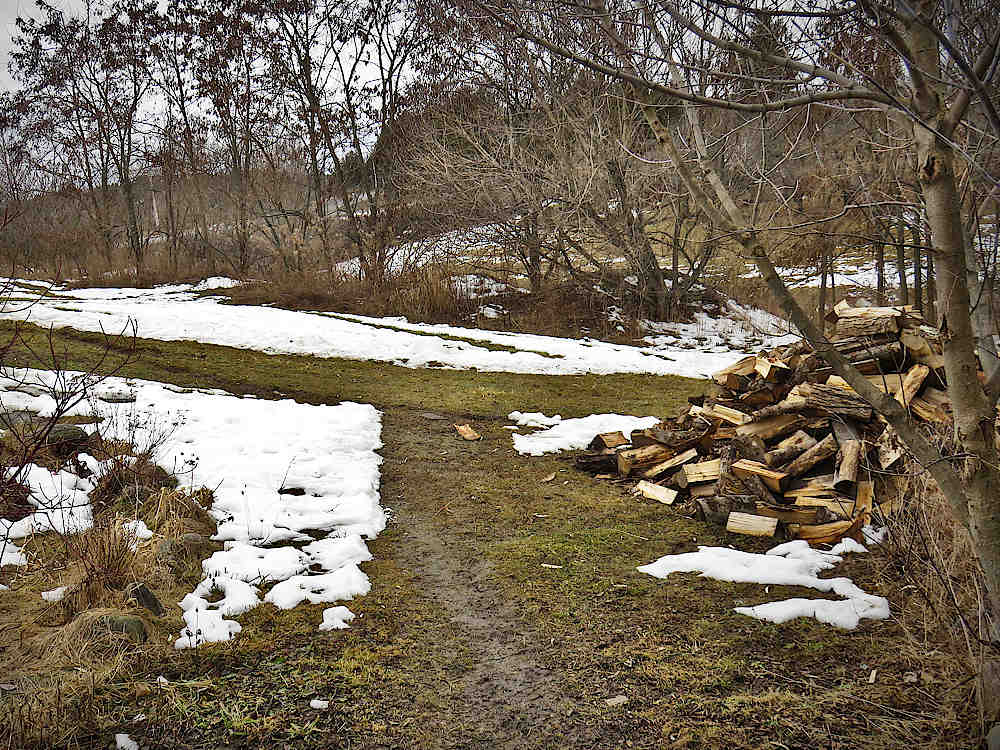
The snow is clearing pretty quickly. I haven’t checked the weather forecast for the next couple of days. It could go either way: all brown again, or…all white, again! We’ll soon see…
Firewood heap
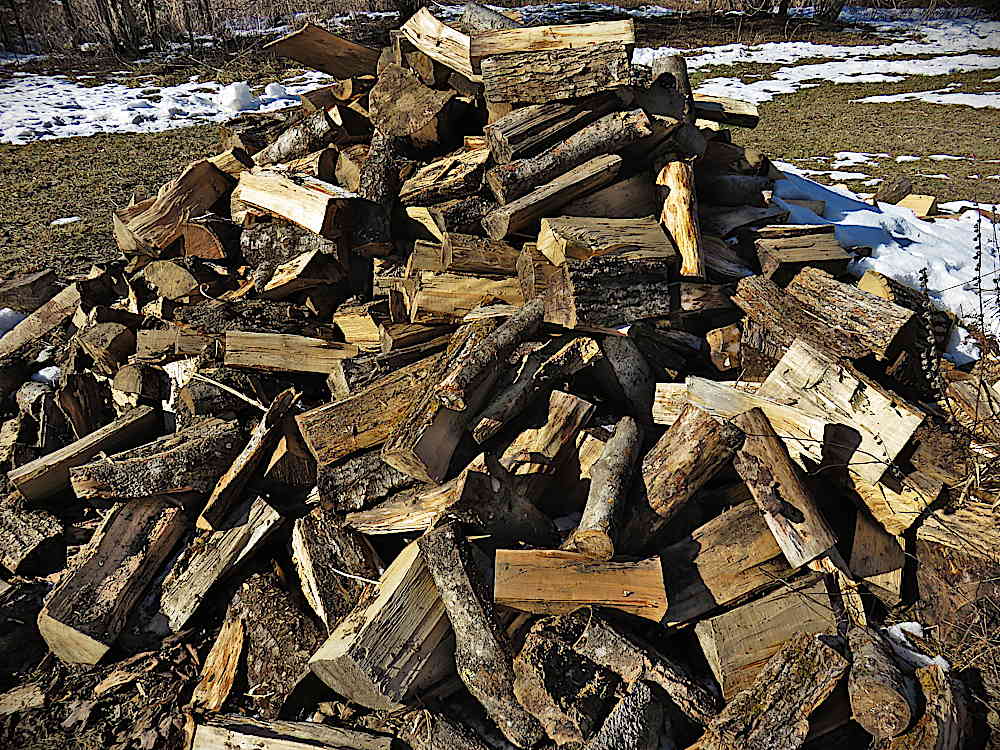
The last pile of firewood, hopefully enough to get through the cold weather. There’s more in another small stack, enough for a week or two, then this. It’s a motley collection, cut further north from here, from the zillion trees felled by that crazy windstorm of three-four years ago and hauled over. Different sizes of tree. Different species, mostly hardwood, but a fair bit of too-fast-burning softwood. Overall well-seasoned, lying around dead for years, and then cut and split early last summer. If it looks like “a lot”, you probably haven’t burned wood as a main heat source, when it’s below freezing day and night, the wood stove eats those big chunks like…bite-sized chocolate bars after Halloween. With the crazy weather, colder cold now seems to come only in spells, a couple days, a week at a time, then back to hovering around zero. We’ll see how the heap holds up!
Somewhat snowy
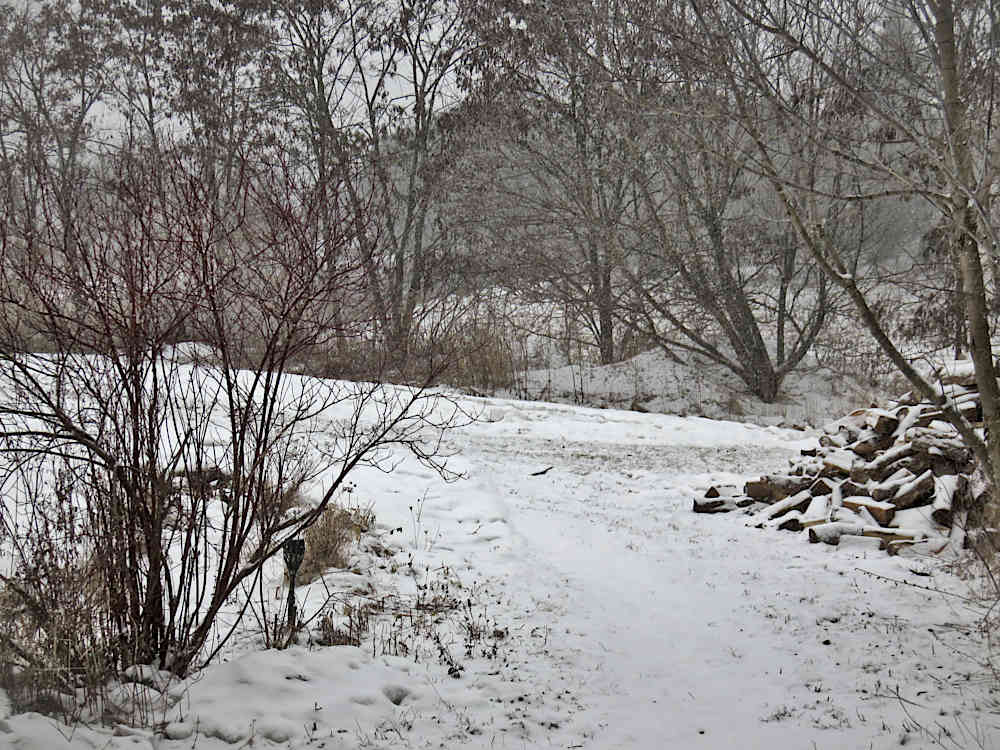
Back to bit of a traditional great northern winter look after a fair dusting of snow. It looks wintry, but you only get that old time winter feeling when it sticks around for months, with short days of freezing cold. Here, you can still see the grass pushing through. Cosmetic! :)
Upcycled food
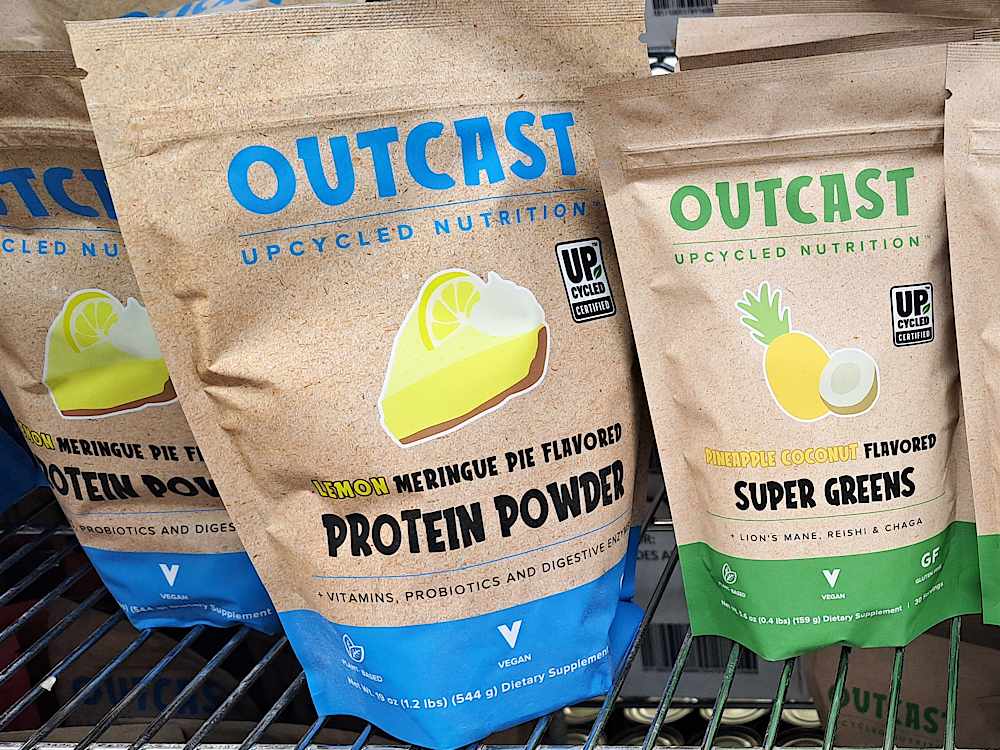
On my last stop-in at the luxury grocery discount outlet* around three weeks ago, the “upcycled” on these labels caught my eye. “Certified Upcycled”? Don’t think I’d heard upcycling applied to food in that direct way, but it made sense. It has an automatic eco-conscious, palatable ring to it that “recycled food” certainly wouldn’t. My immediate thought was that it referred to using cosmetically damaged and unsold fruits and vegetables to make things—damaged meat and meat scraps isn’t as appealing, and we already have hot dogs. I imagined the piles of veggies that at times went onto the compost heap on my tiny farm. I took the photo, figuring I might want to know more…
The big number that is hard to imagine is 35% of food goes to waste around the world. That’s the rough figure I see everywhere I look. Sometimes it’s 25% or 40%. In any case, let’s say, a third of all food is somehow made, then not eaten. How does that work? I finish a harvest, then toss a third of it on the compost heap? Every time I buy three bags of groceries, I immediately dump one in a bin conveniently located at the supermarket exit? There’s an oversupply of some food crop and boxcar loads get left unsold by the tracks? There are lots of ways food can get wasted, and they all add up. It’s one of these modern problems we have that’s so sprawled through supply chains, it’s hard to see a big picture of how we got here, let alone how to do something significant about it.
In that mix, we have upcycled food. Here, protein powder and something called Super Greens. Checking out the company’s web site doesn’t yield much info, and no surprises. Seems they gather various unsold crops and…process them. Assuming the nutritional quality is the same as non-upcycled, is the upcycled product cheaper to buy? Or is the main advantage the feeling as a consumer that you’ve done something good for the environment, for the planet? It’s easy, only a search or an AI buddy away, to get more info. For me, for now, I’m satisfied. Upcycled food means companies out there are making otherwise going-to-waste food into…more food. Got it!
*Luxury grocery discount outlet is what I call the local discount food outlet with a line-up that includes an everchanging assortment of big brand names and specialty organic labels. Great deals, around a third of the normal price or even less (I haven’t done actual price comparisons, but that’s what it seems like). Excellent finds aren’t guaranteed, but it’s always worth a stop. One of my all-time favorite scores: certified organic chicken gravy and brown gravy cubes, 50¢ for a box of four. I stocked up on soooo many! (I don’t think that much of the certified organic stamp in general, there’s all the lawyering and lobbying going on by the big food manufacturers to massage the rules, who knows what exactly it represents, but when it comes to processed products, and for 50¢, why not?!)
As the sun sets
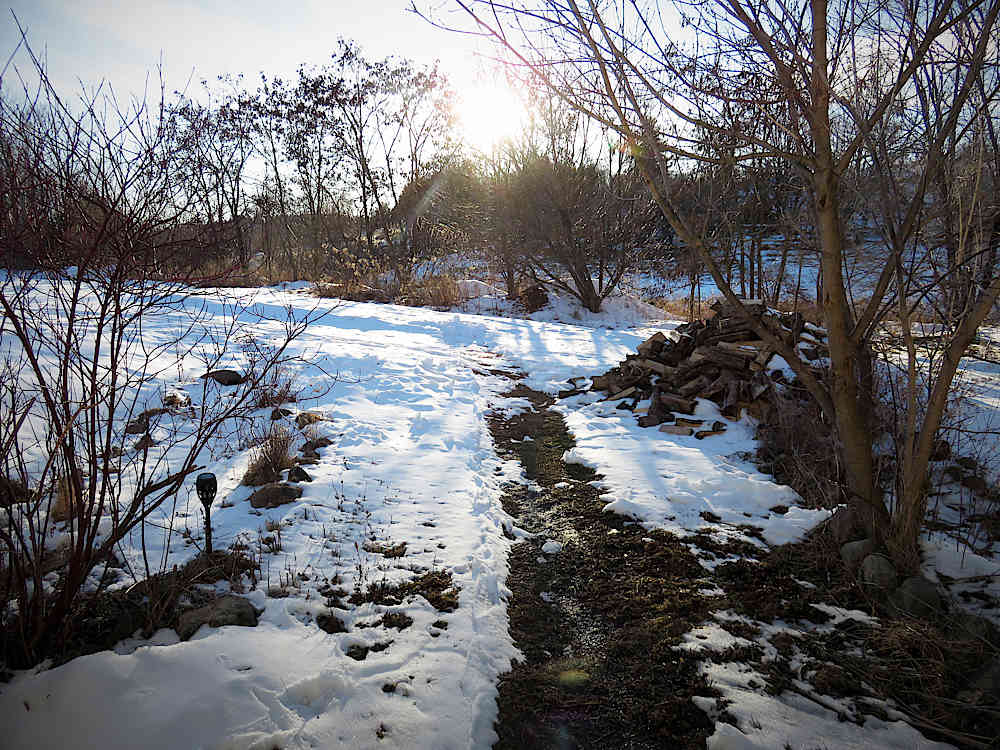
You can only come up with so many titles for the same photo, taken every few days, to show the ups and downs of the local weather. The sun is getting warmer, more head-on. That’s normal! Wondering when the fields may dry out enough to start working is still a ways off, six weeks. Before then, even if it seems like it’s gotta be summer, the risk of a cold snap, or a week or two of snow, makes it probably not worth getting such a super-early start. When will they ever get weather forecasting working like we want it to?!?
Temperature the old way

It’s around noon, and an unseasonably, pleasantly warm 62°F/17°C. This cheap old plastic analog thermometer has been hanging in a doorway for at least the last 10 years. It’s a quick and reliable way to see how warm or cold it is. No worrying if batteries are running down. No looking for the right angle to read the screen. Only this column of dyed-red alcohol—safer-than-mercury!—expanding and contracting, going up and down. The simplicity is soothing. The way it’s positioned, the afternoon summer sun hits it on one side, causing it to shoot up. Otherwise, all through the winter, it’s shaded from the direct sun, and it gives a roughly accurate reading of the air temperature, 24/7. Why not reposition it so it’s always shaded? Checking it for the temperature on a hot summer afternoon hasn’t seemed to be a big concern. Not sure why!
For tiny farming, I’ve used a few electronic weather gadgets, alongside analog devices like the trusty old min-max thermometer, and a plastic weather vane/thermometer/rain gauge combo that looked like a toy, that I stuck on a post. The thing about seeing the temperature in real-time, it’s a little late to do anything. It’s mostly about satisfying curiosity. On the other hand, min-max thermometers, that record the lowest and highest temperatures they hit until you reset them, they’re super-useful tools, for example, to monitor how cold it gets in the greenhouse at night and adjust! And soil thermometers, now they can come in handy!
Weather forecasts are another story. A day or so out, I’d say they’re around 60% right maybe a bit more (I could be off, it’s just a guess). Overall, it’s hard to tell how useful they actually are, though if you’re in tornado country, you may have a different view! Since yesterday, there’s been a weather alert on my phone. Not color-coded in alarming red and yellow, so far this one is only grey. Still, it’s a “warning”, not the milder “advisory”… The temperature may suddenly plunge in the afternoon, with heavy gusting wind, and the chance of instant ice on the roads. A cold front is coming, so, I guess, beware…