
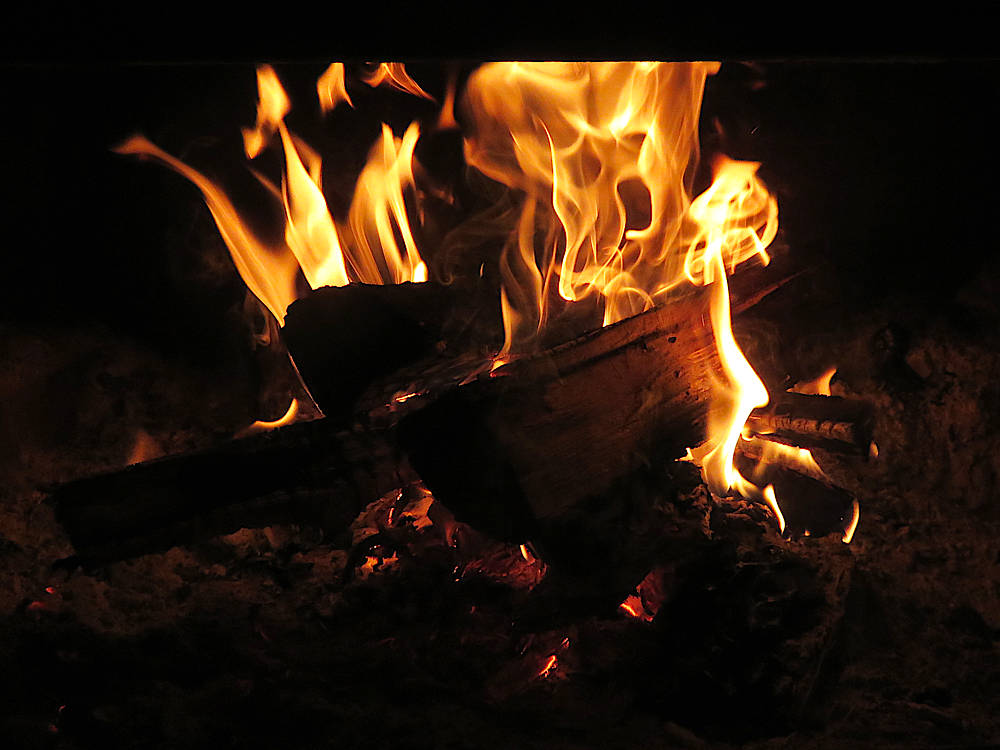
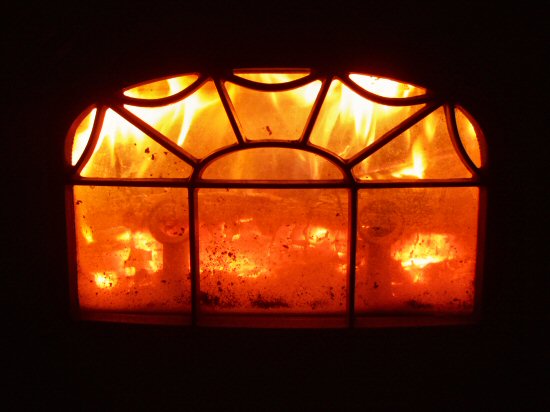
Enjoying the flames and the slowly building heat from starting the wood stove for the night. Guess this is saying goodbye to the semblance of winter we’ve just had. Wood heat and tending the fire seems best enjoyed when it’s so cold outside, you really bask in the indoor warmth and outdoors seems like a harsh alien force trying to get in. This year, it’s hardly ever gotten so chilly inside that a decent sweater wouldn’t offset if you had to make do. Of course, the wood stove did bring a huge level of…comfort! Here, it’s in what I think of as stage two of firestarting. The kindling and smaller pieces have done gotten things started. Now, medium pieces are kicking in. The air vents are at least partially open, so fire burns hotter and faster. After 15 minutes or so like this, it’s burning nicely, and there’s the start of a bed of hot coals. Then the full-size chunks go in, the vents are closed, and another round of wood heating is underway. That’s my method with this particular stove, and it does seem to work!
wood stove
Firewood heap
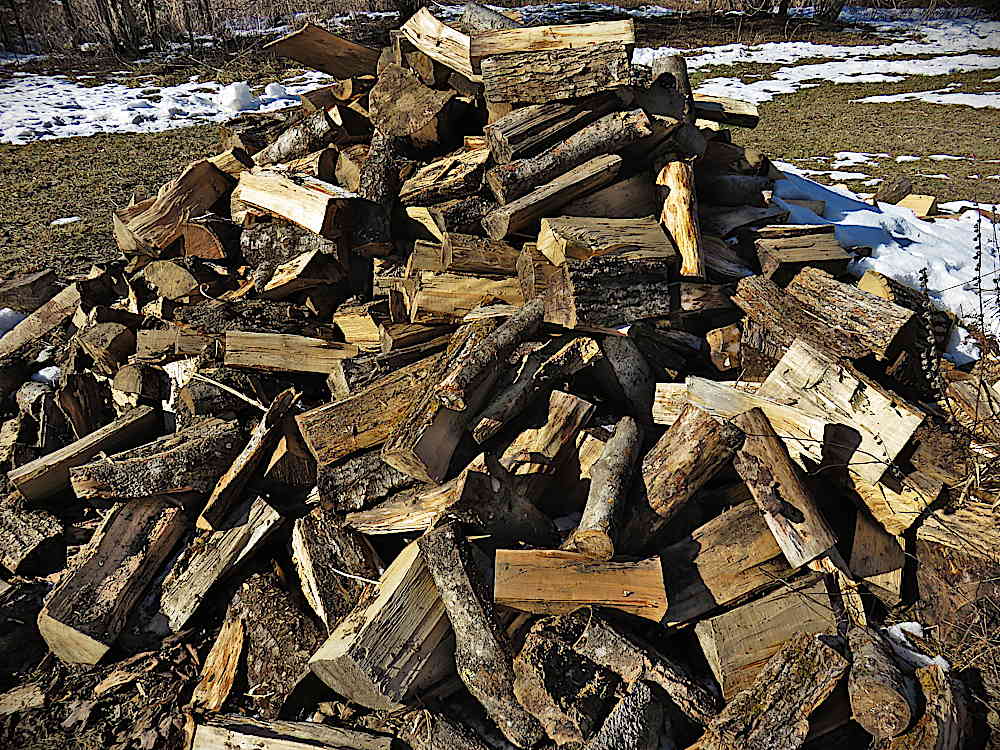
The last pile of firewood, hopefully enough to get through the cold weather. There’s more in another small stack, enough for a week or two, then this. It’s a motley collection, cut further north from here, from the zillion trees felled by that crazy windstorm of three-four years ago and hauled over. Different sizes of tree. Different species, mostly hardwood, but a fair bit of too-fast-burning softwood. Overall well-seasoned, lying around dead for years, and then cut and split early last summer. If it looks like “a lot”, you probably haven’t burned wood as a main heat source, when it’s below freezing day and night, the wood stove eats those big chunks like…bite-sized chocolate bars after Halloween. With the crazy weather, colder cold now seems to come only in spells, a couple days, a week at a time, then back to hovering around zero. We’ll see how the heap holds up!
Firestarter
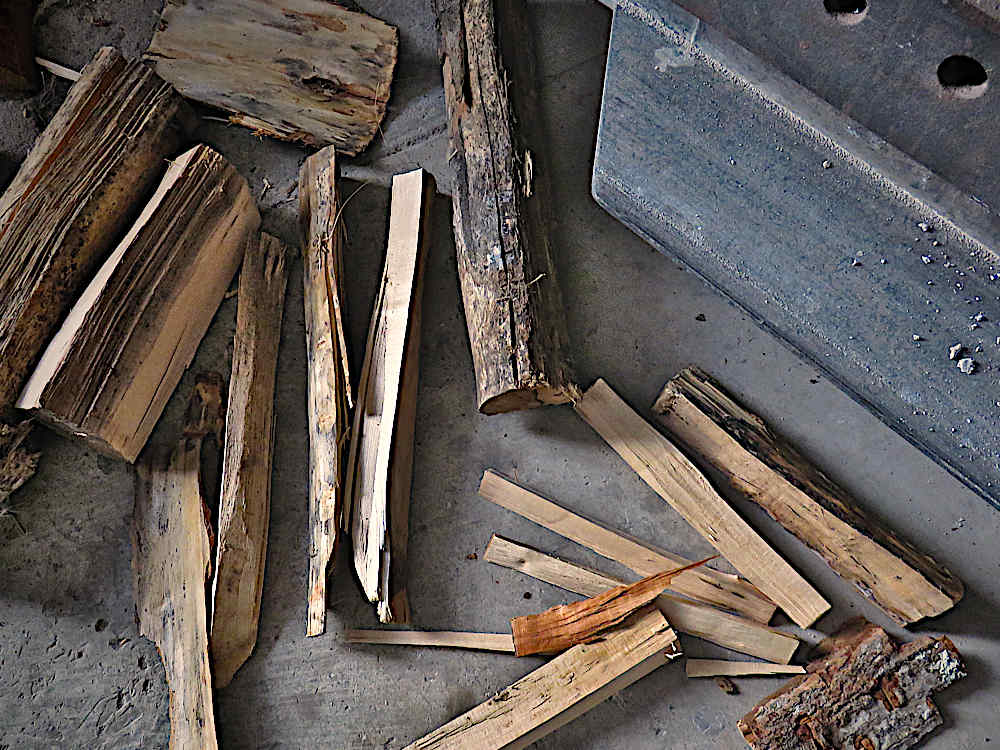
Wood heat has been the winter way around here for the last few years. The old wood stove, and stacks of firewood. In cold snaps, where it stays well below freezing, day and night, the fire is always burning. In the more usual dramatic temperature ups and downs, the fire is often left to run down overnight, and a new one built up early evening. I’ve become a little obsessed with firestarting using the least amount of paper and kindling, and only one match. I don’t suppose you could call that a skill, nor an art, but some kind of a game! I enjoy setting up for a dominos falling effect, but with fire. The easy-to-light, fast-burning paper lasting long enough to ignite the smallest pieces of longer-burning wood, which in turn start the next larger pieces, the bigger chunks get, the more steady, sustained fire it takes to set them ablaze. Idea for a video game?!
Bush cord meter
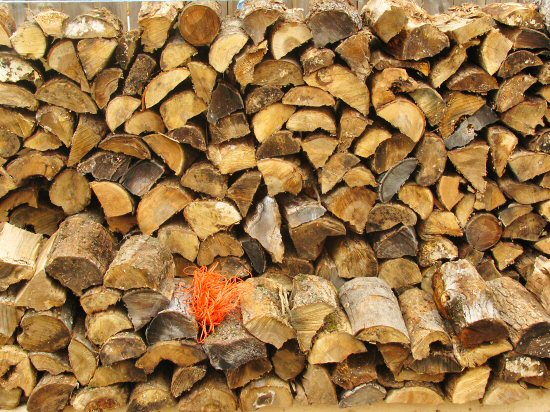
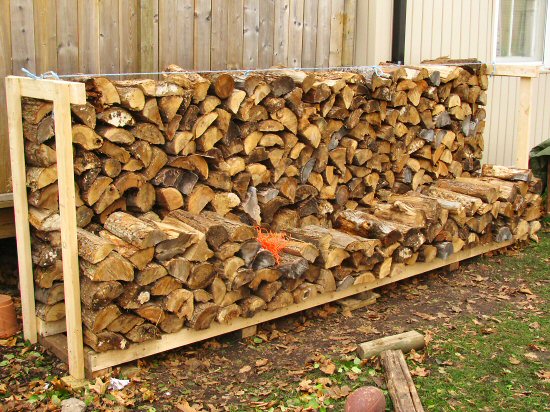
Our first wood order of the season arrived a week ago, just as we ran out of the leftover from last year. It’s a bush cord. At least, that was what was ordered, bought and paid for. One bush cord of well-seasoned hardwood, in 16″ pieces. The wood is great on the seasoning end, but when I finished stacking it today, in our custom-built, holds-one-bush-cord rack (below), even taking into account the wood we burned over the last week, we are CLEARLY WAY SHORT!!
I’m kinda shocked at how short we are. When I looked into what exactly a bush cord comprises, the definition seemed pretty clear: 4’x4’x8′ of tightly stacked wood. A volume measure. With 16″ pieces, that equals one long 24′ row, 4′ high. “Tightly stacked” is a little vague, but after asking around, and looking at photos, it seems like common sense: you don’t fit the wood together like a jigsaw puzzle, just stack it nice and solid. OK.
I built a simple rack out of 2x4s that should fit…exactly one bush cord. Of standard 16″ pieces. It’s kind of a bush cord meter. To fit in the narrow side yard, the rack has two 12′ rails, with 4′ high ends. I stacked it reasonably solidly. And we seem to be at least 1/3 (that’s 33%!!!)…short.
The firewood guy came recommended, he’s apparently been doing this for decades, how could this BUSH CORD be so off? It’s a mystery. I’m new to firewood, maybe the counts are loose, but this is extreme. I’m on the phone…
Wood heat
Nights are getting chilly, and a few days ago, in the evenings, we started lighting the wood stove at Kendall’s house in town. It takes some skills. Paying attention to the mechanics of heating was never part of the mix in my few years of winter farm living. It was either central heating by oil furnace, or with electric space heaters, and both ways, really no different from city life convenience: adjust a thermostat or click a switch, pay the bill, and that was that. Pretty mindless.
Here in town with Kendall, natural gas central heating is the main heat source, but she offsets that as much as possible with good ol’ wood heat. So, oddly enough in my ongoing tiny farming career, it’s in an urban setting that I’m first learning how to build and feed a fire, adjust the air intake, get a feel for the draft in different weather conditions, safely dispose of the ashes and embers. And, of course, there’s the wood: bush cords and face cords, hardwood and softwood, well-seasoned vs. green, splitting and stacking, the never-ending quest for good kindling…
Just as your awareness of weather explodes with attention to detail and a certain urgency when you go from city supermarket life to growing food, the same thing happens when you become intimately involved with fending off the winter cold (especially here in Canada, where you can literally freeze to death!). Only a few days of casual evening fires in relatively mild temperatures, hovering around freezing, and already I’m hooked! So much to learn, so little time… :)