
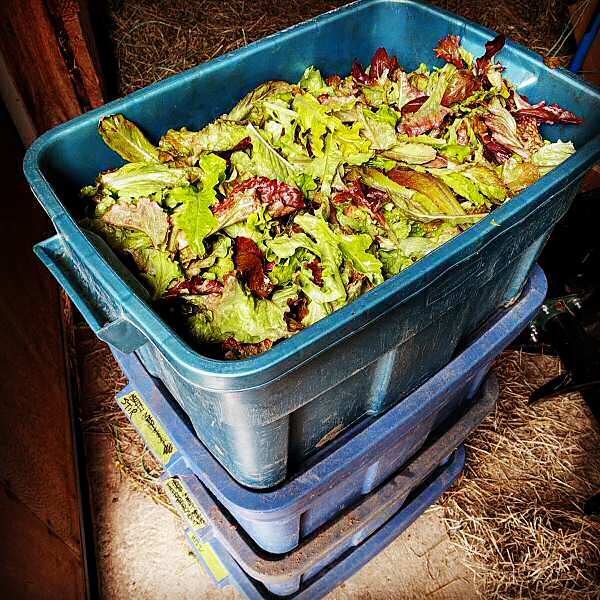
Friday harvest and the main green going right now is LETTUCE, appearing as small leaf salad mix. We’re waiting to do new greenhouse seeding – it’s still way wet in there – but a bunch of lettuce transplants are already in, some bok choi, too. So the season’s ramping up and the weekly look around to see what the weather has delivered for market…begins!
Harvest
First winter harvest
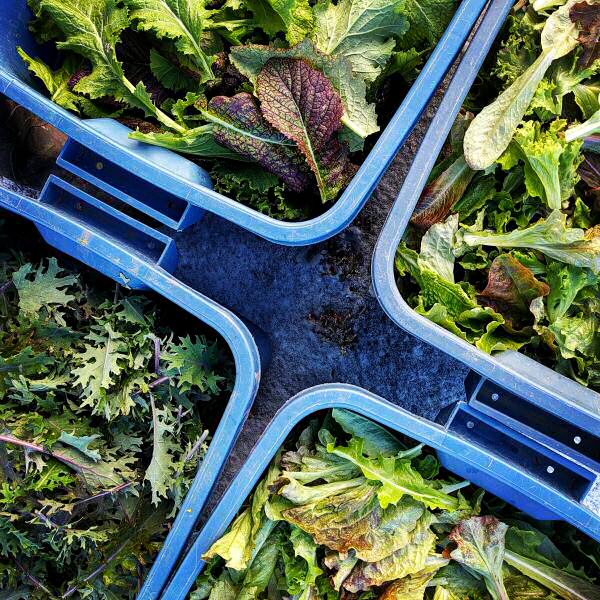
Yesterday’s harvest that went to today’s farmers’ market, my earliest market start by almost two months! From the unheated greenhouse: kale, green and red mustard, and lettuce mix times two. Harvest conditions: -2°C outside, a perfect-working-weather 10°C inside. At the end, the sun came out and it started to get sweatingly hot under a T-shirt, shirt and fleece. But, already done! No rinsing, just covered and into a cool room for a 6 a.m. pick-up this morning. It felt a little odd, starting the year’s Saturday markets so early, and indoors—this fall, if all goes as intended, weekly market will cease to end for winter and become instead a fully year-round thing…
Early share
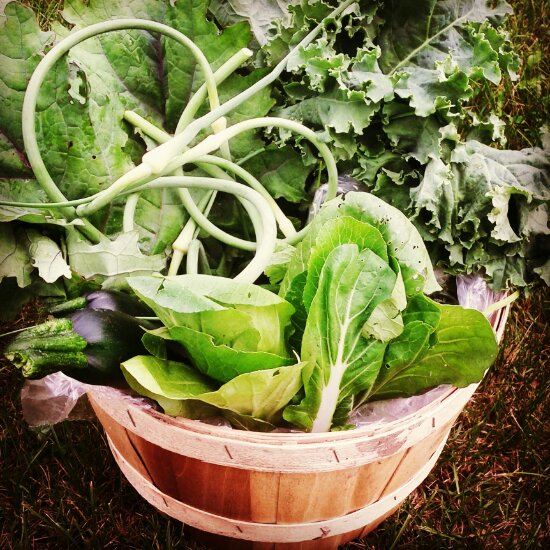
This week’s harvest basket, still greens, mainly: young curly and flat leaf kale, baby bok choi (autographed by a few flea beetles that made it under the cover), our Zippy Mix (today’s version, mustards as always, with mizuna and some baby Chinese cabbage), 4-lettuce mix (out of sight), plus garlic scapes and baby zucchini. Pretty simple. Not bad… We’re not doing CSA this year, but we do have a handful of share commitments!
May salad
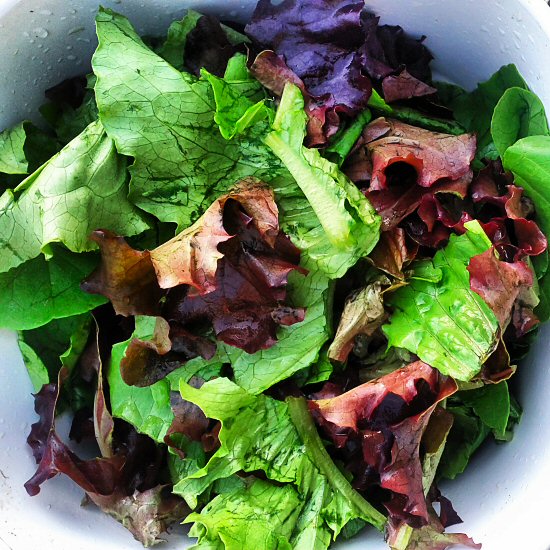
No food styling, just salad! The first grown-this-season greens – romaine, butterhead, oakleaf/salad bowl letuces – picked by raiding half-grown plants for a few leaves apiece. Dinner.
Brassica greens galore
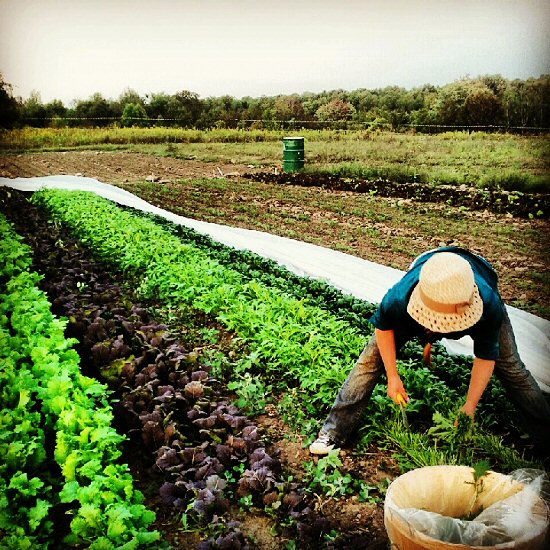
Brassica greens in perfect, flea beetle hole-free shape, thanks to good weather and…floating row cover. Rochelle is cutting mizuna—in the pic, there’s green and purple mustards, mizuna and tatsoi. Our extra focus on salad mixes this season continues to go over well, with a Mild Mix, Zesty Mix, and Mix of the Week, plus everything bagged individually. To fill the line-up, we have our own lettuce blend, the brassicas just mentioned plus arugula, all grown separately and as a mustards-mizuna-tatsoi mix (the tatsoi tends to be too small to easily cut in, so that’ll be out next round), spinach, and chard and beet greens (both grown tightly spaced). The greens harvest bin of choice this season is bushel baskets lined with a new clear bag each time (easy to toss into, hold a lot, the bags stay put even in wind and can be easily lifted out). Will be fun to expand the greens line-up and tweak the planting and harvest next year!
Volunteers!
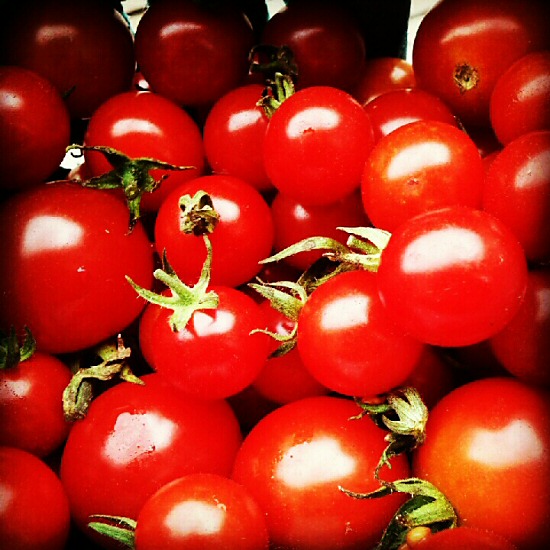
Volunteer cherry toms – weed toms, really – ahead of this year’s planting. Cool. Not sure if these have crossed, we had many varieties planted close together last season. These are not hugely sweet, instead, super little bursts of mildly tart tomato-tasty!