Weed ID-ing in the Digital Age

Weed ID app photo

Wormwood of some sort, this weed from the greenhouse, according to our best guess from a selection of possibilities offered up by the smart smartphone plant identification app I’ve been playing with/trying out. There are several such apps for Android: this one’s called Like That Garden—”See a plant, take a photo, and find out what it is – instantly!” It got the highest ratings, and is free, so I grabbed it.

Like the advertising says, it’s that simple to use. With the app, you take a snapshot of the mystery plant that’s saved as a low rez image (above) and sent off into the ether where it’s checked against a vast plant photo database, several possibilities soon return, with multiple images for each, and you pick the one most likely (I suppose in some cases, only one choice comes back, but so far, that hasn’t happened). The technology is all about advanced image recognition and visual searches, very…digital. Trying it out on a few plants, it’s worked quite well.

While this app is doing fine, I have a great (effective) weed book as well. Is the app a novelty toy, or a serious tiny farming tool? Or will the smartphone be accidentally dropped in a puddle and destroyed before we get a chance to decide? Only time will tell…

Bush cord meter

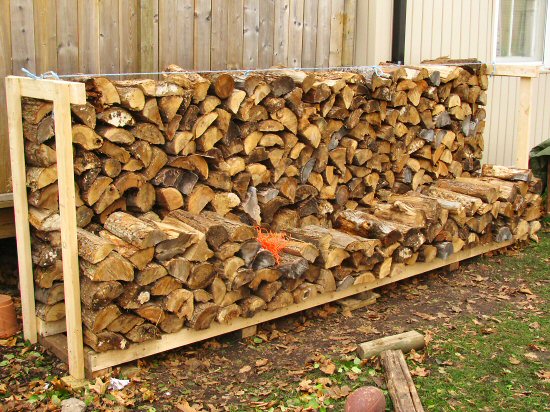
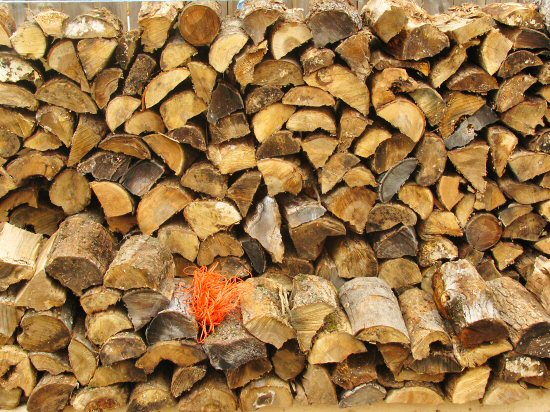
Stacked 16" firewood

Our first wood order of the season arrived a week ago, just as we ran out of the leftover from last year. It’s a bush cord. At least, that was what was ordered, bought and paid for. One bush cord of well-seasoned hardwood, in 16″ pieces. The wood is great on the seasoning end, but when I finished stacking it today, in our custom-built, holds-one-bush-cord rack (below), even taking into account the wood we burned over the last week, we are CLEARLY WAY SHORT!!

I’m kinda shocked at how short we are. When I looked into what exactly a bush cord comprises, the definition seemed pretty clear: 4’x4’x8′ of tightly stacked wood. A volume measure. With 16″ pieces, that equals one long 24′ row, 4′ high. “Tightly stacked” is a little vague, but after asking around, and looking at photos, it seems like common sense: you don’t fit the wood together like a jigsaw puzzle, just stack it nice and solid. OK.

I built a simple rack out of 2x4s that should fit…exactly one bush cord. Of standard 16″ pieces. It’s kind of a bush cord meter. To fit in the narrow side yard, the rack has two 12′ rails, with 4′ high ends. I stacked it reasonably solidly. And we seem to be at least 1/3 (that’s 33%!!!)…short.

The firewood guy came recommended, he’s apparently been doing this for decades, how could this BUSH CORD be so off? It’s a mystery. I’m new to firewood, maybe the counts are loose, but this is extreme. I’m on the phone…

Big beets

Something excellent and hard to pin down happened with the last planting of beets: they became HUGE. This was the fourth planting of the season, around mid-July (see them on the left), and the seedlings got caught in the near drought, although they were around the top of the irrigation list and got a decent share of water. In mid-September, the steady, plentiful rains started, along with continuing warm weather, but that was well into their growth (they’re all 50-60 day varieties). And thinning was good, though just the usual. Whatever the cause, all of them—Scarlet Supreme, Golden Detroit, Bull’s Blood, Chioggia—blew up, most weighing in at 1.5-2.5 lbs (700-1100 gms). Maybe I don’t get out enough (to check out other people’s produce around the country and the world :), or maybe more irrigation would do the trick, but to me it’s somewhat of a mystery how these got to double and triple size. I’ve tasted them all, raw and cooked: they’re firm, tender, with great color and flavor. Smaller beets are more convenient for some purposes, but these big guys are versatile and…easy to harvest and pack… Two to a beet!

Row cover mystery

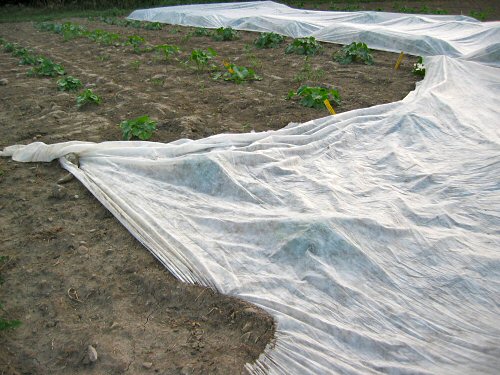
Odd bits of strange, unexplained phenomena turn up in the field from time to time, nothing to get overly excited about, but definitely weird stuff, like this case of mysteriously removed row cover. Earlier in the day, I noticed the cover on one section of risk crop squash was off, thought Conall had removed it, but found when I walked over that about two-thirds of the 50′ (15m) sheet had been ripped off, and lay, bunched up, about 10′ away. In the pic, you can see the remaining piece, perfectly in place, and above it, an adjoining covered row that hasn’t been disturbed in the least. The cover is 14′ wide, and while not hard to tear, isn’t easily sheared right across like that. There’s been no heavy wind in the last few days. There are no footprints or animal tracks in the bed. How did this 35’x14′ section of row cover, anchored by burying the edges every few feet, and with heavy rocks at the corners, manage to detach so cleanly?! It’s a mystery!

Where carrot seed comes from

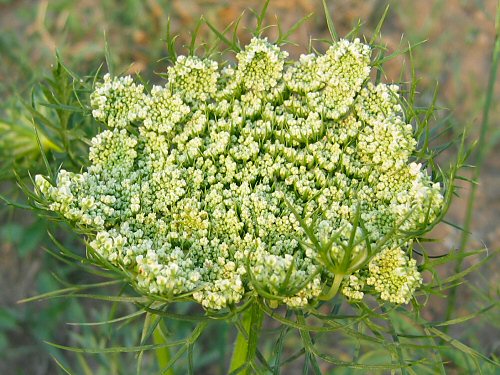
This is where those tiny, slow-to-germinate carrot seeds come from! For leaf and root crops, you often have to go out of your way in the veggie garden to see first-hand how exactly their seeds are produced—the crop is harvested and eaten before the flowering stage starts. Carrots are biennials, they go to seed only in their second year, so unless you’re seed-saving, or accidentally leave some behind over the winter (as we did here), the entire flowering process will remain a garden mystery. For carrots, if it was a mystery, no longer…!