Peering down a rabbit hole

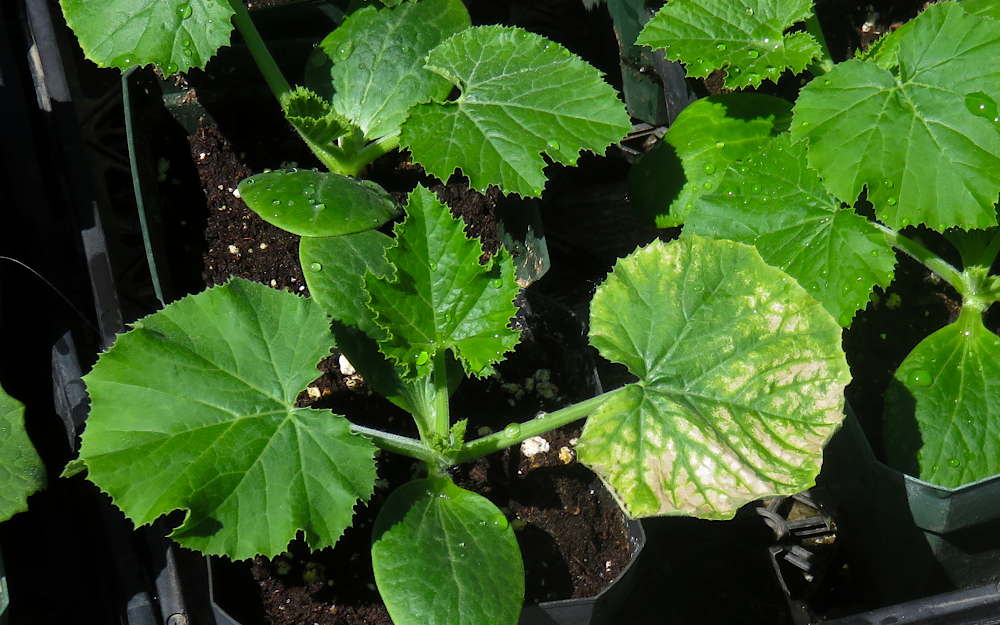
Not a literal rabbit hole, instead, the one that I encountered when just for fun I looked into sunburned leaf damage, like what appeared today on a single squash leaf. Sunscald during hardening off isn’t what you’re aiming for, but it happens and it’s never been a big deal. So long as the seedlings are well-watered and the roots aren’t getting cooked in their containers, they’ll be fine has been my experience. Still, since only one leaf among around three dozen squash and melon plants got burned, after several full days in the sun, and yesterday half overcast, I took a mild interest—if I was a lot busier, with hundreds or thousands of seedlings on the go, and everything else looked fine, it wouldn’t get a second thought. Odd one-offs happen all the time.

A bunch of reading and skimming of farm and garden blog posts, university agricultural extension papers, science mag articles, and scientific studies, and no answers. The sunburn itself seemed unusual, especially after a half-cloudy day. Of course, our SPF sunscreen-and-skin cancer training has told us that UV is still strong on cloudy days, but why did only one leaf get so toasted?

Then I discovered the UV spike. Not so widely written about, not as confidently stated as ~80% of UV makes it through clouds, but a real thing. When certain types of cloud pass in front of the sun, like perhaps the fluffy cumulus ones that floated by most of yesterday, the fringes of said clouds can act as a magnifying lens or filter that focuses and directs UV straight down, resulting in an intensity spike of maybe 25%. Could it be that one big early leaf hadn’t been shaded by the others on previous days and gotten more exposure and hidden damage, and just couldn’t take a day of high-powered UV micro-blasts, a few seconds each as the sun disappeared and reemerged, over and over. Hmm, that sounds maybe fairly reasonable…

Soon after, I lost interest—WHY would I want this explained? I could think of no good reason. I’ve found with tiny farming that learning is continuous and great, but what you choose to take in is also critical, sucking up everything is a waste of attention. The one burned leaf isn’t a mystery, it just clearly happened. And unless more similarly unusual things appear, I’m not particularly curious. The real thing to remember: harden off, a couple hours max outdoors the first day, and keep them well-watered and not boiling in their pots! When they get into the real ground, small ups and downs along the way will be forgotten, they’ll spread their roots and do just fine. Conditions in the field being favorable, of course!
Thigmomorphogenesis

Squash seedlings in a stiff breeze

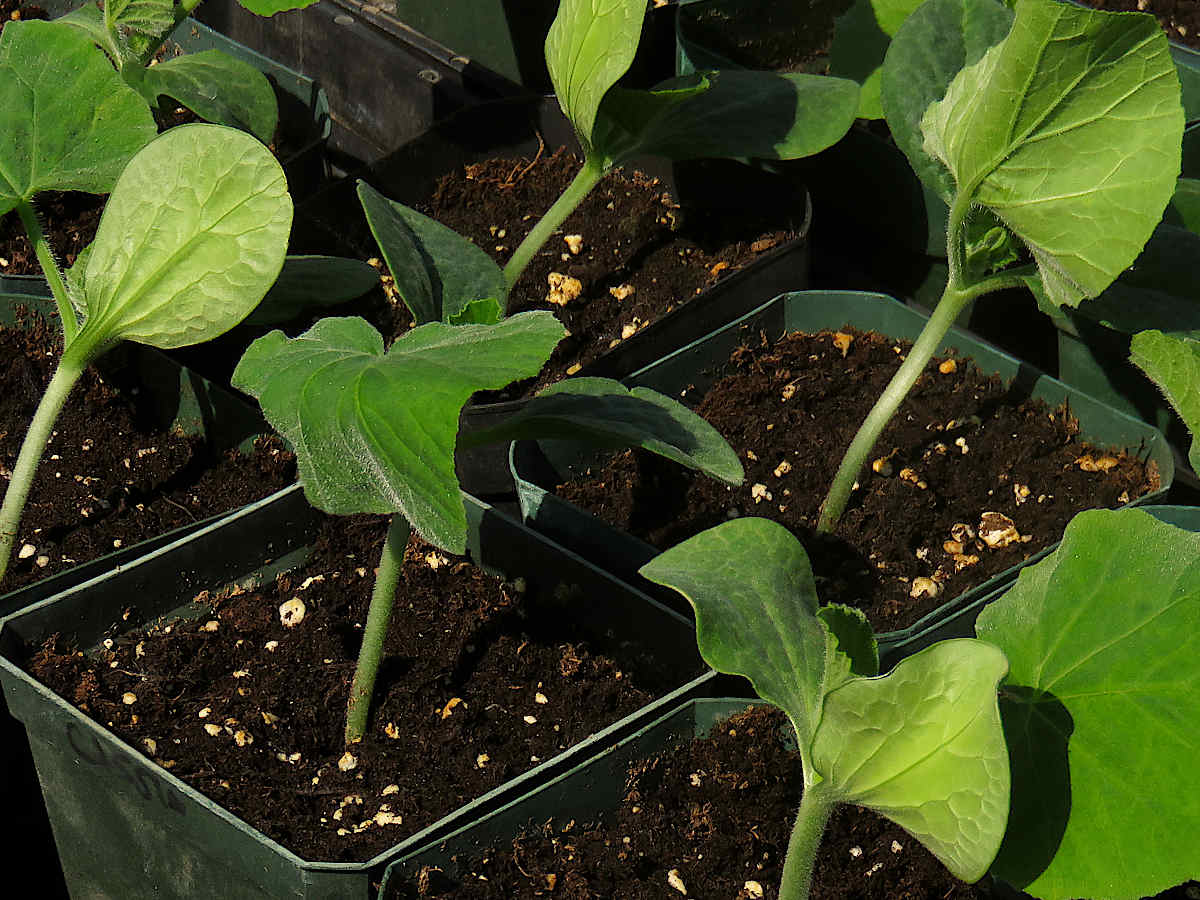
Squash seedlings in a stiff breeze—gale-force wind would’ve made for a more dramatic image, but thankfully not. This bending and fluttering of leaves is another benefit, besides the sun, of taking indoor-started seedlings out into the real world.

Movement, like blowing in the wind, triggers the catchily named thigmomorphogenesis process in plants, where they dramatically toughen up after getting a little pushed around. It could be wind, a pummeling rain, animals or hands brushing by or moving them about. Makes perfect sense for them to armor up.

I’m not particularly into the details of how they change, develop sturdier stems and whatnot—tougher seems to sum it up just fine—but it’s good to know about (I used to use an oscillating fan in winter). And I really like the term. For most of my life, my casual thought was that knowing everything would be cool, kind of like AI tries to today. At one point, though, conveniently marked by a certain blog post, my thinking flipped to often wanting to know less. Not cheering for ignorance, just comfortably sticking with what’s necessary for the moment. So, thigmomorphogenesis—long, unwieldy, yet surprisingly easy to pronounce after a couple of tries!

Winter squash green

Winter squash leaves

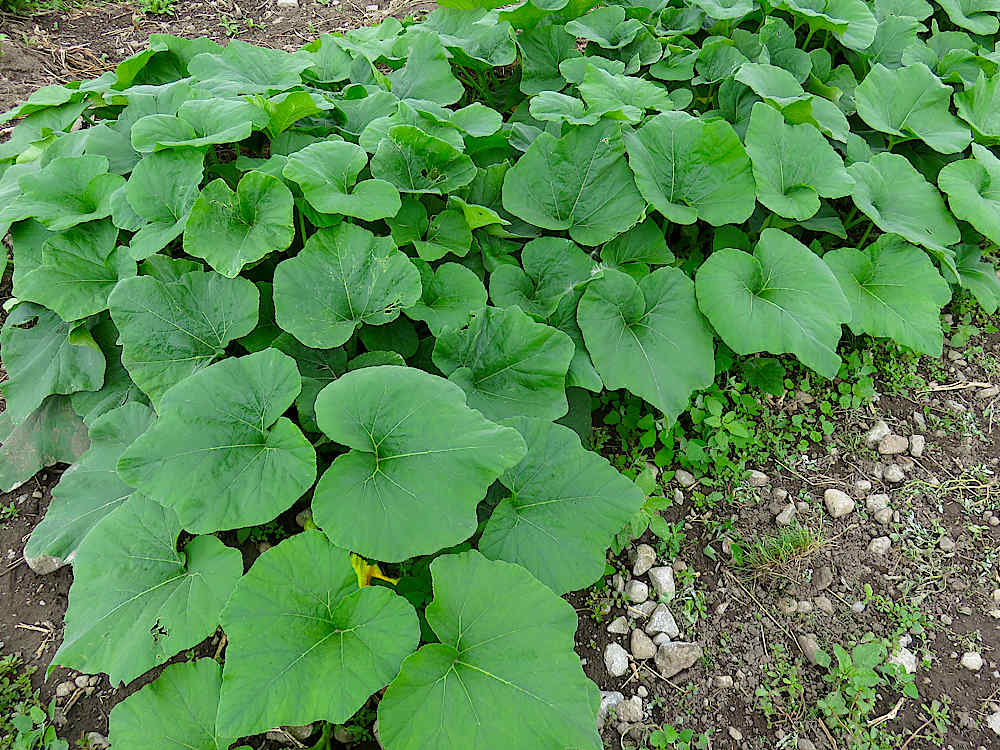
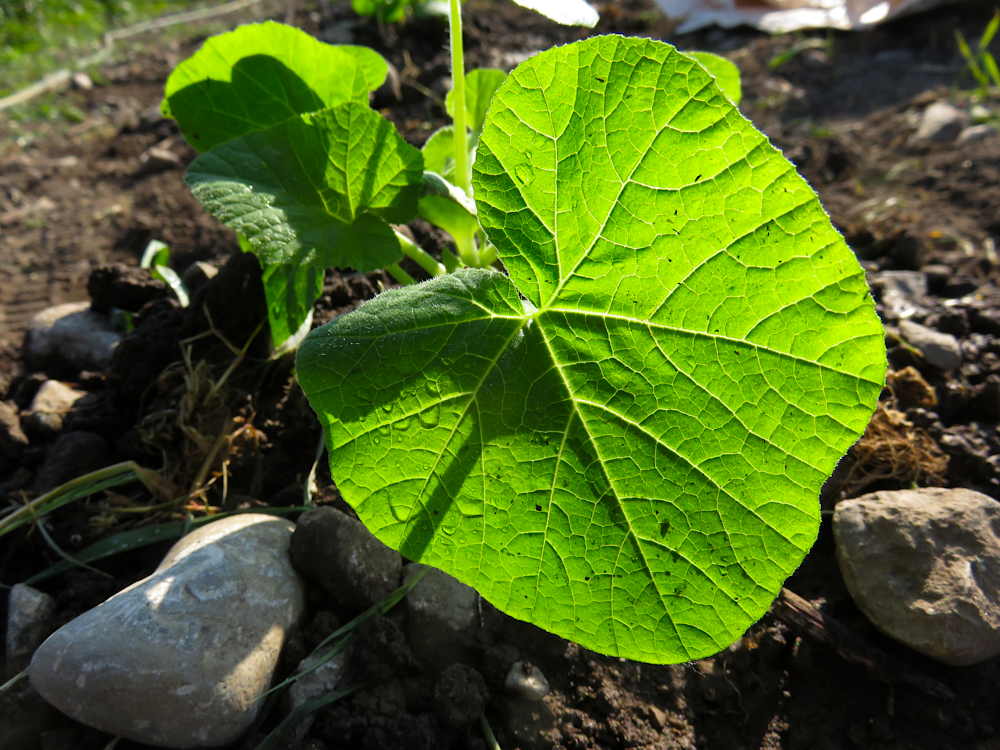
Broad, fast-spreading, richly green winter squash leaves, especially in their first few weeks, are kind of the emeralds of the vegetable patch. They’re poster plants for healthy garden growth. Unfortunately, that charm is hidden under row cover until they get well-established, to protect them from cucumber beetles. At flowering time, the cover comes off so bees can feed and collect pollen, and pollinate in passing all those future butternut and acorn squash. Here, with the cover pulled back for hand watering and a bit of weeding, you can see how squash do a great job of self-weeding by creating lots of shadow that keeps the competition down!

Squash to the field

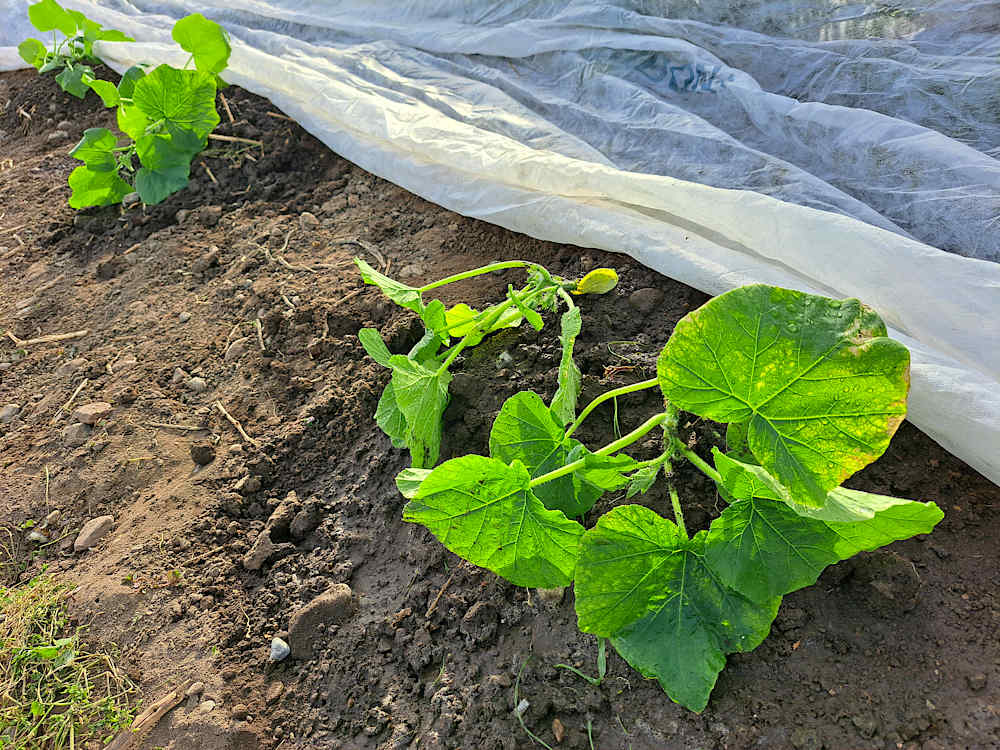
Transplanted butternut squash

Transplanted butternut squash seem to be doing fine in the great outdoors. The row cover will protect them from the fairly cucumber beetles, until they’re big enough not to be bothered. The beetles eat the plants and can also pass on bacterial wilt (I’ve experienced hungry cucumber beetles, but luckily so far, no wilt). This rock cover is medium weight, thick enough that it’s easy to handle without tearing and can be reused, and thin enough that it lets 85% of the sunlight through. A small tradeoff for no chemicals!

A day in the sun

Seedlings hardening off in the sun

I’ve been hardening off trays of seedlings over the last few days, a few at a time, taking them out from the under the lights. Today, they were all outdoors, some for their first taste of the sun. It’s a manual routine, walking back and forth from the light racks with one or two trays at time, then bringing them back in in the early evening. I like it: a clear, simple, straightforward task, and the most important thing to do when you’re doing it. This is also exactly the type of routine that’s perfect for automation, or at least, optimization.

To grow a fair bit more than this year, I would put seedlings out in an unheated greenhouse where they’d stay until transplanting. That brings more convenience and efficiency, and also a few extra concerns. Voles tend to burrow in and munch on greens, so checking the perimeter becomes a thing to do. Daytime temperature in the greenhouse shoots up to 40°C+ (104°F+) on a sunny day, so ventilation is a must. When you open the doors in the day, you have to close them at night against cold and critters, and open them again early the next day. If the forecast is for freezing overnight, row cover placed in the evening and removed in the morning can handle a few degrees below (in a more extreme cold situation, a portable heater fired up in the middle of the night might be necessary).

Then there’s the new super-high winds that started happening around here within the last five years or so, there’s extra concern about the whole greenhouse staying up—mostly not in your control, but you still think about it with every weather warning!

Nothing wrong with scaling up and improving efficiency, while every step to bigger has its complications!

Baby zukes

Butternut squash seedling

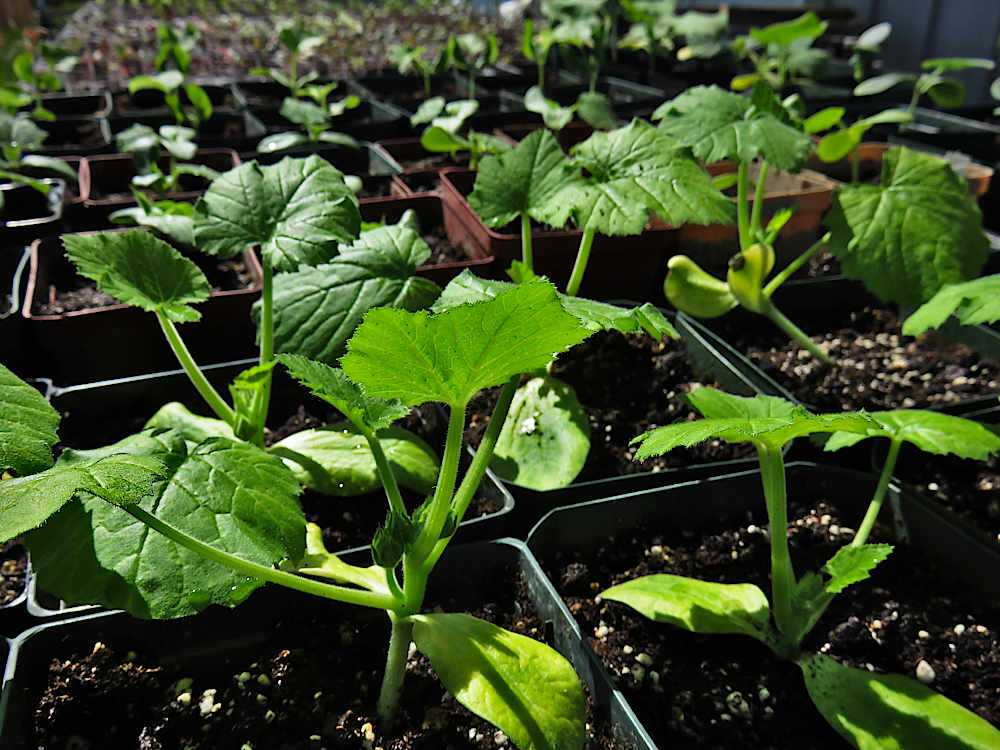
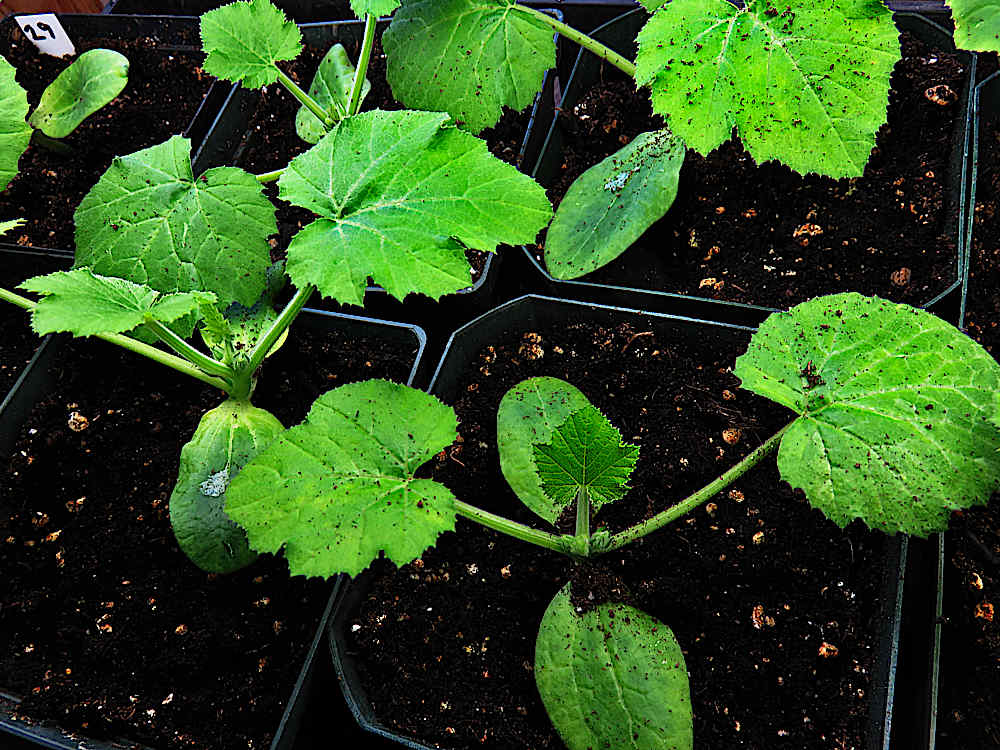
A little less than a month after germination, these summer squash—a variety of zucchini called Raven—seem pretty happy under the lights. They still haven’t seen the sun, which sounds a little weird when said like that. I’ll soon start putting them outside during the day, getting them ready for the field. (The “29” on the plant label at the top left is how I keep track of which seedling is what, in my recently revised and simplified seedling marking system…)