
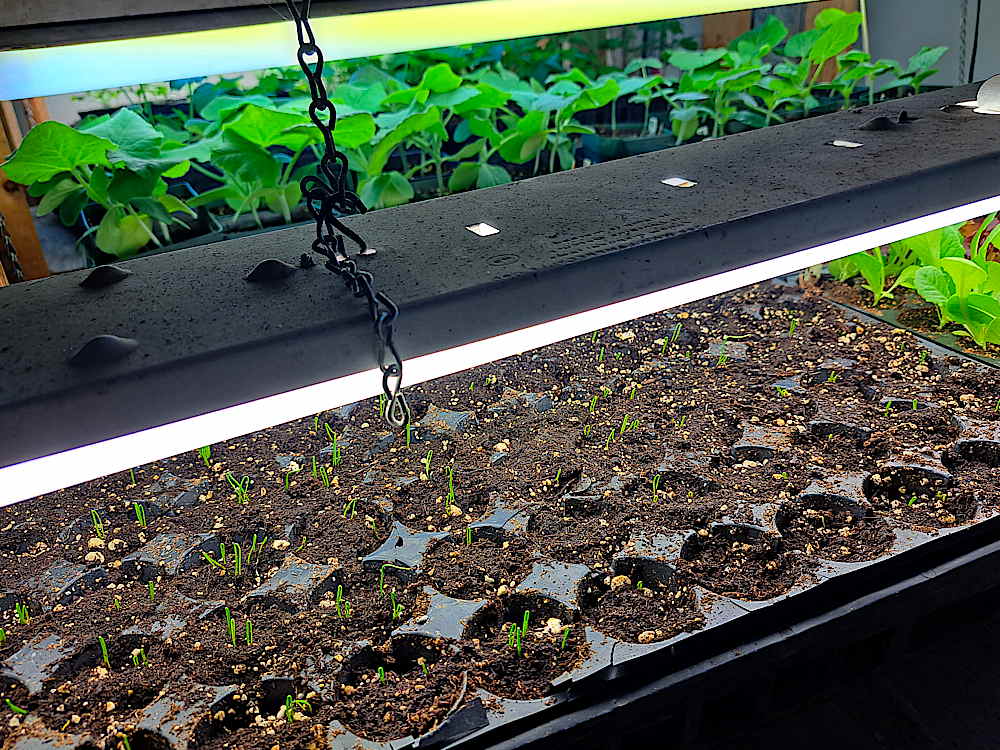
A pretty rough snapshot taken with my phone—its attempt to balance of sunlight and fluorescent doesn’t do the photo any favors—still fulfills the spring photo blog tradition of seedlings on the light racks. (More words to come…)
light rack
Cucurbits!
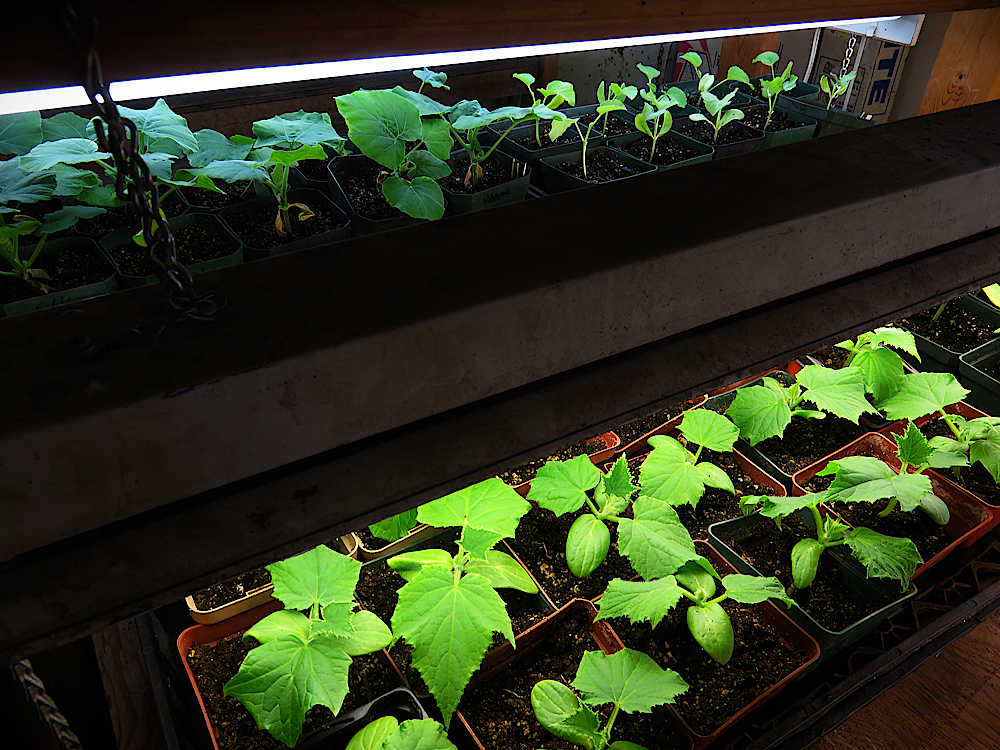
Cucurbit, from Cucurbitaceae, is a useful word! How else would you refer to the large squash-and-melon family that includes winter squash like acorn and butternut, summer squash like zucchini, pumpkins, gourds, melons (cantaloupe, watermelon, and so on), cucumbers, even the fruit that dries out to become loofah sponges. All the same plant family, all with similar-looking leaves and sprawling vined growth. I’ve on and off wanted to learn the scientific Latin-word plant classification system. I’ve even semi-memorized the basics more than once, then soon forgotten, because there’s no actual use for it in my day to day. But some terms, like cucurbits, do come in handy…
Baby zukes
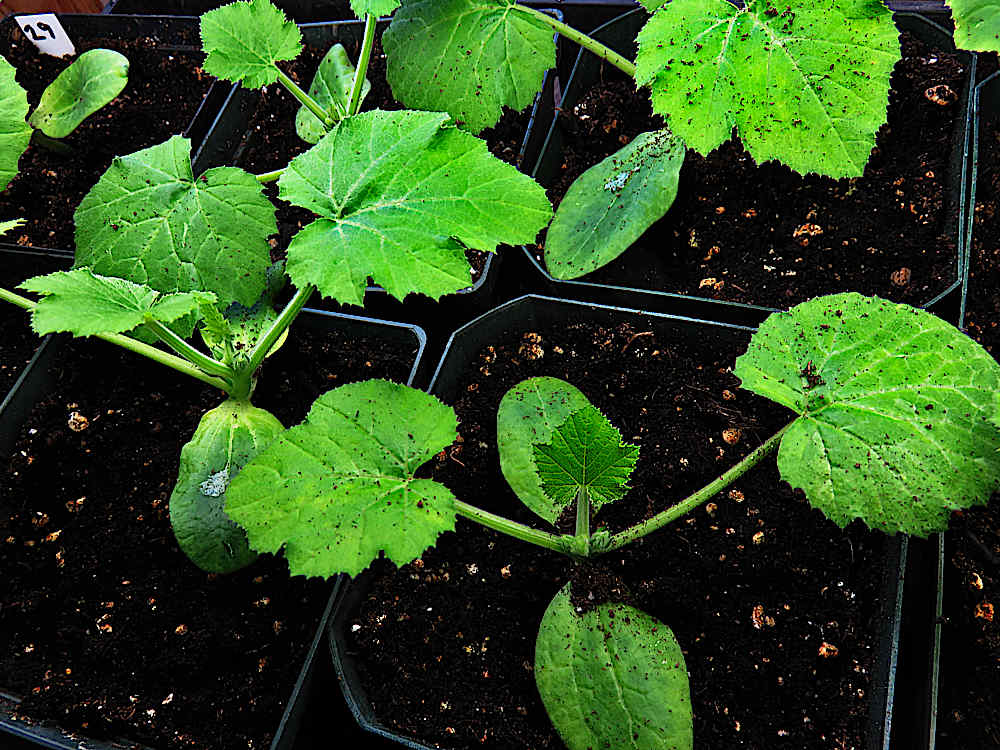
A little less than a month after germination, these summer squash—a variety of zucchini called Raven—seem pretty happy under the lights. They still haven’t seen the sun, which sounds a little weird when said like that. I’ll soon start putting them outside during the day, getting them ready for the field. (The “29” on the plant label at the top left is how I keep track of which seedling is what, in my recently revised and simplified seedling marking system…)
Tomatoes a month in
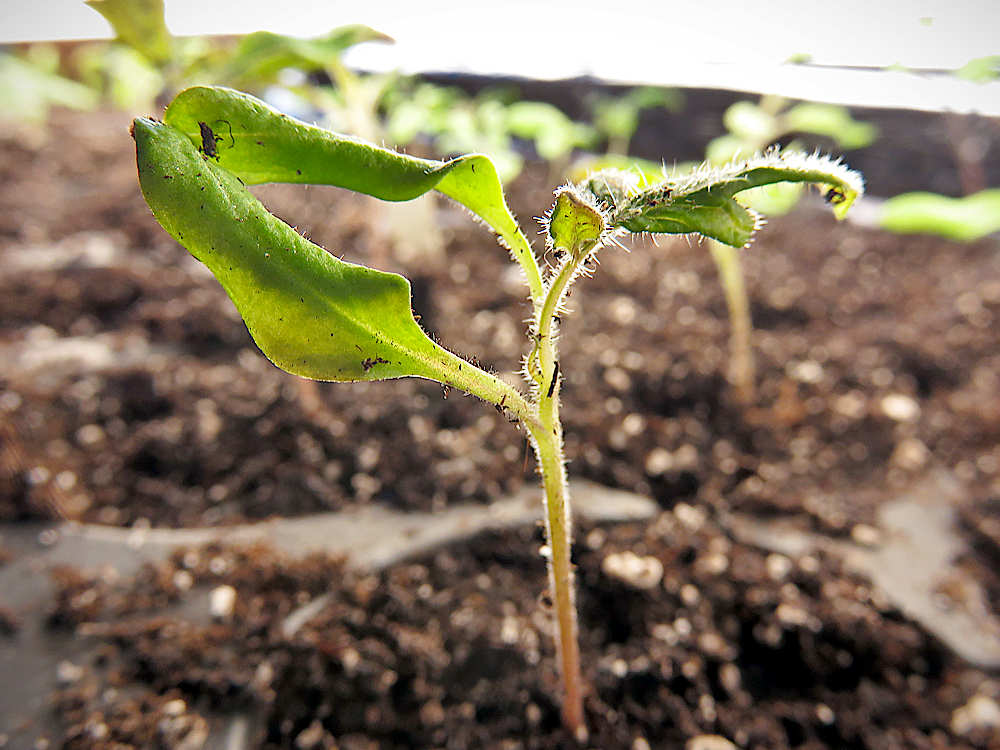
Tomato check-in, around a month after germination. On the left, the pair of plain, generic-looking seed leaves that come first—they’re still stuck together at the tip by a tiny bit of the seed shell. On the right, the true tomato leaves are taking over. See the tomato grow! :)
Pepper’s eye view
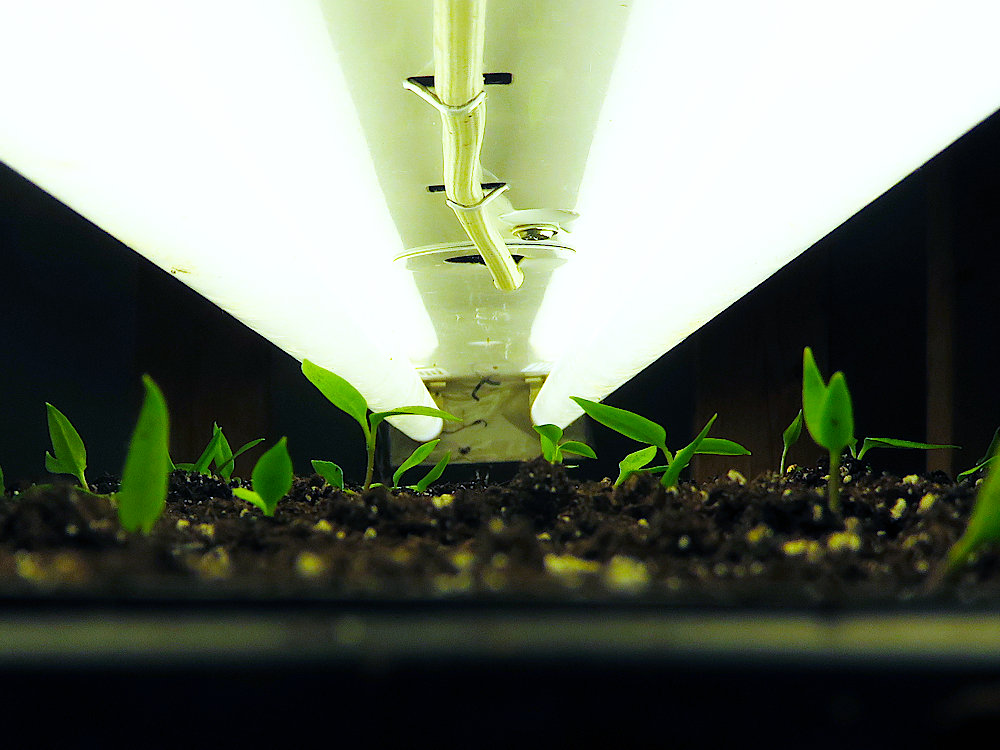
Here’s what the tiny sweet pepper plants would be seeing if they saw like we do, from under the fluorescent tubes in one of the light racks. It has a bit of an alien spacecraft hovering feel. The seedlings would be more pleased with the zillion times stronger real sun, but considering that it still drops down to freezing outside at night, they have to make do with weak substitute sun and indoor warmth as they get an early start on the growing season. These peppers are about a month old, still with only their seed leaves. Welcome to this season’s tiny farming transplant production!
Seeds under plastic
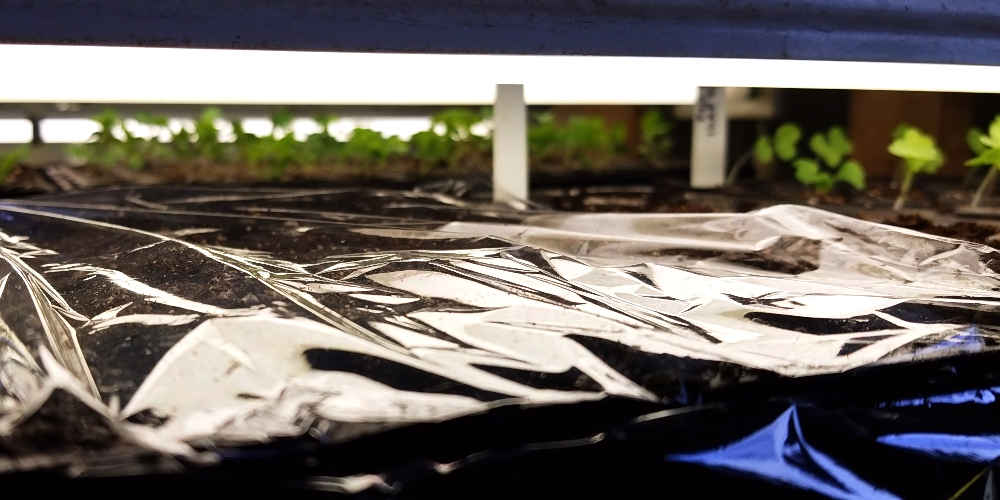
Plastic that looks like plastic adds its own surreal touch to any scene. I use sheets of food wrap to cover plugsheets trays until the seedlings push up above the surface. The plastic holds in heat and keeps the seedling mix moist, both of which the seeds definitely like. As soon as the seedlings emerge, off comes the plastic. Time to let the air flow. I reuse new sheets of wrap for a whole season. With use, they lose their clinginess and are that much easier to handle. The little things add up!
1440 onions
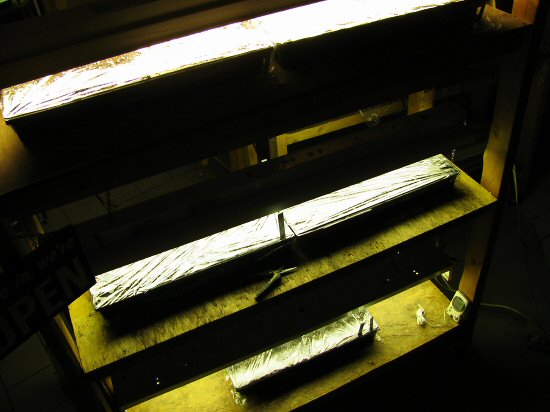
I’m sure I’ve taken this photo before, but somehow, it’s still new—the first transplants of the season! This is the look of 1,440 onions, starting out. These are 72-cell plug sheets, and the plan is to multi-plant four onions in each spot. Do a little multiplication—5 trays, 72 cells, 4 onions per—and the results are clear. Whether things will turn out exactly like this, perfect bushels of Red Globe red and Utah sweet Spanish, is anybody’s guess, but I’m quite confident we will get…something! :)
All the usual tools and methods for this tiny farm are back for another run. There are still at least a couple of years left on the roll of donated food-grade plastic wrap that I use (and re-use for the season) to hold moisture and increase heat, just until the tiny seedlings emerge. To check temperatures in this new seedling room, on the lowest shelf of the light rack, where it’s coldest, is one of the minimum/maximum digital recording thermometers. And of course, there are the trusty, home-built light racks themselves, with an assortment of T-12 and T-8 fixtures and Cool White fluorescent tubes, providing the bare minimum of heat and light to get things started.
I’m always up for trying new approaches and new gear, but a lot of the time, if it gets the job done and you’re already having fun, what more could you need?!