Peering down a rabbit hole

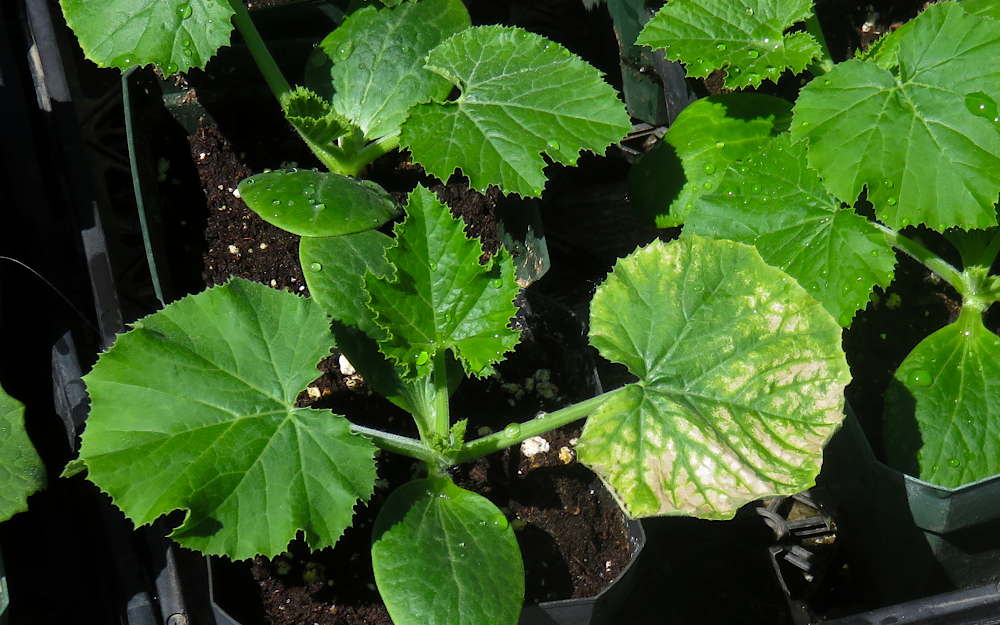
Not a literal rabbit hole, instead, the one that I encountered when just for fun I looked into sunburned leaf damage, like what appeared today on a single squash leaf. Sunscald during hardening off isn’t what you’re aiming for, but it happens and it’s never been a big deal. So long as the seedlings are well-watered and the roots aren’t getting cooked in their containers, they’ll be fine has been my experience. Still, since only one leaf among around three dozen squash and melon plants got burned, after several full days in the sun, and yesterday half overcast, I took a mild interest—if I was a lot busier, with hundreds or thousands of seedlings on the go, and everything else looked fine, it wouldn’t get a second thought. Odd one-offs happen all the time.

A bunch of reading and skimming of farm and garden blog posts, university agricultural extension papers, science mag articles, and scientific studies, and no answers. The sunburn itself seemed unusual, especially after a half-cloudy day. Of course, our SPF sunscreen-and-skin cancer training has told us that UV is still strong on cloudy days, but why did only one leaf get so toasted?

Then I discovered the UV spike. Not so widely written about, not as confidently stated as ~80% of UV makes it through clouds, but a real thing. When certain types of cloud pass in front of the sun, like perhaps the fluffy cumulus ones that floated by most of yesterday, the fringes of said clouds can act as a magnifying lens or filter that focuses and directs UV straight down, resulting in an intensity spike of maybe 25%. Could it be that one big early leaf hadn’t been shaded by the others on previous days and gotten more exposure and hidden damage, and just couldn’t take a day of high-powered UV micro-blasts, a few seconds each as the sun disappeared and reemerged, over and over. Hmm, that sounds maybe fairly reasonable…

Soon after, I lost interest—WHY would I want this explained? I could think of no good reason. I’ve found with tiny farming that learning is continuous and great, but what you choose to take in is also critical, sucking up everything is a waste of attention. The one burned leaf isn’t a mystery, it just clearly happened. And unless more similarly unusual things appear, I’m not particularly curious. The real thing to remember: harden off, a couple hours max outdoors the first day, and keep them well-watered and not boiling in their pots! When they get into the real ground, small ups and downs along the way will be forgotten, they’ll spread their roots and do just fine. Conditions in the field being favorable, of course!
Tiny jungle

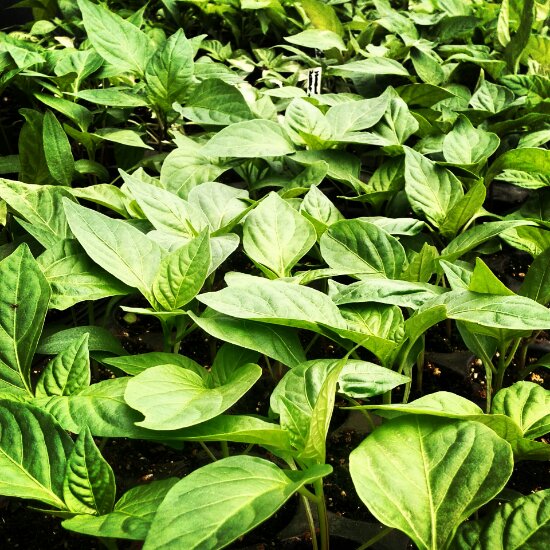
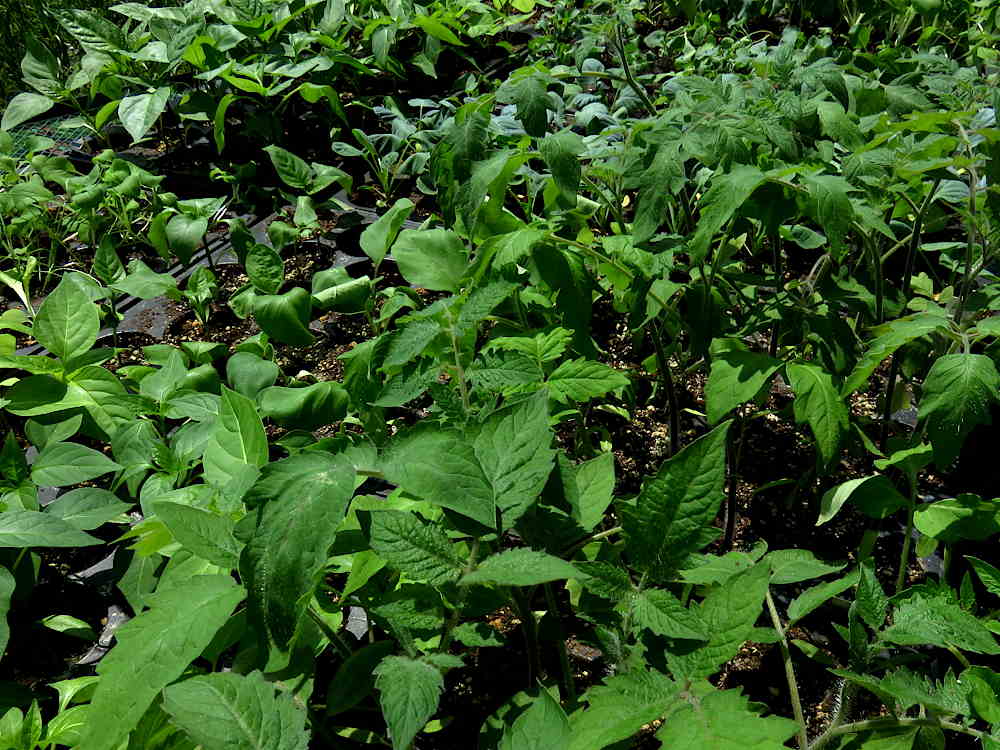
Mix of seedling out in the sun

Hardening off seedlings on a mainly sunshiny day. I can see tomatoes, peppers, eggplant, Brussels sprouts, and bok choi. Some are for now, some a little down the line. I’ve been transplanting steadily bit by bit, rather than all out at one time, as a hedge against erratic weather changes. Same with direct seeding. It’s another experiment, and given our short season and the generally unpredictable weather, it’s risky. Then again, depending on the crop, I’ve seen plantings a week or two apart more or less even out. It’s always a gamble!

A day in the sun

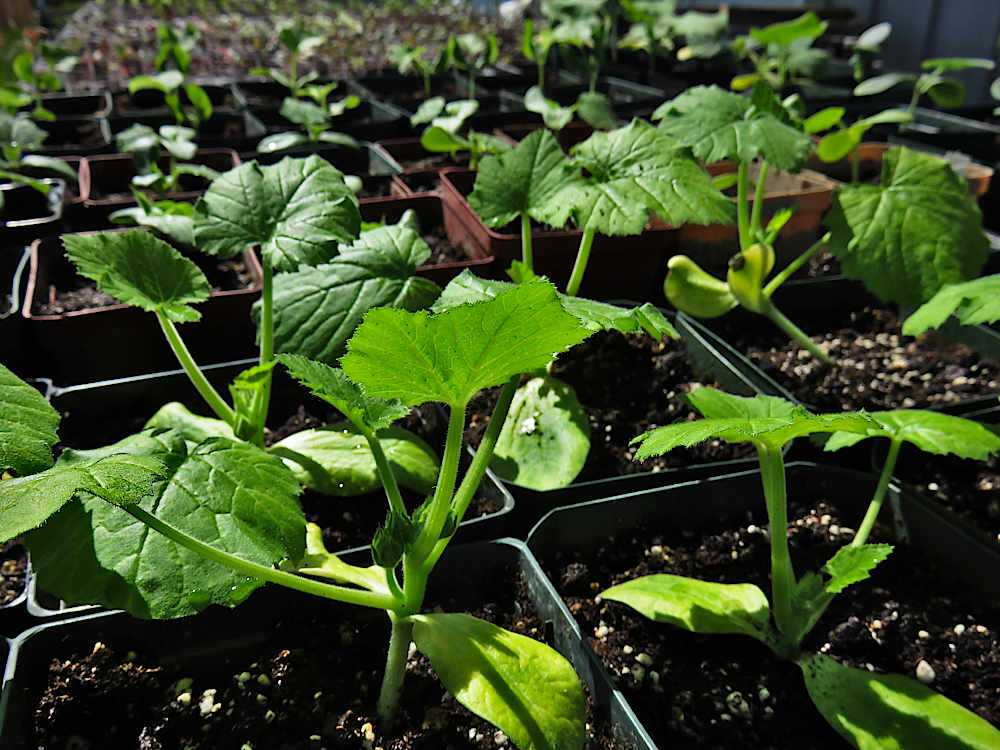
Seedlings hardening off in the sun

I’ve been hardening off trays of seedlings over the last few days, a few at a time, taking them out from the under the lights. Today, they were all outdoors, some for their first taste of the sun. It’s a manual routine, walking back and forth from the light racks with one or two trays at time, then bringing them back in in the early evening. I like it: a clear, simple, straightforward task, and the most important thing to do when you’re doing it. This is also exactly the type of routine that’s perfect for automation, or at least, optimization.

To grow a fair bit more than this year, I would put seedlings out in an unheated greenhouse where they’d stay until transplanting. That brings more convenience and efficiency, and also a few extra concerns. Voles tend to burrow in and munch on greens, so checking the perimeter becomes a thing to do. Daytime temperature in the greenhouse shoots up to 40°C+ (104°F+) on a sunny day, so ventilation is a must. When you open the doors in the day, you have to close them at night against cold and critters, and open them again early the next day. If the forecast is for freezing overnight, row cover placed in the evening and removed in the morning can handle a few degrees below (in a more extreme cold situation, a portable heater fired up in the middle of the night might be necessary).

Then there’s the new super-high winds that started happening around here within the last five years or so, there’s extra concern about the whole greenhouse staying up—mostly not in your control, but you still think about it with every weather warning!

Nothing wrong with scaling up and improving efficiency, while every step to bigger has its complications!

Seedlings in the sun

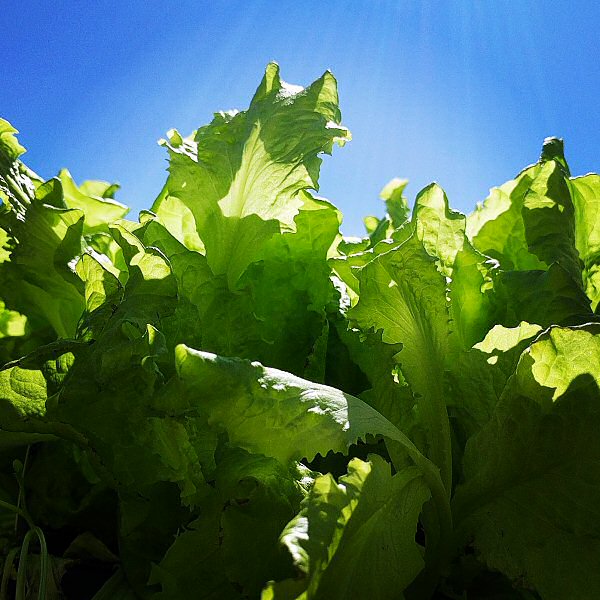
Hardening off leetuce seedlings

Lettuce seedlings get their first taste of full-on springtime sunshine. Next stop, into the ground in the greenhouse. I wouldn’t call this hardening off, some of these are being transplanted later today—tomorrow’s cloudy forecast should give them all the post-transplant adjustment break they need, then bring on the sun! (Starring in this pic, always reliable Black Seeded Simpson.)

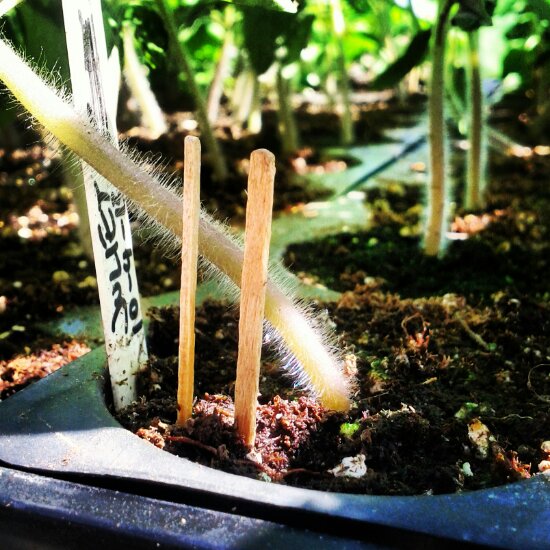
Toothpick timekeeping!

A toothpick tracking system. Before heading out to be transplanted in the field, so they don’t bet burned, seedlings growing under lights first have to be introduced to the sun. They go out in the day, get a toothpick, and come back in for the night. Each day of hardening off is marked by a toothpick—two or three days and they’ll be fine. Simple and sustainable—reuse your toothpicks and a single box could probably be made to last a lifetime.

Toughening up

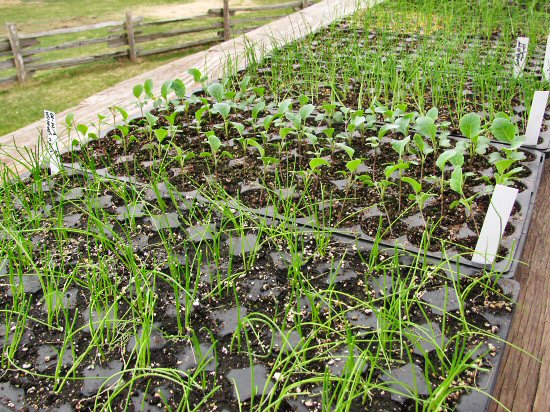
Hardening off onions, cauliflower, broccoli

Today, it’s a warmish (57°F/14°C), overcast, gray day, with a light breeze. In the next week or so, the unheated greenhouse is to be relocated, set up, and outfitted to house hardier seedlings. All things considered, right now is a fine time to start this season’s hardening off… In early afternoon, we set outside trays of onion, cauliflower and broccoli, preparing them to head out from the cosy shelter of the seedling room to the real world. They’ll stay out till early evening, then it’s back in for a few more hours under the lights, and more of the same for the next few days. These first acts and sights of spring on a tiny farm never fail to excite (I think it’s the gambler in all of us)…