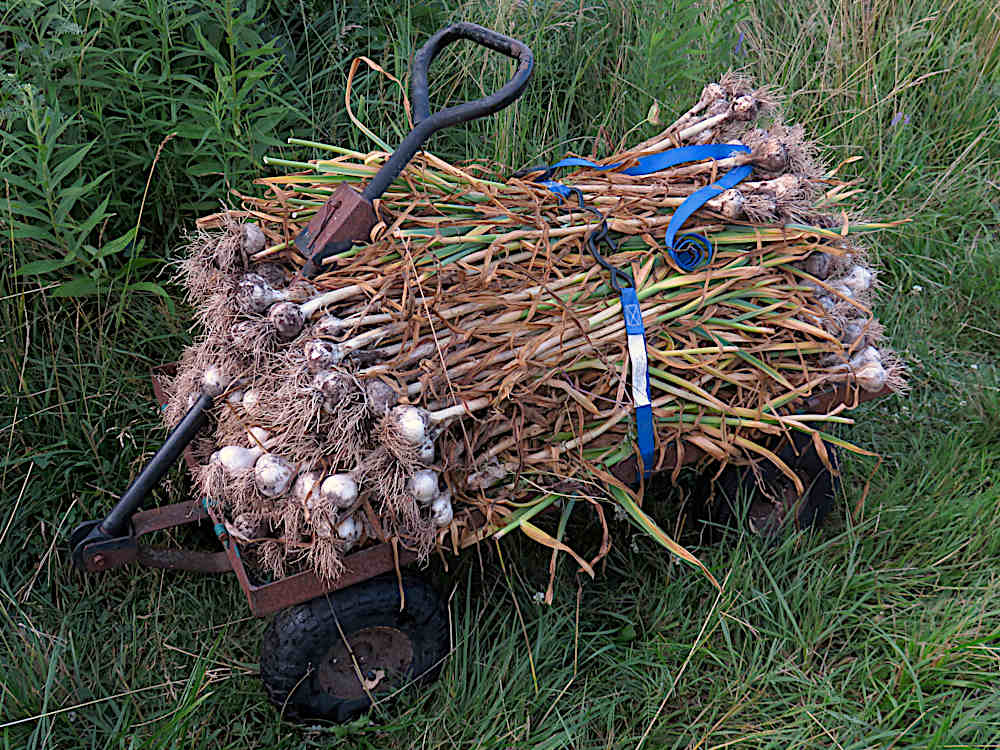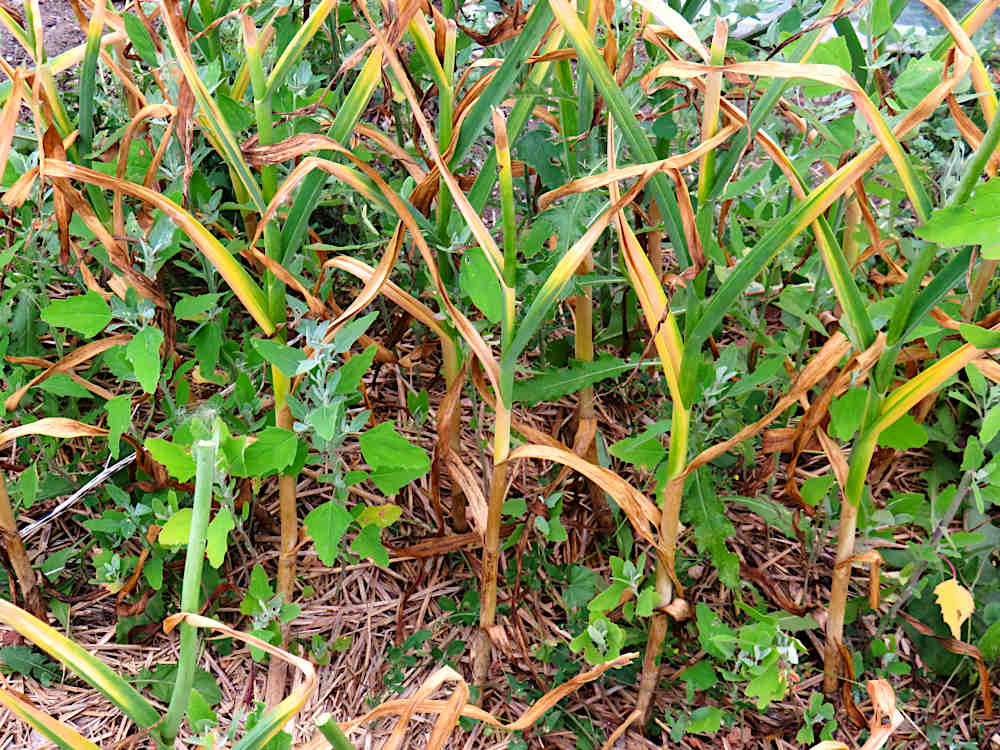
The rule of thumb for garlic harvest, as far as I’ve gathered, is they’re ready to come out when the bottom third of the leaves, or 2-3 leaves, start dying back. I’ve always sort of followed that, but mainly checked by harvesting two or three from different spots every couple of days, starting when the first leaves begin to yellow, how often depending on the weather. This year, because they’d been under row cover the whole time—the anti-leek moth strategy—getting 15% less sun according to the cover specs, I decided to wait longer. They were uncovered into full sun about 10 days ago, and I decided to let them do all the clove growing they could do.
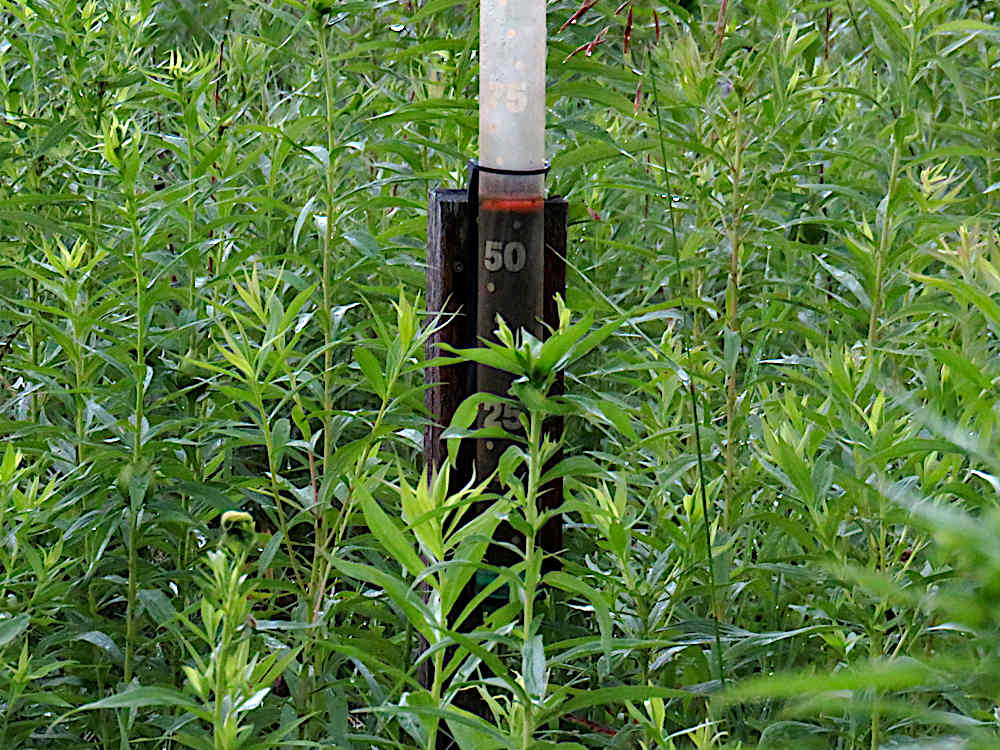
There may be a more scientific, measured way of timing the harvest on big commercial garlic farms. Sensors could be involved! On this smaller scale, an educated guess and harvesting samples has been my approach. If the last month was very wet, an earlier harvest is a good idea. One extraordinarily wet June, rainy and always overcast, left the garlic sitting in pretty damp soil all the time. Even harvested early, at least half had swollen and split the skins at the bottom, making them not great for through-the-winter storage.
Garlic apparently does most of its clove growth as the leaves start to die off—a change of focus. This continues till about half the leaves have started dying back, which makes sense of the rule of thumb. Once the yellowing starts, it goes pretty fast. The idea of not letting them yellow too far is that every leaf blade is a layer of the papery skin that holds the bulb together. The leaves extend right down around the cloves, and once they’re dead on top, they could rot underground. But, if it’s not real damp down there, the buried leaf just starts to dry out. So if it looks alarmingly dead up top, it shouldn’t be a problem, more like the bulbs have started curing—drying out—in the ground. I’ve been checking.Doesn’t sound very precise, in this precisely measured digital world. And these field guesses can be wrong. Overall, though, going by simple experience, topped up by reading and chatting, continues to work out just fine!