
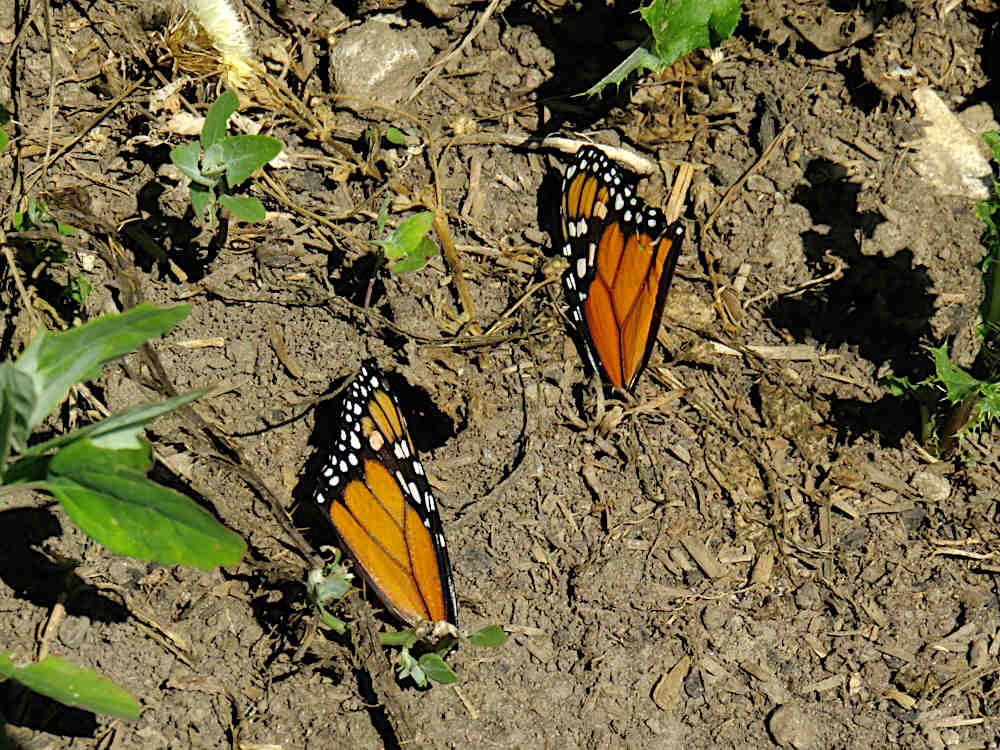
Glancing down, I thought it was two Monarch butterflies taking a break together. Turned out to be two Monarch wings, with no body to connect them. Probably a nutritious protein snack for some predator. Looking into it a bit more, I discovered from photos that these are only the big wings. Monarchs have two fully independent pairs of wings, the big ones for power, and little ones tucked in back for steering and whatnot. When their wings were torn off, the much more delicate little ones probably got shredded, partially eaten, or just blew away. And so Nature goes. The big wings still carry the brand! :) RESEARCH: Monarchs exclusively eat milkweed, which contains a heart attack toxin that they concentrate in their wings. Enough of it can cause heart seizure by disrupting a creature’s electrical system. But the poison is also super sharp and bitter, so if a whole butterfly is eaten, it’s usually violently vomited up, discouraging future Monarch eating. Psychological defense through non-lethal pain, like deer and the electric fence. So smart Monarch predators rip off the wings. These specialists include some birds, praying mantis, field mice. There’s nothing about Monarchs that isn’t hardcore and fascinating.
insects
Butterfly man
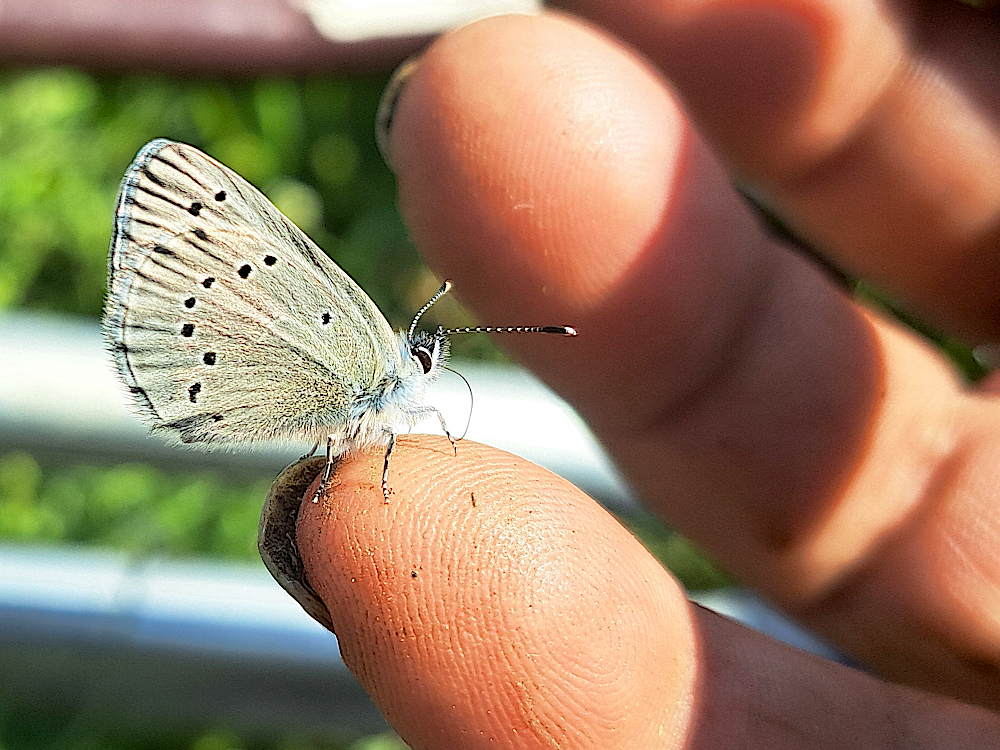
Sure, I know it’s there to suck up the minerals from my sweat. That doesn’t stop my moment of irrational wonder, feeling in harmony with all of Nature. Butterflies land on me!
These guys are always around the wet soil after watering in. They descend in a flutter of half a dozen or more, and land on the wet ground. Today, my hand was damp from the hose, so I slowly extended it toward them. And that’s when I received this sure sign that I’m one with the universe. To prove its intention, it gave me all the time in the world to get my camera from a bucket of gear nearby and capture the moment using my wrong hand!
As far as names for things, I’ll go with it’s a Silvery Blue (Glaucopsyche lygdamus), from my generally accurate or at least ballpark iNaturalist app. I looked into it at some point: they’re apparently after minerals and other nutrients they don’t get from nectar, and the behavior is called “puddling”. Hm.
Attack of the leek moth
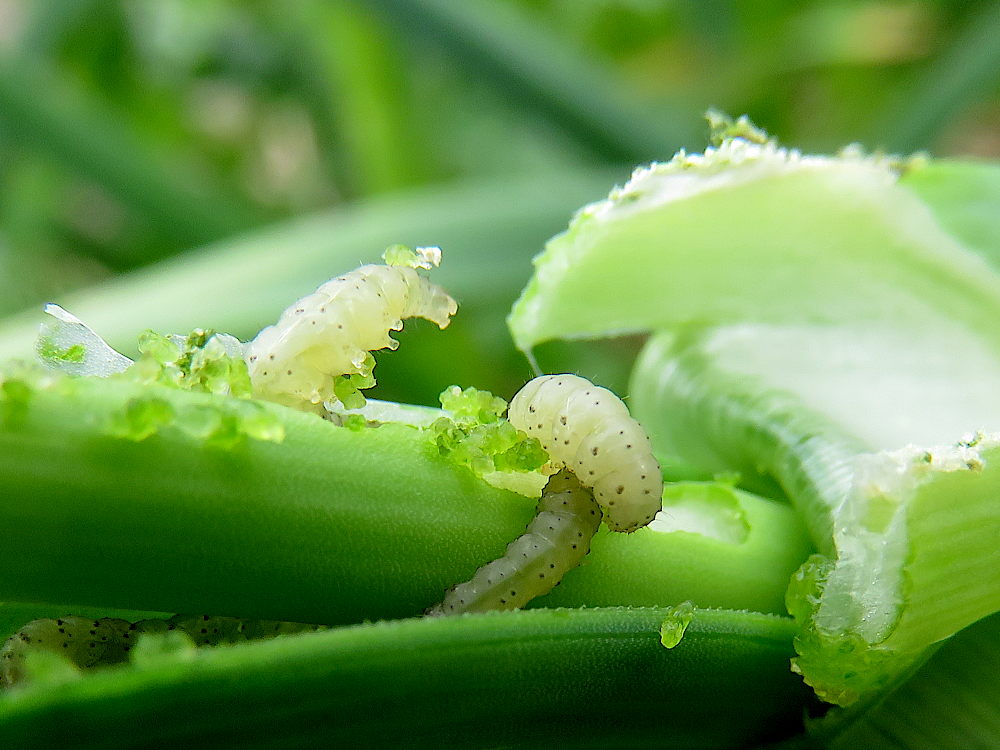
Checking for scapes today, only a couple of days after the last all-good garlic check-in, and found absolute carnage thanks to a leek moth invasion. For years, I’ve heard about these voracious leaf devourers ravaging alliums—garlic, onions, leeks—in the general region, but they’d never shown up here. Until now. After hours of hand picking and squishing, the situation may be somewhat under control.
FACT-FINDING: I did a bit of quick research to get the bigger picture. Leek moths (Acrolepiopsis assectella) are nocturnal, operating in full darkness. They overwinter in plant debris, emerge and mate when the temperature gets up to around 50°F/10°C. There are usually three generations a year, around here in mid-May, June and July. The first generation grows up (fast, in around 3 weeks) and starts laying another round, and so on.T hat means, in unusually warm or cold weather, there could be more generations per year, or less. Each female has around 100 eggs, lays them singly not in clusters, usually on the underside of leaves near the base of the plant (but, naturally, look EVERYWHERE!). There’s of course lots more, but that’s what I need to know for veg protection—garlic under row cover (and it would be pretty safe to uncover them during the day).
Best not to touch!
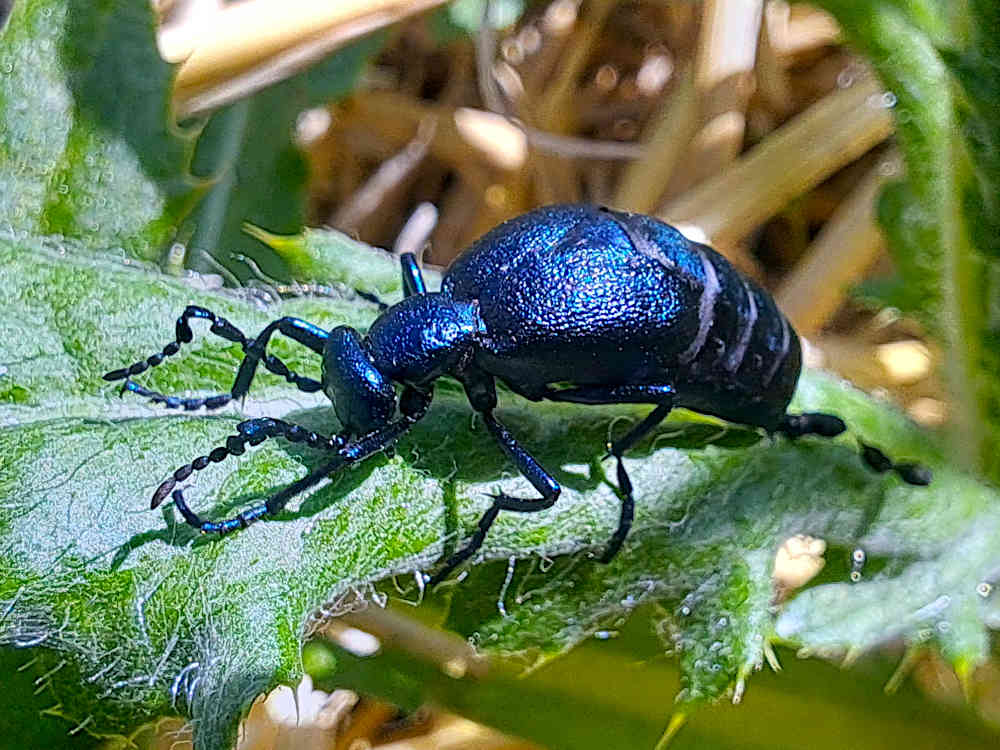
Meet the oil beetle! When I see new insects that I don’t immediately recognize, there’s an automatic, “Who goes there?!” challenge in my head. So many little critters can do so much veggie damage, one can’t help a “you’re either with me or against me” reaction to the unknown. In this case, I have to identify this fairly spectacular, sparkly beetle, sitting on a thistle that will soon be tilled under. (More to follow… Think powerful blistering agent, voracious beehive raider,… I doubt there’s a single insect species that doesn’t have it’s own odd and elaborate quirkiness )
CPBs
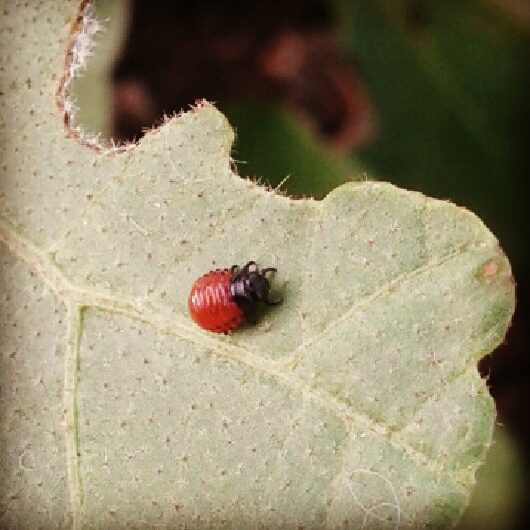
Pre-squish: Brand new Colorado potato beetle, larva about the size of a match head, on eggplant. Around the leaf edge, older damage done by bigger CPBs. Recently, for whatever reason, they’ve been around but not in numbers enough to be a big problem. The crazily erratic weather of the last few fears seems to have obliterated regular pest cycles, so we just see ’em and pick ’em…whenever.
Praying mantis visit
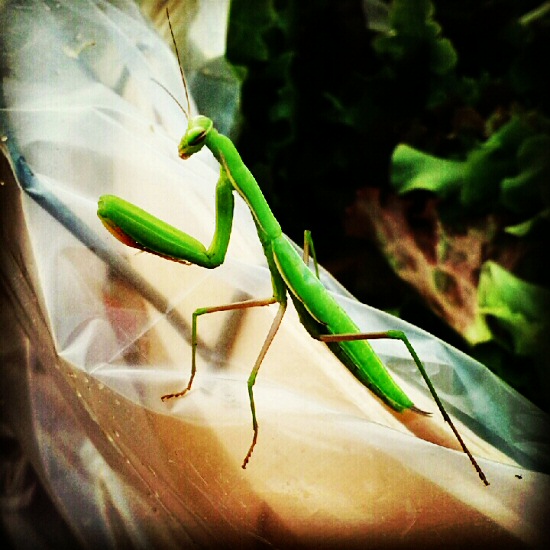
It came with the greens. A praying mantis perched on the edge of a lettuce mix harvest basket and took the ride in. Kool kat, with a wraparound look. Friendly, too, if insects can be, calm at least, let it walk on my hand to transfer it to a fence post. Don’t see them often, so I looked ’em up and…yikes! “Sexual cannibalism is common among mantises in captivity, and under some circumstances may also be observed in the field. The female may begin feeding by biting off the male’s head (as they do with regular prey), and if mating has begun, the male’s movements may become even more vigorous in its delivery of sperm.” Kinky and kinda brutal. But reading on, it seems this behavior may be induced by the distractions of being constantly observed in the lab, and not a normal practice. There we go again, messin’ with stuff. Well, this one got away. In the wild, it’s considered a beneficial insect for the veg patch, a massive hunter that eats “most pest insects, mites, eggs, or any insect in reach.” Nice. And it’s apparently the only insect to hunt moths at night, and the only one fast enough to catch flies and mosquitoes. Go, mantis!