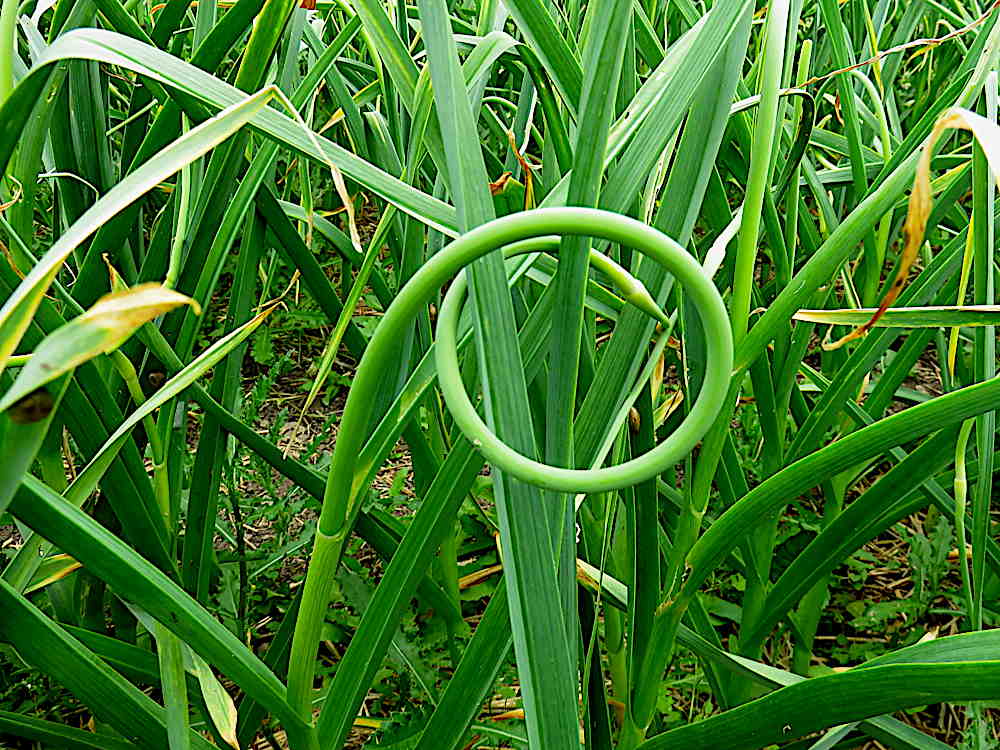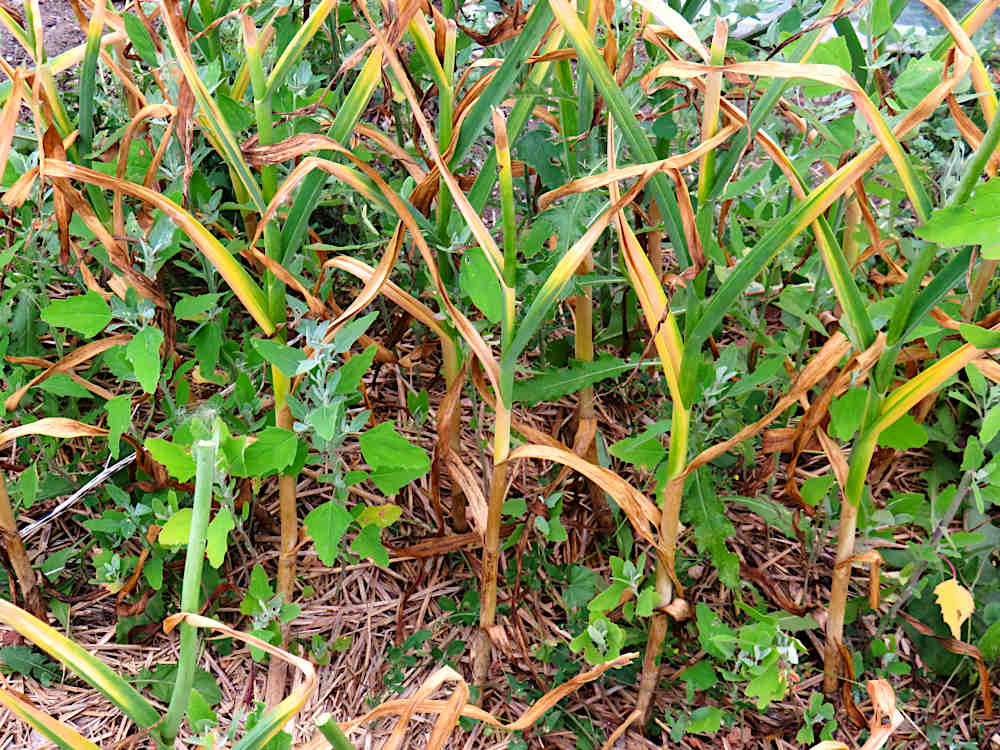
Here we are, a week after leek moths invaded the garlic, gazing at a healthy scape. If you’re not familiar, scapes are the curling tips that emerge as the garlic gets close to harvest. They’re also clearly a favorite target of the moth larvae: they chew their way in and start tunneling down. All of the attacked scapes had to be snapped off, right as they were emerging. Happily, many also survived. Snipped when tender—they get woody if left too long—scapes are filled with a full, delicious garlic flavor, a preview of the garlic to come. Let your imagination decide how to use them! (It’s also said that removing the scapes directs more plant energy to making the bulbs bigger, though I haven’t seen that for myself.) As for the bulbs and the leek moths, this is my first encounter, so we’ll only know for sure if all that hand-picking and scape snipping worked when the garlic comes out next month.
garlic scapes
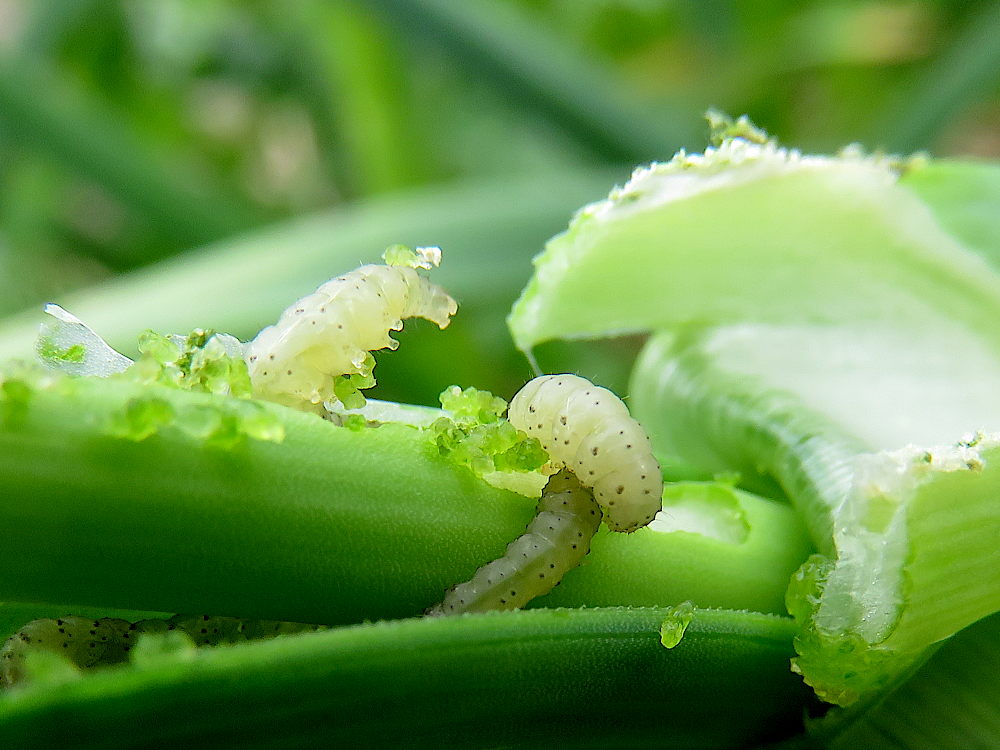
Attack of the leek moth
Checking for scapes today, only a couple of days after the last all-good garlic check-in, and found absolute carnage thanks to a leek moth invasion. For years, I’ve heard about these voracious leaf devourers ravaging alliums—garlic, onions, leeks—in the general region, but they’d never shown up here. Until now. After hours of hand picking and squishing, the situation may be somewhat under control.
FACT-FINDING: I did a bit of quick research to get the bigger picture. Leek moths (Acrolepiopsis assectella) are nocturnal, operating in full darkness. They overwinter in plant debris, emerge and mate when the temperature gets up to around 50°F/10°C. There are usually three generations a year, around here in mid-May, June and July. The first generation grows up (fast, in around 3 weeks) and starts laying another round, and so on.T hat means, in unusually warm or cold weather, there could be more generations per year, or less. Each female has around 100 eggs, lays them singly not in clusters, usually on the underside of leaves near the base of the plant (but, naturally, look EVERYWHERE!). There’s of course lots more, but that’s what I need to know for veg protection—garlic under row cover (and it would be pretty safe to uncover them during the day).
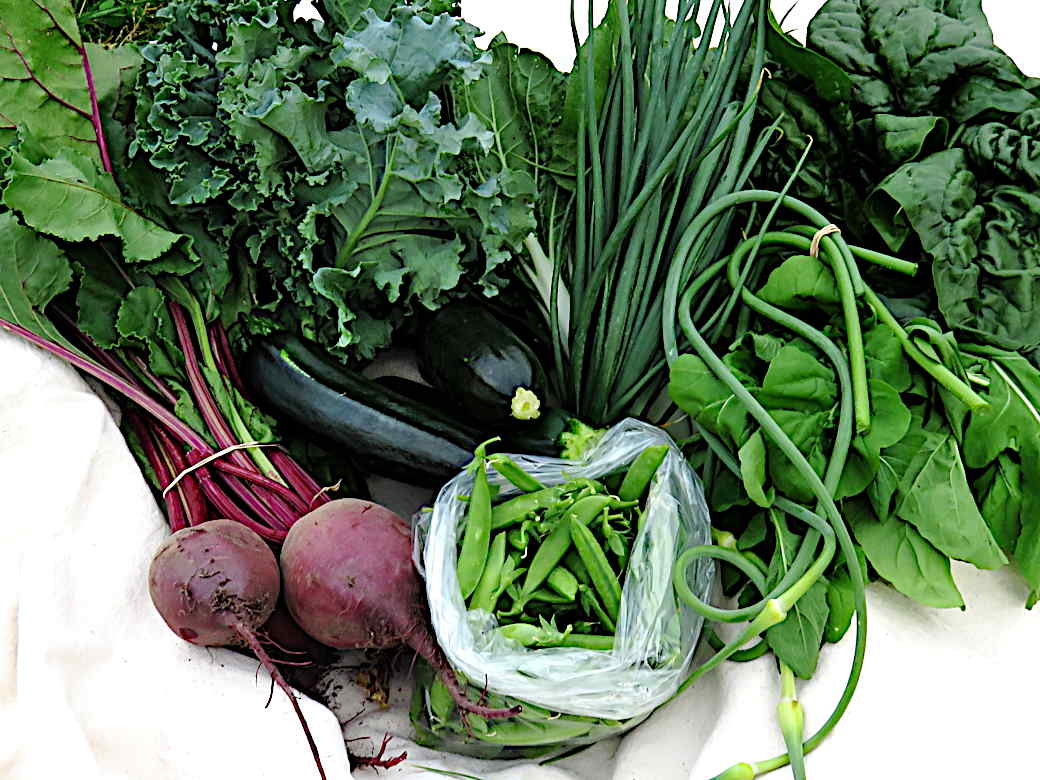
Early summer harvest
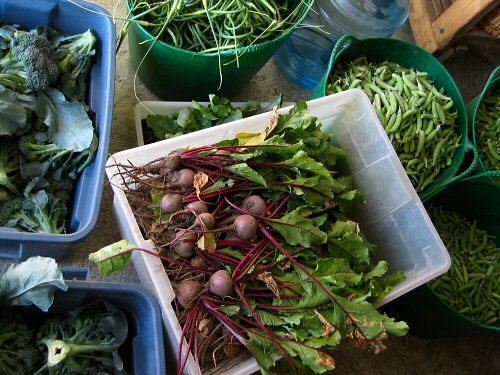
Bigger harvest, still mostly green. Beets, snap peas, spinach, garlic scapes, zucchini, kale, green onions, arugula, bok choi.
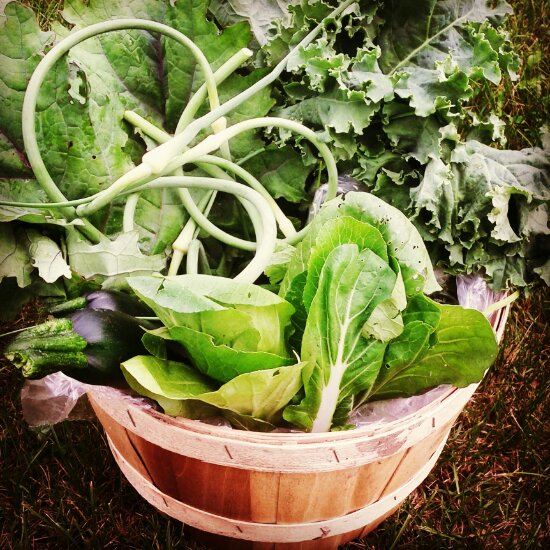
Early share
This week’s harvest basket, still greens, mainly: young curly and flat leaf kale, baby bok choi (autographed by a few flea beetles that made it under the cover), our Zippy Mix (today’s version, mustards as always, with mizuna and some baby Chinese cabbage), 4-lettuce mix (out of sight), plus garlic scapes and baby zucchini. Pretty simple. Not bad… We’re not doing CSA this year, but we do have a handful of share commitments!
Local beef
A cool change with the much bigger farmers’ market we’re at this year is the easy access to lots more local food from other market vendors. We’re there every Saturday, and so are they! (Nothing better for really appreciating a farmers’ market than being both a seller and a buyer…).
The biggest change for me is, suddenly, there’s all sorts of LOCAL MEAT. There’s beef, bison, chicken, emu, rhea (ostrich-like), plus a cured-meat-and-sausage vendor, a butcher, and more (venison and elk, I think, and there must be pork in there as well). Still haven’t gone through it all, but I have started to taste my way through the beef. This week, I’m on to a second beef farm.
My sampling approach is simple: buy a steak cut (I prefer rib) and some ground, expensive and…less so. In the first taste test, the beef was certified organic and 100% grass-fed. Today’s, also certified, is fed a combination of grass (pasture in summer, hay in winter, of course) and corn silage, all grown on their farm.
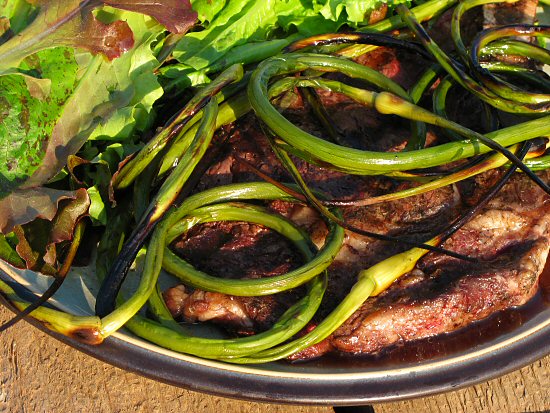
The meal is pretty local: rib steak, grilled to medium-rare and lightly salted, topped with grilled garlic scapes, tossed in a salt, pepper and olive oil, and our all-lettuce mesclun, just cut, with a drizzle of olive oil and a splash of apple cider vinegar.
The scapes are from our market stand neighbors (it’s so sad not having our own fall-planted garlic in the garden this year!), happen to be organic, gotten on a trade for mesclun. The beef was purchased for full price (vendors give each other a 10% discount here, but I didn’t bother to identify myself just for the savings, I’m sure we’ll get to know each other over the summer…!).
All in all, totally tasty, and even easier to buy and cook than to write about! :)
Late June harvest
The harvest is still small: snap peas, broccoli, mesclun, the last of the garlic scapes and spring spinach, beet greens, the first few, baby beets. With 50 CSA shares to fill this year (around double from last year), plus the farmers’ market, a couple of local outlets, and the farm stand, I’ve really upped the ante. Even with PEOPLE at work in the field, I’m concerned about quantity. Where bad germination and losses from pest damage here and there have been no real worry so far, now every little setback seems…dire. Probably, most of this is in my head, endless millions of small farmers have done it before and are doing it now. Still, staying tiny and diversified at my particular scale seems tougher than before. It’ll work out, and for now, any uncertainty keeps the adrenaline on a steady slow drip! :)