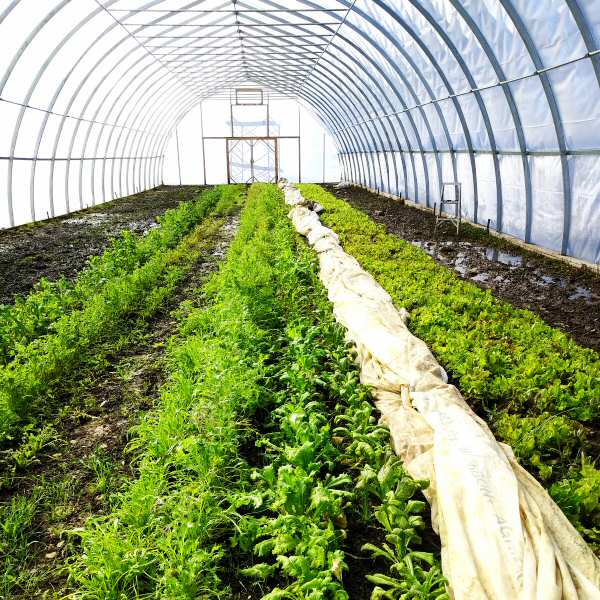
Post-winter greens

Post-winter greens

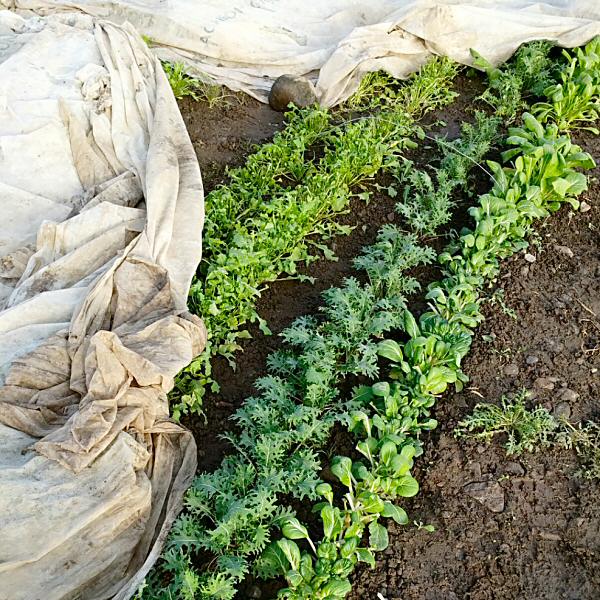
The covers are off and it’s all shades of green! That’s about three months, left to their own devices, living through freezing nights, often around -20°C (-4°F), and a low of -32°C (-25.6°F), under a couple of layers of medium-weight row cover, which means, little light (with the plastic added in, somewhere around 50% of already weak winter sun). Inside, at ground level outside the row cover, the lowest it got on the coldest night was an amazingly not-so-chilly-at-all -13°C (8.6°F). As a simple survival test…excellent!
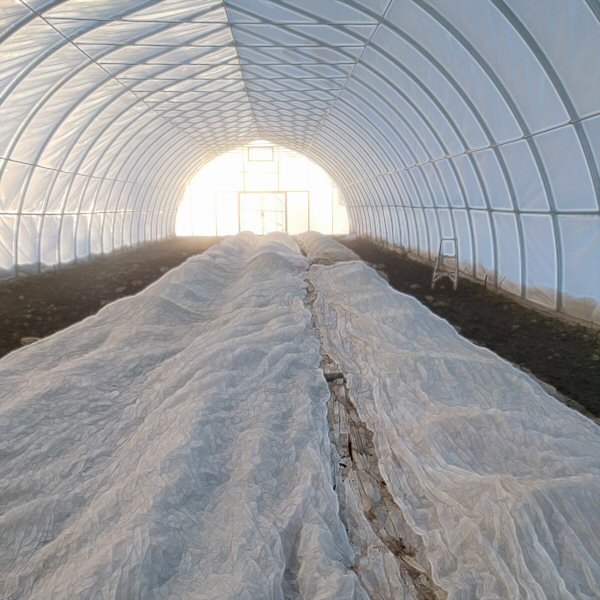
 

Sundown in the hoophouse

Sundown in the hoophouse

Not your typical postcard sunset, and it’s kinda chilly, damp and mucky in here, even as the temperature outside slides down to an overnight -15°C (5°F). But it’s all about the greens, tucked under a couple of layers of row cover, maybe not exactly cozy with only ground heat to keep them warm—who knows how they’re really feeling—still, well-set to survive another sub-zero night. With that in mind, sundown through 6 mil plastic is a cheery-enough sight to see!

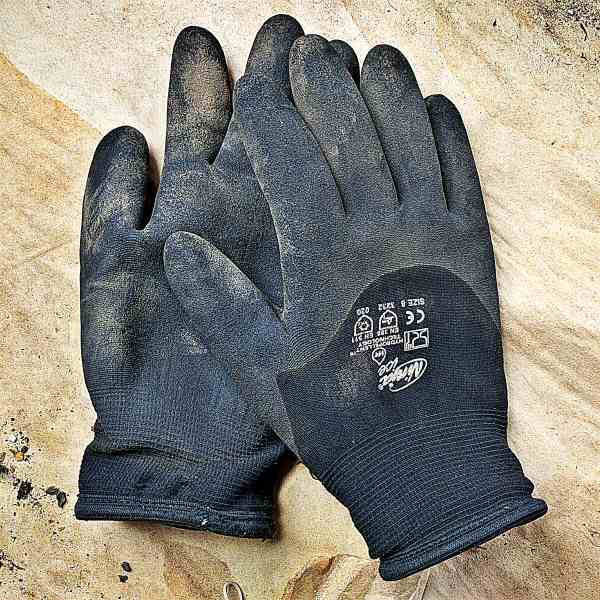
Great gloves get a little better!

Good fieldwork gloves for fall and winter

How excited can you get about a pair of gloves that you use to work in the field? Quite! Although enthusiastic may be the better word. This style of glove I’ve used for a while, for fall and winter, in cold weather. I wrote about their many fine features a while back—this particular version is the best yet, with the grippy, waterproof coating extending just far enough down the back so that they don’t get wet during normal handling of soggy stuff, while allowing enough open, breathable area so your hands don’t sweat. What more can I say?!

Cold crop lettuce

Greens in unheated hoophouse after the deep freeze

Lettuce in the unheated greenhouse, under a couple of layers of medium-weight row cover, is doing fine so far, firm and tasty after weeks of sub-freezing nights, all the way down to -30°C (-22°F). Now there’s even a noticeable bit of grow-back from the last cut, late December (even the weeds are getting in on the protection, see bottom left). My first full-winter tiny farming experiment continues…!

It’s cold

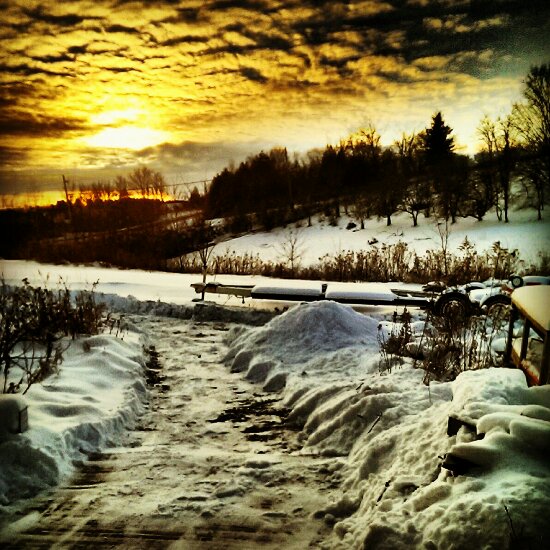
Sometimes the winterscape looks a little strange… We’ve been in a deep freeze for most of the last month (mostly in the -5° to -20° range at night, the days barely higher, with a couple of pleasantly mild exceptions). Today, a little more snow. Need a break to harvest the last of the carrots.

Cold-grown salad

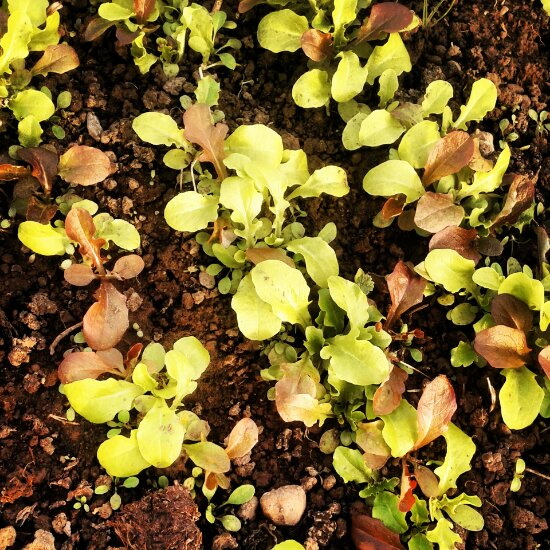
Cold-grown: Tiny lettuce leaves, crisp, fresh and delicious…and grown oh so slowly, without cover, in the unheated greenhouse, through many freezing nights, some down to -15C. Still a while till it’s big enough to harvest, and it was seeded way back at the beginning of October: that’s already 50 days compared to the usual spring/summer 25-35 days for baby lettuce mix). Also, the cold effect gets trickier as the leaves get bigger. All in all, though, seeing food grow in the cold with a minimum of help is quite fantastic.

Winter greens: the long haul

Unheated greenhouse early March

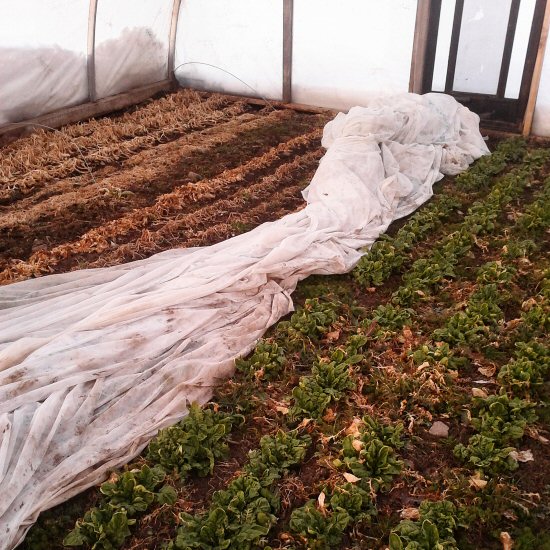
Checking in on the winter greens mini-experiment. These guys have been through six weeks of up and down weather, balmy days well above zero (reaching 60-70°F/15-20°C on a sunny day in the hoophouse) , and many extreme freezing nights. So, how did it all do? The Bloomsdale spinach, uncovered (above), is fine, although after all that freezing and thawing, the taste and texture changes (good to eat, but probably wouldn’t sell). It wasn’t the plan, but this spinach can be trimmed back to see how new growth does in spring. The other beds, all brassicas (tatsoi, mizuna, arugula, mustards), left half uncovered, are completely toasted. Meanwhile, under a single layer of medium-weight row cover, arugula (below) is good, perky and quite tasty. Not the most extensive and scientific testing plan, but combined with the experience of harvesting through December and in mid-January, it’s a solid starting point for next winter’s goal of full-on, unheated winter greens production!