Next generation

The second round of lettuce isn’t a next generation in a people having kids way, but it feels like one, as one seeding of lettuce grows to tasty salad size, while another is just getting started to take its place. Achieving an endless harvest is super rewarding (not to mention, necessary, if you’re going to market every week)—succession planting so that quick-to-mature, pick-once crops are steadily available at their peak all through the growing season. Salad greens like lettuce, mustard and arugula, baby bok choi and kale, also spinach, radish, summer turnip, green onions, and more can be planted repeatedly. Work out the timing, as things grow fast early on and slow down into end of summer and fall.

Oddly, in the hundreds or thousands of home veg gardening chats I’ve had, I can’t remember anyone beaming with satisfaction over their succession planting successes. It’s as if home garden seeding only happens in spring. Maybe lots of home tiny farmers do it, and just don’t like talking about it. It makes sense, it’s useful, and it’s fun to mention!

Best lettuce!

Mezquite variety of romaine lettuce

Just watered heads of Mezquite lettuce, doing well given all the heat they’ve had to deal with over the last weeks. This is a great, fast-maturing romaine lettuce. It’s sweet and crunchy, even in full summer heat that makes most lettuces strong flavored, with a slightly bitter edge.

I grew up with mild lettuce, the standard supermarket fare that’s sourced from wherever the crop grows most abundantly. Here in the mixed veg world of the tiny market garden, no crop can expect its own perfect conditions. That doesn’t mean inferior vegetables, instead, you get a full range of tastes. Grown in summer heat, lettuce often develops a full-bodied flavor and a pleasing hint of bitterness—with a little oil and vinegar, salt and pepper, or in a sandwich, it’s a whole new, elevated taste bud experience!

Anyhow, this Mezquite variety combines full flavor with sweetness, holds up well in all conditions, matures a week or two faster than most other romaines, and is even open-pollinated so you can save the seed. As long as a roving critter doesn’t breach the defenses, like the row cover these guys spend much of their time under, they’re a treat in the making! I harvested a couple today for early tasting purposes…

Lettuce pops!

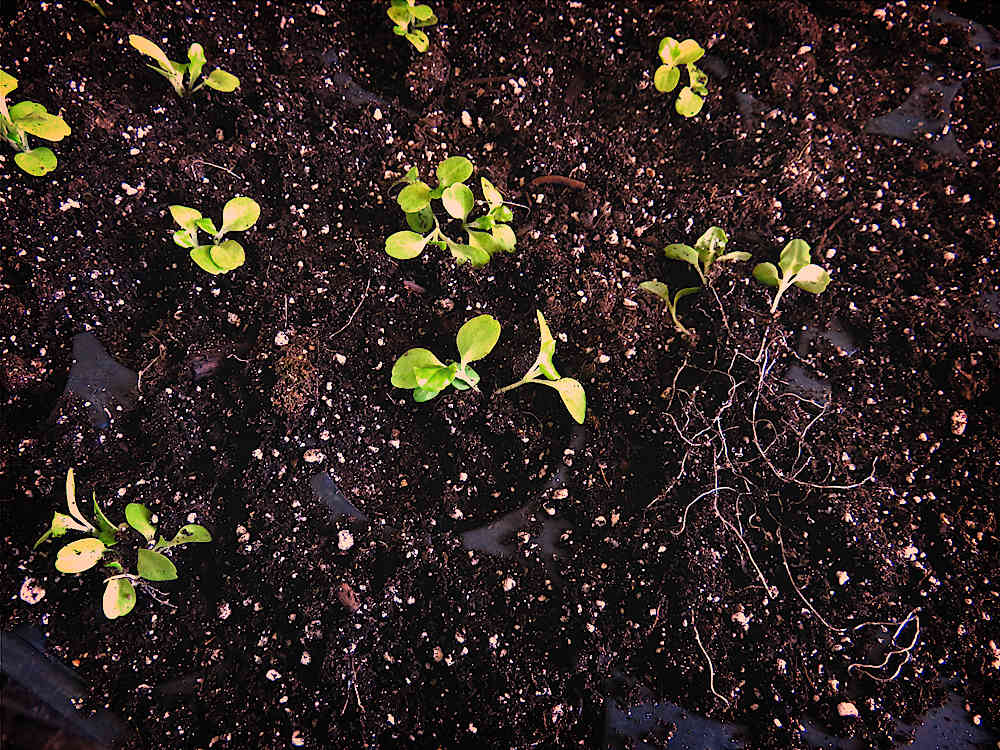
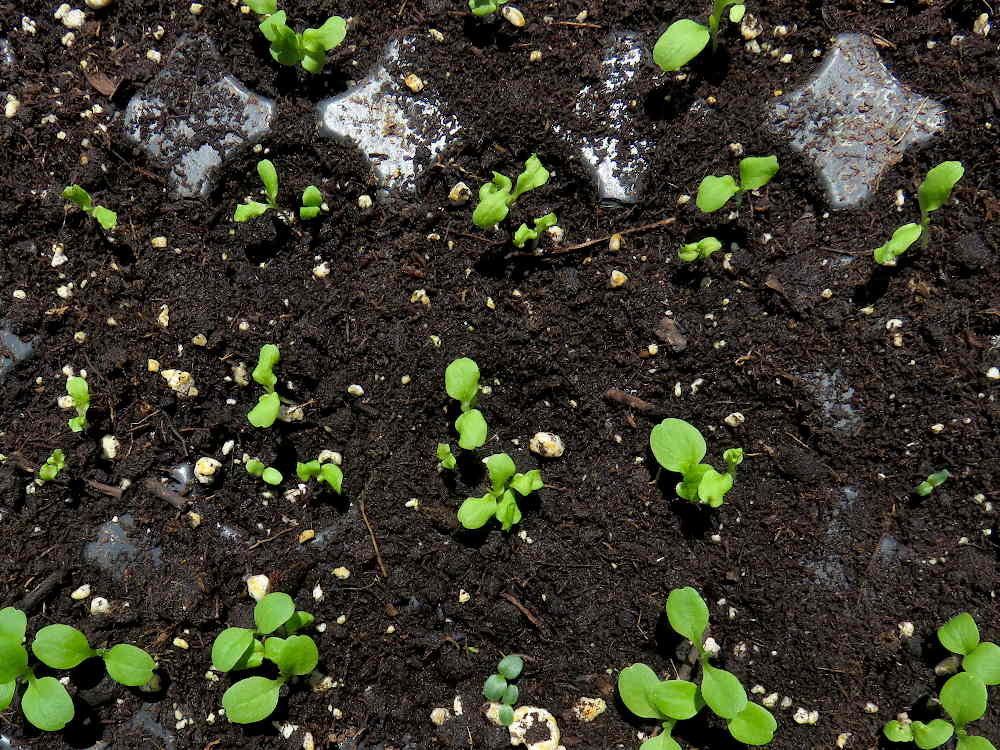
Lettuce seedlings first pop

“Pop” isn’t the most elegant, poetic word, but that’s what I thought the first time I noticed how plants can suddenly shoot up overnight. It’s feels like magic, especially when you’ve been obsessively focused practically hour by hour on their progress, as I was in my first year of farming. Crops are growing slow and steady, then you turn around for a minute and they’re suddenly transformed: bigger, more vibrant colors, next level! As if they POPPED into a new form, like in a cartoon. Plants can pop right through their growth, from when they’re tiny seedlings (some, like corn and pole beans, grow so fast in the field that you can imagine staring at them for a while and being able to actually see them grow). It might not seem like much to look at, but to the watchful eye, these lettuces just popped. Nice!

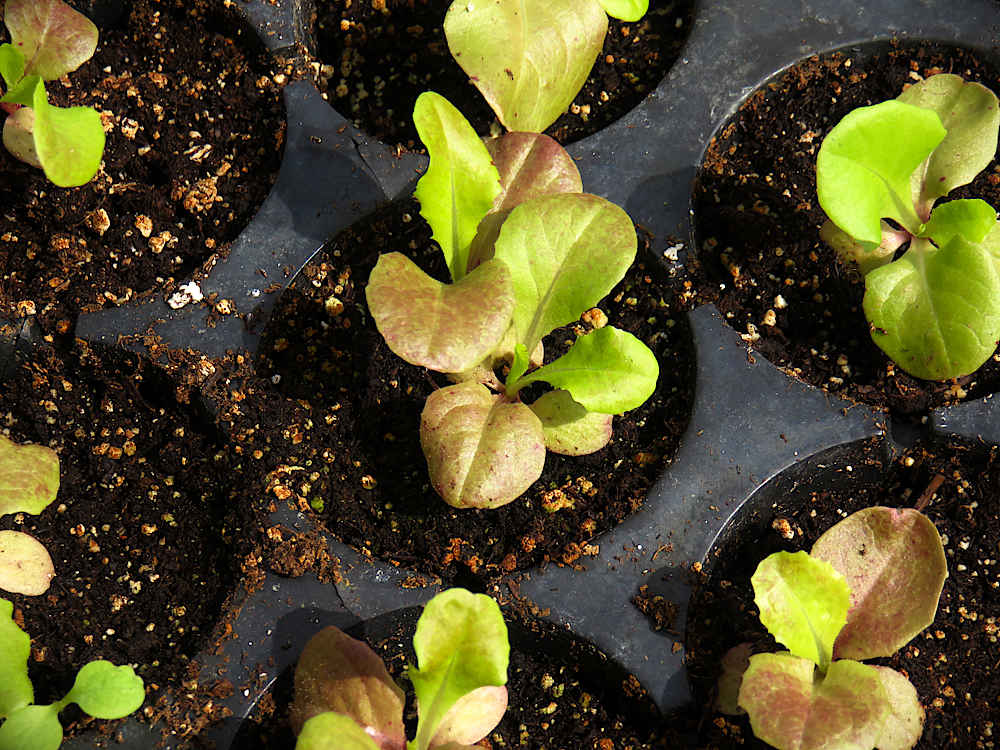
Bare root lettuce transplant

Bare root lettuce transplant

Bare-root transplanting lettuce—separating seedlings and replanting them with more space to spread their roots—isn’t something you’d do on a large scale. At Tiny Farm scale, it’s manageable and fun in a simple, relaxed way, like making flatbread, or prepping veggies for cooking. Very up close and personal with the plants. My usual approach is to seed them where they’ll stay until transplanting in the field, which saves time. With this round of lettuce, I was starting five varieties and wanted to see how they all germinated, so I seeded a bunch of each in a single plug sheet, and today I divided them as needed. Some are still two or three together, so as not to tear apart the roots too much, to be thinned later on. It all works out!

Lettuce under lights

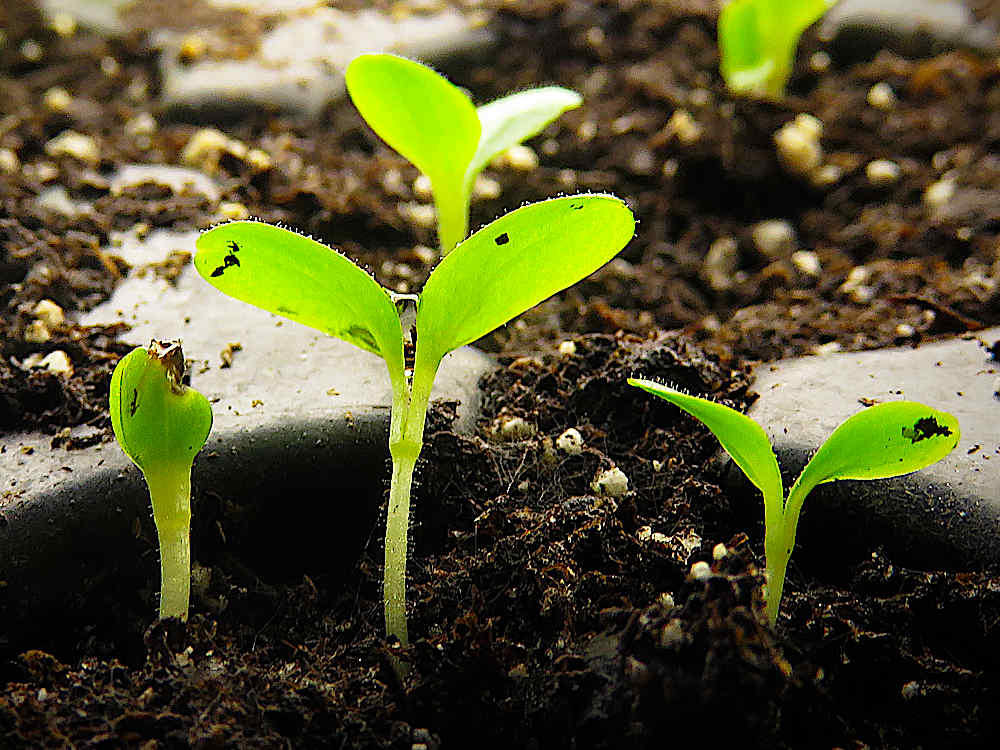
Lettuce seedling

The first round of lettuce, five days from germination, under the lights. I could have started them earlier: two weeks, three, four? It all depends on the weather, when it seems right to transplant, and when you’re hoping for the first harvest. This year, hopefully young harvestable lettuce is ready by late June, so if I can plant them out in mid-May, great! Some years, I’ve started lettuce as early as February, for planting in April in an unheated hoophouse. This time around, it’s straight to the open field. We’ll see how it works out!

October harvest

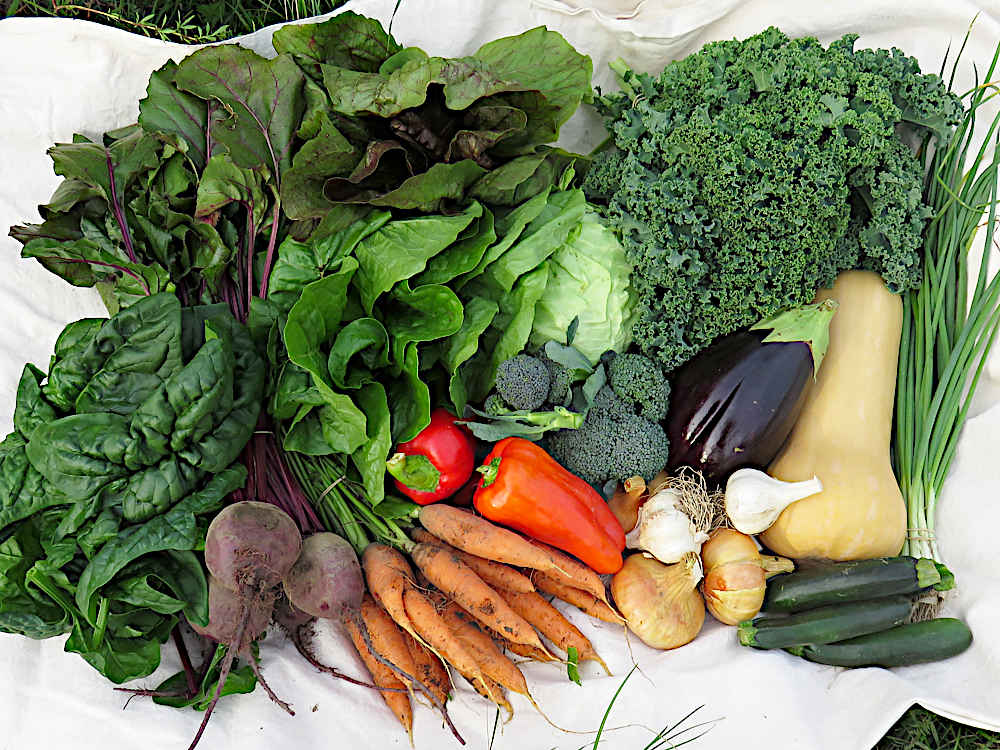
October vegetable harvest

Great weather into the first week of October, with no hard frost so far. The veggie harvest list: beets, carrots, peppers, garlic, onion, green onion, zucchini, spinach, kale, lettuce, cabbage, butternut squash, radicchio, broccoli, eggplant. Nice!

Mid-September harvest

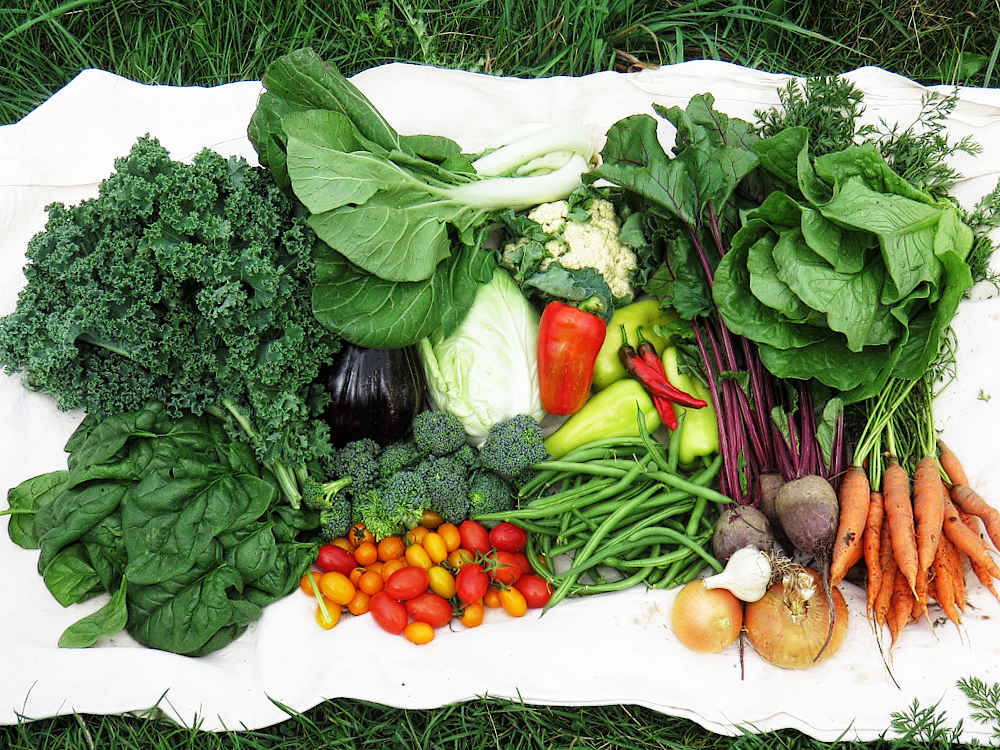
Mid-September vegetable harvest

The weather’s been fine, no big frost worries, and the harvest is nice. For the sake of a list, in no particular order, we have: spinach, onion, garlic, carrots, bok choi, broccoli, lettuce, cabbage, kale, hot and sweet peppers, cauliflower, cherry tomatoes, green beans, beets, and…eggplant! I think I got ’em all. The set-up on a strip of canvas is for a newsletter photo–the lighting is an overcast sun, the studio is the field!