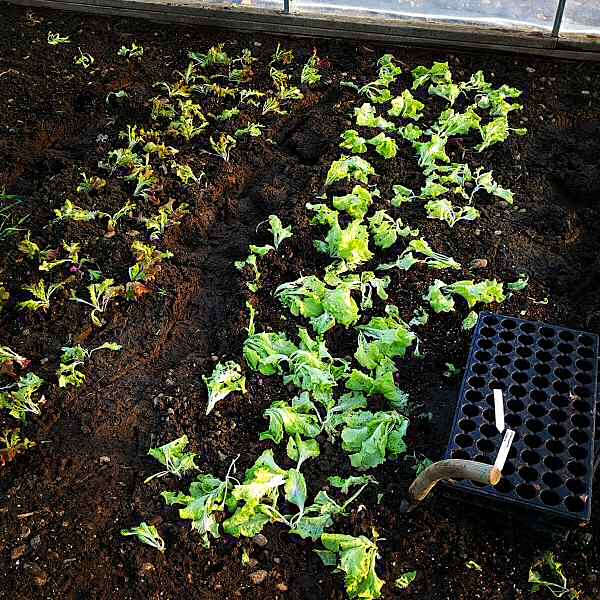
Transplanting lettuce into the unheated greenhouse, filling it out in small sections to work around wetter areas. The seedlings, waiting for drier conditions, stayed a couple of weeks longer in trays than ideal—now they’re a little floppy and stretched, but I’m confident they’ll figure it out. This first spring, seeing how the ground dries in the new hoophouse is part of the learning curve. Tiny farming!
hoophouse
Winter salad
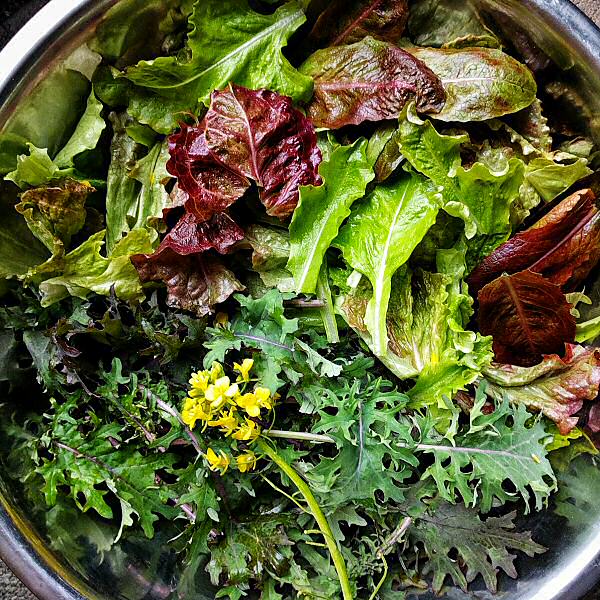
This bowl of lettuces and kale is the first cut of spring, taken from the unheated greenhouse while snow flurries whip around outside. With the help of 6 mils of plastic and some row cover, the salad easily survived three months of winter, with temperatures that went down to -30°C (-22°F). The texture and color are good, the taste, deliciously bold. Fantastic! The flowers are bok choi that managed to bolt in the alternating warmth and cold—on sunny days, the hoophouse temperature could easily reach 10-15°C (50-59°F), even when it was sub-zero outside. Interesting!
Sundown in the hoophouse
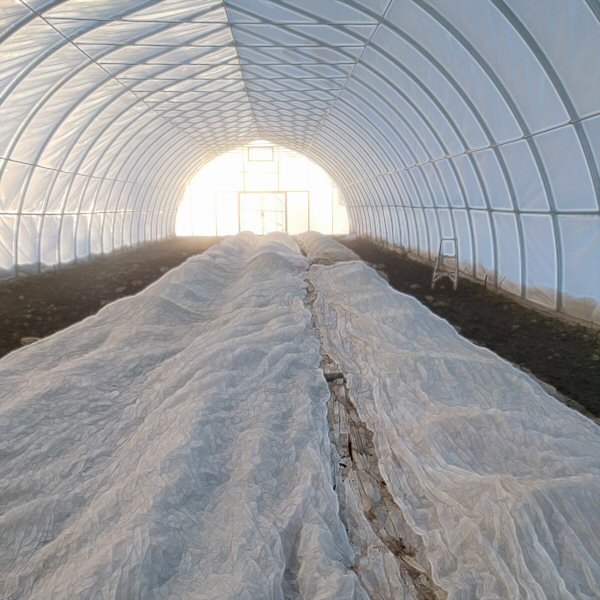
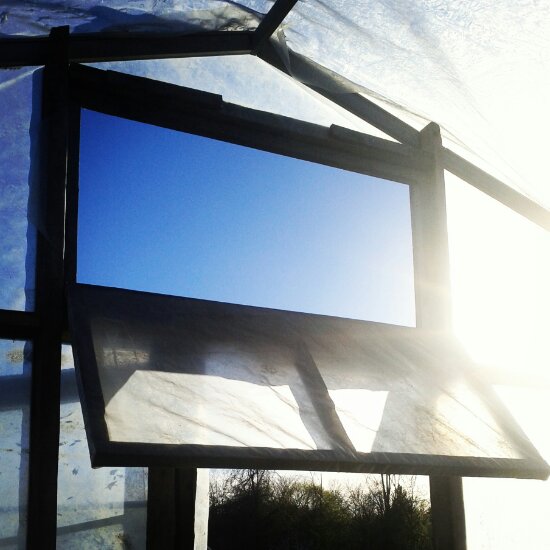
Not your typical postcard sunset, and it’s kinda chilly, damp and mucky in here, even as the temperature outside slides down to an overnight -15°C (5°F). But it’s all about the greens, tucked under a couple of layers of row cover, maybe not exactly cozy with only ground heat to keep them warm—who knows how they’re really feeling—still, well-set to survive another sub-zero night. With that in mind, sundown through 6 mil plastic is a cheery-enough sight to see!
Cold crop lettuce
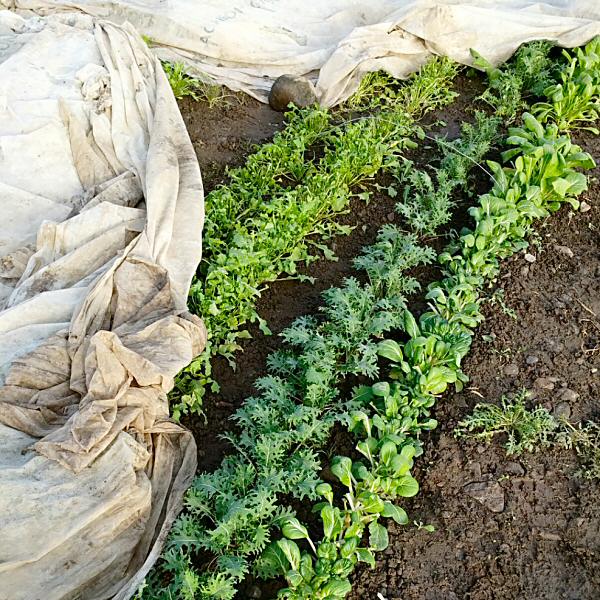
Lettuce in the unheated greenhouse, under a couple of layers of medium-weight row cover, is doing fine so far, firm and tasty after weeks of sub-freezing nights, all the way down to -30°C (-22°F). Now there’s even a noticeable bit of grow-back from the last cut, late December (even the weeds are getting in on the protection, see bottom left). My first full-winter tiny farming experiment continues…!
Wire work
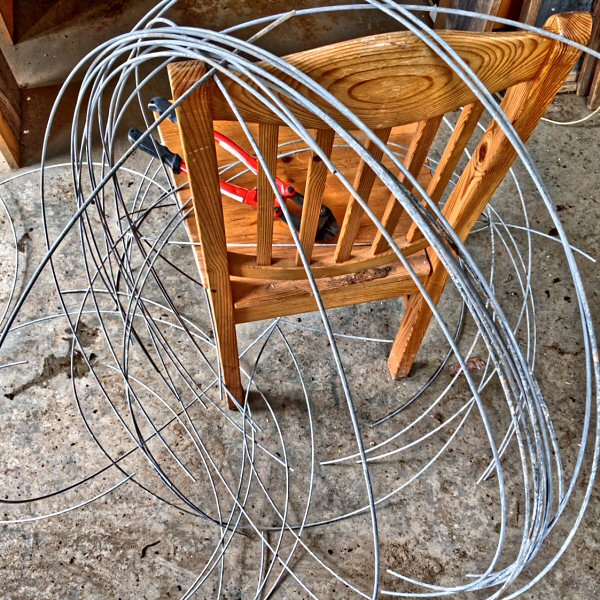
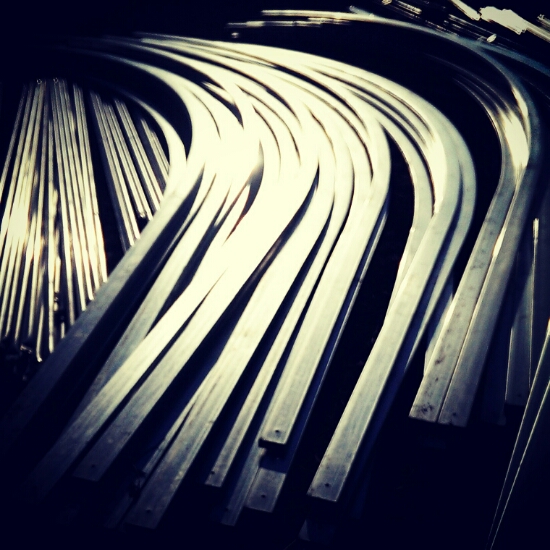
Electric fence wire work, snipping 6-foot pieces of 9-gauge wire for hoops to hold up floating row cover in the greenhouse. Hopefully this wire is stiff enough to do the job, supporting up to three layers of row cover, heavy with moisture from humidity and being dripped on by water condensed on the inside of the hoophouse plastic, or weighed down by ice, when the soaked cover freezes at night. This test batch of about 180′ came coiled, in a circle about 2½’ in diameter, and the built in curve is perfect for stretching slightly to span about 4′ of bed. So, no bending required, it’s all about the snipping!