
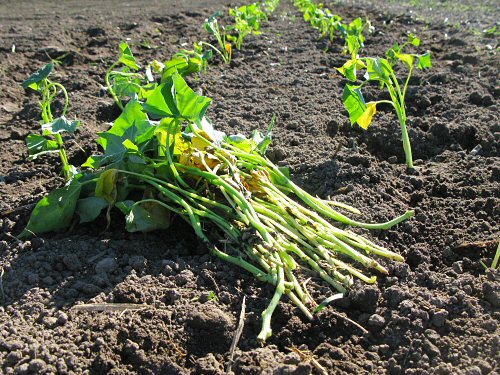
Sweet potatoes are in! They were a last minute addition this year, I was expecting them by the end of May, and then started to write ’em off when I couldn’t get in touch with the grower who was supplying them. But he came through, and they arrived by UPS yesterday, one box with around 1000 slips. Bob P., the sweet potato farmer who sent them, is also here in Ontario, but further south in a microclimate zone near Lake Ontario that’s a lot warmer. Still, they should grow here as well. The variety is Beauregard and they’re started from slips, which are vine cuttings. This is the first crop I’ve started strictly from direct grower-to-grower info, it was great to chat about them on the phone, rather than do the usual new crop…research. And they sound unbelievably trouble-free. Bob’s instructions: stick ’em in the ground with the growing point 2-3″ (5-7.5cm) above the surface, 12″ (30cm) in-row spacing, and as little as 12″ between row, all the way up to 3′ or whatever you like for tractor transplanting and cultivation. That’s it! No watering in, no watering except in extreme drought conditions. Just…weed. Hmmm… I’ll look into them more, but for now, that’s what I did, and there they are. The leaves will probably die off, it’s new rooting that should happen. One mild concern: sweet potato grows best in loose, sandy soil, where here the heavier clay loam is being well-compressed by lots and lots of at times pounding rain. Also, the slips are apparently supposed to be planted within 7 days of cutting, and it’s about a day after that. We’ll see. In 100 days, sweet potatoes? ;)
cuttings
Herbs…
Picked up some herb seedlings from local growers at the farmers’ market yesterday. From the bottom left: peppermint, lovage, spearmint, rosemary (started here from cuttings), and tarragon (peeking in from the corner). I generally grow everything possible from seed, so the ones from the market are a bit of an instant treat. I’ll buy a couple of seedlings and multiply them myself to production quantities, which in this case means next year, at least, for the lovage and tarragon. Last frost date was May 18, the 15-day forecast is well above zero C, so it’s now time to get all of the seedlings in. It’s also time to direct seed the flowers. Lots to do…
Rosemary cloned
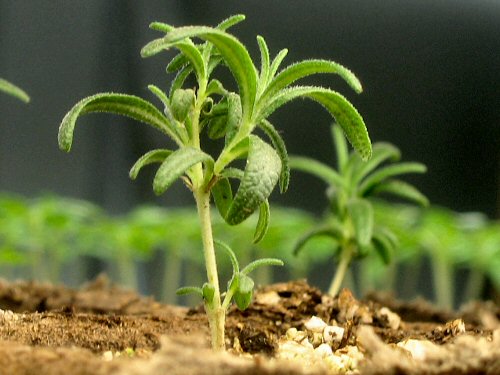
The little gamble on propagating rosemary from frail cuttings paid off at 20%. Out of about 40 starts, eight took root, this without any sort of rooting compound. I put them in 3″ peat pots yesterday. They’re headed for the summer herb garden.
Rosemary revival
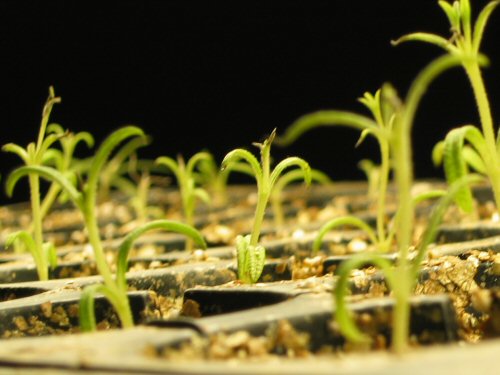
A little experiment in vegetative propagation—replicating rosemary from tiny, stressed cuttings. Most of the potted rosemary taken up from the herb garden last season got toasted after too many -20°C nights in the unheated greenhouse (a bit of a random how-cold-can-they-go experiment). These tiny cuttings came from one that was taken indoors earlier. They’re kinda frail and stretched from relatively low light (etiolated is the typically uncommon technical term). They’ve already been three days in the tray, let’s see how they do. (Fast forward to…results!)