Pie plate protection

Fluttering pie plates scare off birds

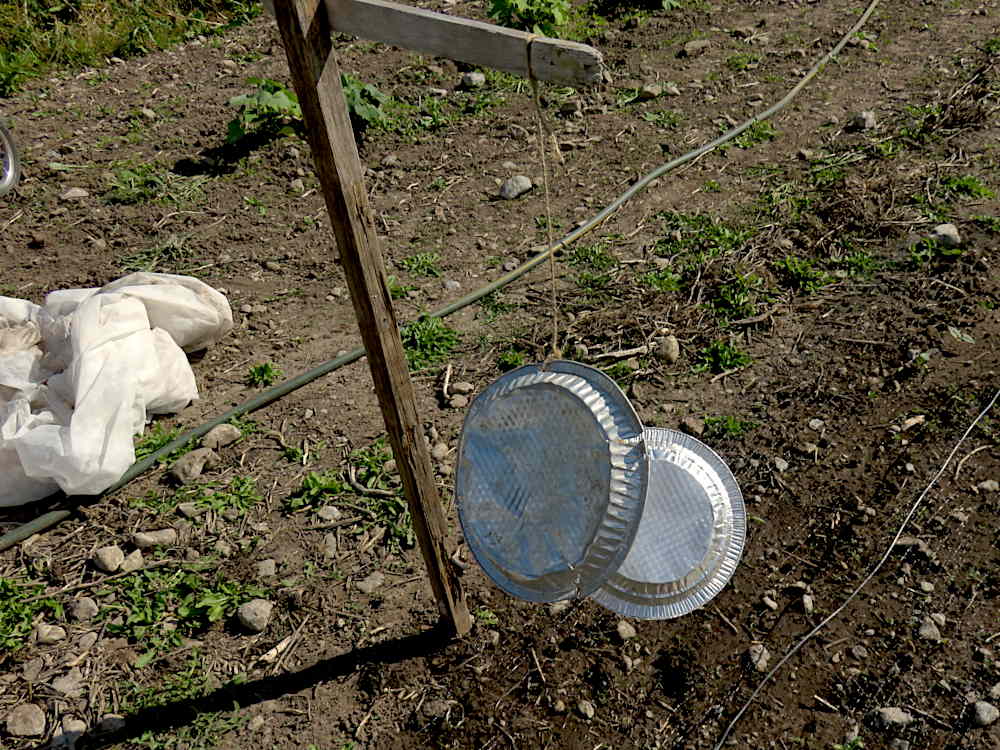
A couple of pie plates tied to a post, fluttering and lightly clanking in the breeze…scares birds. Why mess with the birds? In this case, to protect green beans as they emerge as perfectly peckable bird treats. To prevent avian decapitation, pie plates work, more DIY than scare balls, with the added dimension of sound. Not as soothing as wind chimes, but relaxing in the background, probably because it signals…protection!

DETAILS: It’s amazing what wind can do. In really heavy gusts, the plates can tear off—there’s a rip from last year on the upper pan. But that’s an extreme. You could reinforce the hole, but I don’t bother. For the post, which can also get blown over, I dug a small hole with a trowel, filled it with water, then pounded it into the mud. Probably a foot down. The whole rig should hang together just fine.

Birds 2 – Beans 1

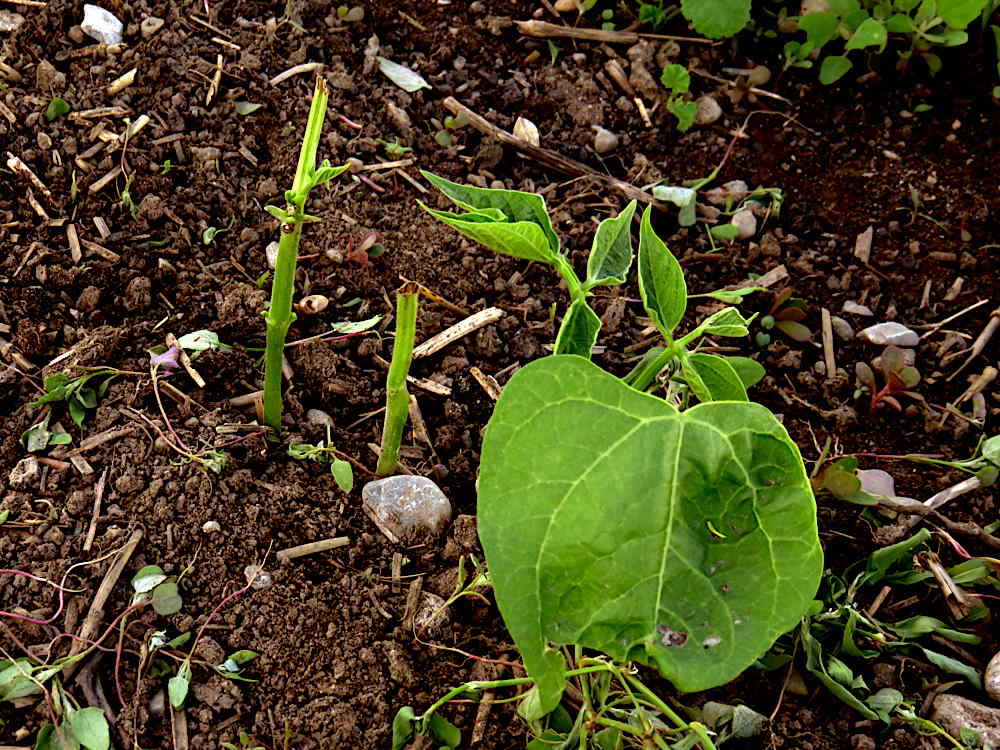
Bird damage on bean plants

The first small bed of green beans was coming up fine—then I lapsed for a moment, and the beans were mercilessly attacked. So it goes in the rough-and-tumble world of the country veggie garden. I suspect birds. Can’t be sure but I’m pretty sure. I’ve seen them in action before. The ragged tops of the stems seem to point to pecking action, not the clean angled slice of creatures with teeth.

Instead of seed leaves, beans emerge with the actual bean split in two right on top of the stem, like an irresistible treat on a stick. Not sure what sort of garden raider survival strategy that represents. I usually put out anti-bird measures: inflatable scare balls or aluminum pie plates suspended on string. Or toss on some row cover—the duct tape of the garden—until a few leaves develop.

Here I didn’t act as soon as I saw the first signs of emerging beans. Also, I’m not used to hand-seeding and probably got a little too precise and seed-saving. With a seeder, plenty of seed drops, so there’s room for thinning, even by birds. Unforced human errors!

Anyhow, there are still enough plants for a decent first harvest, and a bigger bed is seeded and underway, with pie plates heading to the field. Bonus quarter point for the beans—you can see a tiny new leaf on one of the bare stems as it goes for a comeback!

Robin at the window

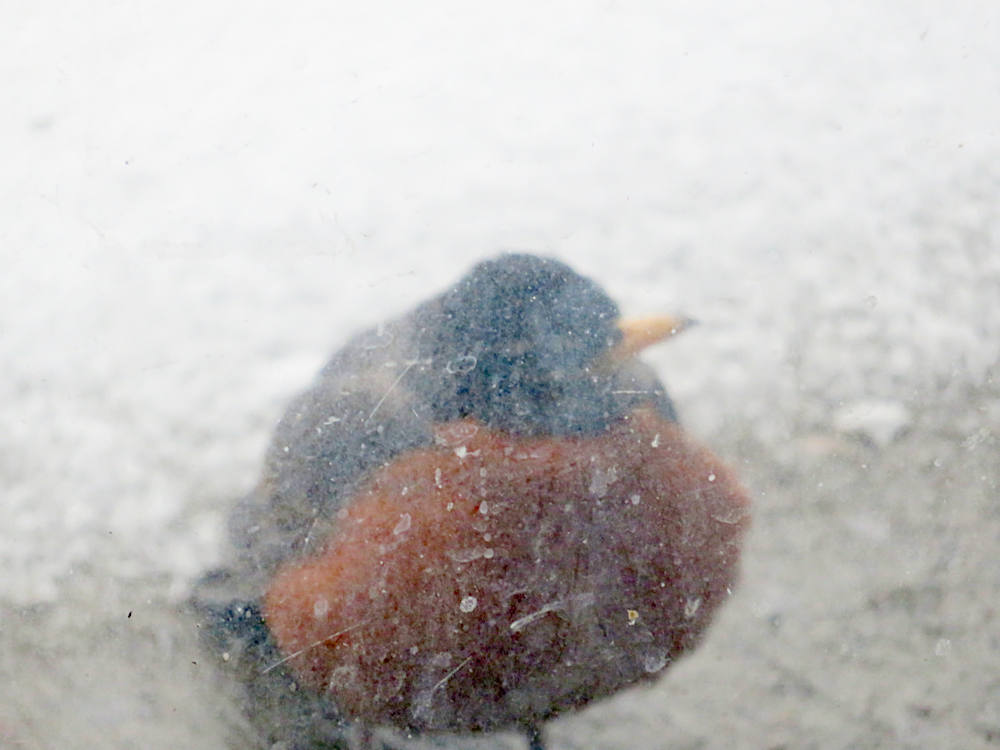
American robin at the window on a snowy day

Looked down at the patio door and what did I see? A robin on the outside, standing right up to the glass between us, kind of looking back at me. Or maybe (more likely) seeing its reflection as another robin. It’s a bit of a surprise. Robins are usually summer company in the field, darting around, searching for bugs as I weed or harvest, not hopping around in near zero weather, in snow and freezing rain. It’s like being let into another part of their life. In any case, this guy or gal looks pleasantly plump and unperturbed. I’m glad to see they are quite all-weather and doing fine in the off-season.

Orange-breasted, worm-eating buddy

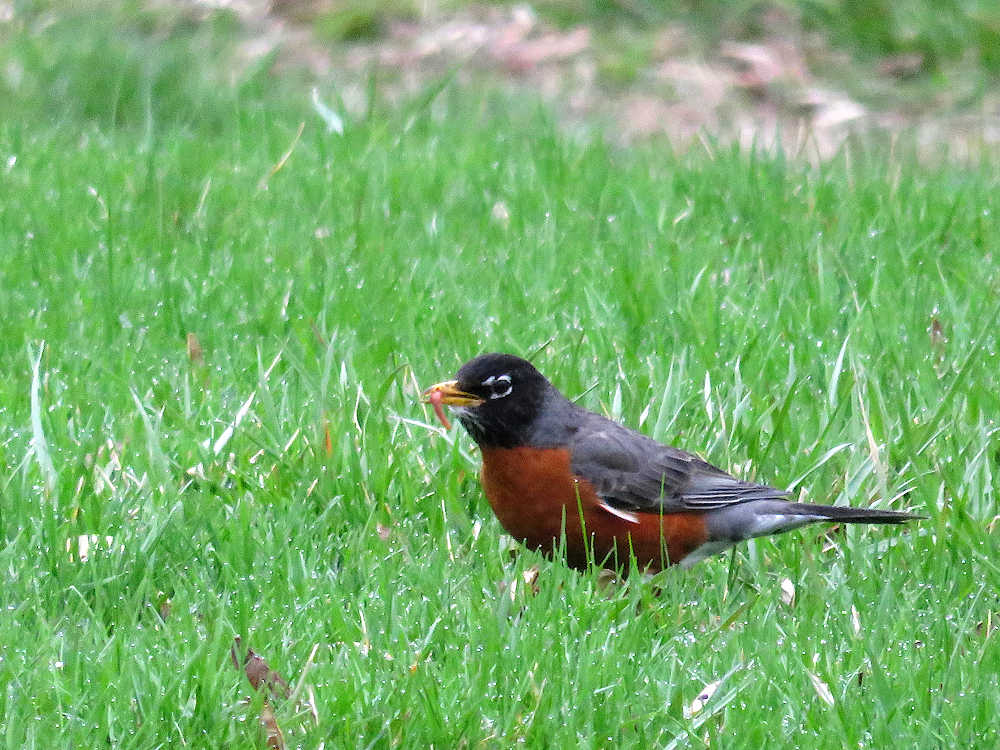
American robin

One of my annual garden companions. First met the American robin when I started veggie farming. I thought it was a sign. The bird was quite near me, darting a ways, then stopping, seeming to follow me, not looking worried when I turned towards it. Other than urban pigeons and scavenging seagulls, I wasn’t used to birds being so on grounded. It soon seemed clear that it was following me, probably resonating with my kindred earthy spirit, recognizing a fellow field worker, accepting me into the tribe. Turns out that spending a lot of time on the ground, running around looking for bugs and earthworms, especially in open, freshly tilled fields, is just what the American robin does. I was only a part of its landscape. Oh well.

These guys are here every year, keeping company in the field. Later in the season, I sometimes see the chicks zooming around, cuter than kittens. I read that American robins are known to gorge on berries that have fermented, get drunk, and topple over as they dart around. Hope they don’t drink and fly (but they apparently do)!

American crow

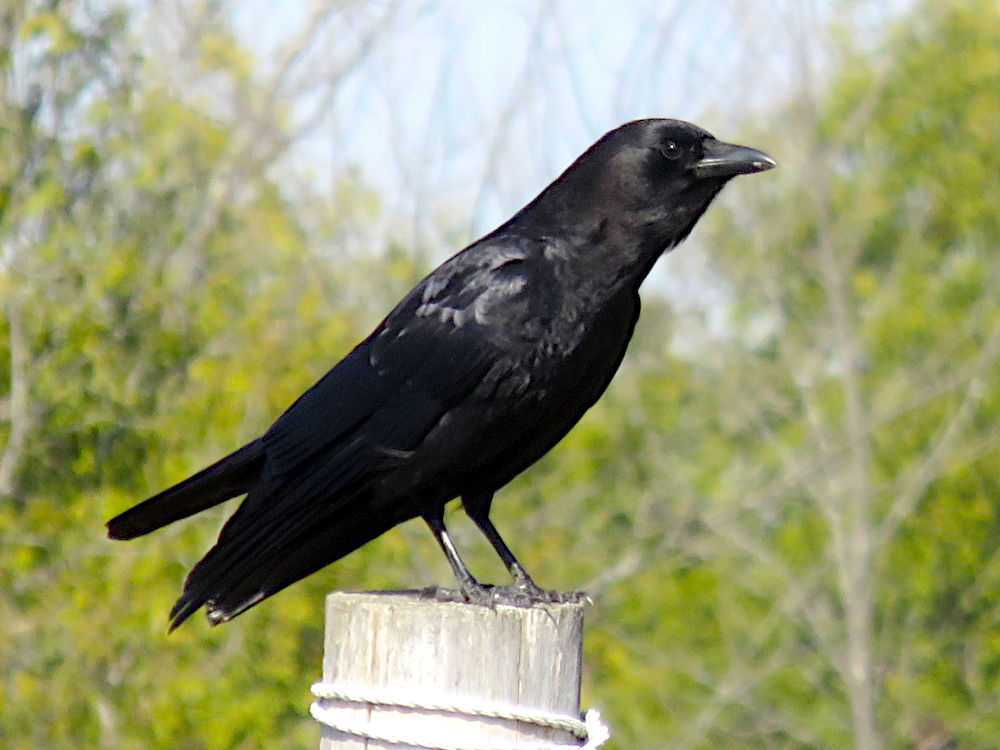
Crow perched on a post

A crow on a post. This is called an American crow, I believe, to be specific. I kinda, well, not envy them, exactly, but would like to try it out. The flying and casually perching on high for a look around. I’m in the field for the better part of most days, and practically none of that time is spent feeling immersed in nature. It’s more about whatever the task at hand. When the work is repetitive, which it mostly is, thoughts are floating around in my head, or I’m listening to a podcast or music. All through the day, though, the everyday intricacies of nature nudge to the front. I’ll stop to gaze at a hawk lazily circling (and think about which veggie-devouring critter it might be eyeing for lunch). Or suddenly notice the busy hum of bees and sit back from weeding to watch them at work. Or be slightly startled by the way tiny zucchinis have grown to dinner-size literally overnight.

Turkey vulture on patrol

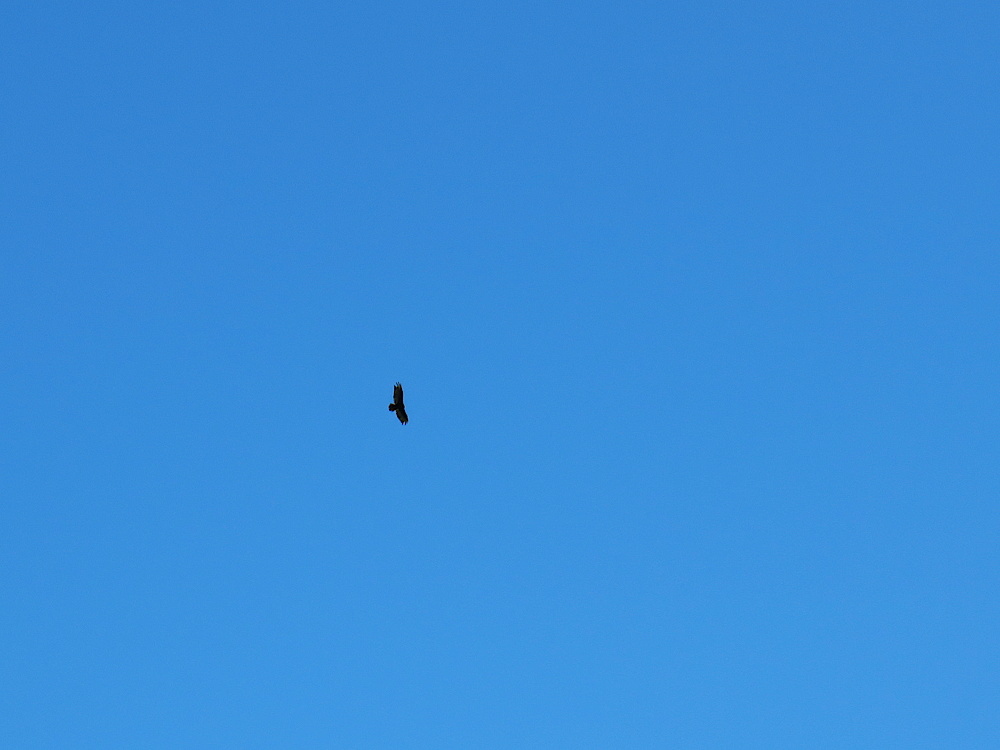
A turkey vulture lazily circling way up, looking for dead flesh. I’m not entirely sure of my bird ID, but pretty sure. These guys circle all the time, barely moving their wings. I used to happily imagine they were some kind of hawk, on patrol over the vegetable patch, the clear, weeded rows a perfect background for spotting rabbits, maybe even zeroing in on seedling-munching field mice and voles. It was a pleasant thought bubble, burst when I eventually looked into it. The overall boxy shape, the fingered wingtip feathers, the patient gliding loops with little flapping, all seemed to say, “Vulture! Turkey vulture!”

Looking for leaves

No leaves

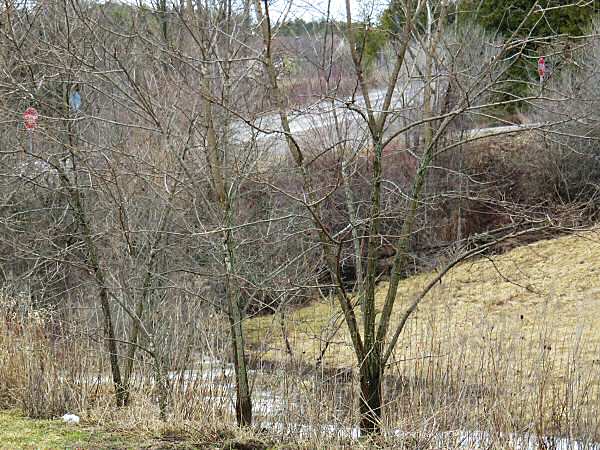
The snow’s gone, replaced by puddles and mud. You can still see the road through the trees—the only aerial green so far is evergreen. An overall browned-out scene, but what’s not in the pic is the vigorous twittering of birds, the tantalizing hint of real warmth in the still chilly air, the slightly musty dampness of winter earth waking up, as the outdoors steadily gets ready to…explode!