Veggie sleuthing

Asian veggies at the supermarket

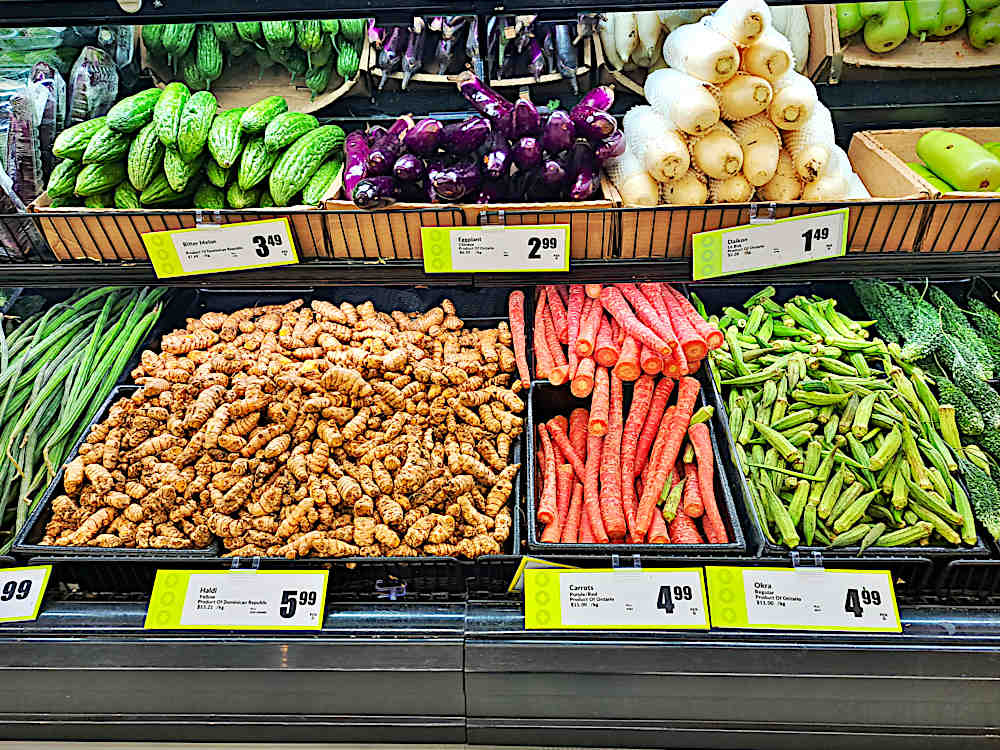
Part of the Asian/Southeast Asian veggie section at one of the local supermarkets. Most of these vegetables are unfamiliar, some I recognize. I usually scan for unusual shapes and textures when I roll by, but my curiosity is never that high. I suppose you could see them in an exotic, different cultures way; to me, they’re just…more veggies! This time, I decided to take a closer look, and took a pic on my phone (which was also my shopping list!). So what do we have?

ID-ing everything from the labels in photo and searching the interwebs for info, here goes. Top row, left to right: I couldn’t make out what that first plastic-wrapped veg is. Next, bitter melon, my mom grew this in her community garden. Used in Chinese cuisine. Remove seeds, keep skin, slice, use in stir fries. Or steam, or stuff. Next, eggplant, and daikon radish, both familiar, I’ve grown these. Then, squash (long) is what the label says, but this one has several names: opo squash, calabash, bottle gourd, and others. It comes in different shapes, like the decorative hourglass-shaped dried gourd version, or really long, or this stumpier look. For cooking, it’s another summer squash, like zucchini, so raw, steamed, boiled, sautéed, or grilled!

Bottom row, from the left: This long, skinny veg is labeled drumstick (label cropped out of photo), and it’s also called moringa. They’re the pods from the moringa tree, from Southeast Asia, India. Lots of superfood claims. When used as a veg, there are these pods, and also moringa seeds on their own. For the pods, cut up, put in soups and curries. Next, haldi, is another name for turmeric, which I have as a ground spice and use in my standard breakfast red lentils spice mix. Relative of ginger, native to Southeast Asia. Use fresh the same as powdered turmeric, grate or slice and add to soups, rice, whatever you like. Also, pickle (one way: lemon juice, salt, jar, fridge), use in marinades, blend. Then, carrot, purple/red, prepared a little differently with the tops and tips sliced off. And okra, also familiar. Last, the bumpy-textured veg is labeled karela, which turns out to be one of many names for bitter melon, so same as above!

And where are they from, fresh not frozen in the dead of winter? Carrot, daikon, eggplant and okra are from right here in Ontario, the drumstick is from India, and the rest were grown in the Dominican Republic. All of them I think can be grown here in colder country, except turmeric, which needs many months of warm weather (it apparently can be done here with a few months of indoor growing, then moved outside).

Now that I’ve finally LOOKED CLOSER, I’ll probably try some of the new veg. Of particular interest: drumstick and (remembering mom) bitter melon!

Another good market day!

Last farmers' market of August

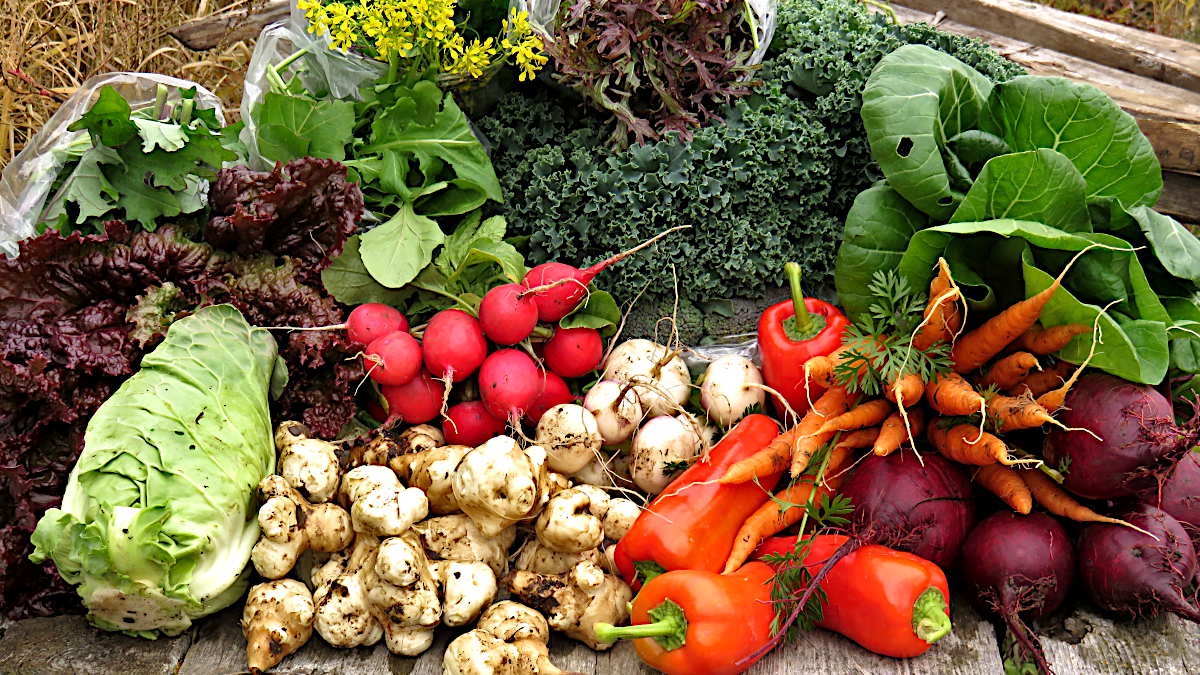
This is our second Saturday market with quite a solid harvest, both selection and quantity. Last week was fine, this week we’ve added the first of the fall spinach, also, an unexpected bushel of radish that sized up practically overnight, picked at the end of the day yesterday at the perfect maturity moment. For the record, we have: green onion (Ramrod), two kales (Red Russian, Nero di Toscana), green and yellow beans (Jade, Indy Gold), two carrots (Nelson, Touchon, mixed), radish (Rebel), cherry tomatoes (a mix of 7-8 varieties, hybrid and heirloom), Asian greens mix (mustards, mizuna, tatsoi, etc, our custom blend!), arugula, Swiss chard (Lucullus, a pale green heirloom), beet (Kestrel), salad mix (four varieties of lettuce), summer squash (Golden Dawn III, Baby Tiger and Raven zucchinis), cucumber (Fanfare and a few round heirloom Lemon), and spinach (Bloomsdale). For those who like lists!

Last in!

Last direct seeding of the growing season

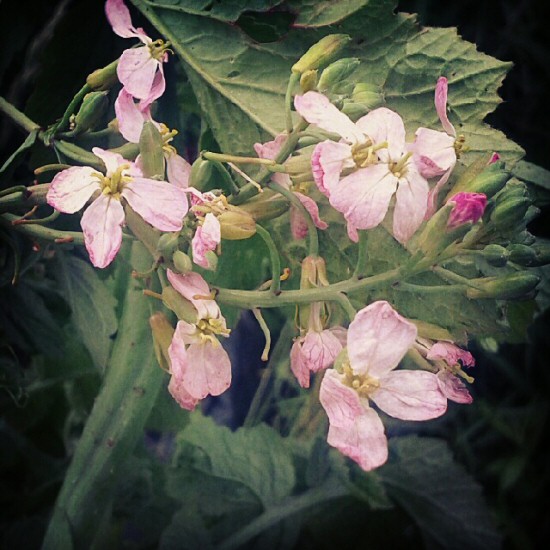
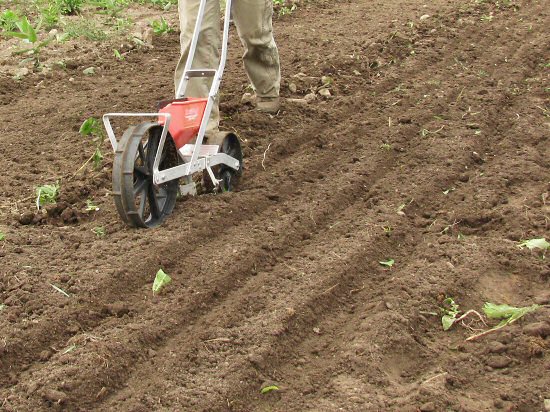
Today, the last direct seeding of the season: spinach, radish, Asian greens mix, arugula, and a lettuce blend for baby leaf… Here, Tracy does the honors with the always-generous Earthway seeder, laying down thick lines of Rebel radish. But is it…too late? Well, who knows?! In good summer conditions, all of these crops can be ready to harvest in 40 days or so from seeding, but the sun is getting weaker now. Hopefully, this round will come up fast, catch the last of the reasonably strong light through September—there WILL be lots of sun!—then continue growing slowly until ready for the last couple of markets through the end of October. That is the…plan. Fresh young veggies at season’s end are a welcome treat!  If it doesn’t work out, oh well (and we may get a chance to do a few days at the indoor market in November). In any case, we have the space and the seed, and pushing for the absolute latest planting date seems to me always worth the gamble. Seeing what happens is kinda…exciting!

Friday harvest to Saturday market

Farmers' market in August

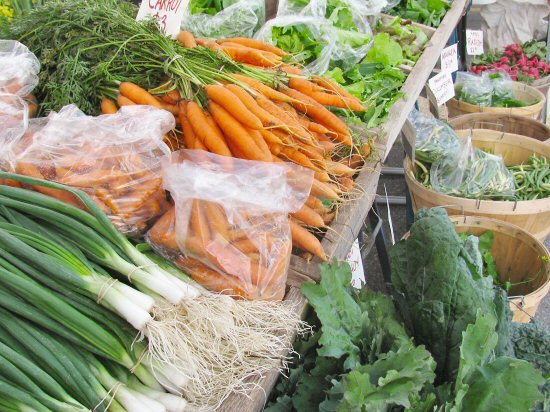
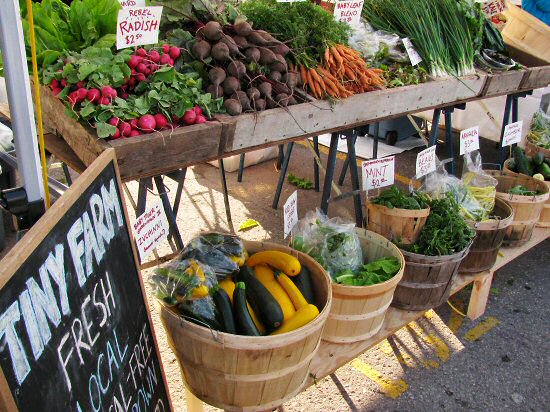
Friday’s harvest to Saturday’s market is the way it is! We still go direct from field to stand, with no cooler in between, and that seems to work out. And the stand itself hasn’t changed much in the last few seasons: raw cedar bins on boards on sawhorses, baskets up front, under the 10’x10′ E-Z UP canopy. What’s new is our latest in DIY veggie sign technology: the usual cards printed in marker with description and price, but now mounted with tape on long, thin coffee stir sticks, stuck right in with the produce. Anyhow, good weather, a decent turnout, a fine morning all round!

First veg at the new farmers’ market!

At last! Our first day at the new farmers’ market, with a large sign (we temporarily used our new roadside sign to make a…big entrance :), and a small but superfresh and tasty (and seasonal) selection: all-lettuce mesclun, spinach (Spargo) and radish (Rebel). Lynn was happy to be at market in her home town, and Tara made her new-tiny-farmer market debut! The flow of people was steady, and we sold out by 11 am. Pretty good!

Pricing at this market is quite a bit different from the old market: everything is more expensive! It’s not quite at urban market levels, but a lot closer in this bigger town. Basically, the same harvest as in previous seasons sells for almost twice as much.

This is for sure more realistic and fair. I think about the ridiculously low (though rapidly  rising) cheap food supermarket pricing that sets the baseline for what small growers can charge at the market. I recall that in North America and Europe, we apparently spend less than 10% of income on food, when quality produce just can’t come that cheap. And these aren’t ridiculous, high-end, boutique veggie prices, simply a more realistic price—processed foods are still sooo much more expensive, while possibly (probably) killing you at the same time…

STILL, it kinda feels weird putting less into a bag than I’ve been used to for six market seasons. Oh, well, change is always a little strange, this one is good all around, and I’ll get used to it! :)