Mud on the leaves

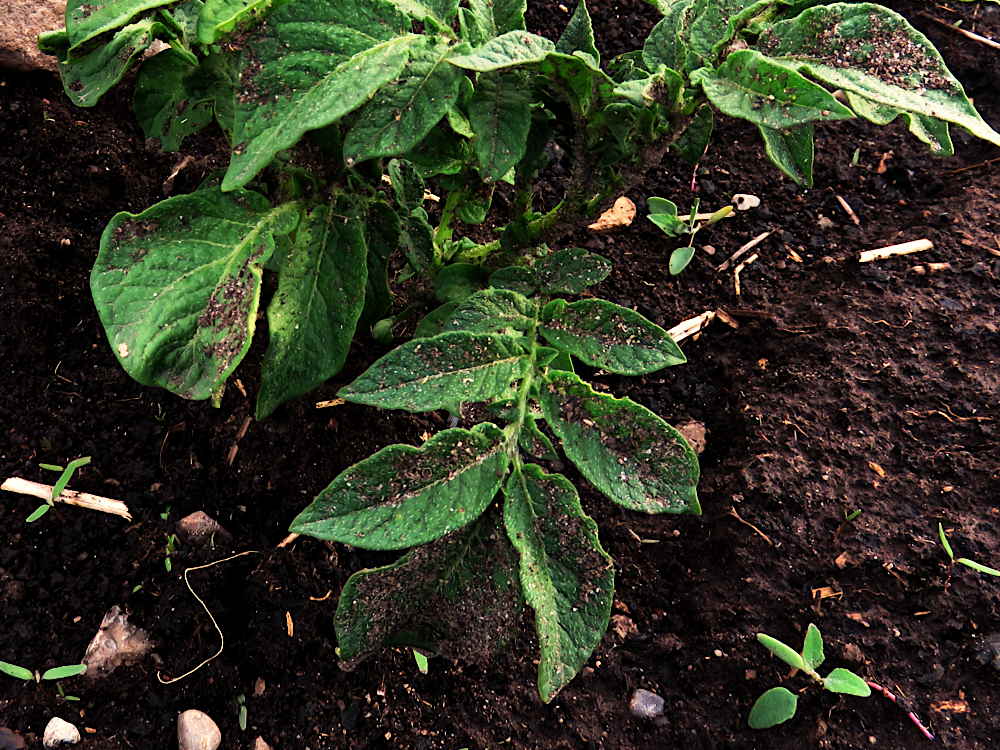
Mud-splashed potato leaves after heavy rain

[From yesterday] Unless someone went wild with a hose, mud on the leaves is a sure sign of heavy, pelting rain. It came down this afternoon while I was on a supply run to town, hidden away in a giant box store, completely disconnected from big weather events (that is, until the power went out, which was its own little adventure in a dimly lit cavern). Back in the field, taking stock, the veggie plot was nicely watered in, the rain gauge read a decent half inch (1.25 cm), and no plant problems, just mud-splatter.

These potato plants do a good job of illustrating the ability of pounding rain to throw up a startling amount of dirt. Still, it’s really only of particular veg garden interest if you have to harvest in quantity. Grabbing some salad greens for dinner, a quick mud rinse and into the salad spinner, no problem. On the other hand, harvesting quantities of lettuce, baby salad greens, beets, radish, and carrots with tops, anything with leaves low to the ground right after a deluge becomes instant extra rinsing work. Which adds up! Of course, rain is manna from heaven for growing stuff. We can’t ever wish rain away, at least not around here (well, not most years). Harvest mud is just one of those things to take in stride…

Potatoes settle in

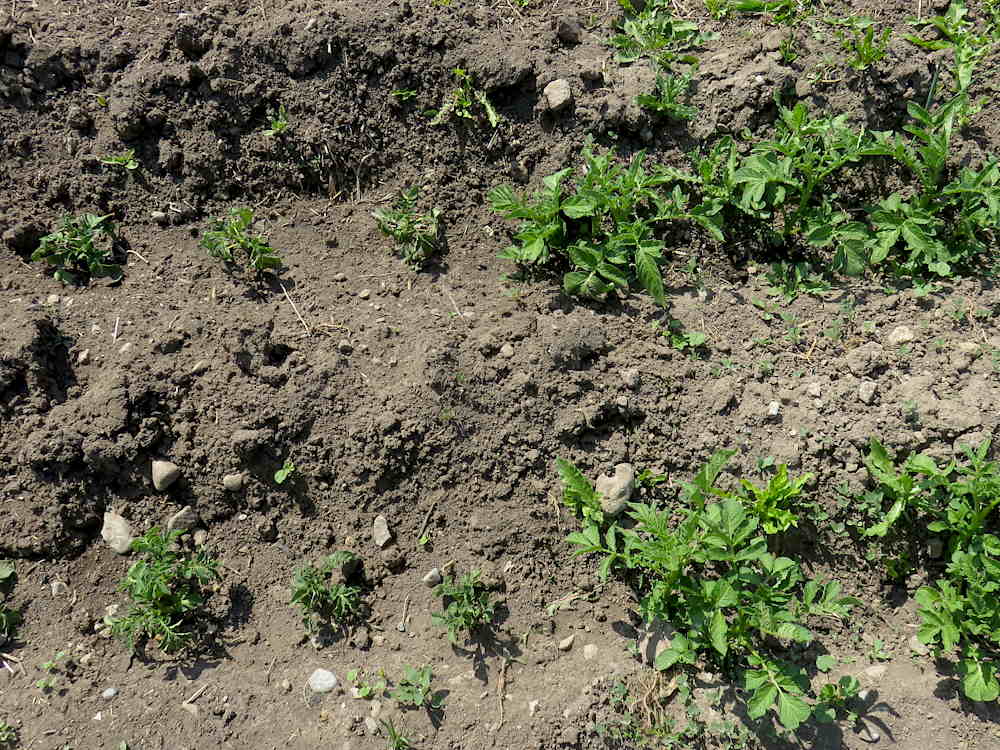
Potatoes settle into new digs

The volunteer potatoes from elsewhere in the garden, dug up and transplanted a couple of days ago, sit side by side with the original settlers in these trenches. Guess which! The transplants seem to be doing fine, but the directly overhead high-noon view is the harshest. They do look a little huddled and scrunched, not like the expansive riot of green growth of their neighbors. The roots of the new guys haven’t reestablished enough to pump a full measure of water to the stems and leaves, that’s my simple guess. Give them time to settle in.

Crop cooperation

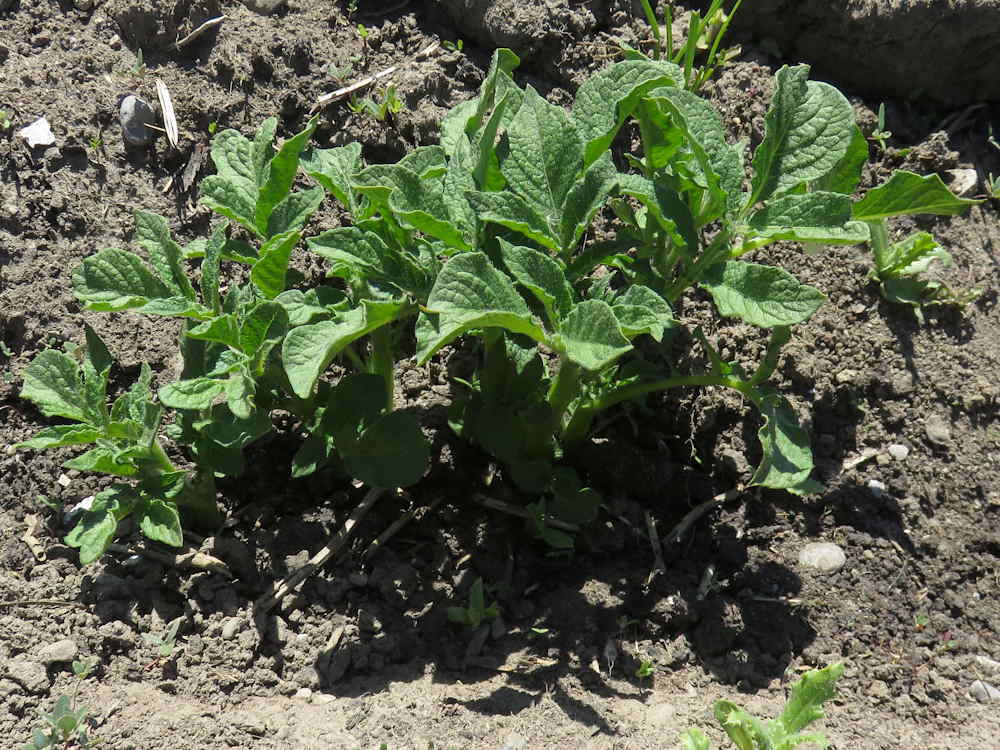
Small potato plants and their shade

Round about this point in the growing season every year, I probably notice the same things, have similar thoughts. Late this morning, I happened to pay attention to the shadow of this happy little potato plant. That immediately led to thinking about how, as they grow, the veggies do their bit in helping you keep the garden going in the direction you want, that is, healthy crops not savaged by predators or overrun with weeds. The veg are like…partners! A pleasant way to look at it, though imaginary. In any case, the shade under leafy plants helps suppress weeds, keeps the soil temperature even, and preserves moisture. The bigger the plant gets, the more of the garden it covers! Of course, it works the other way as well!

Burying Gold

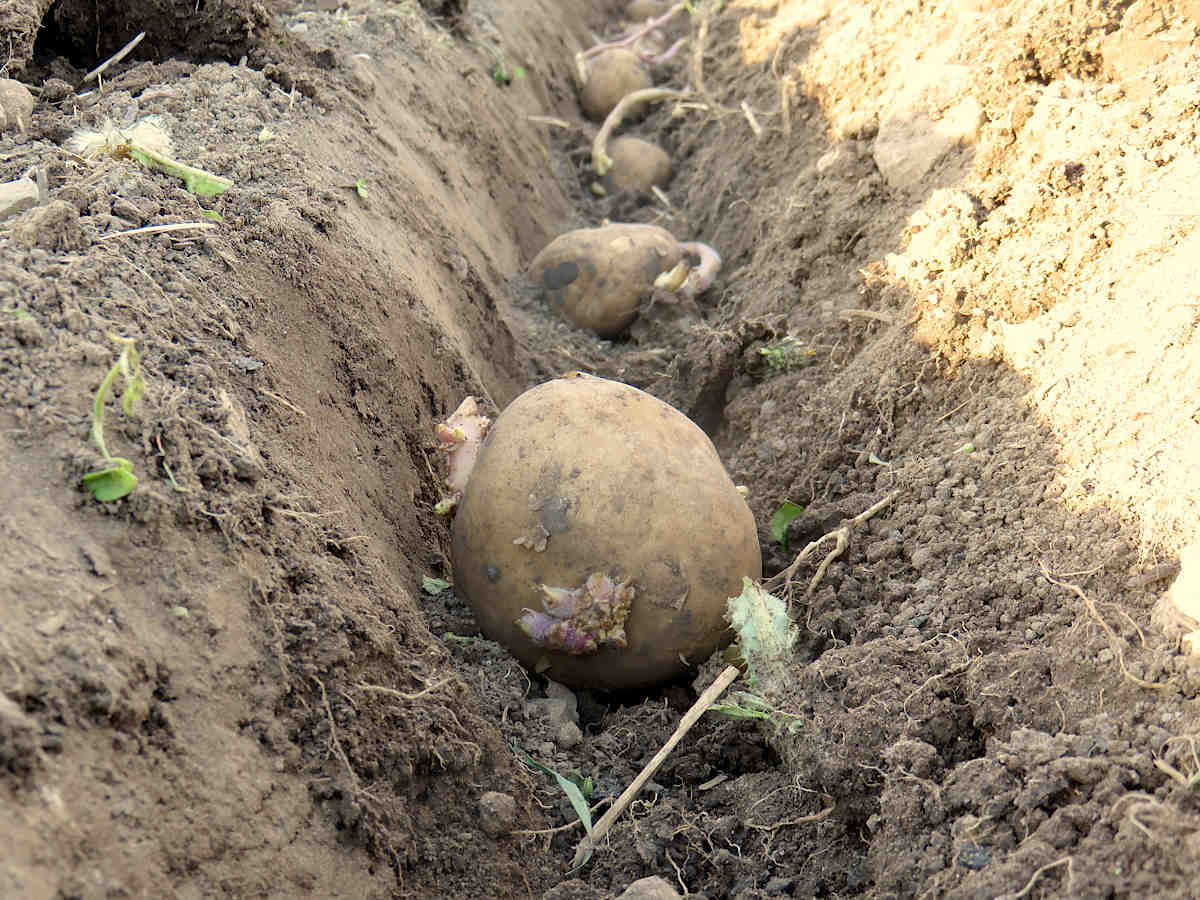
Planting Yukon Gold seed potatoes in a trench

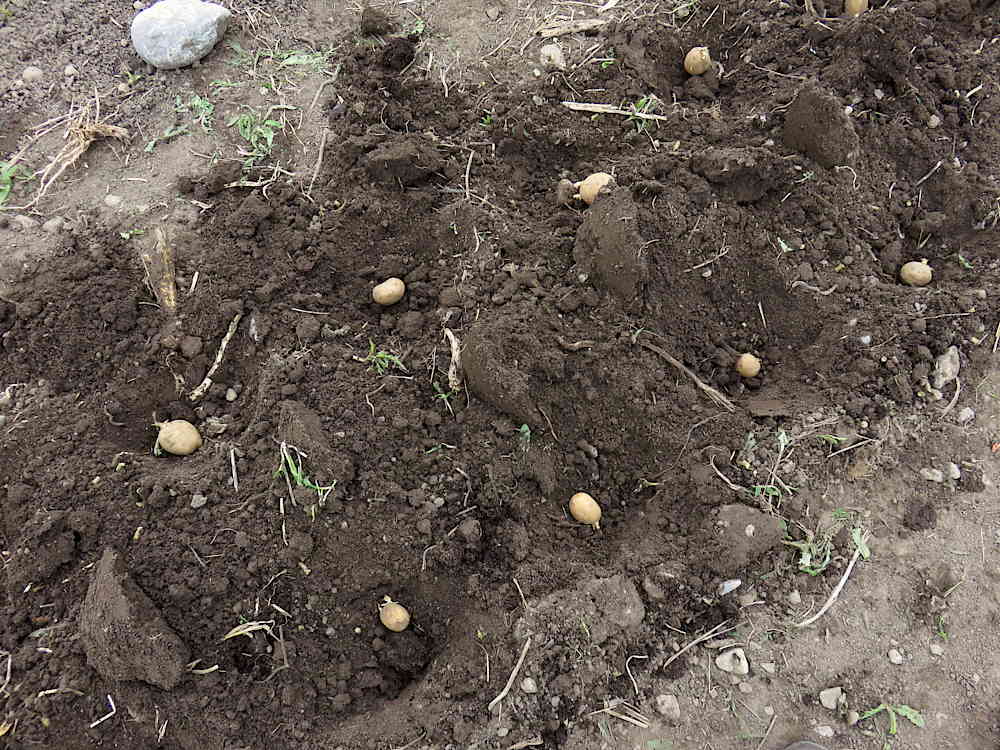
Yukon Gold seed potatoes, placed in a trench, covered with a layer of on-farm compost made from cow manure, and carefully tended—watered and weeded, and hilled up with earth as the potatoes form upwards. In seven or eight weeks, scrabbling around in the dirt underneath the plants is rewarded by the first golf ball-sized new potatoes. So delicious. Yukon Golds were the first potatoes I planted—I almost remember reading about them and thinking of them as a kind of super-potato. “All-purpose” was the magical attribute. Starchy enough for fluffiness when fried, roasted or mashed, yet still with the firmness to hold up quite well in potato salad or a stew. These guys are spaced a foot apart, close enough to commune with their tribe, not so close they start to eat each other’s dinner. With decent weather, this batch will be a mouth-watering harvest just down the line!

Cloning potatoes

Planting potatoes

What a difference a word makes. Planting potatoes sounds so normal, wholesome, so farm and garden. Call it cloning potatoes, and now it sounds…weird. Really, it’s nothing special, just another word for the same old thing. Of the common garden veggies around here, potatoes and garlic are cloned: no seeds, no bees and flowers and pollination, instead, plant a piece of the original. Put a potato in the ground and it’s off to the races: vegetative propagation, direct multiplication—so simple!

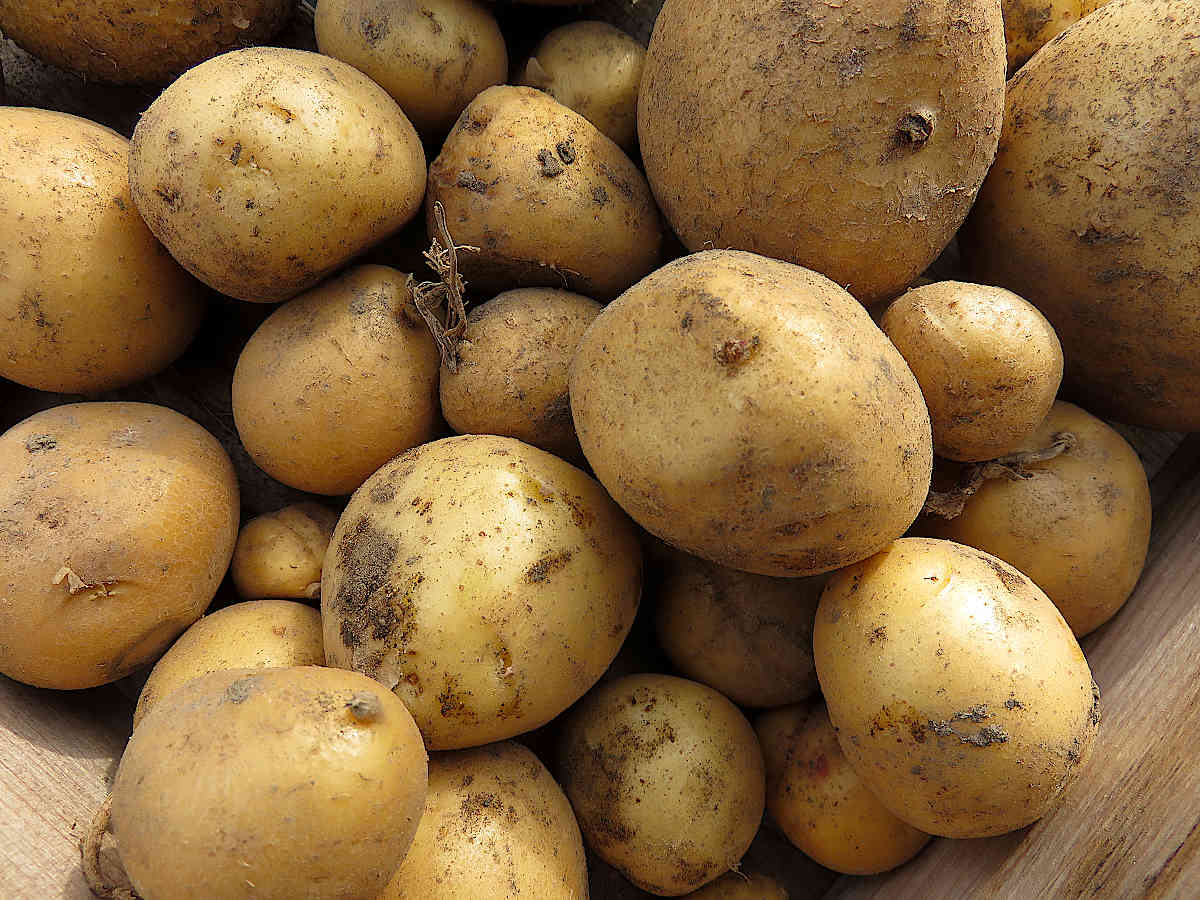
In the photo: Yukon Gold seed potatoes. They’re regular potatoes, just smaller, and they haven’t been sprayed with sprout inhibitors (unlike many/most/all supermarket potatoes sold through the winter and till the next potato harvests).

Potato spotting

Potato seedling emerging

When you spend a lot of time scanning the ground for the very first sign of germination, you get pretty good at spotting new seedlings as they emerge. This new potato plant is easy, it’s quite large, with a rosette of crinkly, distinctively dark green leaves. Carrots and green onions are a whole lot tinier. Beets, spinach, and brassicas can at first look pretty much like the weeds that pop up around them, they blend in. Still, no matter the crop, after a while, you develop a seedling recognition system that automatically zeroes in on even a single new arrival, just like that. It’s always a pleasure to see that seeds are still getting along with the weather and doing their thing!