
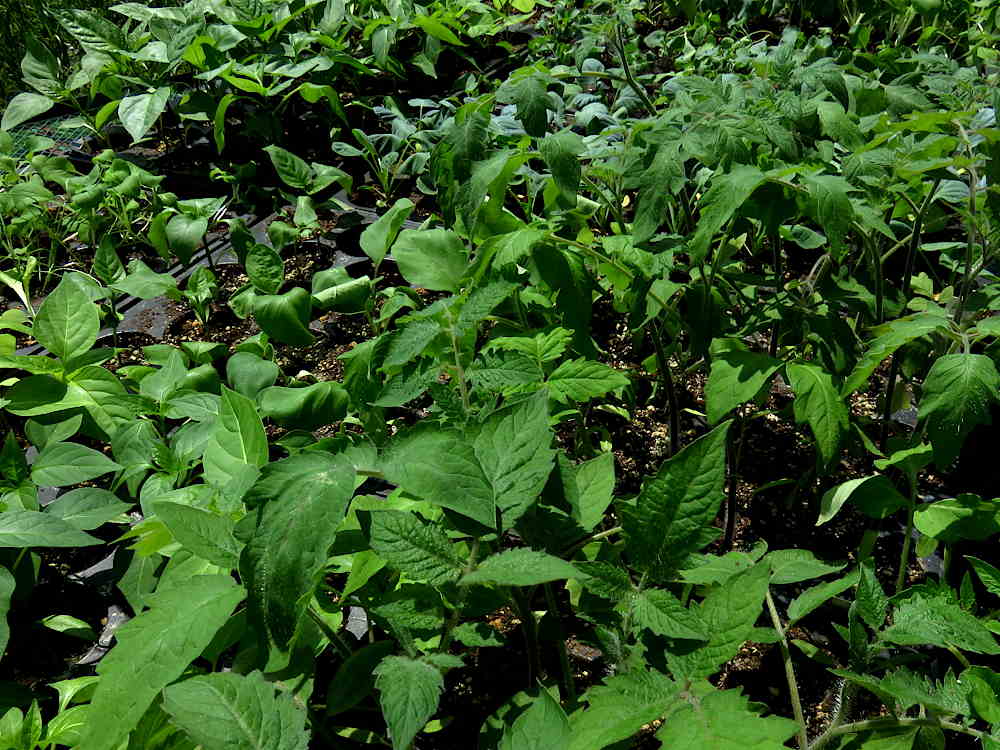
Hardening off seedlings on a mainly sunshiny day. I can see tomatoes, peppers, eggplant, Brussels sprouts, and bok choi. Some are for now, some a little down the line. I’ve been transplanting steadily bit by bit, rather than all out at one time, as a hedge against erratic weather changes. Same with direct seeding. It’s another experiment, and given our short season and the generally unpredictable weather, it’s risky. Then again, depending on the crop, I’ve seen plantings a week or two apart more or less even out. It’s always a gamble!
eggplant
Veggie sleuthing
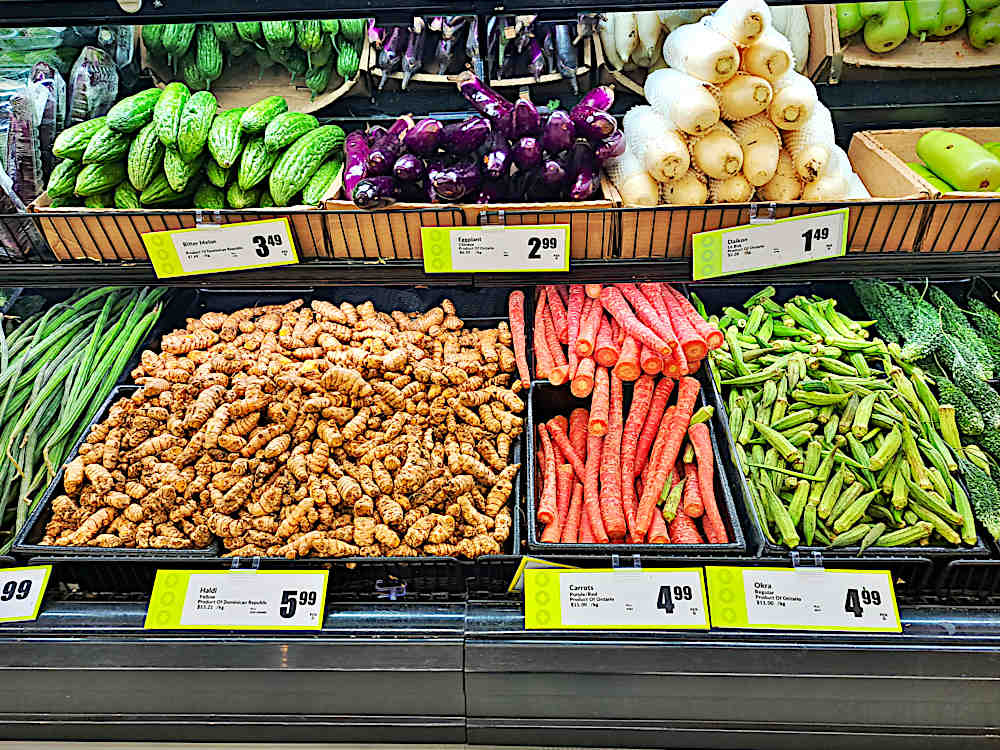
Part of the Asian/Southeast Asian veggie section at one of the local supermarkets. Most of these vegetables are unfamiliar, some I recognize. I usually scan for unusual shapes and textures when I roll by, but my curiosity is never that high. I suppose you could see them in an exotic, different cultures way; to me, they’re just…more veggies! This time, I decided to take a closer look, and took a pic on my phone (which was also my shopping list!). So what do we have?
ID-ing everything from the labels in photo and searching the interwebs for info, here goes. Top row, left to right: I couldn’t make out what that first plastic-wrapped veg is. Next, bitter melon, my mom grew this in her community garden. Used in Chinese cuisine. Remove seeds, keep skin, slice, use in stir fries. Or steam, or stuff. Next, eggplant, and daikon radish, both familiar, I’ve grown these. Then, squash (long) is what the label says, but this one has several names: opo squash, calabash, bottle gourd, and others. It comes in different shapes, like the decorative hourglass-shaped dried gourd version, or really long, or this stumpier look. For cooking, it’s another summer squash, like zucchini, so raw, steamed, boiled, sautéed, or grilled!
Bottom row, from the left: This long, skinny veg is labeled drumstick (label cropped out of photo), and it’s also called moringa. They’re the pods from the moringa tree, from Southeast Asia, India. Lots of superfood claims. When used as a veg, there are these pods, and also moringa seeds on their own. For the pods, cut up, put in soups and curries. Next, haldi, is another name for turmeric, which I have as a ground spice and use in my standard breakfast red lentils spice mix. Relative of ginger, native to Southeast Asia. Use fresh the same as powdered turmeric, grate or slice and add to soups, rice, whatever you like. Also, pickle (one way: lemon juice, salt, jar, fridge), use in marinades, blend. Then, carrot, purple/red, prepared a little differently with the tops and tips sliced off. And okra, also familiar. Last, the bumpy-textured veg is labeled karela, which turns out to be one of many names for bitter melon, so same as above!
And where are they from, fresh not frozen in the dead of winter? Carrot, daikon, eggplant and okra are from right here in Ontario, the drumstick is from India, and the rest were grown in the Dominican Republic. All of them I think can be grown here in colder country, except turmeric, which needs many months of warm weather (it apparently can be done here with a few months of indoor growing, then moved outside).
Now that I’ve finally LOOKED CLOSER, I’ll probably try some of the new veg. Of particular interest: drumstick and (remembering mom) bitter melon!
October harvest
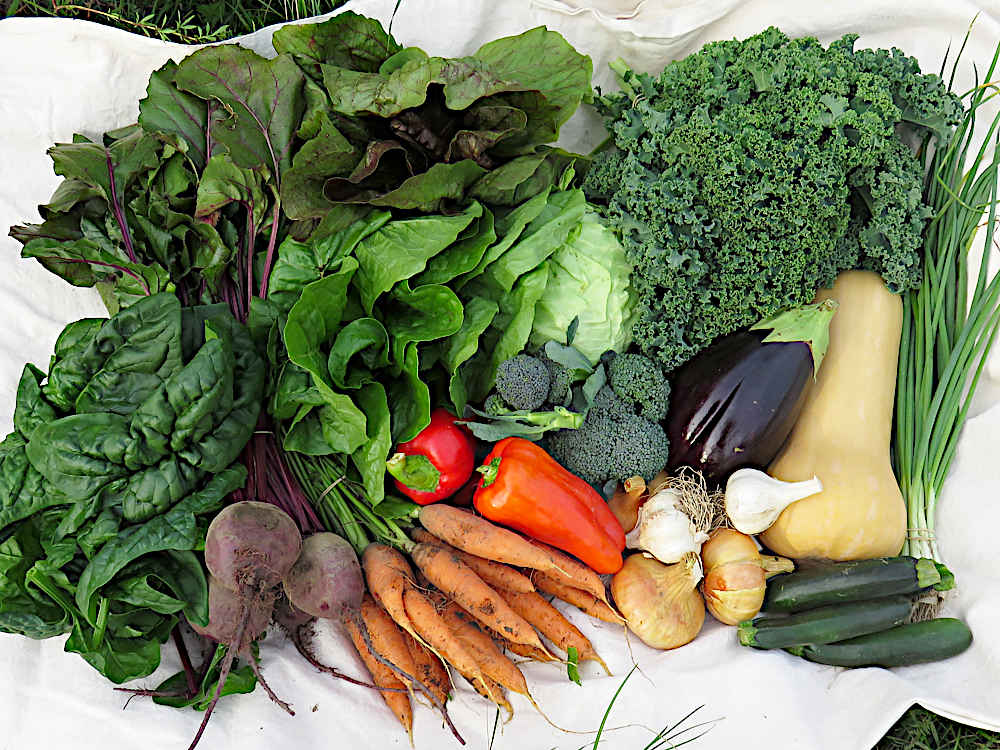
Great weather into the first week of October, with no hard frost so far. The veggie harvest list: beets, carrots, peppers, garlic, onion, green onion, zucchini, spinach, kale, lettuce, cabbage, butternut squash, radicchio, broccoli, eggplant. Nice!
Mid-September harvest
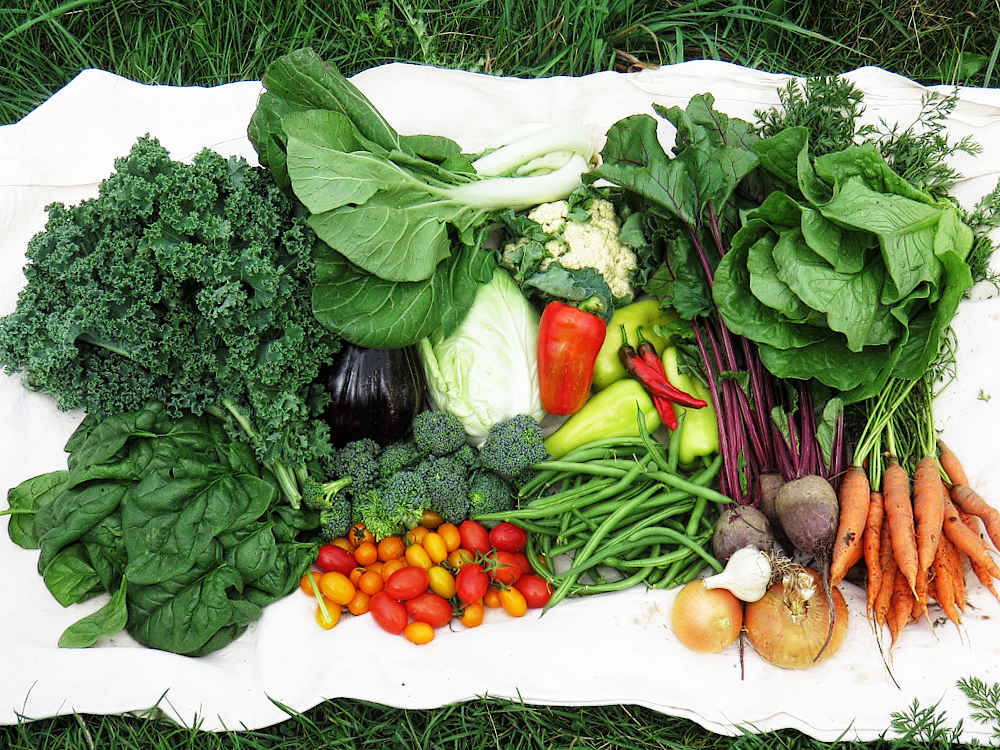
The weather’s been fine, no big frost worries, and the harvest is nice. For the sake of a list, in no particular order, we have: spinach, onion, garlic, carrots, bok choi, broccoli, lettuce, cabbage, kale, hot and sweet peppers, cauliflower, cherry tomatoes, green beans, beets, and…eggplant! I think I got ’em all. The set-up on a strip of canvas is for a newsletter photo–the lighting is an overcast sun, the studio is the field!
Brrrr… Peppers under wraps
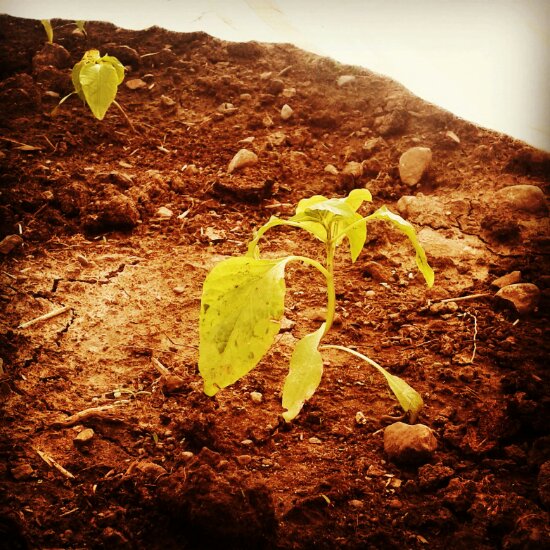
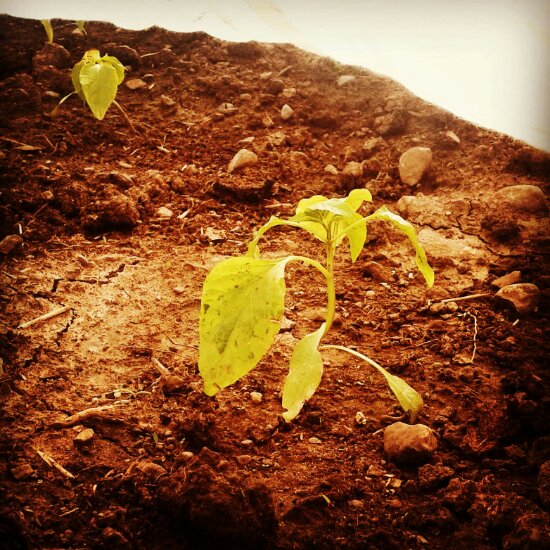
Not the happiest campers after three days and nights of frost protection, peppers and eggplant have one day and two nights more under row cover, if the forecast is to be believed. But the 15-day forecast a week ago was for no more cold nights, so…who knows! We’ve had about a week of frost warning nights so far since the second week of May, which I don’t think I’ve seen before. Normally, the covers would come off during the day, but with everything else to do now, and the kinda elaborate weighting-down-with-rocks setup, it’s simpler to leave it in place till the end…
CPBs
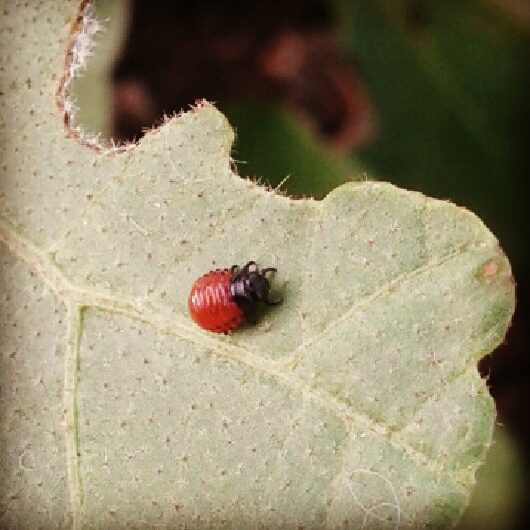
Pre-squish: Brand new Colorado potato beetle, larva about the size of a match head, on eggplant. Around the leaf edge, older damage done by bigger CPBs. Recently, for whatever reason, they’ve been around but not in numbers enough to be a big problem. The crazily erratic weather of the last few fears seems to have obliterated regular pest cycles, so we just see ’em and pick ’em…whenever.
Eggplant!
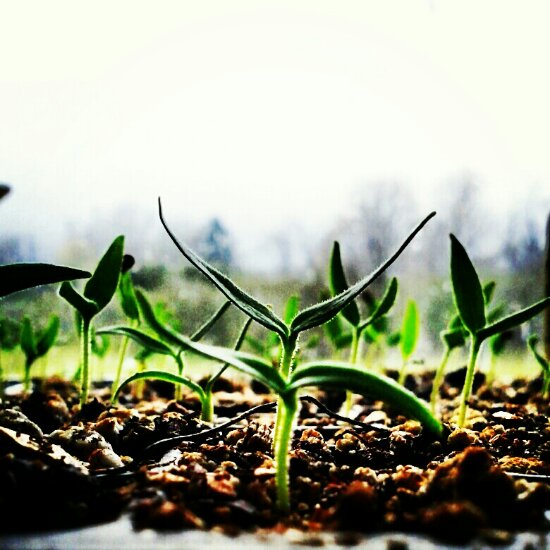
Eggplant pushing up, for the first time probably ever in my tiny farming career, in real sun, not those kinda ghastly (but effective enough) fluorescent lights. This is part of the current season’s unusual start-up, split between two farm locations (where I live and where I grow, about a mile apart, eight minutes by bike!), and smaller and way later than usual, and than the crazy weather allowed. These guys, along with peppers and tomatoes, are in 200- and 128-cell trays, seeded from bareroot germination into a smaller cell size than the usual 72, to make the most of window space. They’ll soon be off to the seedling room on the other farm, and 14-hour days of indoor lighting. Meanwhile, they seem to like it like this—raise your hands in the air! :)