Veggie sleuthing

Asian veggies at the supermarket

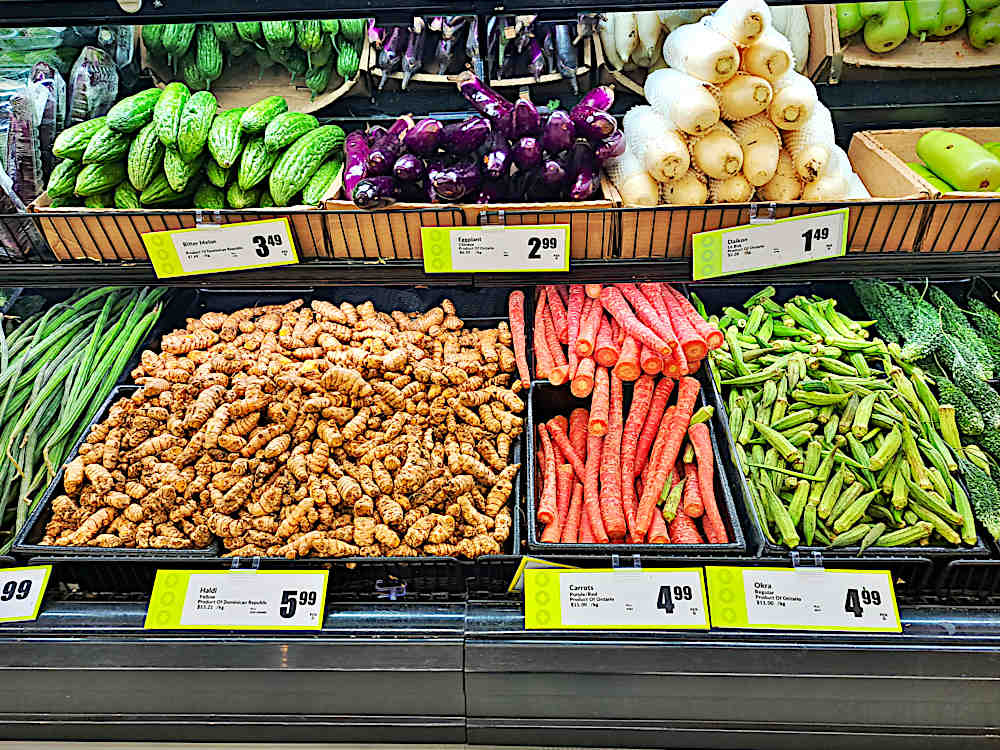
Part of the Asian/Southeast Asian veggie section at one of the local supermarkets. Most of these vegetables are unfamiliar, some I recognize. I usually scan for unusual shapes and textures when I roll by, but my curiosity is never that high. I suppose you could see them in an exotic, different cultures way; to me, they’re just…more veggies! This time, I decided to take a closer look, and took a pic on my phone (which was also my shopping list!). So what do we have?

ID-ing everything from the labels in photo and searching the interwebs for info, here goes. Top row, left to right: I couldn’t make out what that first plastic-wrapped veg is. Next, bitter melon, my mom grew this in her community garden. Used in Chinese cuisine. Remove seeds, keep skin, slice, use in stir fries. Or steam, or stuff. Next, eggplant, and daikon radish, both familiar, I’ve grown these. Then, squash (long) is what the label says, but this one has several names: opo squash, calabash, bottle gourd, and others. It comes in different shapes, like the decorative hourglass-shaped dried gourd version, or really long, or this stumpier look. For cooking, it’s another summer squash, like zucchini, so raw, steamed, boiled, sautéed, or grilled!

Bottom row, from the left: This long, skinny veg is labeled drumstick (label cropped out of photo), and it’s also called moringa. They’re the pods from the moringa tree, from Southeast Asia, India. Lots of superfood claims. When used as a veg, there are these pods, and also moringa seeds on their own. For the pods, cut up, put in soups and curries. Next, haldi, is another name for turmeric, which I have as a ground spice and use in my standard breakfast red lentils spice mix. Relative of ginger, native to Southeast Asia. Use fresh the same as powdered turmeric, grate or slice and add to soups, rice, whatever you like. Also, pickle (one way: lemon juice, salt, jar, fridge), use in marinades, blend. Then, carrot, purple/red, prepared a little differently with the tops and tips sliced off. And okra, also familiar. Last, the bumpy-textured veg is labeled karela, which turns out to be one of many names for bitter melon, so same as above!

And where are they from, fresh not frozen in the dead of winter? Carrot, daikon, eggplant and okra are from right here in Ontario, the drumstick is from India, and the rest were grown in the Dominican Republic. All of them I think can be grown here in colder country, except turmeric, which needs many months of warm weather (it apparently can be done here with a few months of indoor growing, then moved outside).

Now that I’ve finally LOOKED CLOSER, I’ll probably try some of the new veg. Of particular interest: drumstick and (remembering mom) bitter melon!
Root food

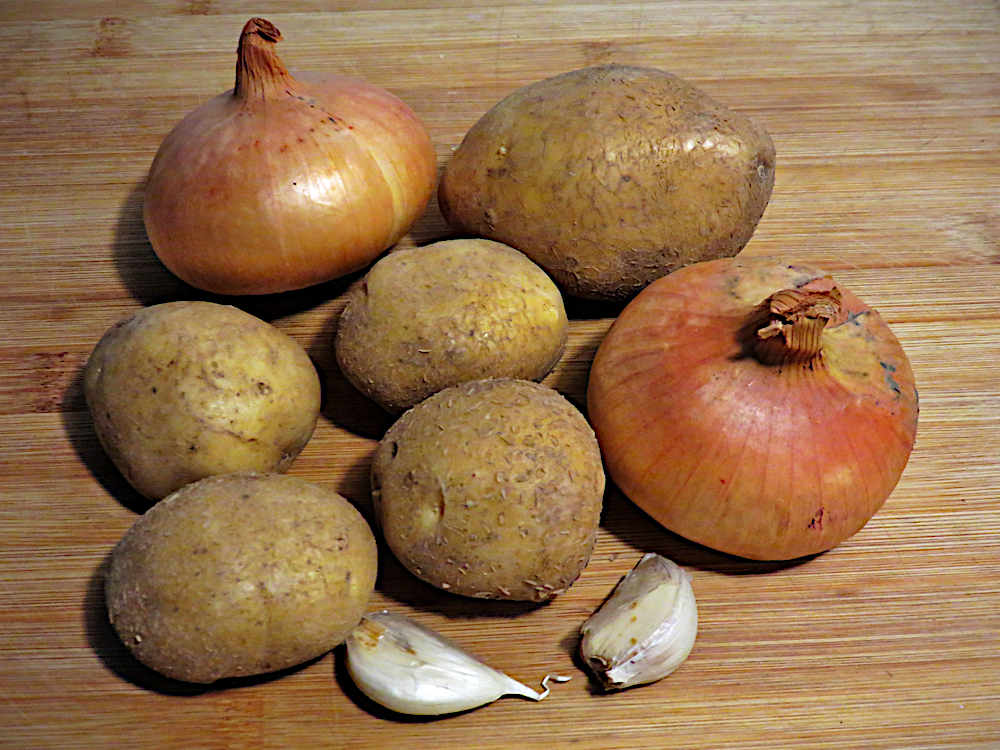
Beauty is in the frying pan! A sampling from the small cache of onions, potatoes (fingerlings), garlic, all pulled from the ground last summer, sitting since then in boxes and bags on the floor of a closet that could be called a pantry. Still firm and looking not really worse for the months of storage. There’s something extra satisfying about eating tasty food that’s been lying around, unrefrigerated, for several months!

Early mini-harvest

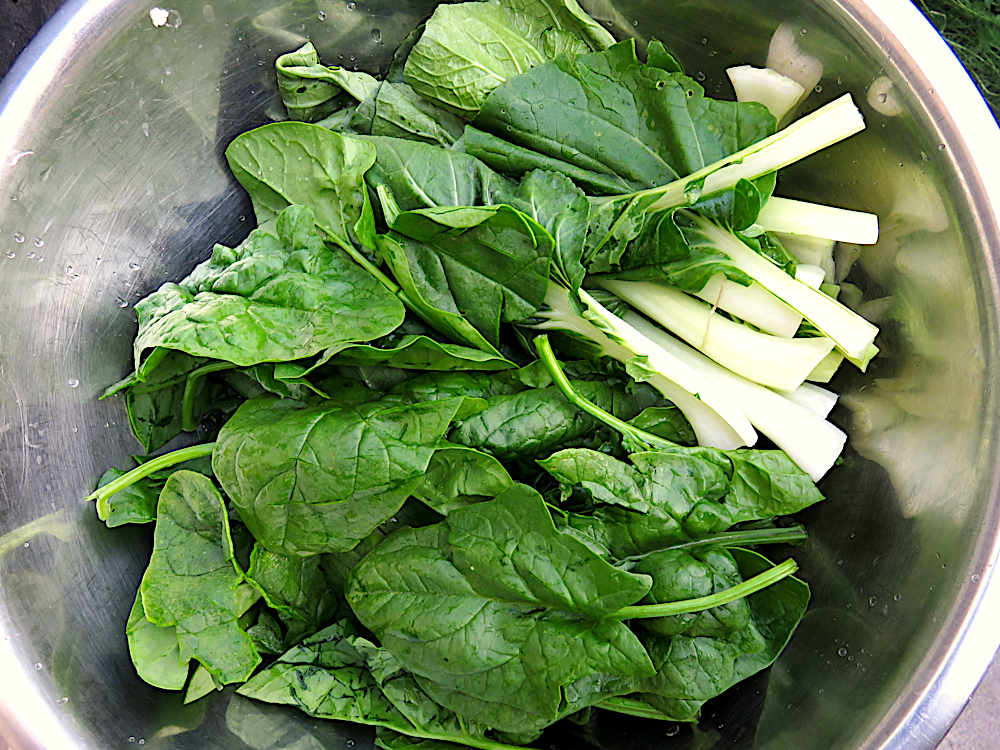
A small harvest of spinach and bok choi for dinner! It’s always a pleasant little shock to taste the first of the season’s garden-fresh veggies. After the winter months when the only fresh produce is grown in faraway lands, it’s a treat. In recent years, I used to buy a limited amount of veggies in winter. Onions if I ran out of my own. Green onions. Sometimes cauliflower and broccoli. Salad mix. Nowadays, I freeze spinach, kale and cauliflower. That, along with stored beets, carrots, and winter squash, covers most of the winter. So, for food satisfaction, the first new harvests every year are a big deal! :)

Winter salad

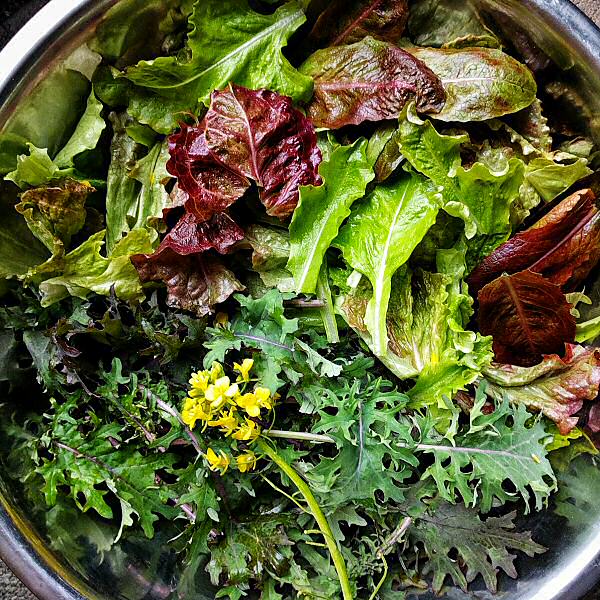
Over-wintered salad greens from unheated greenhouse

This bowl of lettuces and kale is the first cut of spring, taken from the unheated greenhouse while snow flurries whip around outside. With the help of 6 mils of plastic and some row cover, the salad easily survived three months of winter, with temperatures that went down to -30°C (-22°F). The texture and color are good, the taste, deliciously bold. Fantastic! The flowers are bok choi that managed to bolt in the alternating warmth and cold—on sunny days, the hoophouse temperature could easily reach 10-15°C (50-59°F), even when it was sub-zero outside. Interesting!

Stored carrots for stew

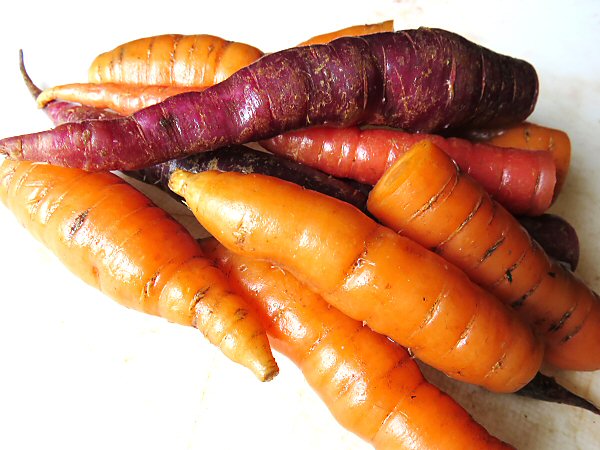
Assorted stored carrots

Long-term veggie storage can get fairly involved, with root cellars, sticking things in piles of sand, adjusting humidity, spotting and culling the spoiled, that sort of thing, or it can be as simple as tossing a plastic bag of small carrots, little guys that wound up at the bottom of an empty market bin, into the fridge’s crisper drawer, and forgetting about them until they’re found four months later while rooting around for ingredients for stew. These carrots represent exactly the latter, a few handfuls of Nelson (orange), Red Samurai, and Purple Sun. They’re in perfect shape, crunchy and tasty—the plastic bag maintains the humidity that keeps them hard—so a quick rinse, chop-chop, and in they go. (They’re partly cut because I’d already started slicing them when I decided to take a pic.) Another whatever-veg-is-around beef stew. What could be simpler?!

Beef meets kale

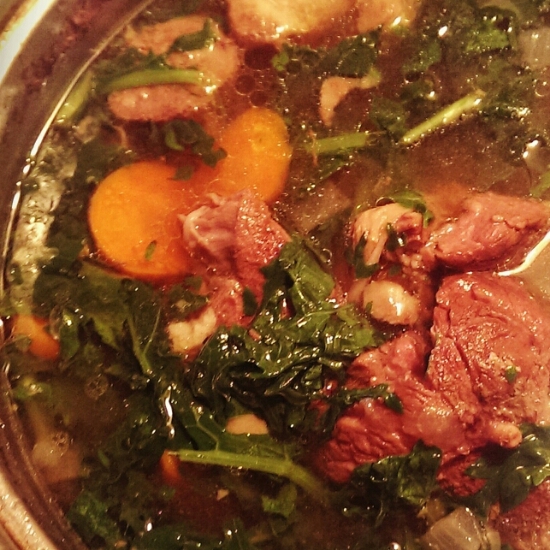
Yes, yet another thing to do with KALE! In a small fit of inspiration, I tore up a few fistfuls of baby Red Russian, and tossed ’em into the pot with carrots, onions, grass-fed beef shank, salt, pepper, garlic and water, slow-cooked for quite a while, six hours or more, adding brown rice towards the end. Voila, Beef and Kale Stew. The kale contributes just a hint of seaweed taste, but maybe that’s just me. Anyhow, excellent. Will do again.

Fresh as it gets!

Simply orange juice

Continuing snowy white and frigid outside, and if it weren’t for the handy neighborhood supermarket, the last thing you’d be thinking about around here right now is fresh orange juice. The reality is, there’s plenty of it, legally speaking, at least: aseptic storage and flavor packs aside, fresh not frozen, not from concentrate, pulpy or pulp free OJ is in abundance, now as ever, and often on special, too!