
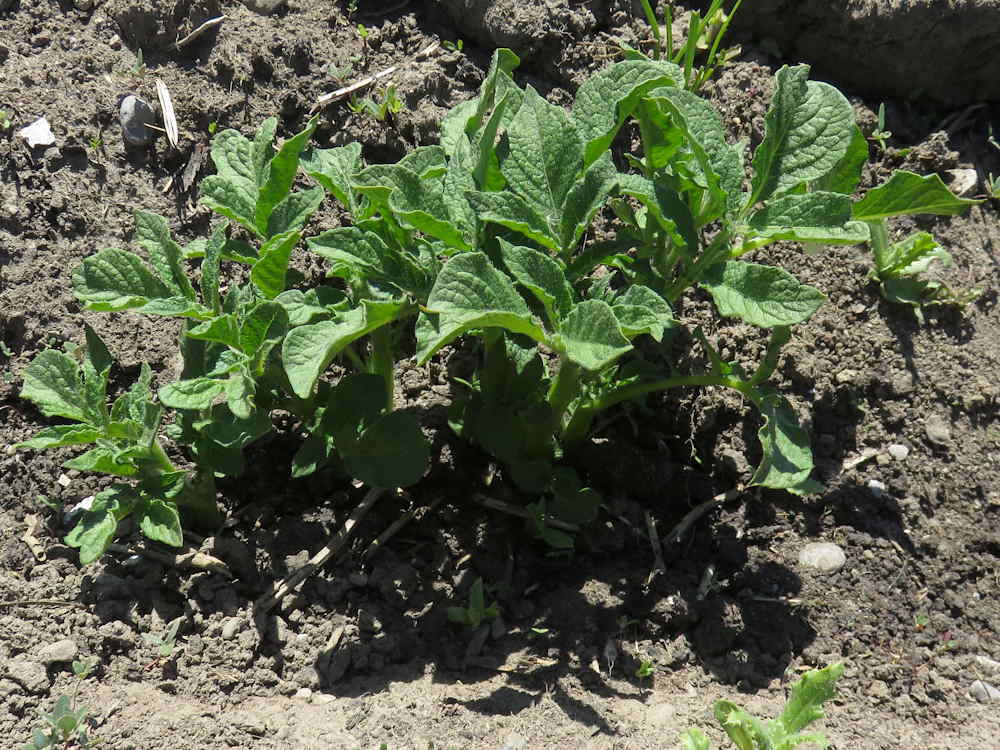
Round about this point in the growing season every year, I probably notice the same things, have similar thoughts. Late this morning, I happened to pay attention to the shadow of this happy little potato plant. That immediately led to thinking about how, as they grow, the veggies do their bit in helping you keep the garden going in the direction you want, that is, healthy crops not savaged by predators or overrun with weeds. The veg are like…partners! A pleasant way to look at it, though imaginary. In any case, the shade under leafy plants helps suppress weeds, keeps the soil temperature even, and preserves moisture. The bigger the plant gets, the more of the garden it covers! Of course, it works the other way as well!
Seed & Seedlings
Pot experiment update #1
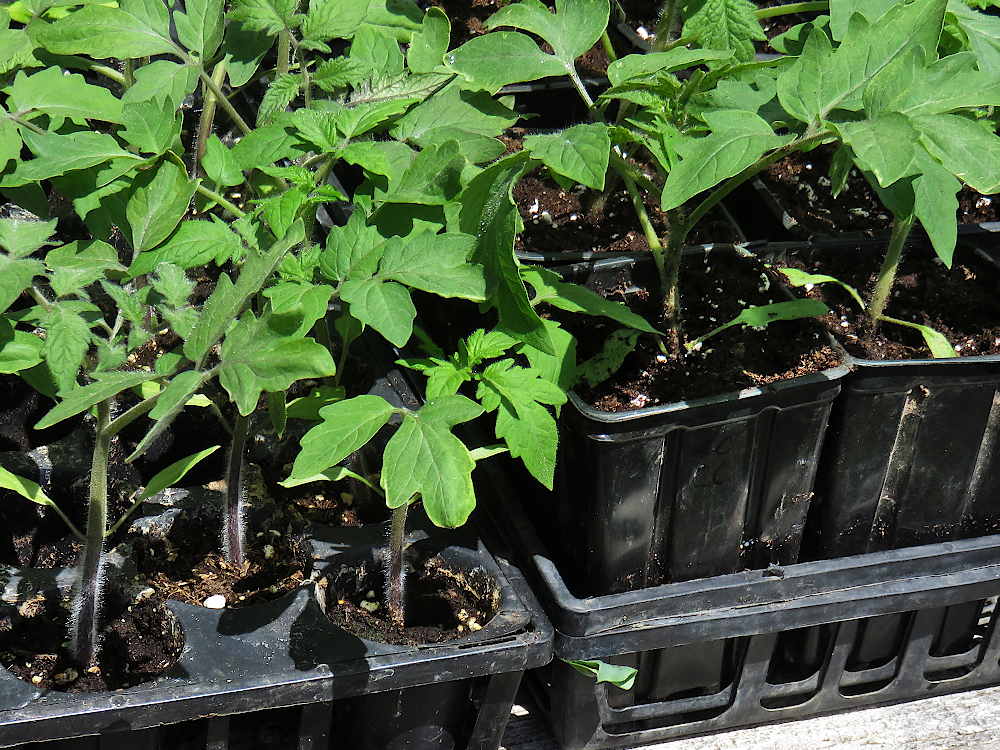
The story so far: Five days ago, 10 tomato seedlings, five each of two varieties, were potted up from the plugsheet where they started, to individual deep pots. The pots measure twice as deep as the cells, though they look taller in the photo. Pretty soon, all the toms will be transplanted at the same time, side by side, to see if deeper rooting leads to bigger, better, faster tomato plants. The ones in pots were also buried up to their seed leaves (that first pair that look like wings)—with their power of adventitious rooting, new roots will develop along the buried stem, so there’ll be a LOT more roots. The leafy parts look about the same between the two, while the real action right now is happening underground. In the plugsheet, roots are already circling around the cell walls. In the pots, it’s a root jailbreak, although they’ll find their new walls pretty quick. But walls that won’t be there forever!
Next generation
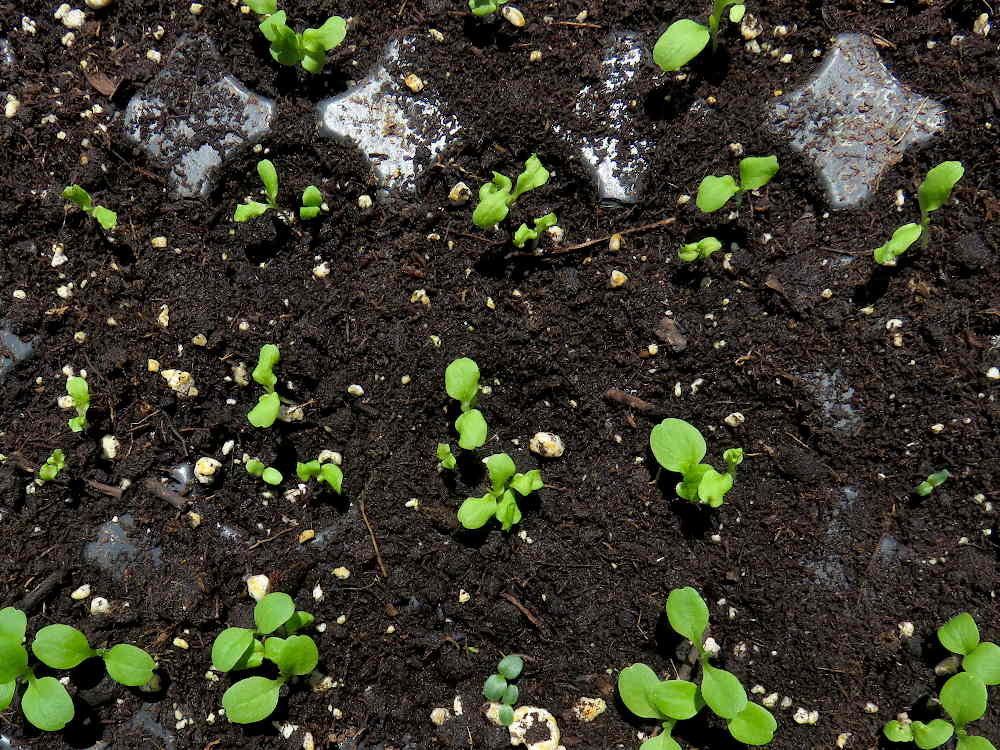
The second round of lettuce isn’t a next generation in a people having kids way, but it feels like one, as one seeding of lettuce grows to tasty salad size, while another is just getting started to take its place. Achieving an endless harvest is super rewarding (not to mention, necessary, if you’re going to market every week)—succession planting so that quick-to-mature, pick-once crops are steadily available at their peak all through the growing season. Salad greens like lettuce, mustard and arugula, baby bok choi and kale, also spinach, radish, summer turnip, green onions, and more can be planted repeatedly. Work out the timing, as things grow fast early on and slow down into end of summer and fall.
Oddly, in the hundreds or thousands of home veg gardening chats I’ve had, I can’t remember anyone beaming with satisfaction over their succession planting successes. It’s as if home garden seeding only happens in spring. Maybe lots of home tiny farmers do it, and just don’t like talking about it. It makes sense, it’s useful, and it’s fun to mention!
Pot experiment
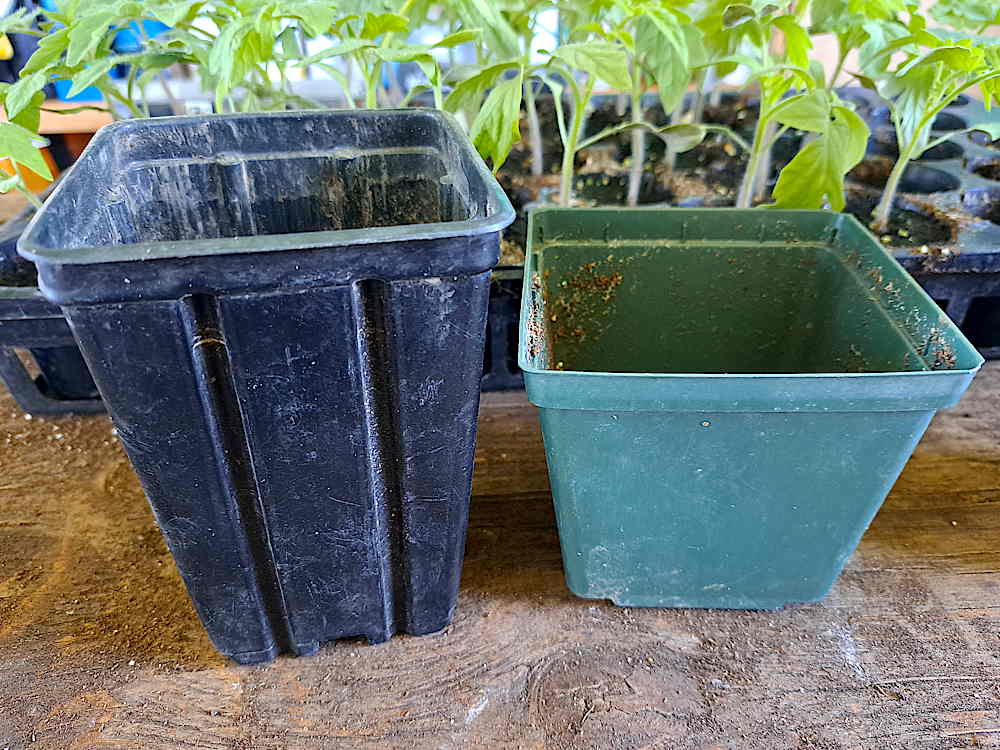
Which pot is better for tomato seedlings, the narrower, deeper, or the shorter, wider one? This is an experiment I’ve started probably half a dozen times over the years, then got so caught up in everything else going on in a typical growing season, I never followed up. Maybe in this quieter repair year, we’ll get to a result!
The general idea is simple: roots like to grow down, looking for food and water. Give them a headstart in the down direction, and you should get better results. Earlier fruiting, bigger fruit, overall more productive plants, especially good if you have a shorter season like here, where fall frost will put a halt to the toms. But there’s a big tiny farming BUT.
Labor is that big thing. If you have hundreds of toms to transplant, especially in our heavy soil, digging that extra couple of inches actually takes time and effort that adds up. Having tomatoes a week earlier, if that proves out, won’t offset not getting the transplanting done on schedule in the first place. Adding extra work for a cool idea is a tough one on a hand-run farm that’s not optimizing in terms of thousands of tons of produce like a big commercial, mechanized farm.
I’ve usually gone the other way. Grow toms in plugsheets that would seem ridiculously cramped and tiny compared to the substantial home garden seedlings available for five bucks a pop at the garden center. Get them in the ground early, buried up to their first leaves. Frost risk? There’s always row cover! Let them get on with it from a young age.
Still, experiments are fun, and when you learn stuff by trial and error, first-hand, the knowledge usually finds a way to become useful. Hopefully this year, there will be a solid deep pot vs shallow result!
Peering down a rabbit hole
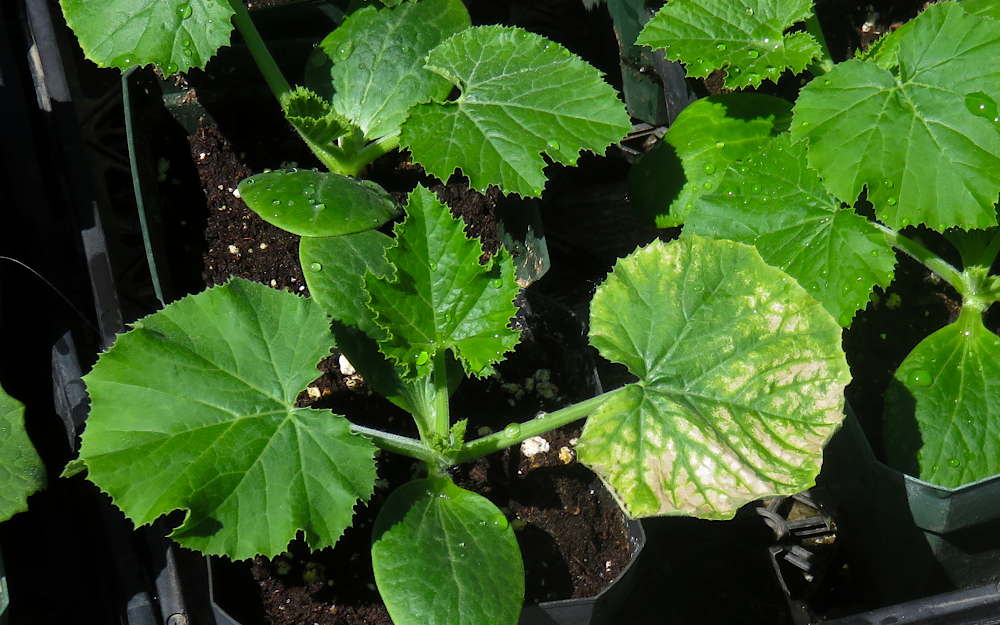
Not a literal rabbit hole, instead, the one that I encountered when just for fun I looked into sunburned leaf damage, like what appeared today on a single squash leaf. Sunscald during hardening off isn’t what you’re aiming for, but it happens and it’s never been a big deal. So long as the seedlings are well-watered and the roots aren’t getting cooked in their containers, they’ll be fine has been my experience. Still, since only one leaf among around three dozen squash and melon plants got burned, after several full days in the sun, and yesterday half overcast, I took a mild interest—if I was a lot busier, with hundreds or thousands of seedlings on the go, and everything else looked fine, it wouldn’t get a second thought. Odd one-offs happen all the time.
A bunch of reading and skimming of farm and garden blog posts, university agricultural extension papers, science mag articles, and scientific studies, and no answers. The sunburn itself seemed unusual, especially after a half-cloudy day. Of course, our SPF sunscreen-and-skin cancer training has told us that UV is still strong on cloudy days, but why did only one leaf get so toasted?
Then I discovered the UV spike. Not so widely written about, not as confidently stated as ~80% of UV makes it through clouds, but a real thing. When certain types of cloud pass in front of the sun, like perhaps the fluffy cumulus ones that floated by most of yesterday, the fringes of said clouds can act as a magnifying lens or filter that focuses and directs UV straight down, resulting in an intensity spike of maybe 25%. Could it be that one big early leaf hadn’t been shaded by the others on previous days and gotten more exposure and hidden damage, and just couldn’t take a day of high-powered UV micro-blasts, a few seconds each as the sun disappeared and reemerged, over and over. Hmm, that sounds maybe fairly reasonable…
Soon after, I lost interest—WHY would I want this explained? I could think of no good reason. I’ve found with tiny farming that learning is continuous and great, but what you choose to take in is also critical, sucking up everything is a waste of attention. The one burned leaf isn’t a mystery, it just clearly happened. And unless more similarly unusual things appear, I’m not particularly curious. The real thing to remember: harden off, a couple hours max outdoors the first day, and keep them well-watered and not boiling in their pots! When they get into the real ground, small ups and downs along the way will be forgotten, they’ll spread their roots and do just fine. Conditions in the field being favorable, of course!
Thigmomorphogenesis
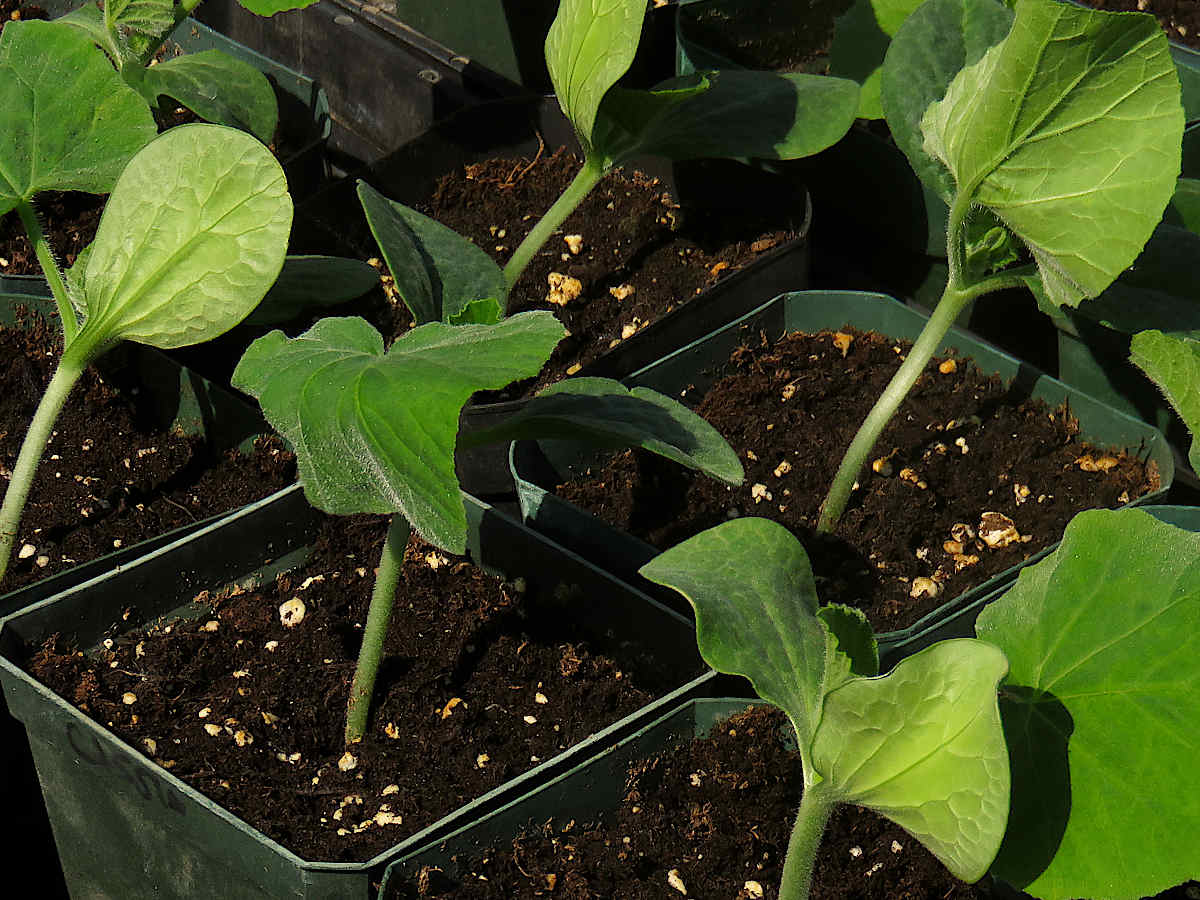
Squash seedlings in a stiff breeze—gale-force wind would’ve made for a more dramatic image, but thankfully not. This bending and fluttering of leaves is another benefit, besides the sun, of taking indoor-started seedlings out into the real world.
Movement, like blowing in the wind, triggers the catchily named thigmomorphogenesis process in plants, where they dramatically toughen up after getting a little pushed around. It could be wind, a pummeling rain, animals or hands brushing by or moving them about. Makes perfect sense for them to armor up.
I’m not particularly into the details of how they change, develop sturdier stems and whatnot—tougher seems to sum it up just fine—but it’s good to know about (I used to use an oscillating fan in winter). And I really like the term. For most of my life, my casual thought was that knowing everything would be cool, kind of like AI tries to today. At one point, though, conveniently marked by a certain blog post, my thinking flipped to often wanting to know less. Not cheering for ignorance, just comfortably sticking with what’s necessary for the moment. So, thigmomorphogenesis—long, unwieldy, yet surprisingly easy to pronounce after a couple of tries!
Burying Gold
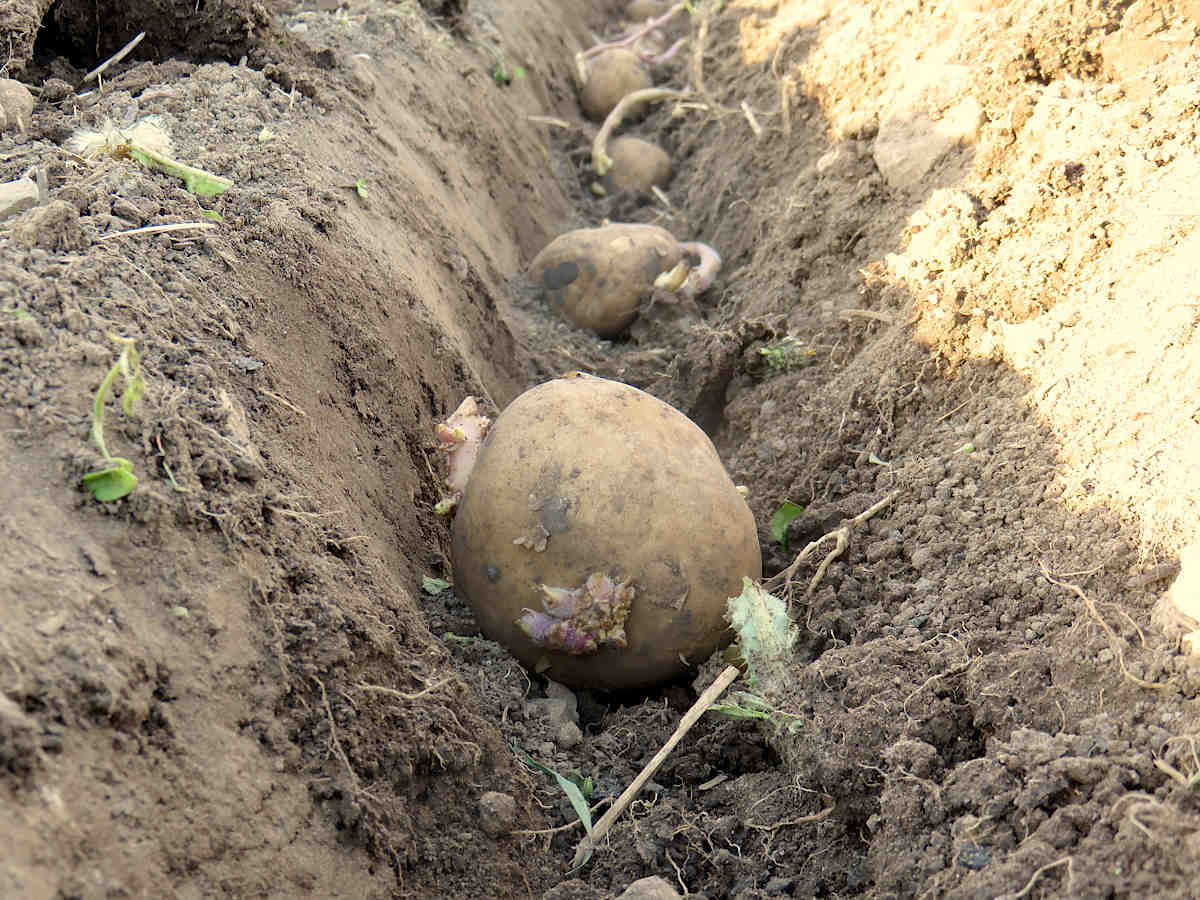
Yukon Gold seed potatoes, placed in a trench, covered with a layer of on-farm compost made from cow manure, and carefully tended—watered and weeded, and hilled up with earth as the potatoes form upwards. In seven or eight weeks, scrabbling around in the dirt underneath the plants is rewarded by the first golf ball-sized new potatoes. So delicious. Yukon Golds were the first potatoes I planted—I almost remember reading about them and thinking of them as a kind of super-potato. “All-purpose” was the magical attribute. Starchy enough for fluffiness when fried, roasted or mashed, yet still with the firmness to hold up quite well in potato salad or a stew. These guys are spaced a foot apart, close enough to commune with their tribe, not so close they start to eat each other’s dinner. With decent weather, this batch will be a mouth-watering harvest just down the line!