
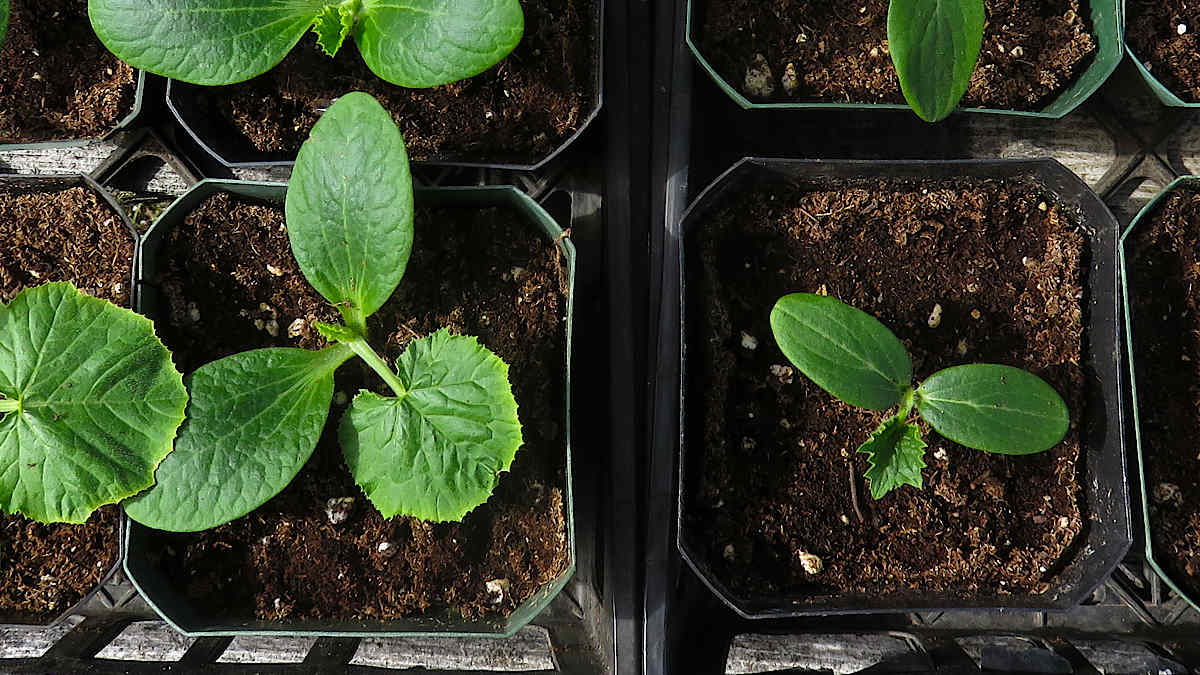
Zukes vs cukes—same family, different natures. On the left, zucchini are big, bold, and prolific with fruit that blow up to dirigible class if you take your eye off of them and stop harvesting more or less daily. On the right, cucumber, more modest in appearance, preferring to vine out than shoot up, unless trellised. Cukes are about equally prolific in the quantity of fruit as the zukes, but not so prone to expanding when left unharvested. Here, barely two weeks from being seeds in a package, with very similar seed leaves (the first two leaves to come out), the difference in their true leaf size already displays their separate ways. Today, they’re out in the sun.
Seed & Seedlings
Grow the whole bulb!
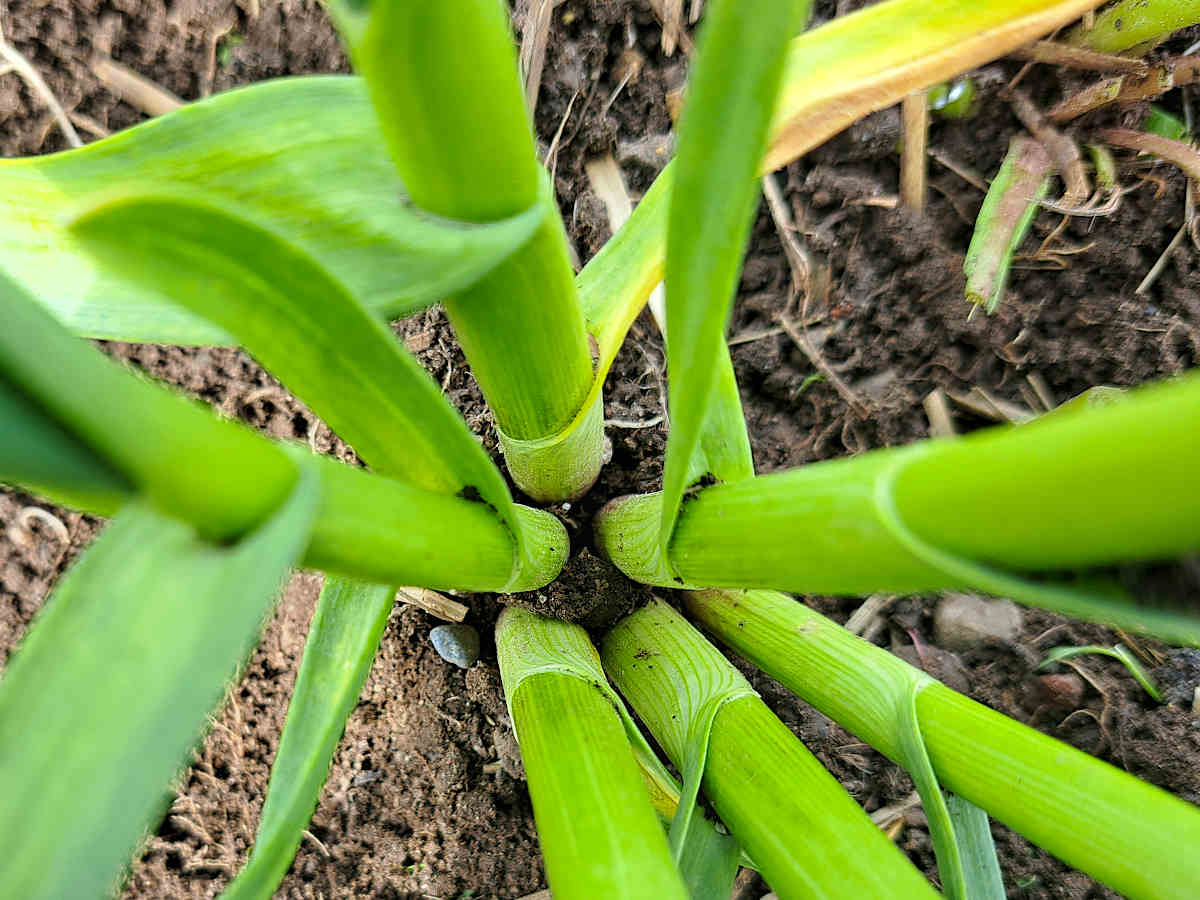
A left-behind garlic bulb from last year has set out on its own, with six cloves all making their way. Decided to leave it to see how things turn out. Not the greatest experimental venture into the unknown: in this quite heavy soil, when things are multi-planted, when it’s veg that grows in the ground in one spot, they tend to crowd and even flatten the sides of each other where they press together. This I know from experience. So expect small, maybe partly flattened new garlic in a couple of months!
Brassicas waiting in the wings

Another wave of brassicas, mostly cabbages and cauliflower, are getting a little big as they wait indoors under lights. In recent years, decent fall weather has extended a whole extra month from what used to be. So I’ve been planting later to extend the harvest. (More text to come…)
Tomatoes just want to root
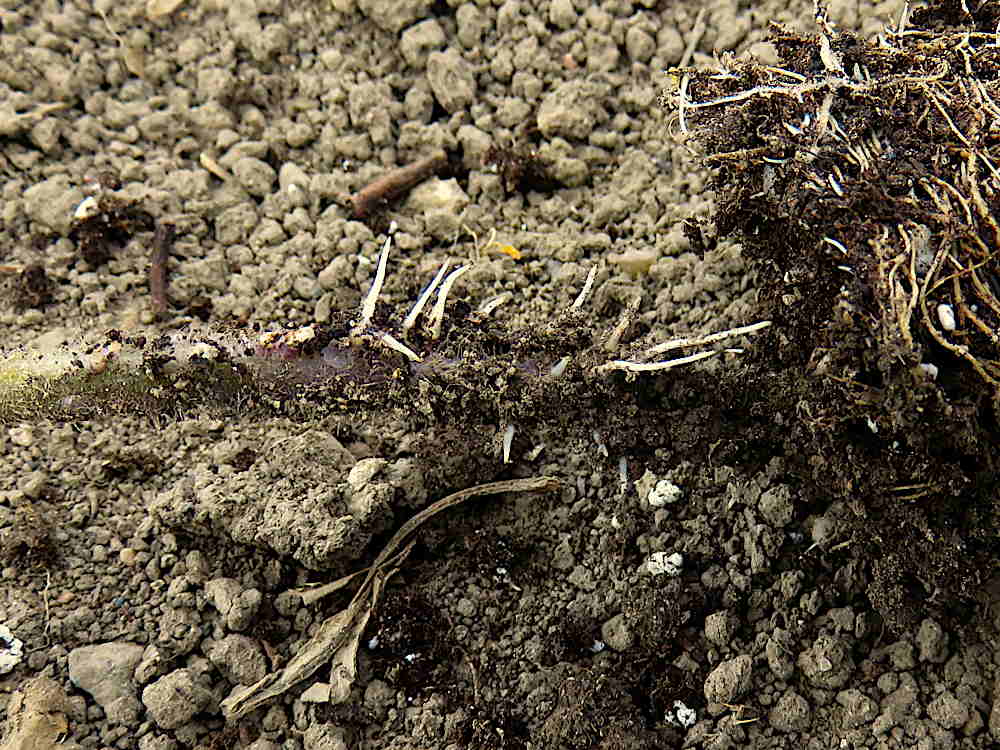
Most of us don’t spend much time at all looking at plant roots. Meanwhile, the things going on underground are quite wondrous. Take this humble tomato seedling, demonstrating a special power: adventitious rooting—a catchy way of saying they can grow new roots from their stems. Tomatoes, potatoes and peppers, all relatives from the nightshade family, have this ability. And? Well, if you have leggy tomato transplants, stretched from too much time indoors in tiny plug sheet cells, this ability allows for a neat trick. You can dig a little trench instead of a hole and lay the seedling on its side. Then, bury the root ball and most of the stem, gently curving up the last bit. Ta-da, a sturdy little transplant. I did this for a few leftover tomatoes two days ago. Today, I found one snapped off—wind? rabbit?—so I pulled it, revealing roots that had already started pushing out. It’s just another little bit of all that goes on in the hidden part of the garden!
Establishing peppers
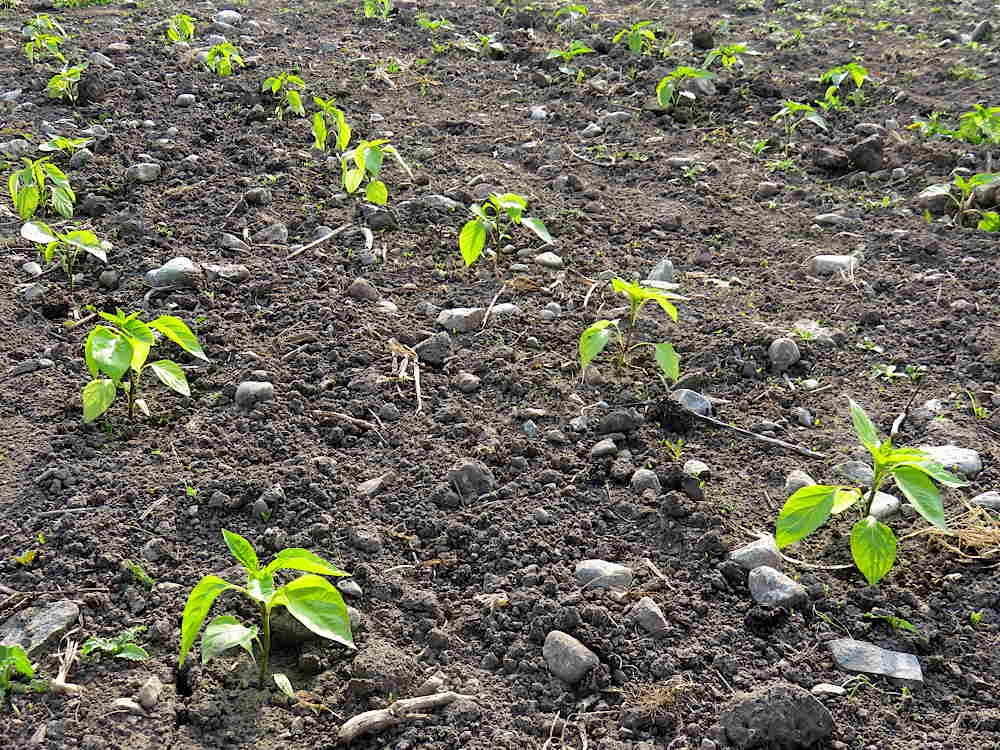
Pepper transplants, backlit by the late afternoon sun, are still looking quite pale and somewhat fragile, but upright and healthy, after a couple of weeks. This is the veg garden equivalent of the suspenseful, hold-your-breath-before-the-big-reveal stage that happens here in June. Transplants and directly seeded crops are showing steady growth, but impatient eyes find it…slow. I think of it as the creep phase. I first heard the gardening “sleep, creep, leap” rule of thumb to describe, not vegetables, but how bamboo transplants get established. First year, nothing to see as they set down roots. Year two, some modest growth. Then—ta-da!—in year three, they shoot up. While none of the veggies in this field follow that three-year plan, I find myself thinking that way about how the crops grow over the season. Waiting for the leap!
Plug sheet gamble, part 2
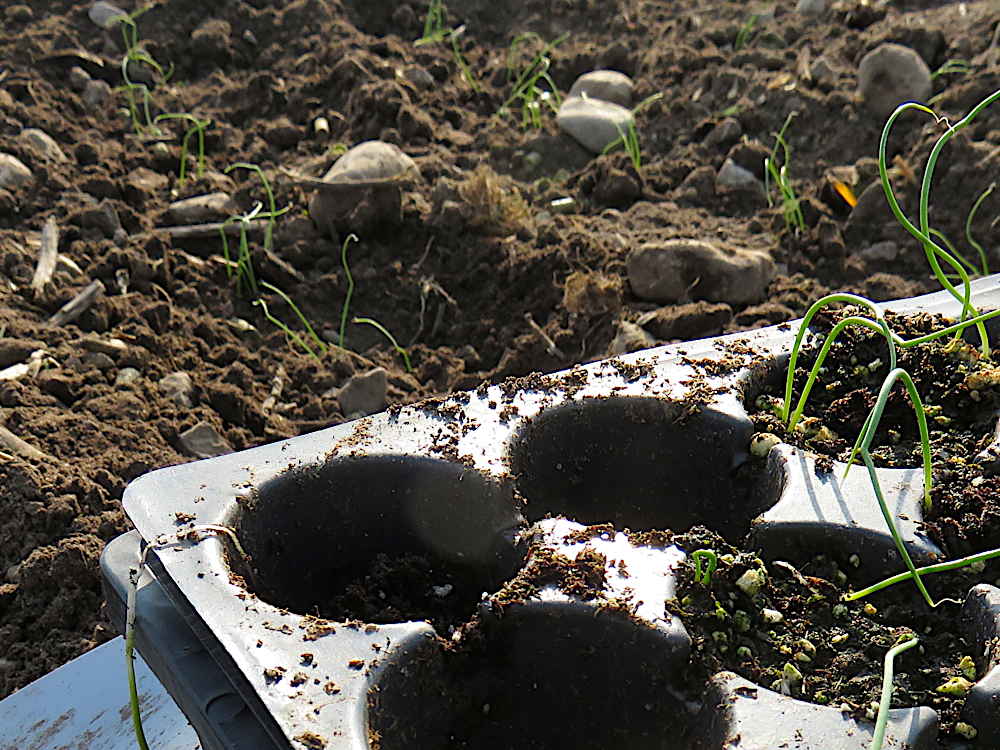
Only a few days after these green onions emerged, they’re in the field and heading into the ground. Haha, there’s no doubt this is a lot more labor intensive than using a seeder. Unless the weather conditions are really extreme, like a long, hot drought with scorching daily temperature and bone dry ground, it’s hard to argue for the plug sheet approach. But not impossible. Let’s see how they do…
IN THE PHOTO: A sharp and critical eye will notice that the seedlings in the tray seem pushed up against one side, instead of satisfyingly centered. This was my error, watering them in with a spouted can, along with a bunch of other seedling trays sitting outside. Onions don’t quickly put out lots of secondary roots that spread through the seedling mix and hold it together. Instead, at first there’s mostly just the radicle, that long white root that comes out of veg seed, heads down and, for most other vegetables, also branches out. So the plugs got kind of soupy and the force of the water pushed the onions to one side. You can see one hanging over the edge because it stuck more to the drainage hole in the cell than to the plug of seedling mix. Details! I should have remembered to use a shower.
Spring seedling snapshot tradition
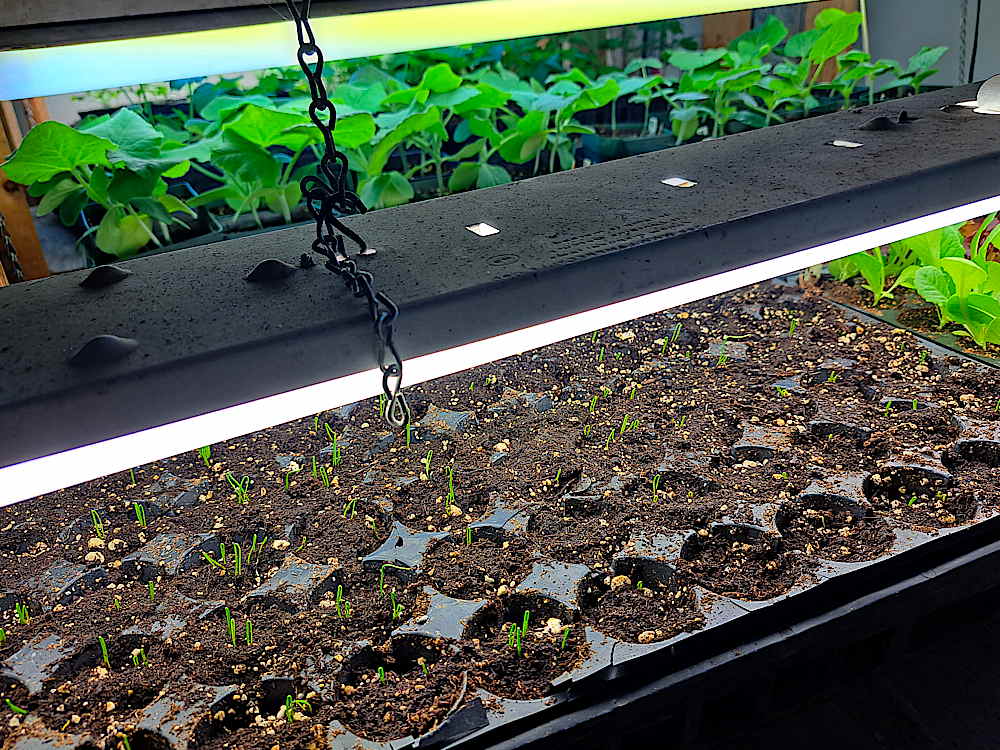
A pretty rough snapshot taken with my phone—its attempt to balance of sunlight and fluorescent doesn’t do the photo any favors—still fulfills the spring photo blog tradition of seedlings on the light racks. (More words to come…)