
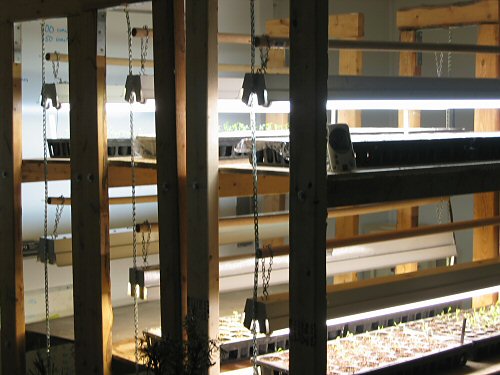
The grow racks are starting to fill up. First trays of eggplant and peppers, seeded yesterday, sit up top where it’s warmest. The lights run 14-hours a day, on a timer, with an extra hour or so of early morning ambient sunlight from windows on three sides of the room.
Seed & Seedlings
Seed starting station
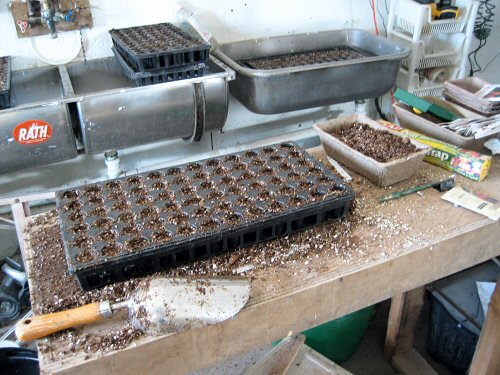
The seedling workstation… This high and narrow table is where I put seeds in cellpaks. The triple sink, a leftover from the dairy days when this was the sterile milk collection room, work out well for seed-starting, with all of the soaking, rinsing and draining involved. Today, the first eggplant and peppers.
New rack ready to roll!
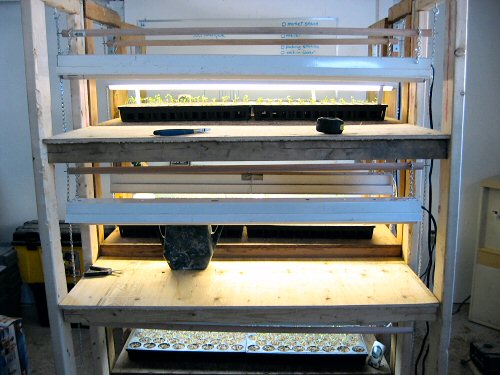
The new grow rack, lined up with its brothers, ready to go to work. The carpentry’s real rough, but it’s sturdy and tried-and-true functional. The addition of 3″ casters has created an unexpected PLUS: when the racks are rolled together, the overall light from the fluorescents spills across the shelves, giving a little more to the plants on the outer edges of the trays. This is good! There is a fairly big difference in early seedling growth from being even a couple of inches further from the lights. (Before, moving the racks around was a pain, and you need to get at both sides quite regularly for watering, rotating trays, generally checking things out. Yay for wheels!) In the end, most things even out, but you take every edge you can get and…they do add up!
Lettuce under the lights
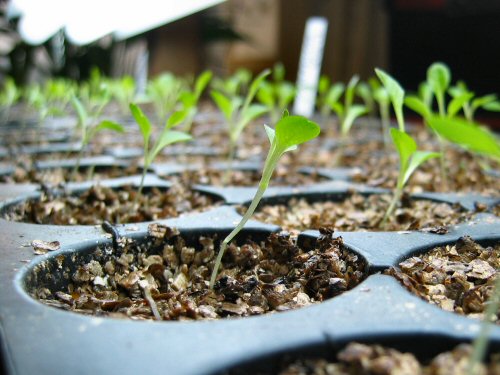
Checking in with the early lettuce. The seedlings are developing their first true leaves. Fluorescent lighting is inexpensive and does the trick, but it still bothers me how seedlings stretch and strain toward the available light, when what they really want is the Sun.
Lettuce overnight
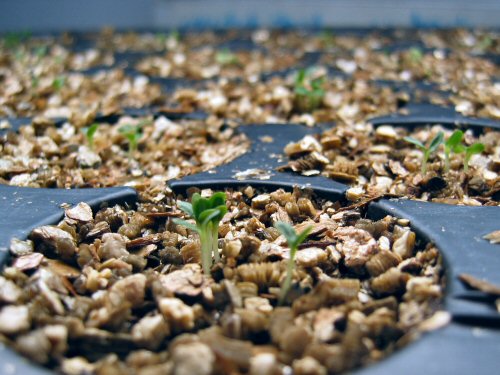
The first lettuce pushed up overnight! Here, lovely red Granada, an Oakleaf-type leaf lettuce that intensifies into a deep burgundy as it matures. Also in trays, Sierra, Simpson Elite, Two Stars and Red Salad Bowl. Now, how early will they be ready for market (the farmers’ market kicks off the first Saturday in May…)?
Rosemary revival
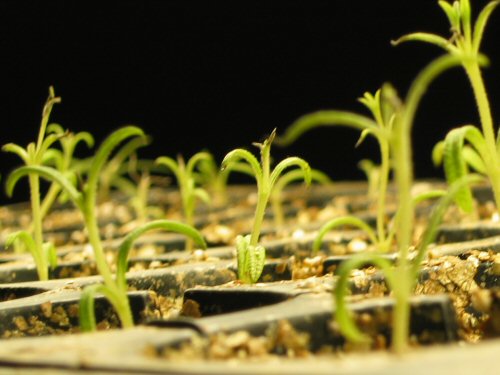
A little experiment in vegetative propagation—replicating rosemary from tiny, stressed cuttings. Most of the potted rosemary taken up from the herb garden last season got toasted after too many -20°C nights in the unheated greenhouse (a bit of a random how-cold-can-they-go experiment). These tiny cuttings came from one that was taken indoors earlier. They’re kinda frail and stretched from relatively low light (etiolated is the typically uncommon technical term). They’ve already been three days in the tray, let’s see how they do. (Fast forward to…results!)
In the mix…
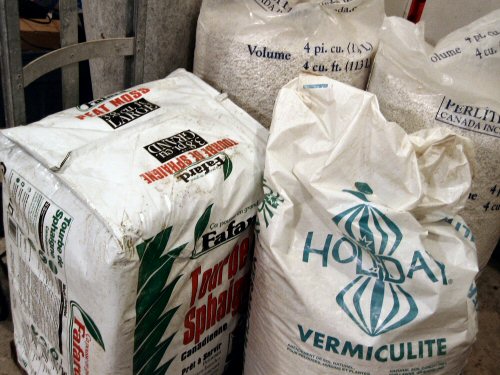
My late winter farming friends: perlite, vermiculite and peat moss, the raw ingredients for a standard seed starting mix. For most veggies and herbs, I mix all three in equal parts, although a combination of any two would likely do as well. It’s soilless (no bacteria, sterile), holds water well and allows oxygen to get around…all a seed really needs in the way of ground to get started.