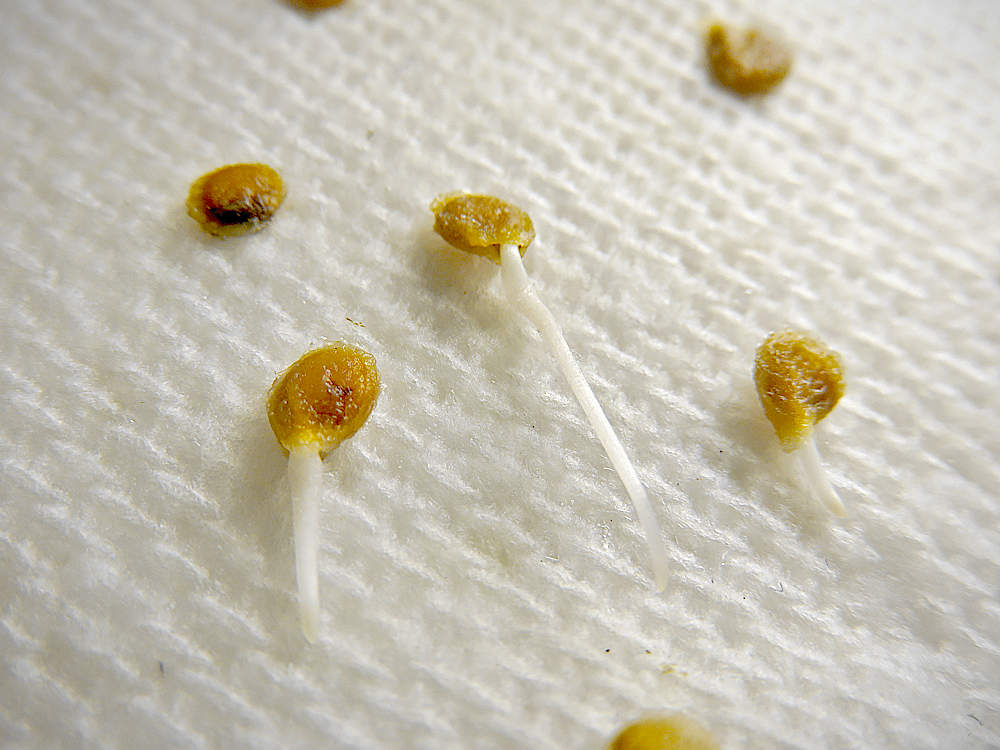
The generally reliable Big Beef variety, five days old. Always the little miracle to see dry specks of seed germinate with a little warmth and moisture, and to imagine them in four or five months, sprawled around the field (or maybe, supported), producing a steady supply of tasty, hybrid-perfect beefsteak tomatoes!
seed
Making salad mix
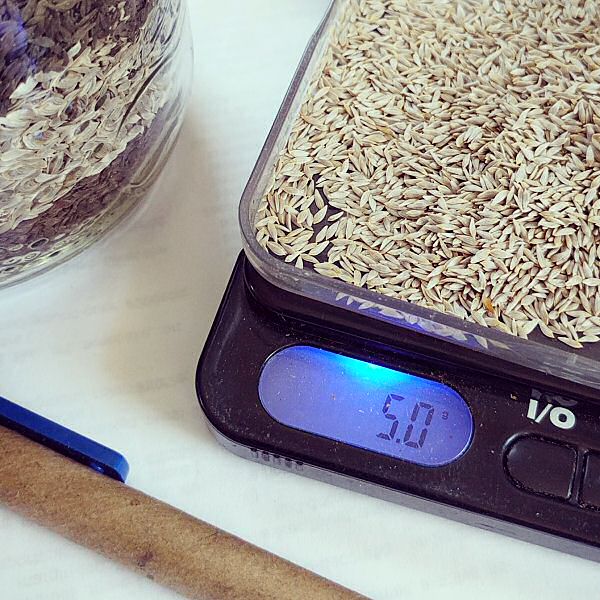
Adding a pinch (5g) of fairly pricey Rushmore (a beautifully deep-red oakleaf) to a batch of salad mix. This is the basic all-lettuce summer blend: seven varieties, selected mainly for color (greens to reds), texture (flat to frilly), and to some degree, seed cost (the price range of lettuce varieties is quite extreme). This inexpensive digital gram scale makes it easy to add relatively small quantities of certain varieties, and keep each batch consistent. Weigh out, shake up in bottle, ready to go. Here: 100g – that’s a lot of little lettuce!
Seed catalog, 2016
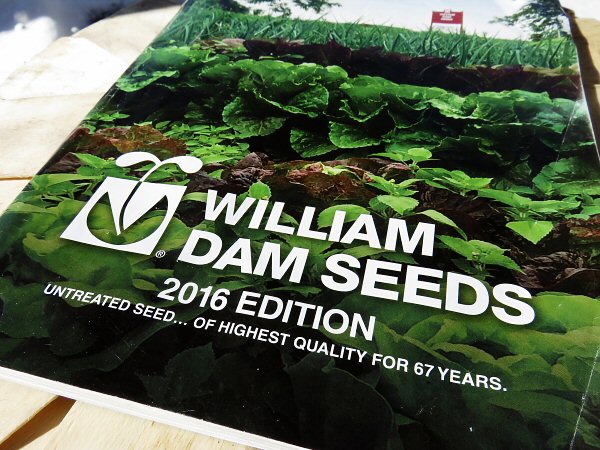
Here’s my main seed catalog for this year. Once again, unlike several seasons ago, when I’d receive a dozen catalogs, order from two main suppliers, and pick up a few things from two or three others, lately, I’ve simplified and get everything in one place. This year, though, and for the second year in a row, there was a crop failure on a variety of mustard that I grow, and no close substitute, so I had to look elsewhere. Which, of course, opened up a world I’d kinda forgotten, the wonderful world of price comparison shopping.
The puzzling thing about pricing is the seemingly bizarre differences in price for the same items between different sources (it’s the same in seed as everywhere else). Some suppliers are clearly overall more expensive than others, so if quality and service are fine, it’s easy to go with the savings. But then, on any one item, prices can vary quite dramatically either way. For example, I found the same variety of mustard at $10 and $17 a pound, and something similar at $50, at three different places, and that’s expected. Less so is that, for just one common variety of lettuce, it’s $33 at my usual place, where the same amount is only $19 at a usually more expensive other supplier.
Yep, I could’ve gone on and on like this, with multiple lists and endless tabs of online catalog pages, like a full-on coupon clipper, looking for the ultimate bottom line big score. Instead, though, I ordered my mustard and stopped! Maybe not the best every-last-penny business thinking for a tiny farm, and tiny farm definitely does not equal big budget, but sometimes at least, for a few bucks, life is too short! :)
Seed shopping
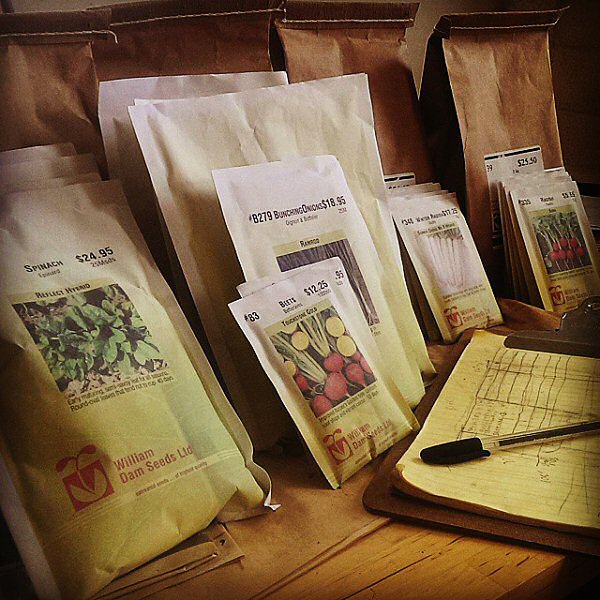
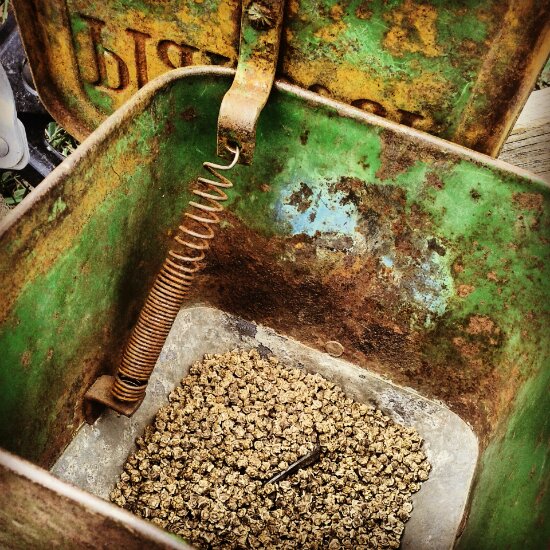
More seed: Not by the 50 lb bag, but it still adds up. You find a balance between buying smaller quantities that are quickly used so that you always have fresh, vigorous seed that’s ready to pop up at the least sign of moisture and warmth, and the huge savings from the bag that’s two or three times bigger than what you need for the season, and may be around for an extra year or more. Shopping! It’s like a human condition you can’t escape.
Prepping and seeding…

This is exactly what small-scale looks like. Prepping and seeding another 20 or so beds, a couple already seeded with salad greens, the rest with compost lightly scattered—maybe a little more spreading, then tilling, sectioning into 50′ or 100′ by 4 or 5′ beds, smoothing, and seeding with the Planet Jr. Sometimes this tiny farming feels to me like being in a little boat on a big, big ocean. Maybe not that dramatic, but I’m definitely adrift in a deep blue sea! Fun.
Catalogs!
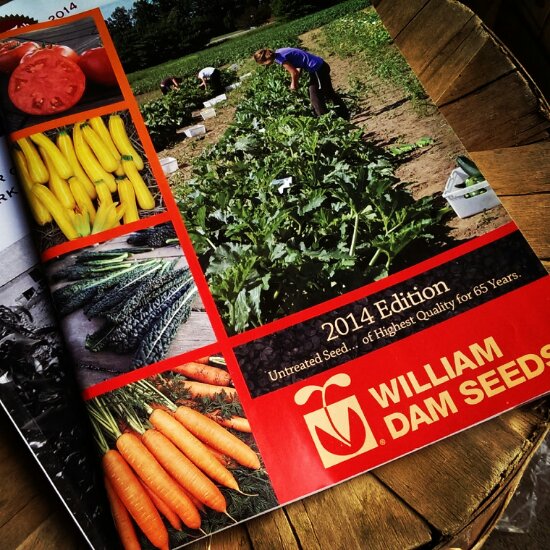
This year’s seed catalogs! Haven’t kept on the mailing lists for the dozen or more I used to get. I do always look around online, but for the hard copy, and the main seed ordering, it’s reduced to two, one main seed supplier and a backup. The more you know, the less you need? I like the sound of that! :)