
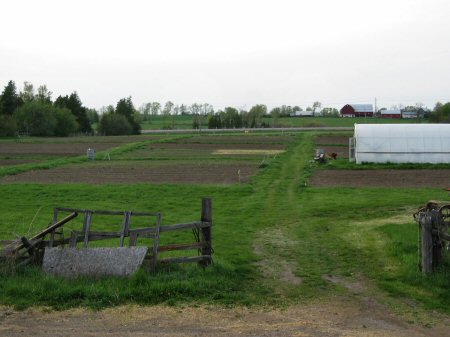
Days are warm, nights are often still sub-freezing, and it hasn’t rained in weeks. Anything that looks like it’s growing is grass.
Veggies
Grass…
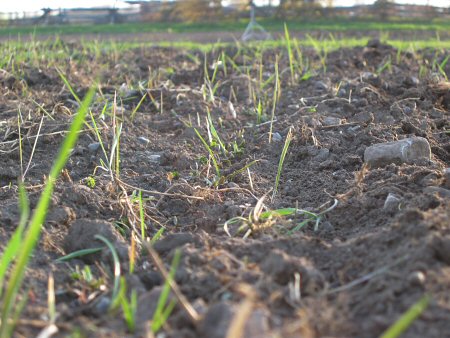
Grass is the worst weed, once it takes hold. It depends on the bed, what was in before, and how well it was cleaned up. The runners take off all over the place, and simply chopping off the blades is no guarantee that it’s gone. Pulling up longer runners works, but that can also dislodge tiny seedlings, and is incredibly time-consuming, labor-intensive. Oh well…
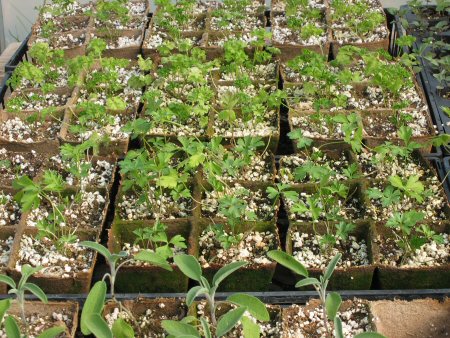
Buildings
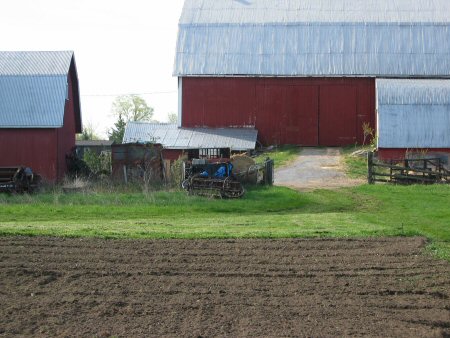
The Barn, with the Milkhouse nestled in a corner, and the Drive Shed on the left. These classic farm buildings don’t have all that much to do with small veggie farming, you can only use so much space, but they do come in handy. And they’re easy on the eyes…
Early lettuce expands
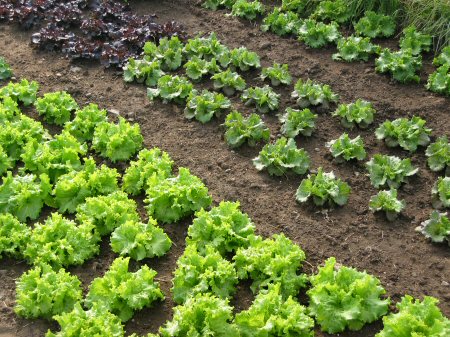
Lettuce started indoors weeks ago, transplanted to the unheated greenhouse (hot days, cold nights), and now finally kicking in with expansive growth. It’s Simpson Elite upfront, Granada (red) and Sierra in the middle, and Two Stars in back (and Optima just out of sight).
Thin green lines
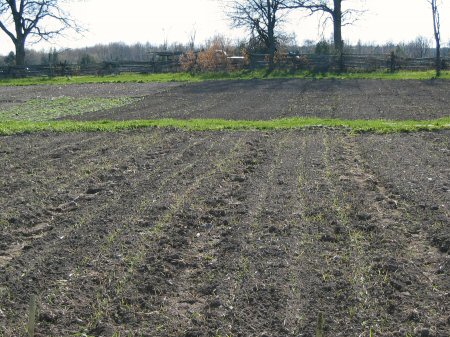
Notice those lovely, hazy green lines. The first signs of direct seeded crops is always on your mind. You can’t cultivate the soil for weeds until you know where your veggies are. If germination is slow—because of cool weather, dry conditions, or both—the weeds can easily get ahead of you before you’ve seen anything at all.
It’s a start…
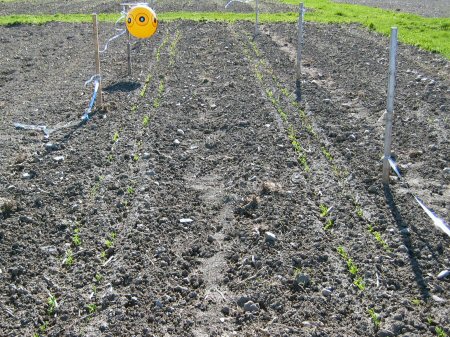
Peas planted in early April finally poking up. These are Sugar Ann snap peas, you can eat the pod and all.