
These days, great weather is as unusual and unexpected as anything else that comes along. The last month or so, we’ve been getting rain around weekly, with sun in between. Ignoring the two days of overnight cold snaps, it’s been excellent. Today, after a half day of sun and heat, clouds rolled in on a cool breeze, a good inch (25mm) of rain came down in half an hour…and it was back to clear skies! We haven’t touched the sprinklers in ages. Bonus!
Back to growing
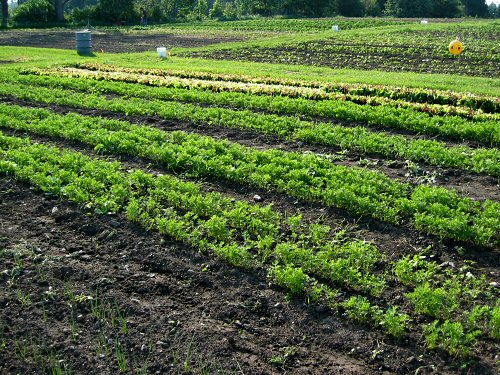
From the left: green onions, carrots, mesclun, snap beans, potatoes… After back-to-back frost warnings for the last two nights, the sun is shining, the air is warm, conditions have returned to reasonable, veggies are growing. Overnight, the min/max thermometer in the field went down to -1°C, but only a few rows of beans were slightly burnt by cold. Meanwhile, 25 miles away where we dropped off some greens today, the pond had frozen over solid and a kitchen veggie garden was completely toasted. Lucky us!
Late frost warning
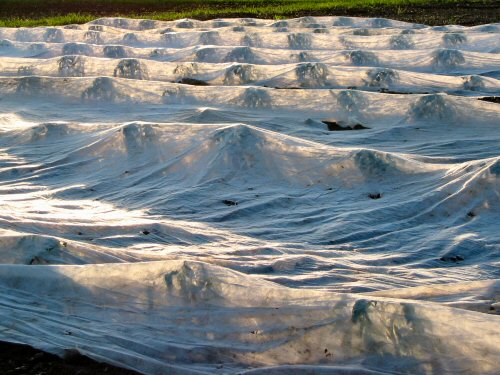
The frost warning for last night didn’t come to anything, but it’s on again for tonight. Yesterday, we covered about 500 tomatoes, some of the peppers, eggplant, and beans, and even the basil. I don’t really think there’ll be a deadly hard frost, so this is only partial insurance. Covering half the field seemed a little much. Here, the tomatoes are somewhat safer than if they were exposed, but the delicate tops are taking a beating from the cover, and if it does freeze up, frozen dew on the row cover fabric will toast the parts of the plants directly in contact. It’s a rough little bit of weather insurance. It’ll be great to have it over tomorrow. Cross fingers!
Working in the rain
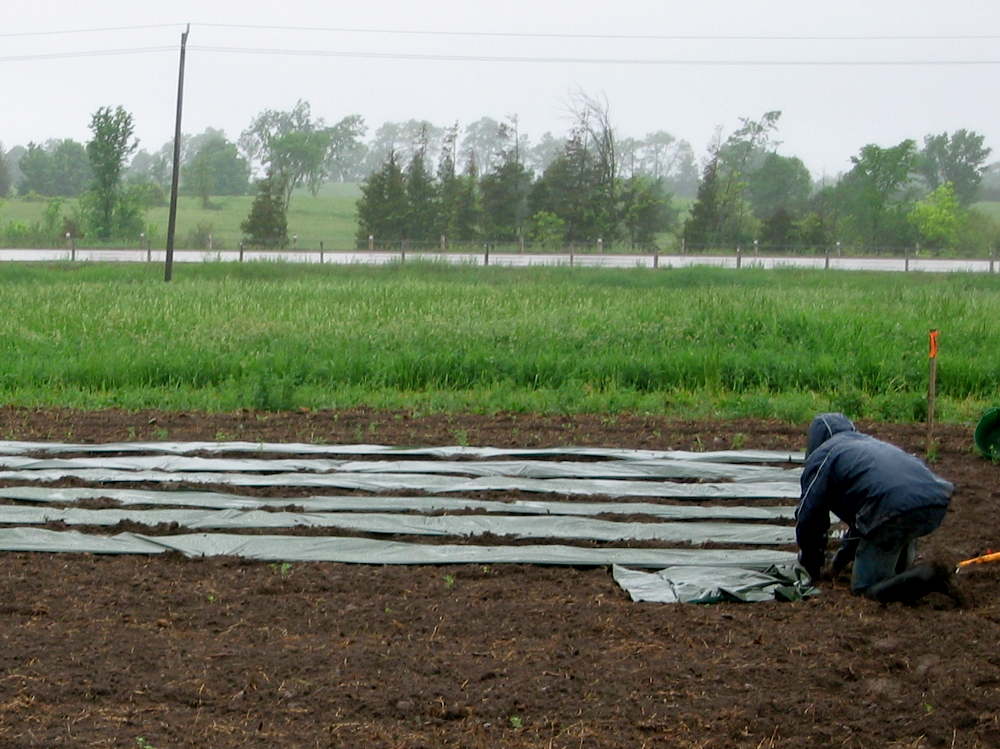
The rain is good (15mm over the last day), the chill (there’s a frost warning for tonight and tomorrow) and sticky clay-loam mud are not so good. But the calendar is flipping and there’s really no time to take shelter. Conall puts in plastic mulch for melons, anchoring it every few feet by scooping out soil, pushing down the plastic, and replacing the soil. We’ll cut X’s to transplant into, and water by hand around each plant as necessary. Labor-intensive, but it’s the most reasonable way to decent melons I’ve found so far, and it worked out well two years ago. After experimenting with straw mulch for tomatoes and melons last year, I’m back to using plastic for melons, and that’s it. Straw is great, but the extra work of spreading and then the fall clean-up seemed like stretching it for everything else that has to be done this year.
What to do with pumpkins
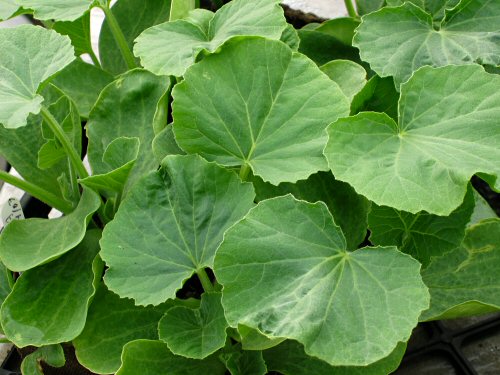
A final few Lumina pumpkin seedlings, straining at the their peat pots, are ready to go into the last couple of open beds in the pumpkin patch. Lumina is a cool whitish-green variety, a change from the orange. Growing pumpkins is fun, once they get established, they totally take over their spot and pretty much care for themselves. Up to this year, though, not much got done with them, they were mostly given away, I was just keeping my hand in on the growing side. Too bulky, heavy and underpriced to haul in quantity back and forth to the farmers’ market, I harvested and kept ’em in the field like a bright little sculpture garden, storing a few for use over the winter. This year, with the farm stand properly open, the pumpkin patch should go to better use. There’s a time for everything, including PUMPKINS!
Last of the Milkhouse seedlings
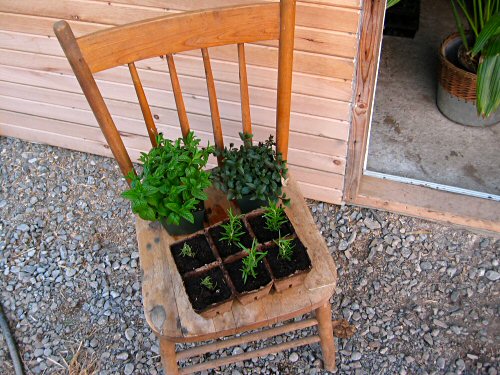
Spearmint, peppermint and some replacement rosemary are all that’s left in—right outside—the Extended Milkhouse. Most of the spring seedlings are in the ground (a few are still in the greenhouse), and it’s time to transform the Milkhouse set-up from seed starting to overnight harvest storage and a place to take a break from extreme weather.
Sunflowers come up quick!
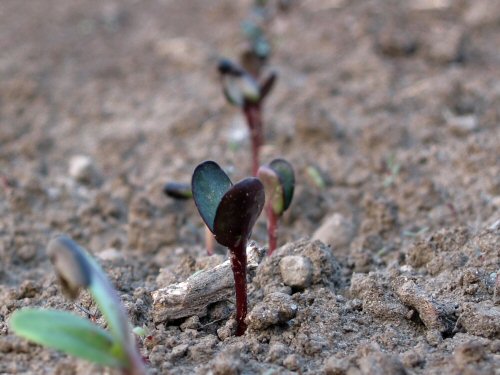
Sunflower is my new favorite flower…because it comes up quick. These Claret seedlings, along with Sunrich Orange and the Go Bananas mix, all poked up after barely three days, with even germination down the rows. Flowers this year are lower priority than the veggies, so they got in a little later than they could’ve. Yesterday, I showed my production list to a flower gardener, who nodded as she read, said “oh, cosmos” in what I took to be an approving tone, and finally commented, “well, you may be a little LATE for some” (my emphasis on LATE). She was only referring to the longest possible season for each, but it made me realize what a dread concept LATE has been all along, only usually it’s just in my own head. You’re constantly trying to stay on top of seeding and transplant timing, hoping for early last frost and late first frost, attempting to squeeze in one more planting, and always wondering if this or that will be…TOO LATE. In fact, it always works out… What you learn is, either way, no worries!