
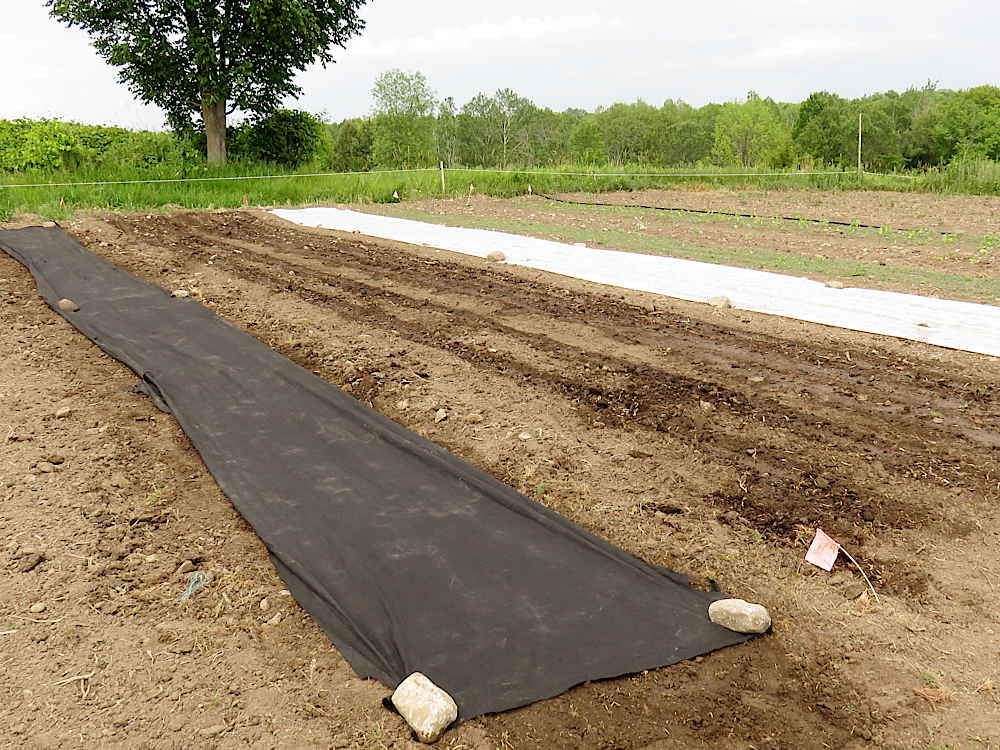
Some crops need to be covered and some crops don’t. It would be excellent if all the vegetables in the garden could bask in the sun together, like a picture-perfect postcard. Which would be possible if it weren’t for pests, and the special conditions some need to germinate. Trusty floating row cover is used here to keep flea beetles chewing holes in the brassica mix—flat-leaf kale, mizuna, mustard, bok choi, and their close cousin arugula, to be harvested as baby leaves for salad. Wee tiny carrot seeds need cover to retain the constant moisture in the ground they need to germinate—I’ve been using black landscape fabric, watering through it as need, for about a week. And some veggies, like green beans and beets, haven’t had insect problems, so they don’t need cover. It all depends!
salad greens
Cutting greens
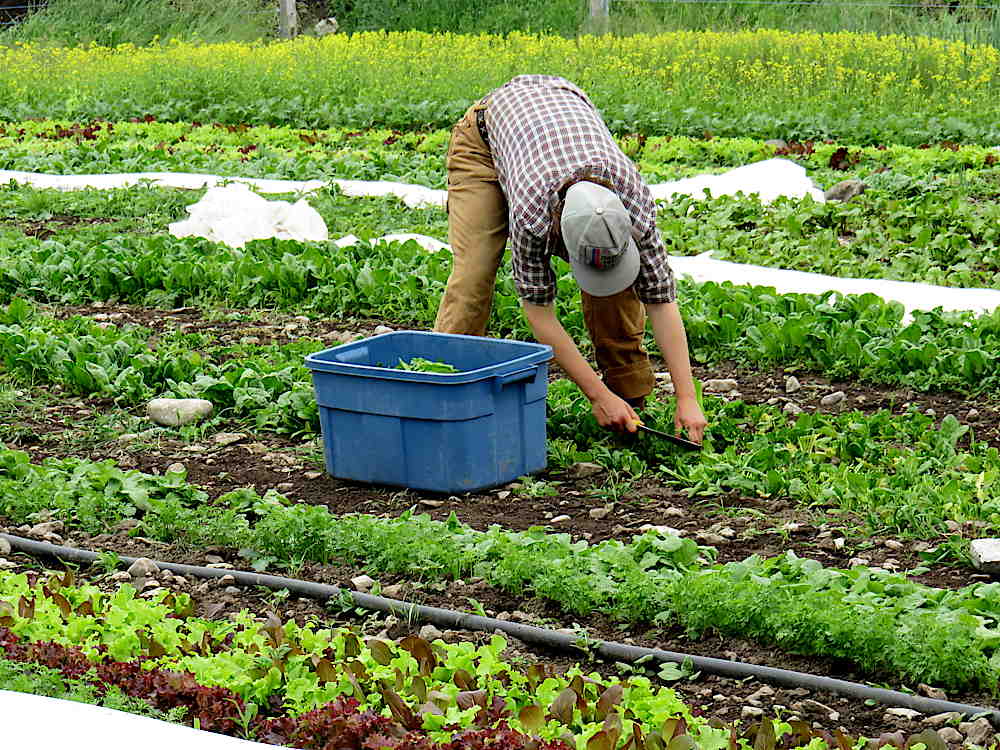
Harvesting salad greens: bin, harvest knife, hands. This has never been one of my favorite things to do—doubled over one 50′ bed after another. A while back, we made a seat on wheels that straddled the bed so you could sit, pushing yourself back with your feet. It worked pretty well, but it became one extra thing to lug around and faded out of service. The greens—lettuces, arugula, mustard, mizuna, other brassicas—at this time are maybe the best of the season, growing before full summer heat. In the background, the goldenrod, native residents of the field, are thriving, towering over all the crops. I don’t think of them as weeds, because they don’t
Greens in the sun
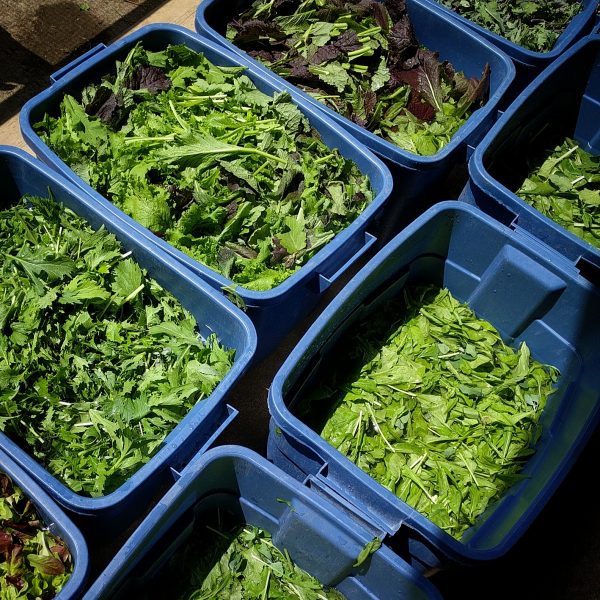
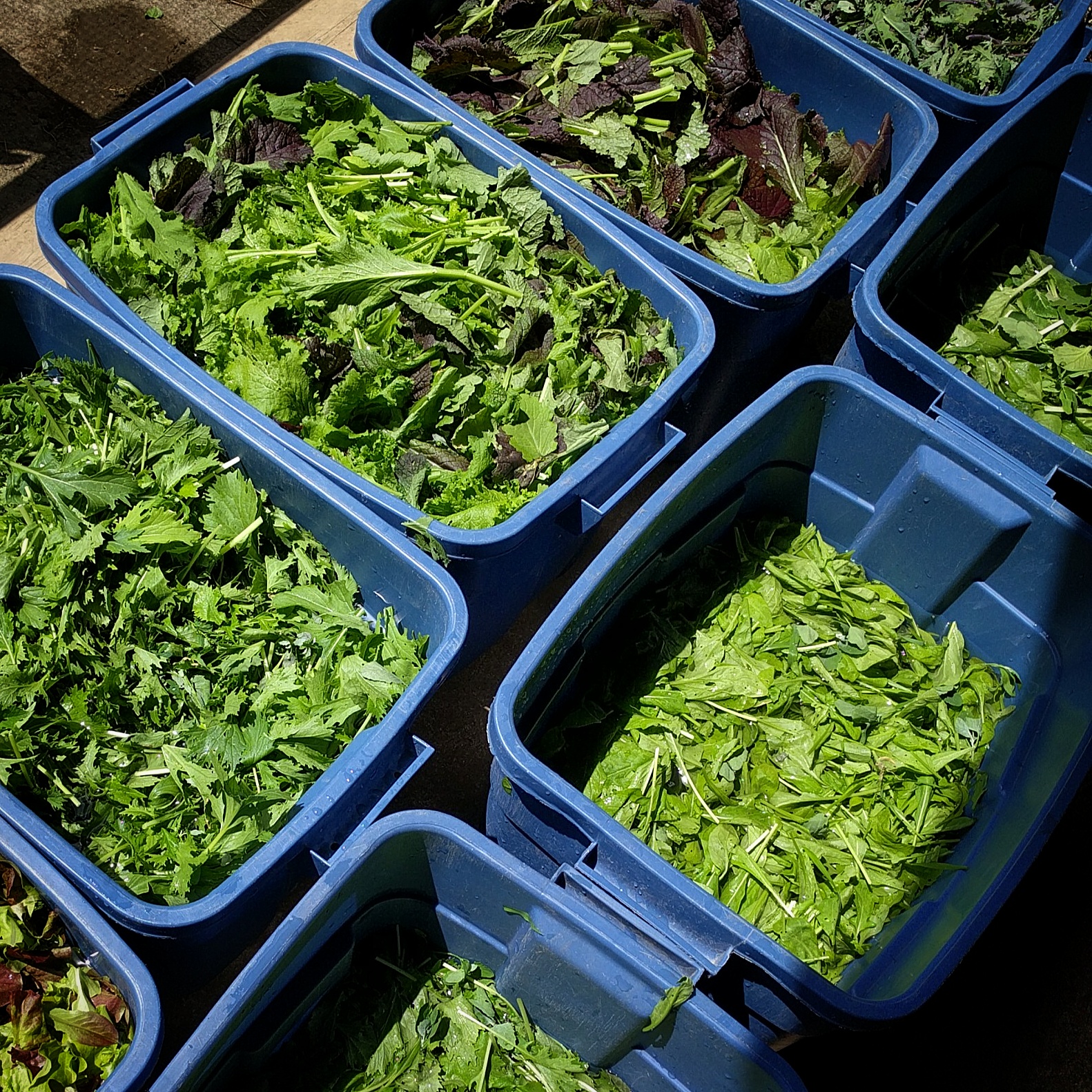
Not the best place for them to be, basking in the sun, but it’s only for a moment, fresh in from the field, and they’re also bathing in chilly well water. Mustards, mizunas, lettuces, kales, bok choi, more… Salad mixes are what’s up for the moment, hanging in there and quite delectable, even as the heat and near total absence of rain continue for the third week straight!
Making salad mix
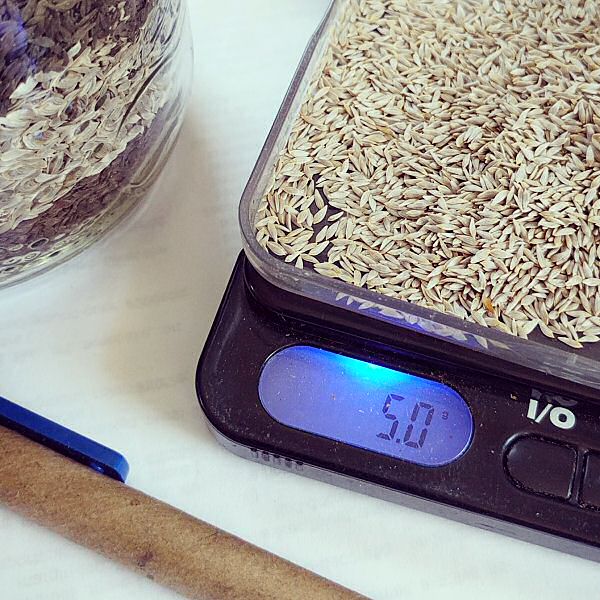
Adding a pinch (5g) of fairly pricey Rushmore (a beautifully deep-red oakleaf) to a batch of salad mix. This is the basic all-lettuce summer blend: seven varieties, selected mainly for color (greens to reds), texture (flat to frilly), and to some degree, seed cost (the price range of lettuce varieties is quite extreme). This inexpensive digital gram scale makes it easy to add relatively small quantities of certain varieties, and keep each batch consistent. Weigh out, shake up in bottle, ready to go. Here: 100g – that’s a lot of little lettuce!
First winter harvest
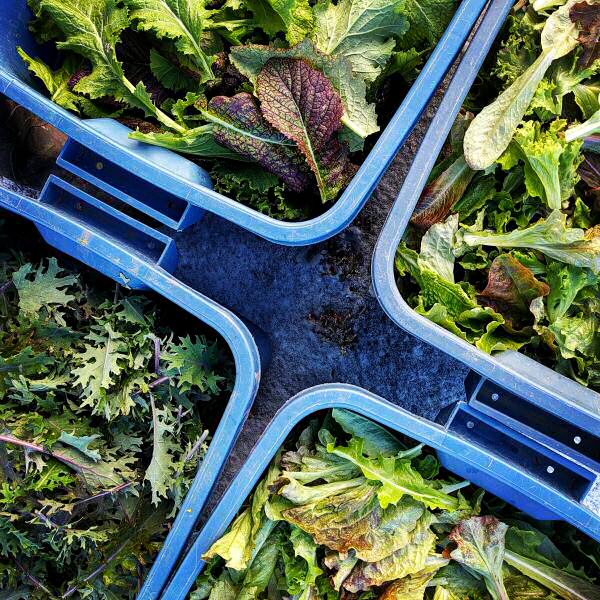
Yesterday’s harvest that went to today’s farmers’ market, my earliest market start by almost two months! From the unheated greenhouse: kale, green and red mustard, and lettuce mix times two. Harvest conditions: -2°C outside, a perfect-working-weather 10°C inside. At the end, the sun came out and it started to get sweatingly hot under a T-shirt, shirt and fleece. But, already done! No rinsing, just covered and into a cool room for a 6 a.m. pick-up this morning. It felt a little odd, starting the year’s Saturday markets so early, and indoors—this fall, if all goes as intended, weekly market will cease to end for winter and become instead a fully year-round thing…
Winter salad
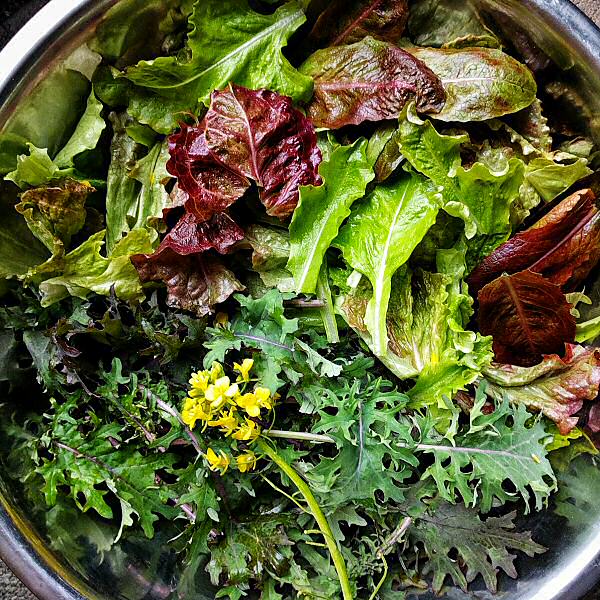
This bowl of lettuces and kale is the first cut of spring, taken from the unheated greenhouse while snow flurries whip around outside. With the help of 6 mils of plastic and some row cover, the salad easily survived three months of winter, with temperatures that went down to -30°C (-22°F). The texture and color are good, the taste, deliciously bold. Fantastic! The flowers are bok choi that managed to bolt in the alternating warmth and cold—on sunny days, the hoophouse temperature could easily reach 10-15°C (50-59°F), even when it was sub-zero outside. Interesting!
Prepping and seeding…
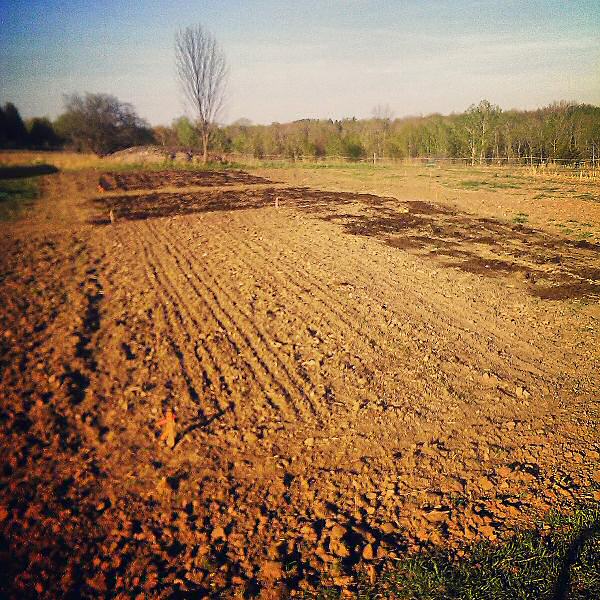
This is exactly what small-scale looks like. Prepping and seeding another 20 or so beds, a couple already seeded with salad greens, the rest with compost lightly scattered—maybe a little more spreading, then tilling, sectioning into 50′ or 100′ by 4 or 5′ beds, smoothing, and seeding with the Planet Jr. Sometimes this tiny farming feels to me like being in a little boat on a big, big ocean. Maybe not that dramatic, but I’m definitely adrift in a deep blue sea! Fun.