
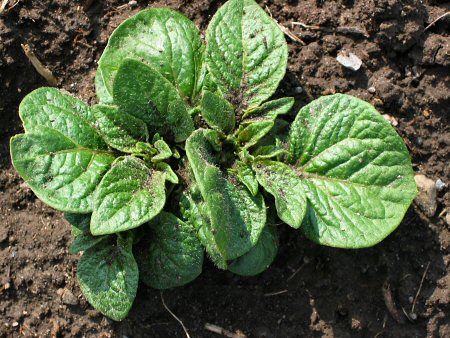
The first potato plants are popping up. This is Gold Rush, saved from last season. The dirt on the leaves was splashed up by the pounding rain that came with yesterday’s thunderstorm.
Spring
50 mm
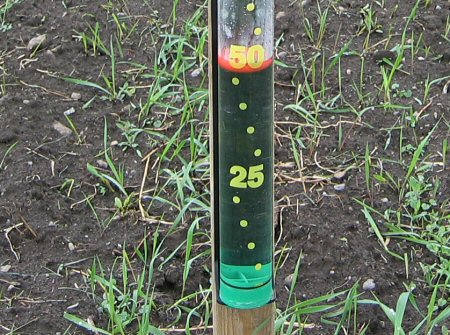
You don’t see that too often around here: two inches (50 mm) of rain over the last day or so, and this after weeks of hot and dry. It’s about time!
Beets and competition
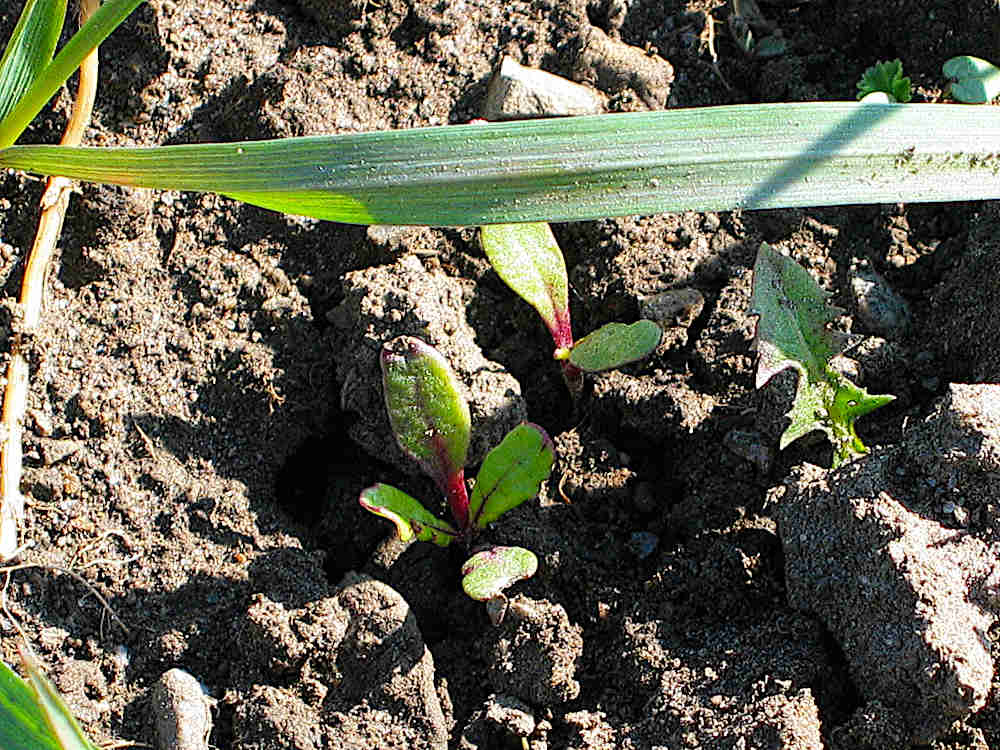
In the real world of this organic field, it’s not all close-up beauty shots of picture-perfect seedlings growing into pristine vegetables all in a row. Competition is the order of the day. Here, a couple of beet seedlings are surrounded by grass, dandelion, and round-leaf mallow (peeking out from behind the grass in the top right corner). It’s a motley assortment of weeds competing for water, food and even the sun (observe the grass shading out the baby beets). We call them weeds when we don’t want them to be there, yet they’re the ones perfectly suited to the conditions and able to grow fast. It can be a pitched battle when you’re not rooting for Nature to take its course!
What’s up, early May?
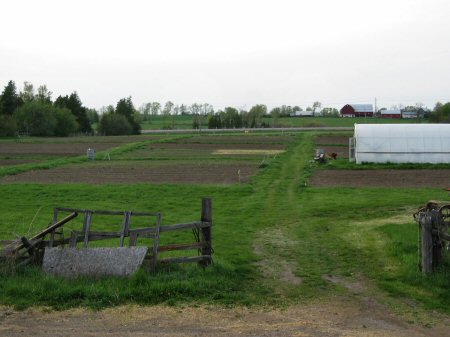
Days are warm, nights are often still sub-freezing, and it hasn’t rained in weeks. Anything that looks like it’s growing is grass.
Grass…
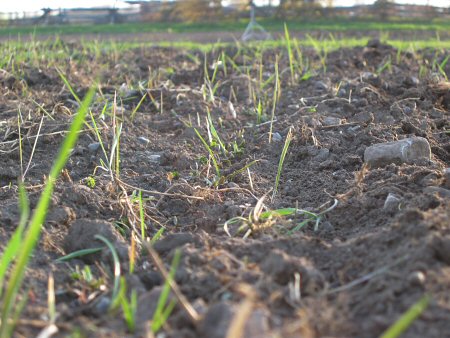
Grass is the worst weed, once it takes hold. It depends on the bed, what was in before, and how well it was cleaned up. The runners take off all over the place, and simply chopping off the blades is no guarantee that it’s gone. Pulling up longer runners works, but that can also dislodge tiny seedlings, and is incredibly time-consuming, labor-intensive. Oh well…
Buildings
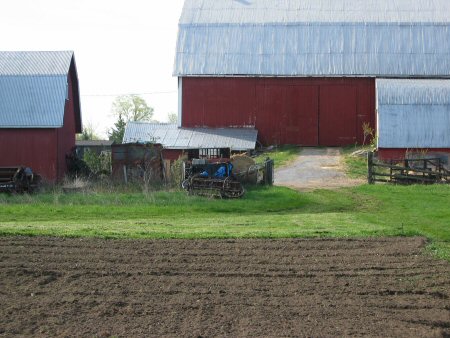
The Barn, with the Milkhouse nestled in a corner, and the Drive Shed on the left. These classic farm buildings don’t have all that much to do with small veggie farming, you can only use so much space, but they do come in handy. And they’re easy on the eyes…