Pounding stakes

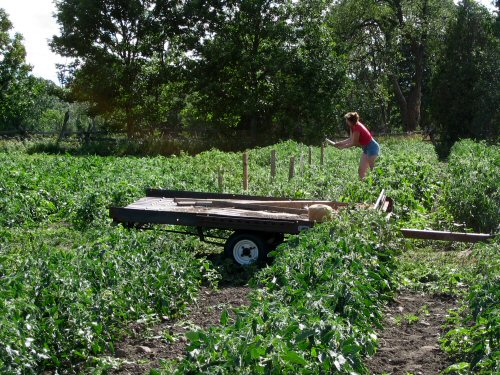
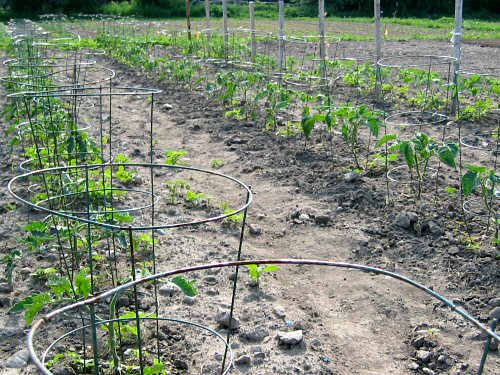
Jo pounds in wooden stakes for a somewhat catch-up version of tomato staking. I think of it as the Modified Sprawl. There are about 600 plants, with maybe 250 in home-style tomato cages. The rest are so far on their own. The cages work great, until a mighty wind comes along and blows a bunch over—they’re not really rugged field gear. It’s too late for proper basket weaving support, so it’s on to my previously tried and OK version, pulling the plants up with twine on both sides, to stakes set every three plants apart, with a bit of pruning and suckering as we go…

This is the point in the season where we start playing catch-up as a million different things need handling. It can get a little frantic, depending greatly on how it went earlier in the year. To add to the…decision-making puzzle, it’s last call, and even very iffy last call, for planting many crops (60 day maturity and under), with day length shortening and frost risk building to a significant consideration just 6-8 weeks down the road. So, thin here, or weed or seed there, or water elsewhere, you can’t do everything at once! It’s all in the timing, with much of the schedule in the hands of Ma Nature (where’s that RAIN!?!). Gambling, yes! Still and all, quite FUN.
Stupice first on the vine

For the third year running, and no surprise, Stupice is the first tomato to start fruiting. This extra-early heirloom is said to be from Czecholslovakia, and its performance hasn’t been even nearly beat for earliness in the 70+ varieties, heirloom and modern hybrid, that I’ve tried over the last four years. The toms are kinda small, maybe 2-4ozs (56-112g). Taste is tart (perhaps not for those sensitive to the mildly acidic) and, um, fantastic… This year, all of the tomatoes are really ahead, with fruit appearing on at maybe two dozen early and mid-season varieties before the end of June. Mmmmm…. (Now, to finish semi-staking, or shall we sprawl?!)

Stakes and cages

Prune, sucker, stake and cage—there’s a lot of (brutal-sounding!) stuff to do with tomatoes. On the other hand, as I’ve done in past years, simply by not having enough time to support them all, you can let ’em sprawl. I’ve always wanted to have the toms neatly assisted by the basket-weave method. This involves pounding in stakes every second plant (maybe every third would also work), then weaving twine in and out, in front then behind every other plant in one direction, then back again, weaving the opposite way, this done every 12″ or so of growth. This way, each plant is then supported by twine on both sides. You also have to prune and sucker (remove the shoots that grow at the intersection of new branch and stem), so that you have one main stem. This year, we should have several beds set up this way. There are also around 250 home garden-style tomato cages, which are quick, but don’t provide that much support when the plants get heavy. An advantage of caging: you don’t have to be as strict with the suckering. For at least a few plants, I’d also like to try caging with cylinders made of 6″ mesh concrete reinforcing wire, a heavy duty (and fairly expensive) approach… This year’s mix of methods is underway. More as it happens!

Late frost warning

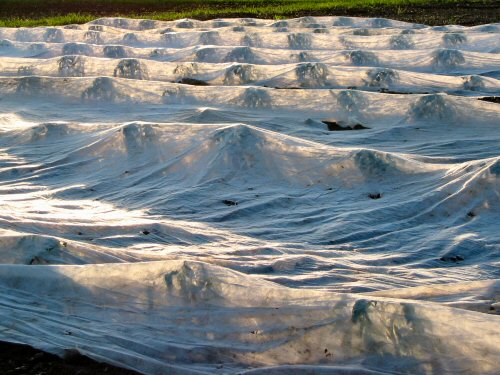
The frost warning for last night didn’t come to anything, but it’s on again for tonight. Yesterday, we covered about 500 tomatoes, some of the peppers, eggplant, and beans, and even the basil. I don’t really think there’ll be a deadly hard frost, so this is only partial insurance. Covering half the field seemed a little much. Here, the tomatoes are somewhat safer than if they were exposed, but the delicate tops are taking a beating from the cover, and if it does freeze up, frozen dew on the row cover fabric will toast the parts of the plants directly in contact. It’s a rough little bit of weather insurance. It’ll be great to have it over tomorrow. Cross fingers!

Tomatoes go in

Transplanting tomatoes

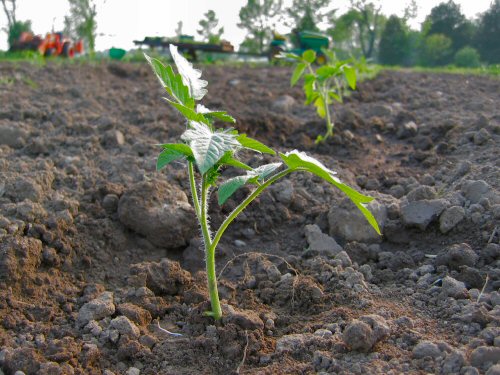
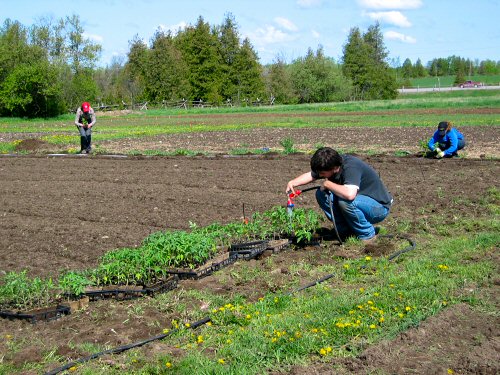
The first of the tender, warm season transplants—tomatoes—hit the field today! About 175 seedlings went in: Juliet, Striped German, Stupice, Emerald Evergreen, Mule Team, Yellow Stuffer. On the transplant team: Conall, Sherry and, new to the season’s crew, Jo. Compared to doing transplants alone or with one other person (my experience so far), this was quite the operation. Teamwork!

Juggling the weather and part-timer scheduling, I took a bit of a risk transplanting today, with patchy frost forecast for tonight. Still, the plants have been through highs and lows in the greenhouse, row cover will help, and tomatoes have…never let me down. I’ll be up at dawn to see how it went. Everything’s a gamble!

More seedlings to the greenhouse

More seedlings to the greenhouse

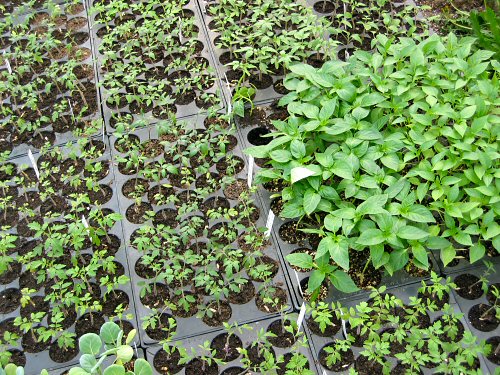
The spring seedling starting days are rapidly winding up. Moved about half of the remaining trays from the Milkhouse to the greenhouse, including most of the experimentally late-started tomatoes. Based on the marginally useful long-range weather forecast, I’m aiming to begin the main field transplants around the end of this week…