Another in my series of possibly-not-so-appetizing photos of oh-so-delicious food. Local food. Ingredients either grown by me or gotten from those who did. I still find knowing where your food comes from endlessly satisfying, it doesn’t get old. Anyhow, without further ado, on to the one-pot, no-culinary-skills-required Beef and Eggplant Stew. More »
Really can’t think what delivery of basic farm supplies could make me happier than today’s six truckloads of well-aged cow manure. Since we don’t have an on-farm source, getting this from a farm less than a mile (1.6km) down the road, loaded to order and delivered by the farmer himself, is a pretty good Plan B. This has been stacked for average around a year, so the composting action is well underway. I’ll be rearranging it into large windrows with the compact Kubota, for further breakdown till spring, and spreading some now. Heart-warming! :)
Suddenly, this morning, it’s cold! For this time of year, that’s a forecast of 4°C (39°F) all day, and -6°C (21°F) overnight. Brrrr… Maybe it’s just me, but I didn’t even notice the leaves turning in their usual intense explosion of reds and yellows, this time around, the trees kinda just went bare with a minimum of flash, and here we are! Round about now, this is as good a day as any to pick as the end of the old season, start of the new farming year!
This harvested parsnip root only hints at the massive root systems that plants have down there. Mature parsnips can root down to 9 feet (2.7m), and spread up to 3′ (0.9m) in the top 10″ (25cm) of soil. Other garden veggies are generally as impressive in the root department. When we harvest, most of the delicate root network is torn off, and we only get to see the bigger, tougher parts, the taproot or the root ball. This pic is from an old post I ran into, a flashback to Oct. 2008: there’s more words and another long-rooted-parsnip pic at Root love! (The arm-and-hand model is Lynn.)
During the growing season, tiny farming can be kinda all-consuming—lots to do!—and it’s easy to wind up in a rather pleasant local bubble, especially if you’ve turned the daily news OFF: watching this documentary last night, RIP: A Remix Manifesto (2008), popped that bubble for me, for a while. Although this doc is on the surface mainly about music, remixing and mashups, copyrights and intellectual property law, it’s REALLY about…EVERYTHING, and independent, small-scale farming fits front and center. I could go on (rapidly vanishing control of SEED comes to mind), but it’s more of a watch-it-and-see-what-YOU-make-of-it deal—at least catch the last 30-40 minutes. It can be a little scary, that feeling of larger human forces and events surrounding you just a little beyond your ability to focus clearly on what’s going on or how it’s affecting you on the day-to-day. Still, you don’t have to be an activist or on a mission from God to save the food system or the entire planet, I think we all need to feel our place in the larger scheme of things. On that basis, this film can definitely be energizing and…inspiring. (Yikes, it’s that word. :) So there you have it: you can also download the doc DVD, for $0.00 or more, you choose, at RIP: A Remix Manifesto (click “you name the price”), or link to the online version at Canada’s National Film Board. Now, I’ve gotta pick up a new front tractor tire for the little Kubota and till up this year’s garlic patch. Back to the local… :)
[Fri, Sep 16, 2011] First frost wasn’t too bad at all, a patchy frost that hit the field lightly, and in some areas, hardly at all. Still, the row cover, over some beans, peppers, eggplant, and a couple of beds of cherry tomato, worked out well, the exposed plants in those areas did get mildly to quite well…toasted. In the pic, we have Dusky eggplant, under its thin layer of salvation. Raising the floating row cover with a few non-pointy sticks, so it’s not pressing on the leaves, is a good idea—moisture often collects where the leaves touch the cover, freezes, and can deliver some pretty severe leaf burn. But for mature plants at this point in the season, I usually don’t worry about that—it’s different with seedlngs at the other end—and just float on the cover and leave it at that!
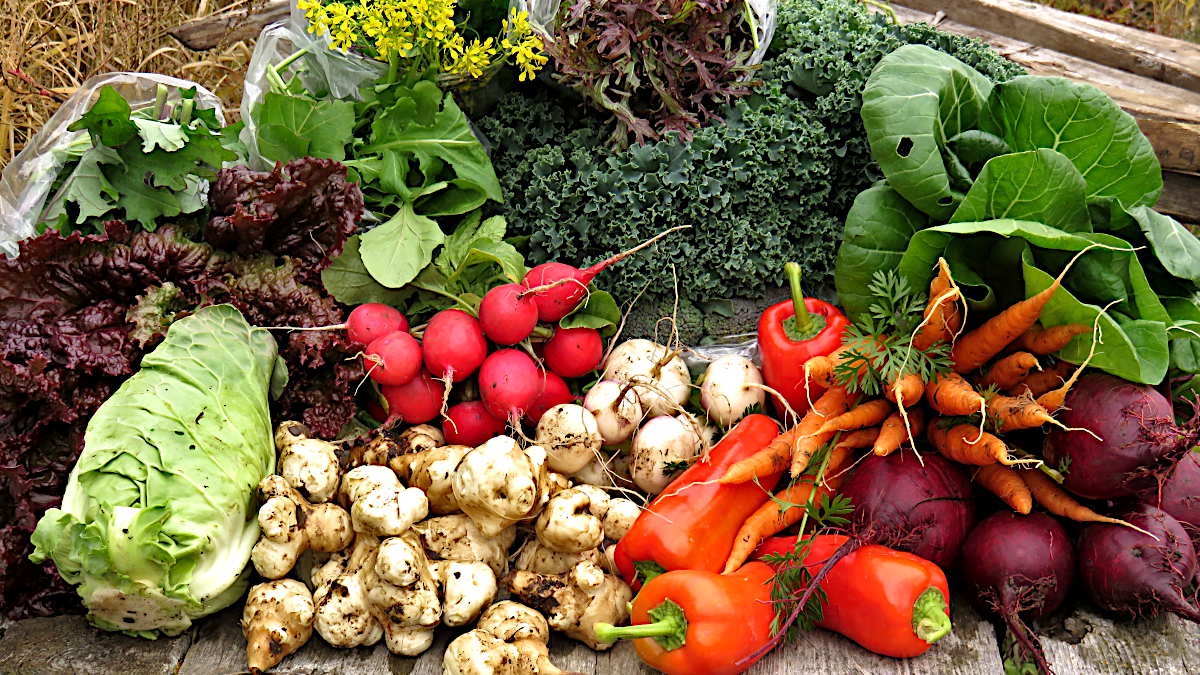
This is the local portion of what I'm currently eating. Produce is grown on the farm, except as noted. Prepared foods contain mainly local ingredients, not necessarily organic. Winter 2012:
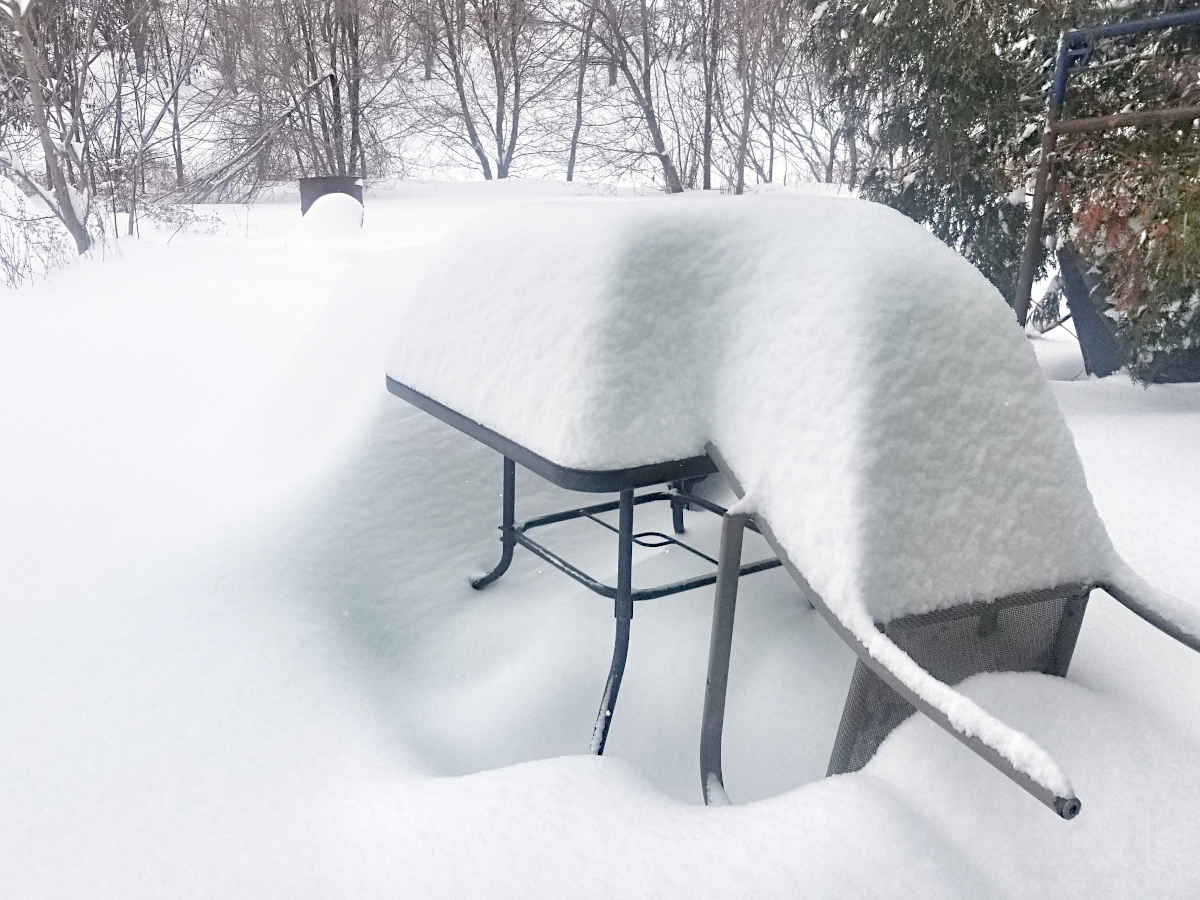
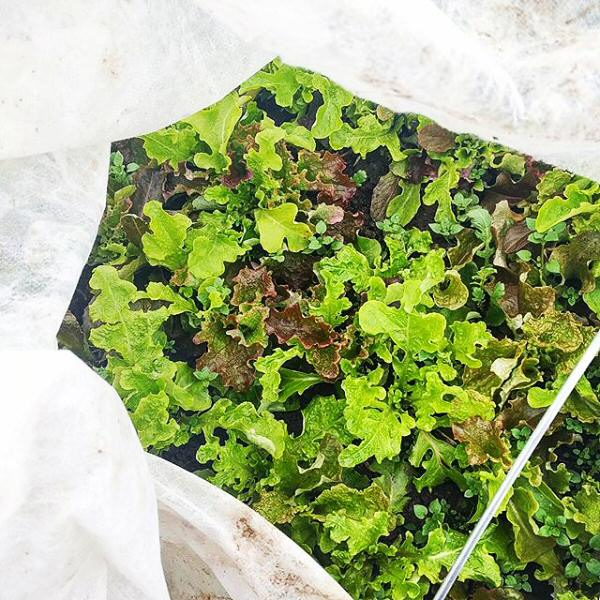
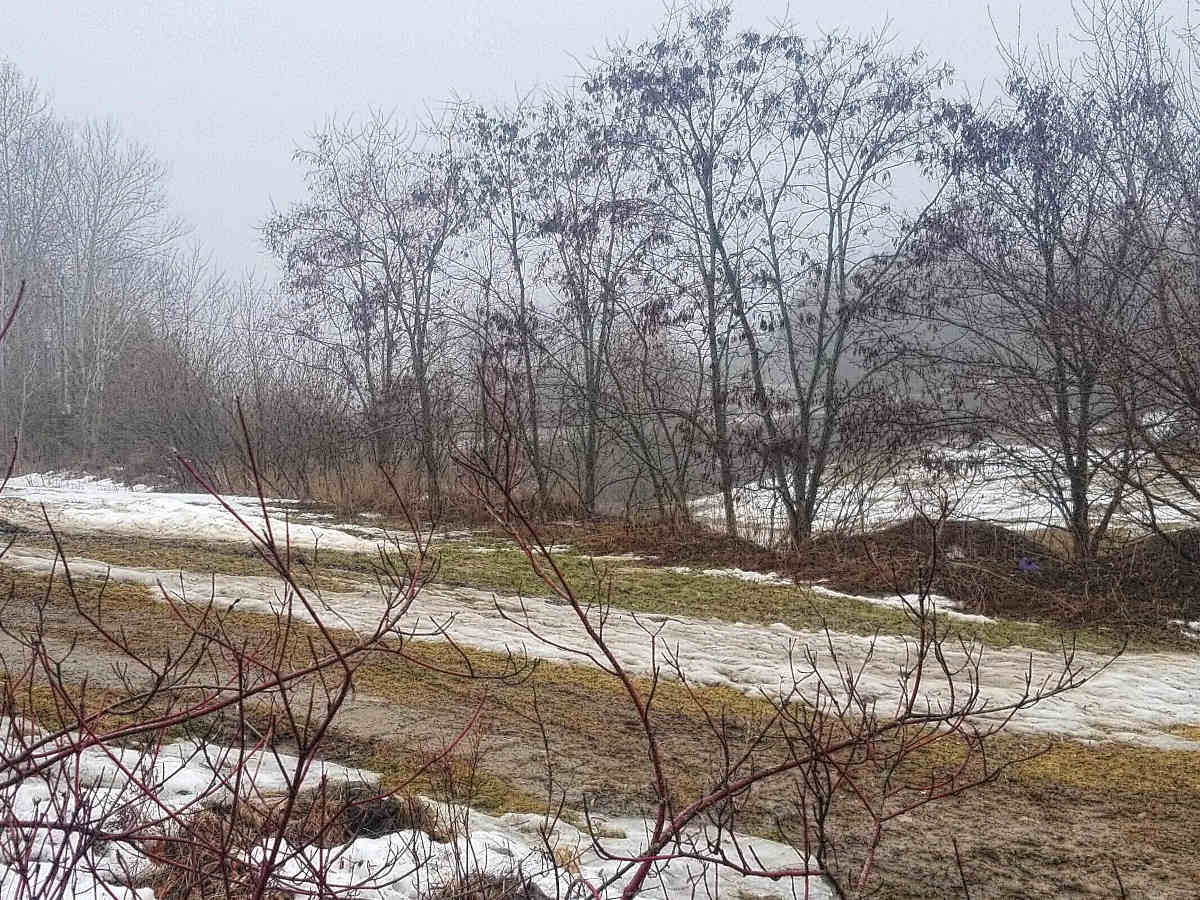
In our field: -
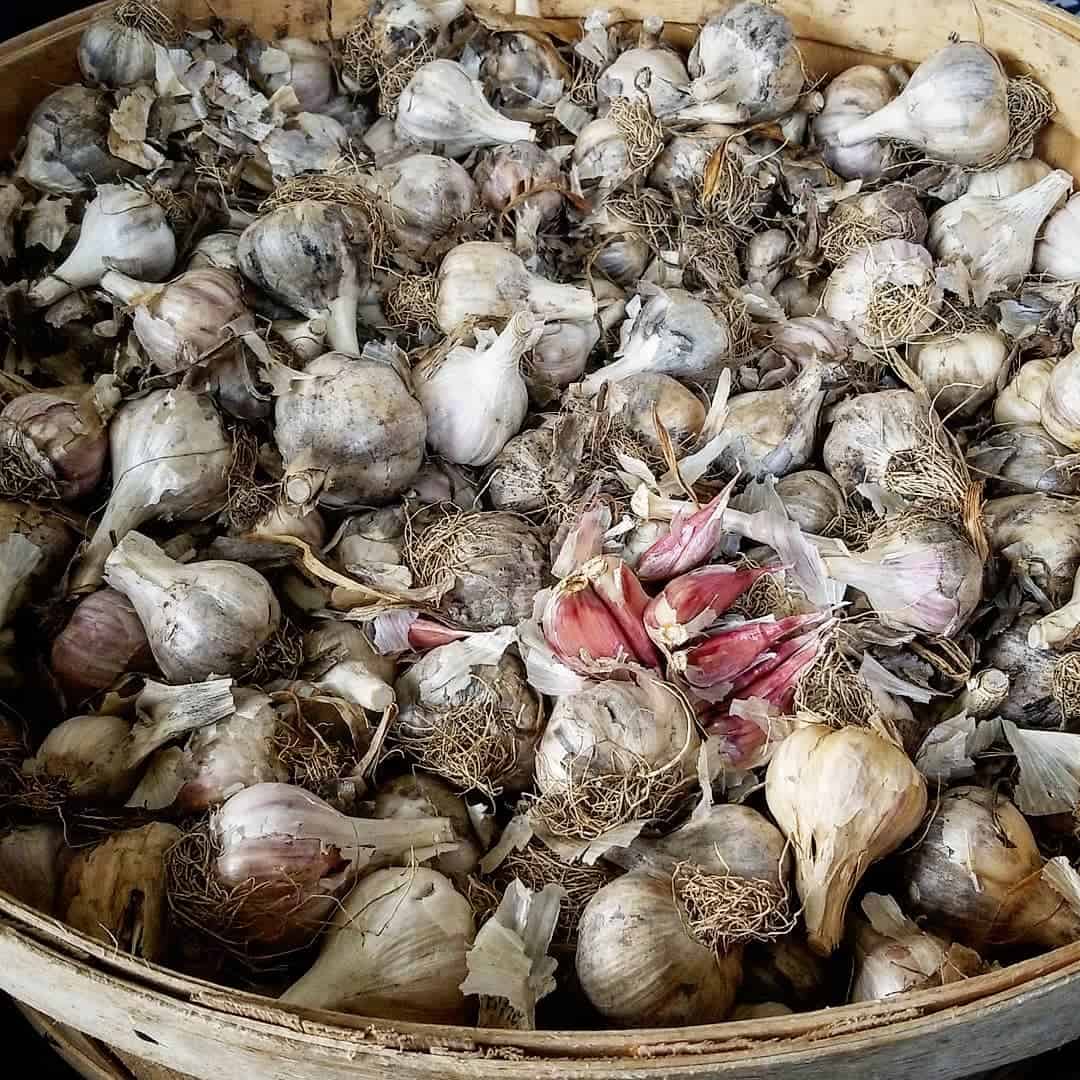
Cool storage:Garlic, potatoes, winter squash
Fridge: -
Freezer: Grass-fed beef Meats are purchased, local small-farm, more-or-less organic.