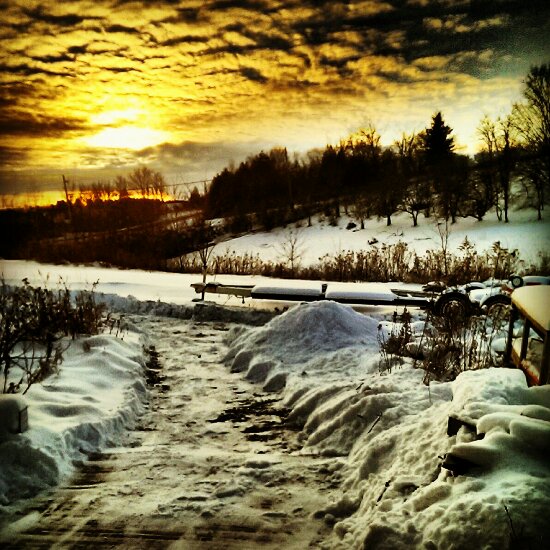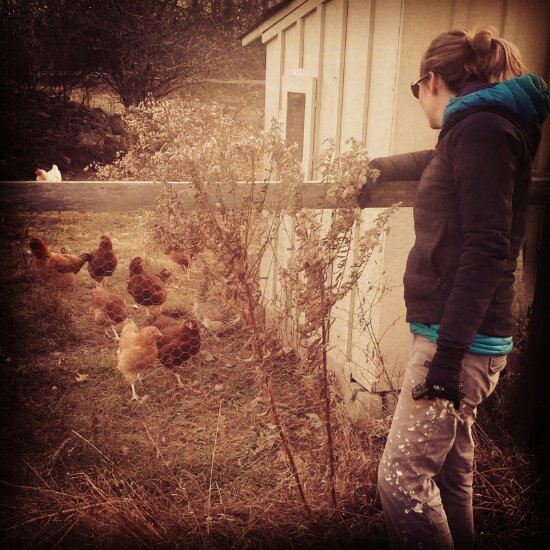
Chickens after harvest: Andrea M checks in with the girls after one of the quickest Friday harvests ever. Beets, carrots, a small amount of arugula and spinach from the unheated greenhouse… Several way freezing nights have left the field mostly in shades of brown.
Year: 2013
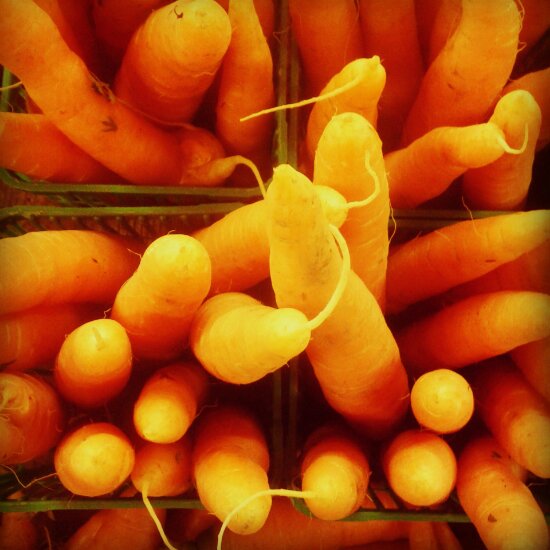
Cold-grown salad
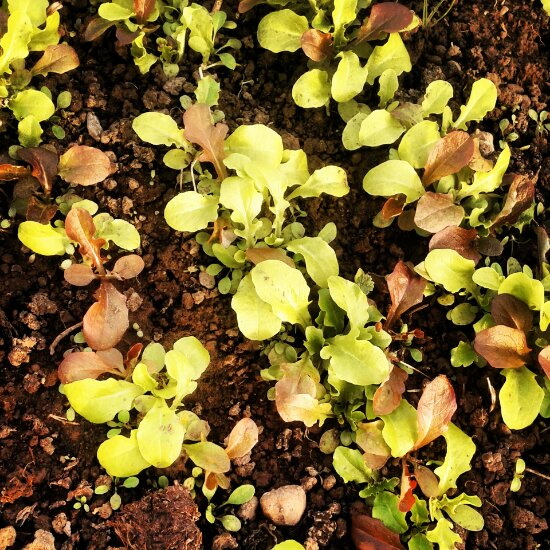
Cold-grown: Tiny lettuce leaves, crisp, fresh and delicious…and grown oh so slowly, without cover, in the unheated greenhouse, through many freezing nights, some down to -15C. Still a while till it’s big enough to harvest, and it was seeded way back at the beginning of October: that’s already 50 days compared to the usual spring/summer 25-35 days for baby lettuce mix). Also, the cold effect gets trickier as the leaves get bigger. All in all, though, seeing food grow in the cold with a minimum of help is quite fantastic.
Farmers’ market tool
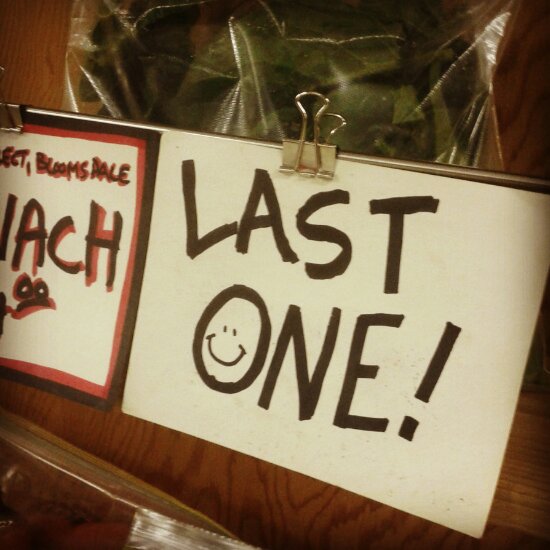
Blogged about before, still in service (no dirt streaks or coffee spills so far), it’s the original, the very first Last One sign (I’m pretty sure it is), brilliant sales tool (nearly 100% successful!), now part of the Almost Gone collection, Last 1-2-3-4-5 and Not Many Left. This one is on some near-perfect unheated greenhouse spinach. Fun with signage at the winter farmers’ market.
Good gloves
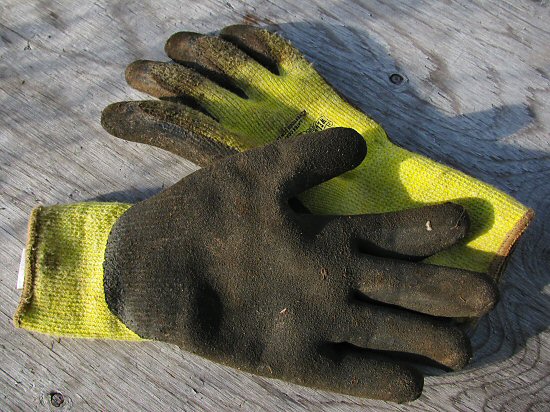
Used right, these gloves are quite fantastic. The different brands I’ve tried have all been pretty much the same: fairly heavy stretch fabric for warmth and a snug fit, and a rough-textured latex coating for waterproof protection and a good grip. Perfect for fall field work, when the temperature is around zero, and everything tends to be damp and cold. They’re close-fitting and not too thick, so the touch is sensitive enough for hand-harvesting of root crops in moist soil when you have to feel around, coiling muddy hoses, picking up various field debris. They’re also tough enough to use as work gloves, to move stuff like damp wood and metal. The trick is that they’re waterproof, and they also breathe, so your hands don’t sweat and freeze they way they would if they were completely waterproofed, but the tradeoff is, you can’t use them in water, only to grip wet things, the minute the fabric gets soaked, well, the fun is over. Most of the time, I choose bare hands: getting nicked, freezing, whatever, it’s usually worth it for that direct contact, and gloves are one less thing to keep track of. When I do decide to use gloves, having the right ones for the job is a little pleasure, and these guys have their place. Nice!
50 Things I’ve Learned from Tiny Farming: #38 Use a pencil
See the growing list of 50 Things I’ve Learned from Tiny Farming:
#38 – Use a pencil: You can find no finer quick-planning and sketching technology than the PENCIL, used with a crisp sheet of paper, a supporting clipboard, and a quality white eraser. There is a curious kind of commitment only a pencil can bring to the start of something. The impermanence, the erasability, the chance to begin now but make sweeping changes later, is the cool thing. Pencils are perfect for roughing out garden maps, preliminarily filling in tricky forms, and sketching all sorts of construction and fabrication projects, mobile chicken coops to better farm stand shelving (even crudely done, a picture is worth…a lot). Forget digital—lappies, tablets, smartphones, batteries, cables, software, formats and files—there’s nothing like good old straightforward no-frills paper and pencil (traditional or mechanical) for freeing you up to think!