
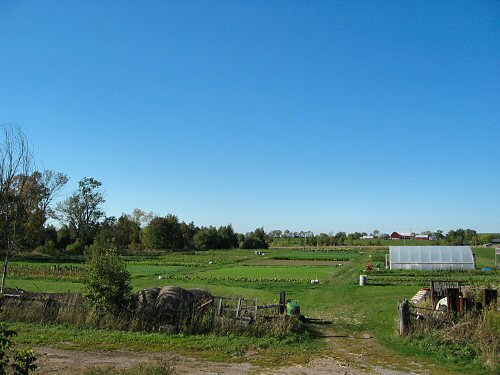
Autumn, what autumn? A finer summer’s day it would be hard to imagine… A warm, gentle sun in an absolutely cloudless sky. A silky soft breeze, without a trace of stultifying midday heat. Here’s the widest view possible with this camera, from the highest vantage point around: the market garden where I spend so much of my time! It all still seems a little odd to me, but I wouldn’t want to give it up!!
Weather
Drought, what drought?
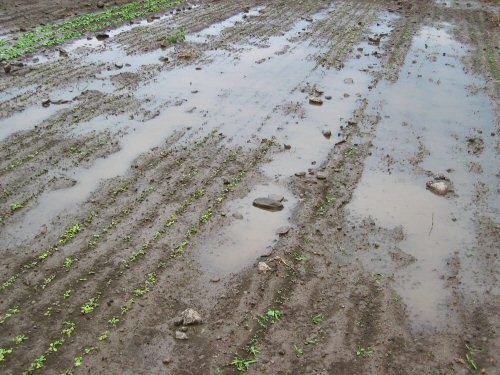
A week after the last couple of inches, it rained again today, a steady, fairly intense downpour that left about 1.5″ (38mm) in around an hour. It came down quick enough to leave huge puddles in a couple of low-lying sections. Pretty cool, they drained in less than 30 minutes, and it reminded me of what too much of a good thing can look like, as I imagined washed out seeds and floated seedlings in new fall beds if the rain just kept on going. Nothing like farm weather for bringing out the fickleness—extreme adaptability?—in people. It only takes a minute to go from cursing the lack of rain to hoping it’ll stop already. How excellent and effortless growing can be when the weather’s going right… Wouldn’t it be great to just take control of the weather (are they already doing it in China?). Yikes!
At last, rain!
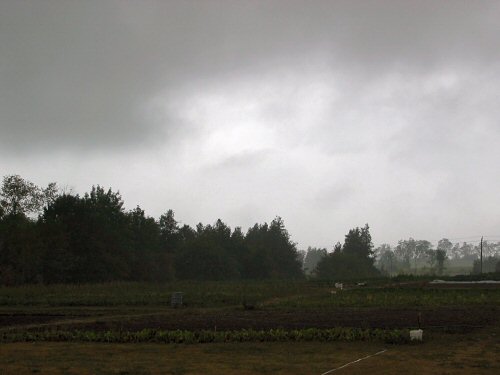
Gloomy, overcast, a typical rainy day…and it actually rained! A couple of heavy downpours and a few gentler extended falls added up to a satisfying full inch (25mm) over a few hours. This is great timing for the second planting of summer squash, which is just starting to produce heavily, and for, well, everything else! Even the pond filled up nicely. It’s too late to make up for nearly three months of near zero rainfall, calculating that effect is best left to the quieter late fall and winter months, when the lessons of the season are reviewed and new year plans get firmed up. Right now, it’s all forward looking, week to week, harvest to harvest. Any decent rain is excellent!
Peppers…
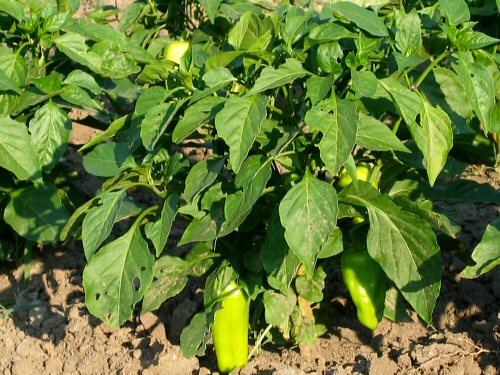
It’s all joy with the peppers (and eggplant). Here, Gypsy sweet peppers put on size and begin to peek out. In the past, these two crops barely made it in, if at all. I planted the varieties, but for eggplant, only the very early Dusky produced satisfying yields toward the end of summer, and peppers made it in decent quantity last year because of the freakishly extended warm weather that went into October. The reason is no mystery: doing the transplanting mostly alone, I’d get to peppers and eggplant last (they’re not prime farmers’ market sellers); this year, they got a good week or more head start. So we have the fruit of extra labor (and pretty good pepper-growing weather)—straightforward and…satisfying!
The end of July
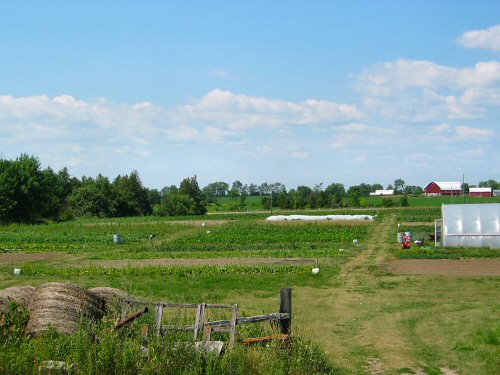
From the gangway to the upper level of the barn, the View shows the new, unusual pattern of the field as summer progresses: less veggies! Compared to barely a month ago, the difference is clear. And it’s even more striking when you walk through. What’s happening is, with this year’s more intensive planting and harvesting, larger sections are finished earlier than in previous seasons. I don’t find this pleasing: too much emptiness, where crops should abound—it’s not the main season fullness I remember (although even now, there is still more upcoming yield out there than ever before)! That’s the way of the busier market garden. And according to the plan, this year’s first organized fall cover cropping—oats, winter rye—should actually fill up the emptied sections, starting in August. I guess you’d call that positive progress, though I still take great, simple pleasure in seeing pure abundance in the field. Not logical, but there you go!
Fish in the field
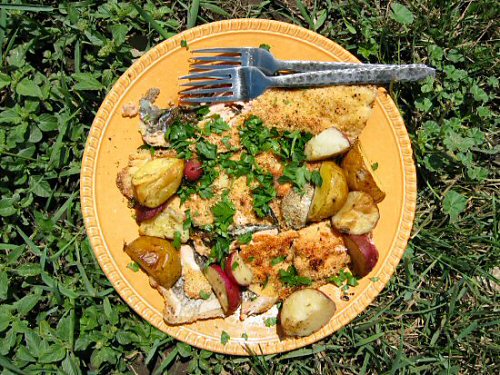
A different order of fieldwork: eating up the leftovers! A couple of rainbow trout left over from yesterday had to be used, so I coated them in cornmeal, pan-fried ’em in olive oil and butter, with a sprinkling of salt and pepper, squeezed some lemon over, and took ’em out to be picked at in the field. The trout was joined by leftover roasted potatoes from last night’s dinner harvest, and fresh flat leaf parsley. Fast, no fuss (my cooking skills are so far…basic!). The photo’s kinda funny. I set the plate down on a path to get the parsley, which is growing two feet away, snapped the shot, then noticed what all was in it: a little pigweed growing on the left, some mallow on the right, and grass all around, my weed friends looking on… Rain: another intense storm overnight finally gave us just over an inch (25mm), and then gave way to this beautiful, sunshiny day. Still, that’s only about 40mm in 40 days!
Milkhouse looking out
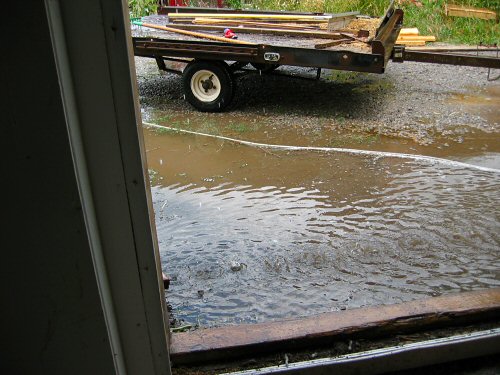
The view out of the extended Milkhouse sliding door is not yet a great one—gotta move the big storage shed that blocks the view straight out to the field—but it’s become a common one this year. Amongst other things, the Milkhouse is a place to take refuge from extreme heat and, very occasionally, from…rain. And the extreme teasing continues. The latest is rain from INDIVIDUAL CLOUDS in an otherwise largely clear blue sky, that comes down just heavily enough to make you take shelter. A gutter hasn’t yet been installed at the front of the Milkhouse, so water streams down from the roof, which picks up more from the main barn roof, creating a deceptively abundant pool in no time. Actual rainfall for this little session: 2mm. (The tiny grey hose running across the pic is the original lifeline from the barn well to the field that in the first two and a half years was all that supplied water when the weather didn’t!)