
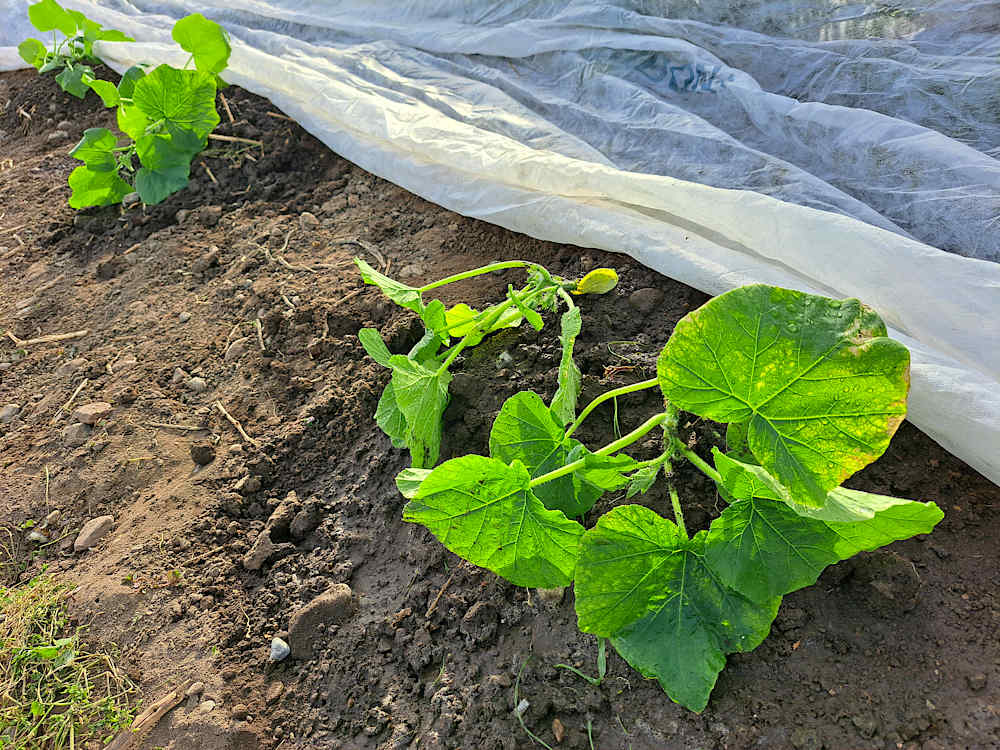
Transplanted butternut squash seem to be doing fine in the great outdoors. The row cover will protect them from the fairly cucumber beetles, until they’re big enough not to be bothered. The beetles eat the plants and can also pass on bacterial wilt (I’ve experienced hungry cucumber beetles, but luckily so far, no wilt). This rock cover is medium weight, thick enough that it’s easy to handle without tearing and can be reused, and thin enough that it lets 85% of the sunlight through. A small tradeoff for no chemicals!
transplant
Zukes in the field
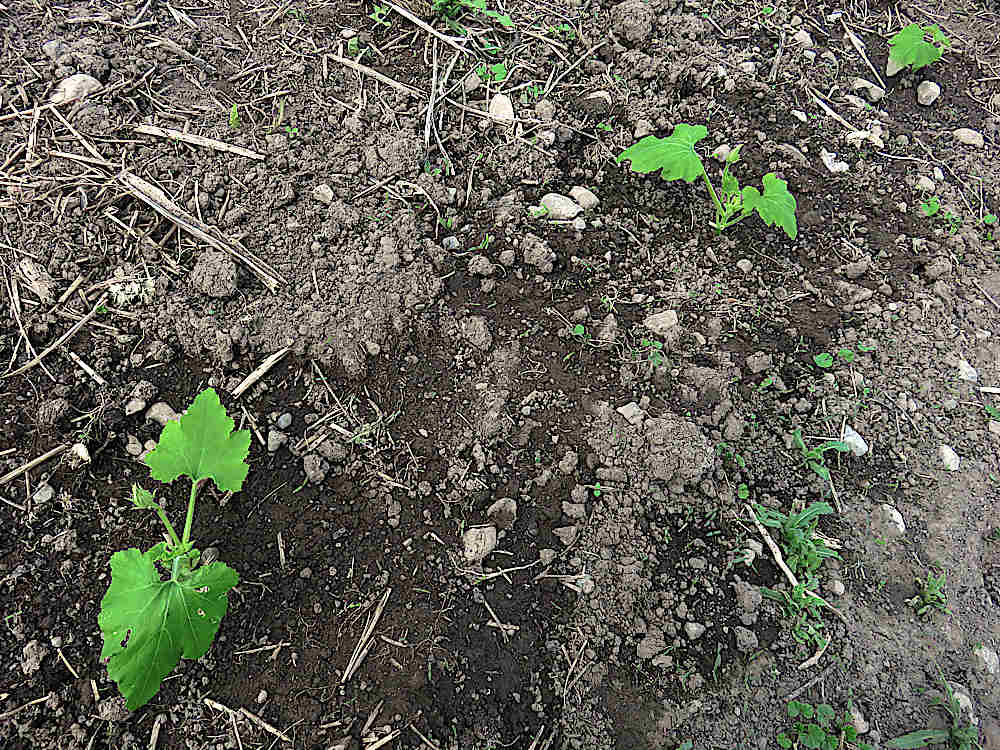
Zucchini, transplanted into the field a couple of weeks ago, don’t seem to be doing much so far. Don’t be fooled! Once they get settled—I imagine a lot of root action, spreading wide and down—they will explode. Pop! They’ve been under row cover to protect them from the cucumber beetles that attack all the cucurbits. I’m giving them some air on yet another mainly cloudy day. It’s generally not a good idea on the leaf disease front to keep our local garden veggies in warm damp conditions that can happen under row cover when there’s not a lot of sun. Looking at the photo, I can’t help but notice all the other garden would-be inhabitants, what we call weeds. I see some thistle, mallow, dandelion and of course, pigweed (aka amaranth). Like the zukes, they only seem like they’re not doing much…because I recently wheel hoed!
Bare root lettuce transplant
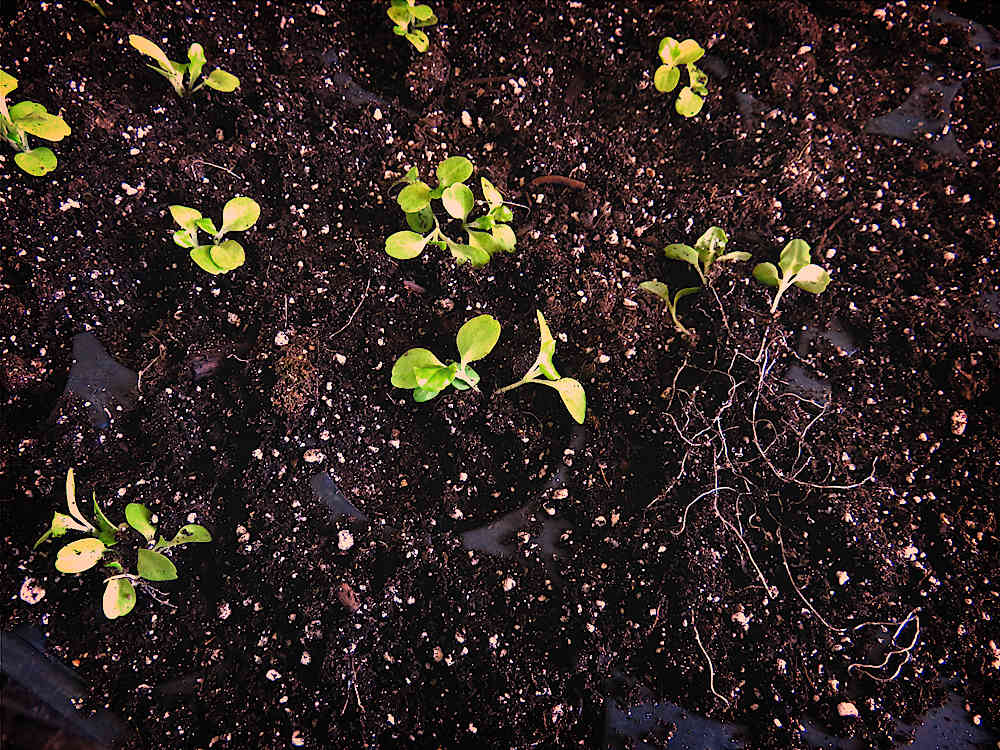
Bare-root transplanting lettuce—separating seedlings and replanting them with more space to spread their roots—isn’t something you’d do on a large scale. At Tiny Farm scale, it’s manageable and fun in a simple, relaxed way, like making flatbread, or prepping veggies for cooking. Very up close and personal with the plants. My usual approach is to seed them where they’ll stay until transplanting in the field, which saves time. With this round of lettuce, I was starting five varieties and wanted to see how they all germinated, so I seeded a bunch of each in a single plug sheet, and today I divided them as needed. Some are still two or three together, so as not to tear apart the roots too much, to be thinned later on. It all works out!
Lettuce under lights
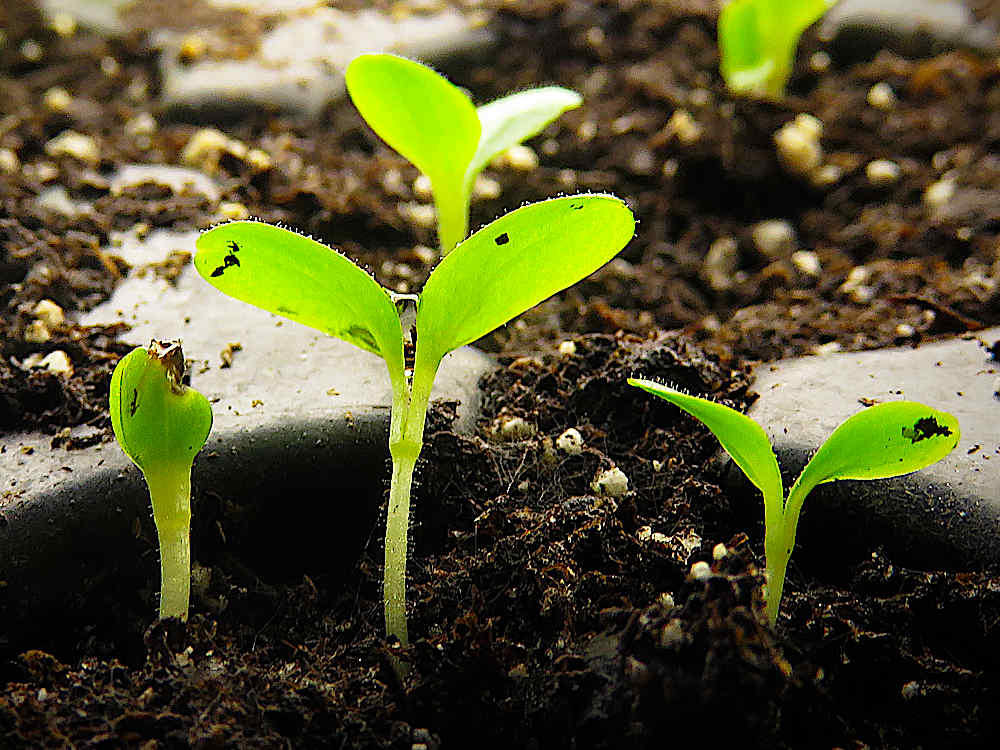
The first round of lettuce, five days from germination, under the lights. I could have started them earlier: two weeks, three, four? It all depends on the weather, when it seems right to transplant, and when you’re hoping for the first harvest. This year, hopefully young harvestable lettuce is ready by late June, so if I can plant them out in mid-May, great! Some years, I’ve started lettuce as early as February, for planting in April in an unheated hoophouse. This time around, it’s straight to the open field. We’ll see how it works out!
Baby brassicas
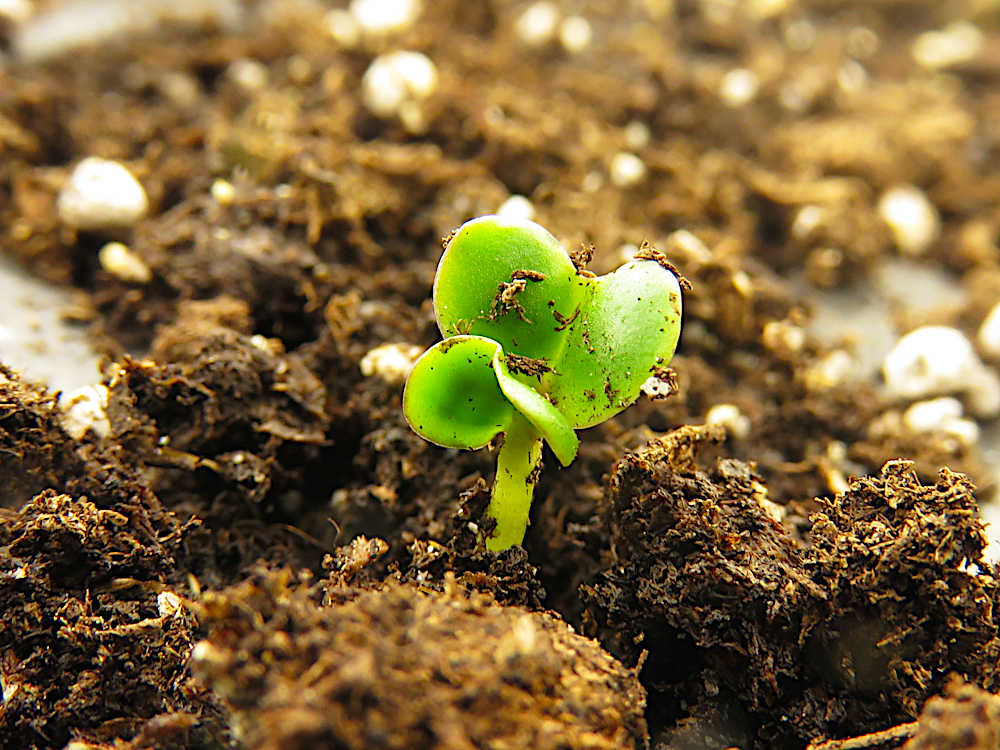
Broccoli? Brussels sprouts? I forgot to check the tray after taking the pic, so I can only narrow it down to one of the two based on size. They’re both in the quite vast garden veggie branch of the brassica family, that also includes cabbage, cauliflower, kale, mustard, bok choi, radish, lots more. The first pair of seed leaves look pretty much all the same. Next leaves take on their own look. At this point, they’re all similar, tiny and pushing up…
Bare root Brussels sprouts
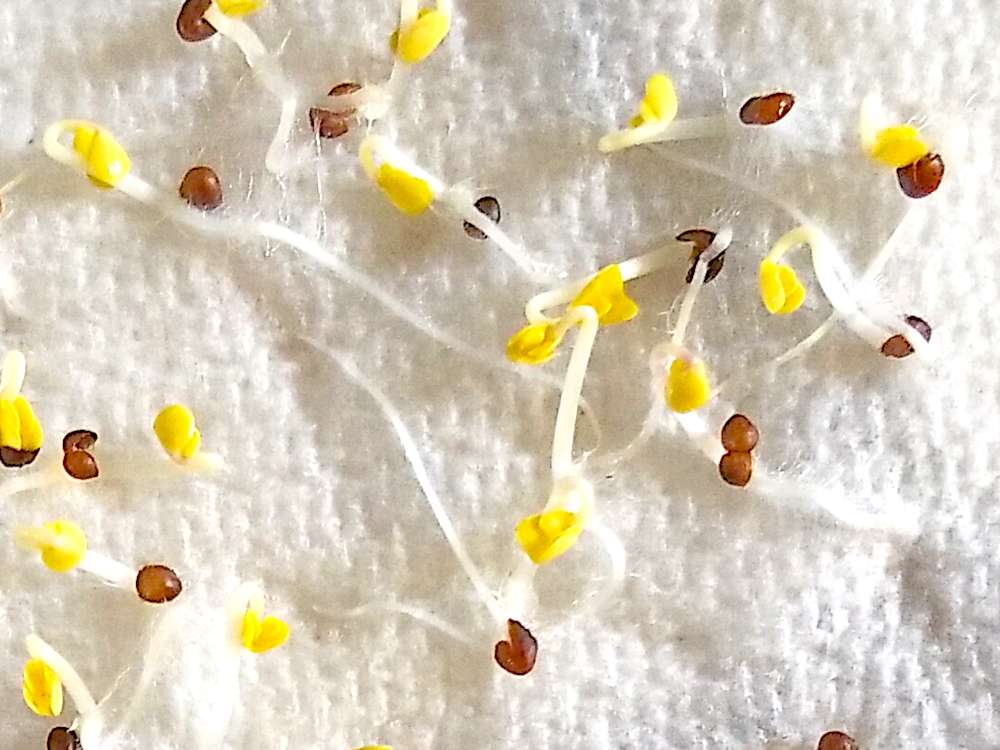
Yep, a wonder of Nature, up close. Three days or so after folding up the pinhead-sized seed in a damp paper towel, we have Brussels sprouts! Of course, this is only step one of many before we get to the deliciousness of actual Brussel sprouts. (Halved, tossed in corn meal and sautéed in butter is one way to go!)
Bare root germination like this is good for at least two things. It’s a useful germination test to see if old seed is still good. It’s also a way to start seedlings: transfer the sprouted seeds to a plug tray or pot, wait a few more days, and up they’ll pop. Let the greening begin.
The bare root approach adds an extra step compared to putting the seed directly in the plug or pot. It’s a little more work. It can be good with hard-to-germinate crops. Or if the seed is old, with a low germination rate, and you want to be sure that every plug has a plant. That it’s fun to see what’s going on is also a fine reason!
Lettuce landscape
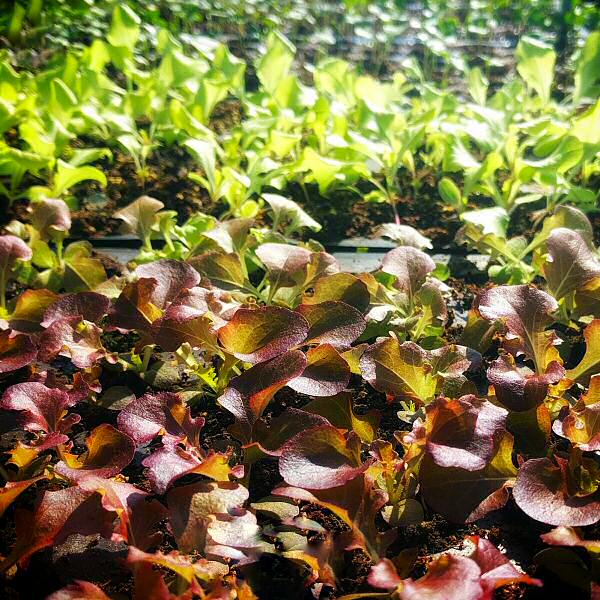
A tiny landscape of lettuces: Especially with the hot, dry weather we’ve been having, you can’t go wrong with a few trays of leaf lettuce seedlings, lending support to the baby greens in the field! Transplanted at 8-10″ spacing, lettuces in a variety of colors and shapes—oakleafs, salad bowls, lollos—can be picked at least a couple of times as leaves for a bigger-leaf greens mix, or thinned as they start to really fill out, with two or three varieties bundled and the rest left to grow all the way. Lettuce options!