Sun, Mar 06, 2011 · Filed under Off-the-farm, Winter

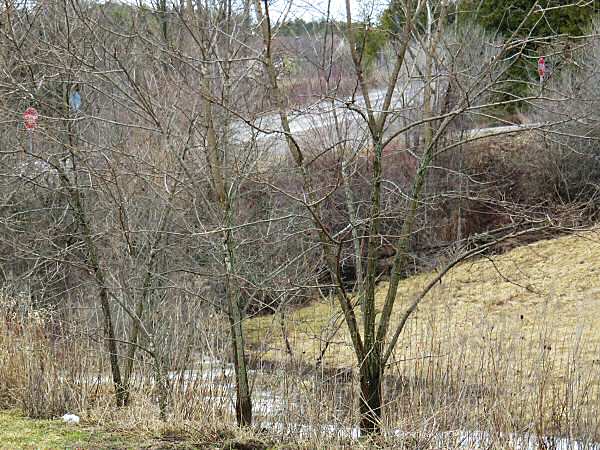
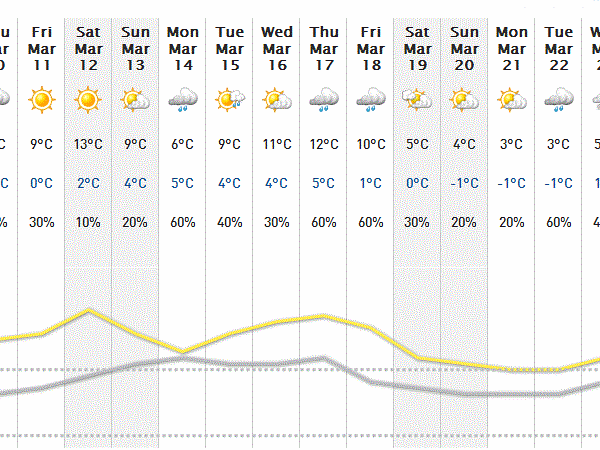
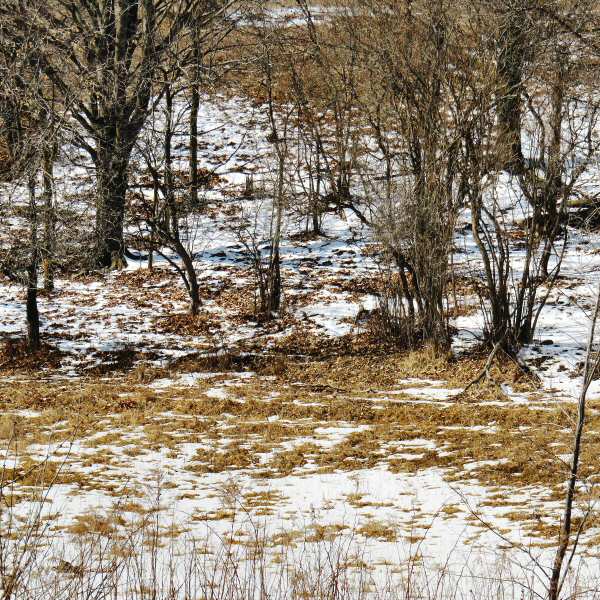
This year’s end-of-winter weather watch is different. It’s March, and I’m still in town, with an urban view, backyards and curb-sides, instead of…fields, which is just not the same. Still, it’s exciting as usual to feel the sun growing higher and stronger, the days getting longer, and the crazy weather rollercoastering along as has become the usual these last few years. Yesterday, steady rain took out all but the high-piled snow and turned the backyard rink into a shallow pool. Overnight, the snow came back strong. But that final meltdown’s coming, it’s just around the bend!!
Permalink
Fri, Feb 18, 2011 · Filed under Animals, Farm lab (research!), Indoors, Planning, Tools, Winter

CHICKEN TRACTOR! My book-of-the-moment, a happy find at the municipal library (thanks to Kendall, I rediscovered LIBRARIES a couple of months ago—haven’t held a library card since school days, long, long ago).
The chicken tractor concept is simple, and it’s been chatted about around here quite often over the last few years…but not yet tried. The idea is to provide a mobile enclosure for your chickens, and move them to new sections of land every day or so, rather than keeping them in the usual chickenhouse and yard set-up. The chickens work up a small area of ground and fertilize it with their manure, and then it’s on to the next patch—the birds are always happy with fresh places to scratch and bits to eat, and a large area can be improved in no time. The rig can be any design you come up with that keeps the chickens in, predators out, offers shelter from the weather, and is easily moved. Easy!
Like most good things in smaller-scale farming, the chicken tractor is a startlingly simple and inexpensive approach that offers deep returns on many levels, from food quality to all-round satisfaction. It’s also kind of the EXACT OPPOSITE of high-tech industrial farming gear and methods that make so little sense to me. And the system works for various other farm animals as well, as in well-known (celebrity!) indie farmer Joel Salatin’s chicken-and-beef rotation at Polyface Farm.
So simple, why do you need a book? Well, it’s WINTER around here, all is snow, and reading about growing is the next best thing! In this case, Chicken Tractor, like its to-the-point title, is a perfect example of an energizing just-do-it how-to book, written in enthusiastic, full-on farmer-scientist mode. It’s jam packed with practical instructions and advice, the text assisted by numerous charts and illustrations, with a non-oppressive serving of sustainability philosophy and general food politics worked in, plus chicken trivia (the term “chicken tractor” was apparently coined by permaculture founder Bill Mollison, so now I know).
It’s cool to see this copy so considerately well-worn, although this being the original edition from the mid-1990′s, maybe it hasn’t seen that much use. It was published in 1994, quickly followed in 1998 by an “All New Straw Bale Edition,” with the subtitle upgraded from “The Gardener’s Guide to Happy Hens and Healthy Soil,” to the better-keyworded, “The Permaculture Guide to Happy Hens and Healthy Soil.” In any case, this edition is fun tiny farm reading from the library.
Anyhow, so much for the book review, let’s see how well this year’s chicken tractor plans actually fly! :)
Permalink
Mon, Jan 24, 2011 · Filed under Indoors, Planning, Winter

There’s a new tiny farming season just around the corner, and I’ve got my plans plans plans plans…
Well, this year’s Plan is actually WAY more laid-back and simple than that may sound. It’s my ninth consecutive year of full-time small-scale organic veggie farming, and this will be my FIFTH start-up on land that’s new to me (3 in the last 2 years, it’s been interesting times). At this point, I’m kinda used to it, and able to be real streamlined and minimal, economical and quite efficient.
This year, I’m still planning to grow just about everything in the way of garden veggies that can possibly do well in our mid-May to mid-September average frost-free Zone 4 (US) climate, but I’m majorly adjusting the relative quantities, growing more of some crops, and way less of others. I’m also concentrating my seed purchases mostly with one main supplier, and more carefully considering the number and selection of varieties than ever before. Among other big but simple changes from the past.
You could say I’m operating on a “the more you know, the less you need” principle. It’s pretty fascinating. When you let go of one whole set of concerns and details, all kinds of new thoughts, approaches, ideas come flooding in…
To underline the more-is-less point to myself, rather than starting as usual with a brand new planning notebook, I took my very first steno pad, from Year 1, way back in 2002-2003, ripped out all the used pages (saving them, of course, for the wayback machine), and began with a thin new no-waste Tiny Farm 2011 clean slate!
The tiny farming adventure continues. Stay tuned… :)
Permalink
Fri, Nov 19, 2010 · Filed under Autumn, Homesteading, Tools

Our first wood order of the season arrived a week ago, just as we ran out of the leftover from last year. It’s a bush cord. At least, that was what was ordered, bought and paid for. One bush cord of well-seasoned hardwood, in 16″ pieces. The wood is great on the seasoning end, but when I finished stacking it today, in our custom-built, holds-one-bush-cord rack (below), even taking into account the wood we burned over the last week, we are CLEARLY WAY SHORT!!
I’m kinda shocked at how short we are. When I looked into what exactly a bush cord comprises, the definition seemed pretty clear: 4′x4′x8′ of tightly stacked wood. A volume measure. With 16″ pieces, that equals one long 24′ row, 4′ high. “Tightly stacked” is a little vague, but after asking around, and looking at photos, it seems like common sense: you don’t fit the wood together like a jigsaw puzzle, just stack it nice and solid. OK.
I built a simple rack out of 2x4s that should fit…exactly one bush cord. Of standard 16″ pieces. It’s kind of a bush cord meter. To fit in the narrow side yard, the rack has two 12′ rails, with 4′ high ends. I stacked it reasonably solidly. And we seem to be at least 1/3 (that’s 33%!!!)…short.
The firewood guy came recommended, he’s apparently been doing this for decades, how could this BUSH CORD be so off? It’s a mystery. I’m new to firewood, maybe the counts are loose, but this is extreme. I’m on the phone…

Permalink
Fri, Nov 12, 2010 · Filed under Farm lab (research!), Off-the-farm, People, Tools
Watching this video made me smile! It wasn’t the kind of smile you do when you’ve seen something cute or funny. This was the deep, involuntary smile of wonder and appreciation and, um, joy, that happens when you see something really cool and admirable. When you see something that…rocks! :)
I’ve been following the adventure at Factor e Farm, through their blog, for maybe three years now, not always diligently, but what they’re up to is always somewhere on my mind. The mission they’re on is incredibly ambitious and fundamental and world-class. You have to read through their blog and wiki, and watch some of their other videos, to get a full feel for what Factor e is up to, but to try and summarize:
Using modern technological knowledge and methods, and very little cash, they are designing and building a set of machines and methods that are open source (plans are free for all), low cost, easy to replicate, highly efficient, simple to maintain, and sustainable to operate, called the Global Village Construction Set, just about everything you would need to build a community, from the house you live in to the food you eat, from scratch.
Or as their blog puts it: “We are farmer scientists – working to develop a world class research center for decentralization technologies using open source permaculture and technology to work together for providing basic needs and self replicating the entire operation at the cost of scrap metal.”
This video is their two-minute introduction:
You HAVE to check it out. The blog: Factor e Farm Blog. The project wiki: Open Source Ecology.
Permalink
Wed, Nov 10, 2010 · Filed under Autumn, Homesteading, Indoors, Off-the-farm

Nights are getting chilly, and a few days ago, in the evenings, we started lighting the wood stove at Kendall’s house in town. It takes some skills. Paying attention to the mechanics of heating was never part of the mix in my few years of winter farm living. It was either central heating by oil furnace, or with electric space heaters, and both ways, really no different from city life convenience: adjust a thermostat or click a switch, pay the bill, and that was that. Pretty mindless.
Here in town with Kendall, natural gas central heating is the main heat source, but she offsets that as much as possible with good ol’ wood heat. So, oddly enough in my ongoing tiny farming career, it’s in an urban setting that I’m first learning how to build and feed a fire, adjust the air intake, get a feel for the draft in different weather conditions, safely dispose of the ashes and embers. And, of course, there’s the wood: bush cords and face cords, hardwood and softwood, well-seasoned vs. green, splitting and stacking, the never-ending quest for good kindling…
Just as your awareness of weather explodes with attention to detail and a certain urgency when you go from city supermarket life to growing food, the same thing happens when you become intimately involved with fending off the winter cold (especially here in Canada, where you can literally freeze to death!). Only a few days of casual evening fires in relatively mild temperatures, hovering around freezing, and already I’m hooked! So much to learn, so little time… :)
Permalink