
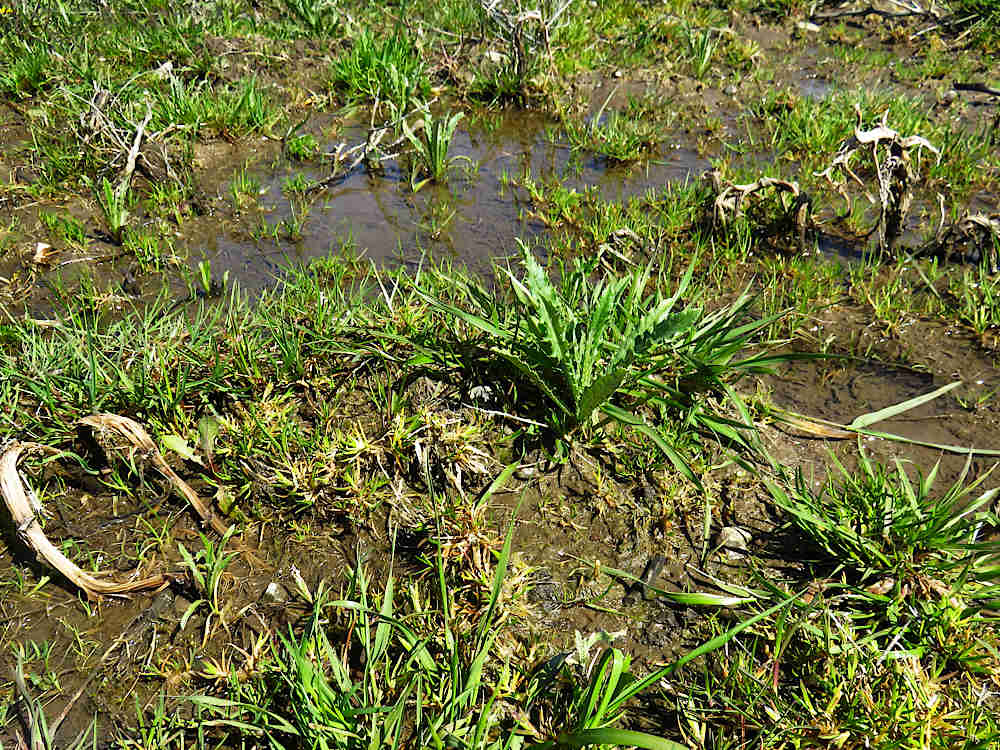
This is a piece of ground you’d usually step around and not give a second thought to…unless you wanted to grow things in it right away! A good part of the field is dried out enough to work, but there are low spots where the ground is still saturated with water, all dense, squishy mud and all-day puddles. The weeds don’t mind, this is home! Thistle pops up. Clumps of grass aren’t a problem, when you don’t let them take hold. Unless there’s a lot of rain, a few more days and it’ll be good…
Month: May 2024
Baby zukes
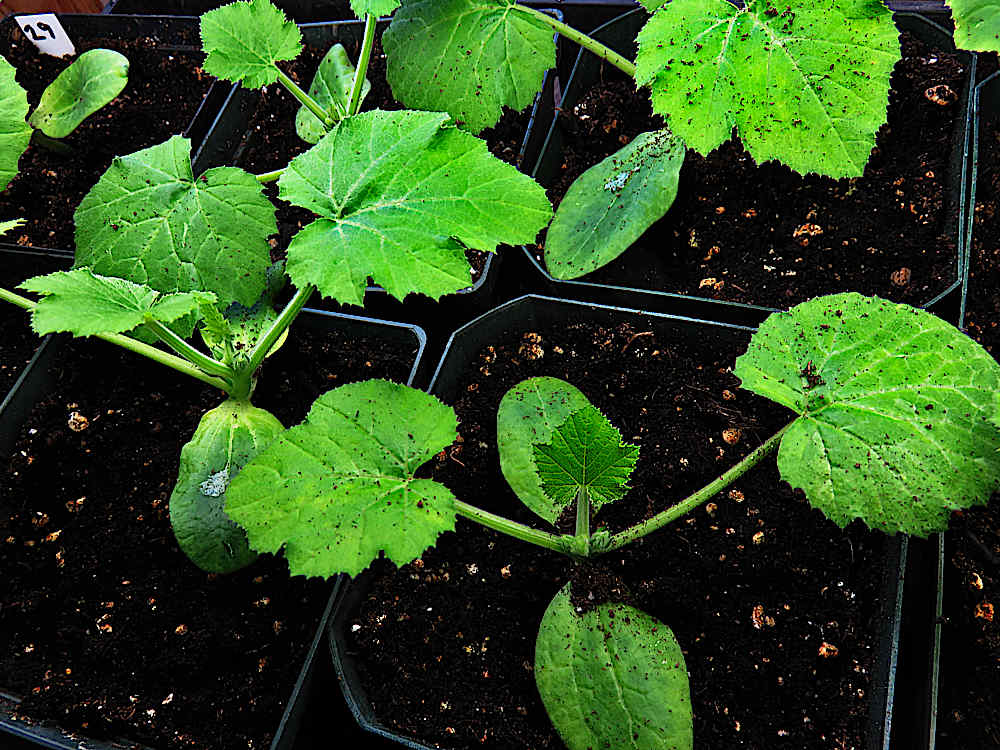
A little less than a month after germination, these summer squash—a variety of zucchini called Raven—seem pretty happy under the lights. They still haven’t seen the sun, which sounds a little weird when said like that. I’ll soon start putting them outside during the day, getting them ready for the field. (The “29” on the plant label at the top left is how I keep track of which seedling is what, in my recently revised and simplified seedling marking system…)
Chipmunk at work
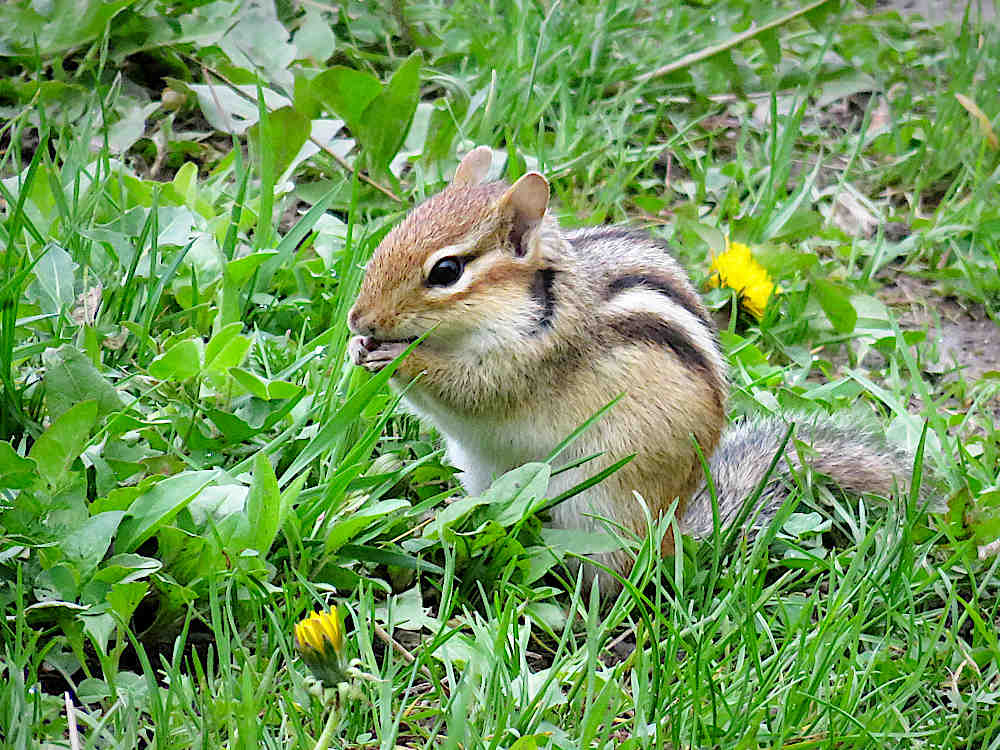
Ahh, my favorite rodent. Another member of the around-the-field cast of characters. Charismatic, curious, always busy, quite friendly—what more could you ask from a wild woodland creature. Oh yeah, no threat to the market garden, at least, not in my experience so far, which is the biggest point in my book! Chipmunks are in the ground squirrel branch of the squirrel clan, and I’ve met the tireless, relentless backyard garden-raiding urban squirrel, so no doubt the ‘munks have it in them to mini-ravage crops. But they seem to stay away from the open field, hanging out near buildings, so all good on this garden’s veggie threat list!
Groundhogs be zapped!
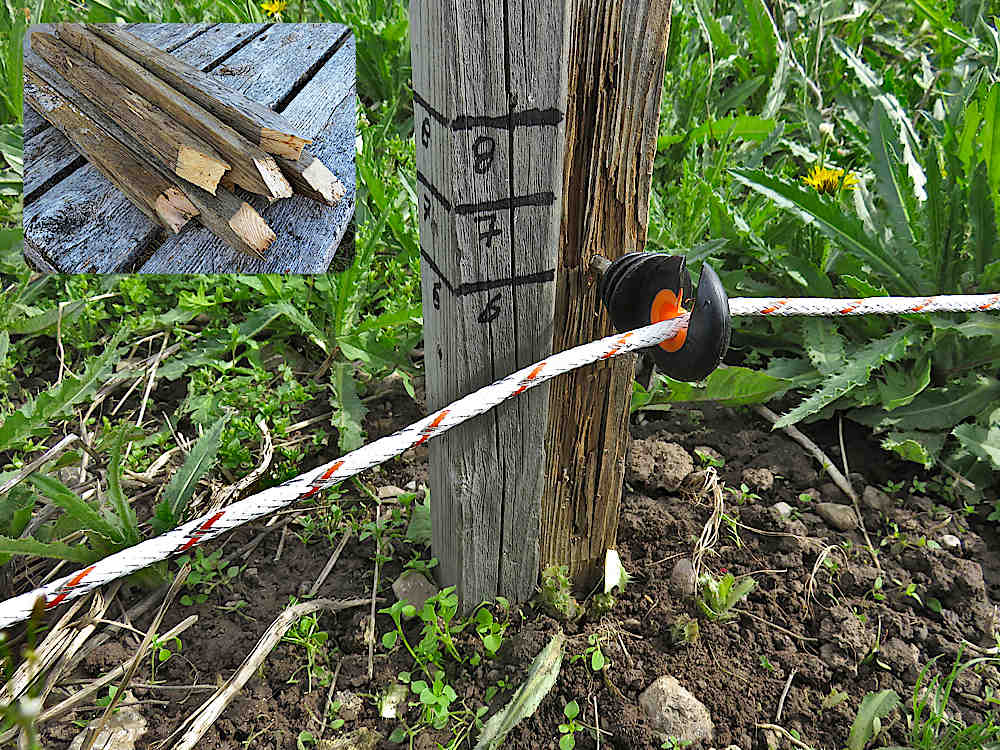
Big Agriculture has its genetic engineering and laserbeam weeding; on the tiny farm, sharpened wooden stakes and startling but harmless electric shocks are about as high tech as it gets. Today I laid out the groundhog electric fence line—poly rope with metal strands twisted in, strung at six inches (there’s another line at 28″ for the deer).
After last year’s first-time groundhog attack, this approach seemed to work. Still, that was later in the season, when the voracious little critters were already starting to get heavy and slow as they bulked up for hibernation. Maybe they were too lazy to put much energy into dealing with short, sharp shocks. This time around, they’re well-motivated, slimmed down, and hungry for the all-you-can-eat veggie buffet only a short waddle away. So…we’ll see! Weeds that touch the low line can draw off electricity—a new extra weeding job to add to the list…
A day in the sun
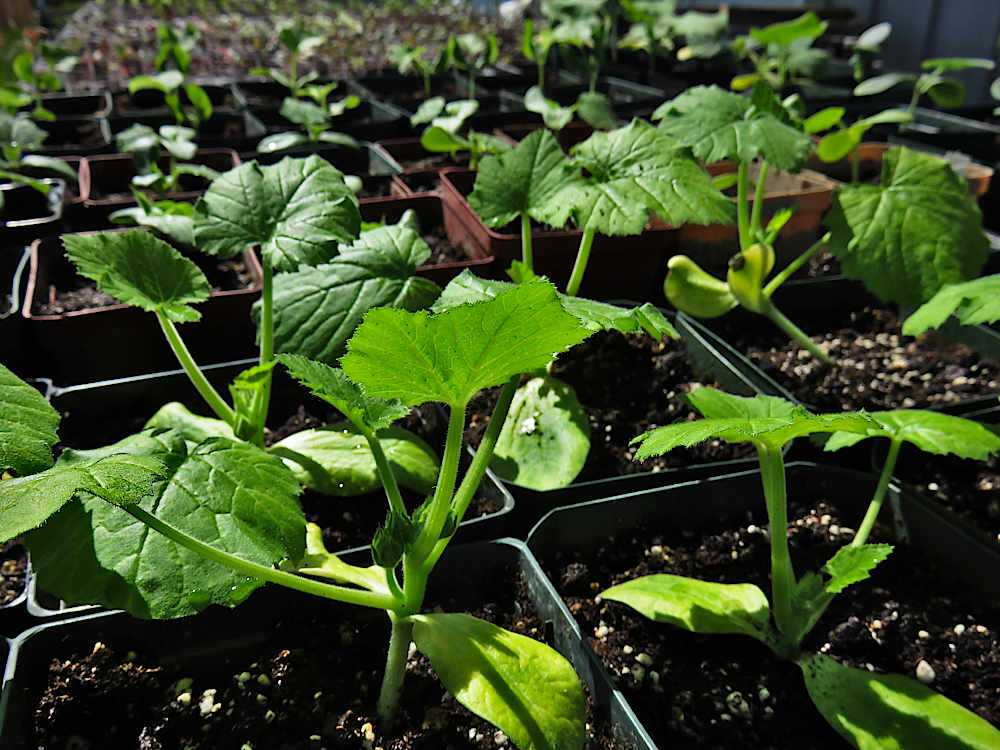
I’ve been hardening off trays of seedlings over the last few days, a few at a time, taking them out from the under the lights. Today, they were all outdoors, some for their first taste of the sun. It’s a manual routine, walking back and forth from the light racks with one or two trays at time, then bringing them back in in the early evening. I like it: a clear, simple, straightforward task, and the most important thing to do when you’re doing it. This is also exactly the type of routine that’s perfect for automation, or at least, optimization.
To grow a fair bit more than this year, I would put seedlings out in an unheated greenhouse where they’d stay until transplanting. That brings more convenience and efficiency, and also a few extra concerns. Voles tend to burrow in and munch on greens, so checking the perimeter becomes a thing to do. Daytime temperature in the greenhouse shoots up to 40°C+ (104°F+) on a sunny day, so ventilation is a must. When you open the doors in the day, you have to close them at night against cold and critters, and open them again early the next day. If the forecast is for freezing overnight, row cover placed in the evening and removed in the morning can handle a few degrees below (in a more extreme cold situation, a portable heater fired up in the middle of the night might be necessary).
Then there’s the new super-high winds that started happening around here within the last five years or so, there’s extra concern about the whole greenhouse staying up—mostly not in your control, but you still think about it with every weather warning!
Nothing wrong with scaling up and improving efficiency, while every step to bigger has its complications!
The rain and the sun

Today was rained out. Too wet to do fieldwork. A few hours of heavy clouds and on-and-off rain followed by brief periods of semi-blue skies, followed by more clouds and rain. The free irrigation is excellent, as I’ve already started to water in new seedings in the field. But—there’s almost always a “but”—a lot of cloudy weather, not enough sunlight, slows things down. A week of mainly clouds, which is what the forecast predicts right now, means noticeably slower germination and growth. It’s not complaining, it’s just observing the balance between sunlight, water and temperature, hoping for the right mix for the vegetables that’s pretty hard to come by!
Garlic: the bug’s eye view
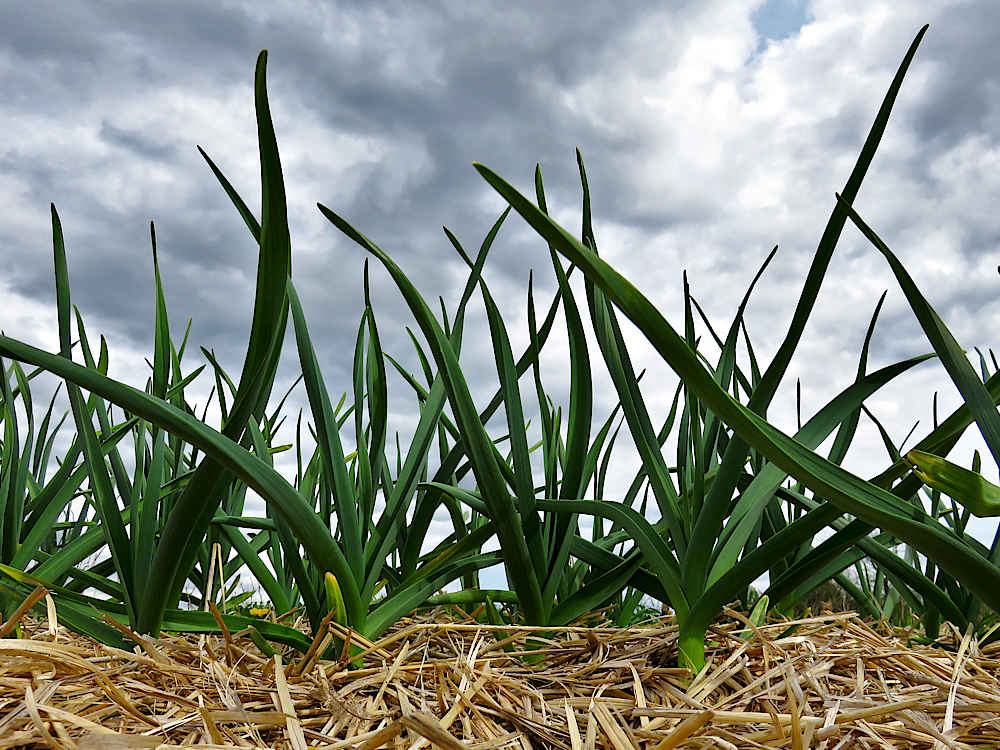
Another cloudy day. The garlic is still the only thing to see as far as crops in the field. It’s looking quite happy and healthy. That’s good!