
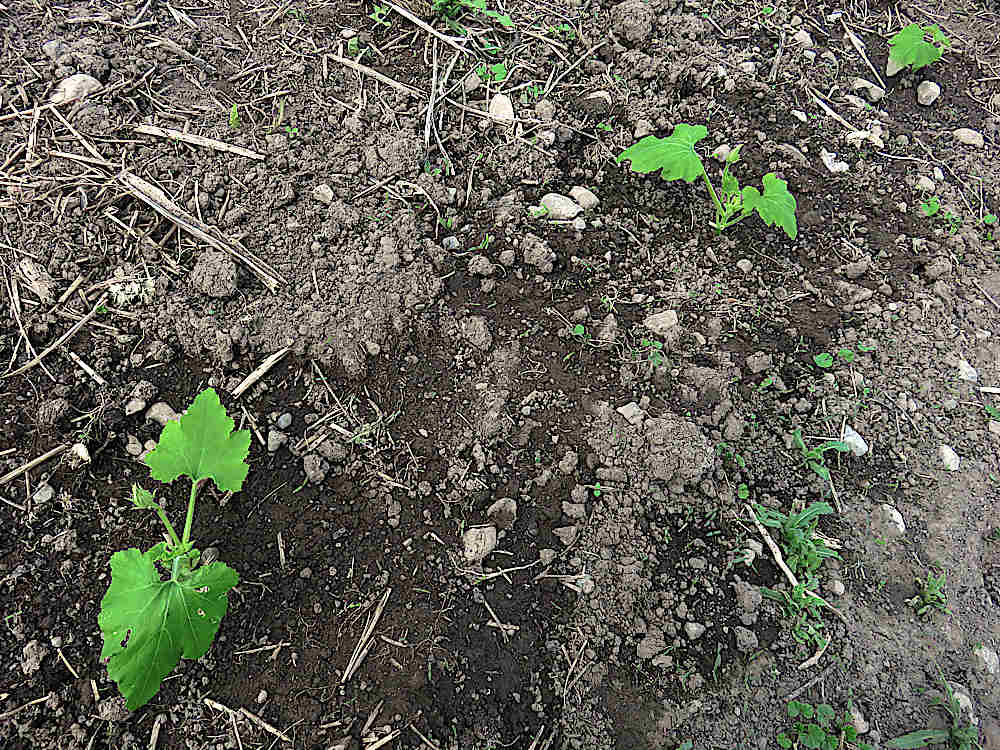
Zucchini, transplanted into the field a couple of weeks ago, don’t seem to be doing much so far. Don’t be fooled! Once they get settled—I imagine a lot of root action, spreading wide and down—they will explode. Pop! They’ve been under row cover to protect them from the cucumber beetles that attack all the cucurbits. I’m giving them some air on yet another mainly cloudy day. It’s generally not a good idea on the leaf disease front to keep our local garden veggies in warm damp conditions that can happen under row cover when there’s not a lot of sun. Looking at the photo, I can’t help but notice all the other garden would-be inhabitants, what we call weeds. I see some thistle, mallow, dandelion and of course, pigweed (aka amaranth). Like the zukes, they only seem like they’re not doing much…because I recently wheel hoed!
Month: May 2024
Thin white lines
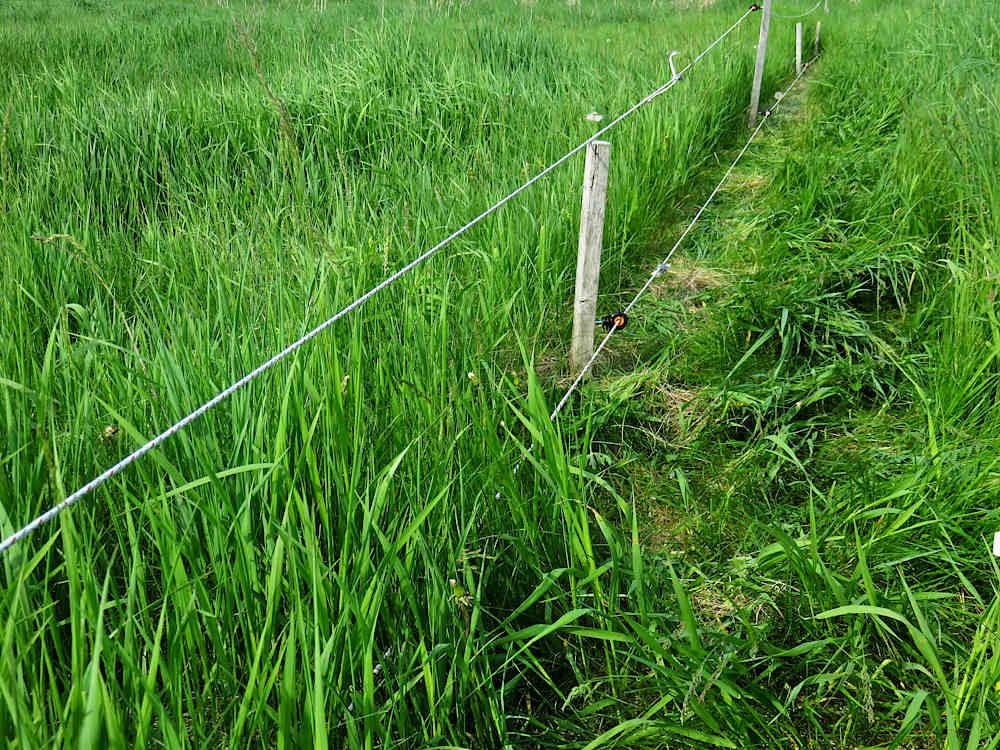
Two lines of electric fence rope, one for deer, one for groundhogs, running through the so-very-healthy grass, perfectly illustrates the nature of the war on weeds. Maybe I should use less militaristic terms, but that’s what comes naturally—guess it’s my cultural upbringing. And it does feel like a battle. On the ground, face to face, against a well-adapted indigenous…opponent. Spraying herbicides would be like an impersonal aerial war, bombing from on high. In this tiny farming, it’s hand pulling and snipping, and using the pulled weeds as mulch to hopefully smother reinforcements that are ready to spring up. Here, letting the grass swamp the fence lines would be bad for the system, draining the battery and reducing the strength of the all-important ZAP!
Seeding potatoes
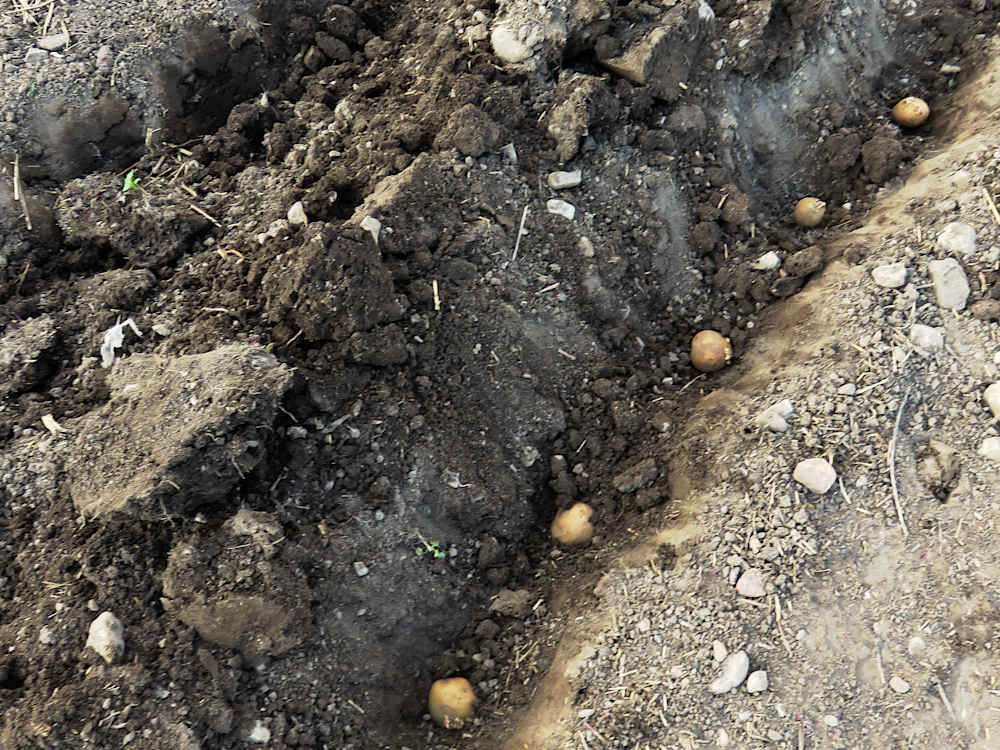
Place seed potatoes in a hand-dug trench at about 12″ spacing. Cover with a couple of inches of soil. Wait for stems to grow a few inches. Start hilling: pile on soil to bury the stems so there’s more underground stem rooting and allowing for potatoes to form. Keep hilling every couple of weeks for as long as it’s practical—stems still growing, more soil easy to get at, leaf cover not in the way. As simple as it seems!
Onion seed, dead and alive
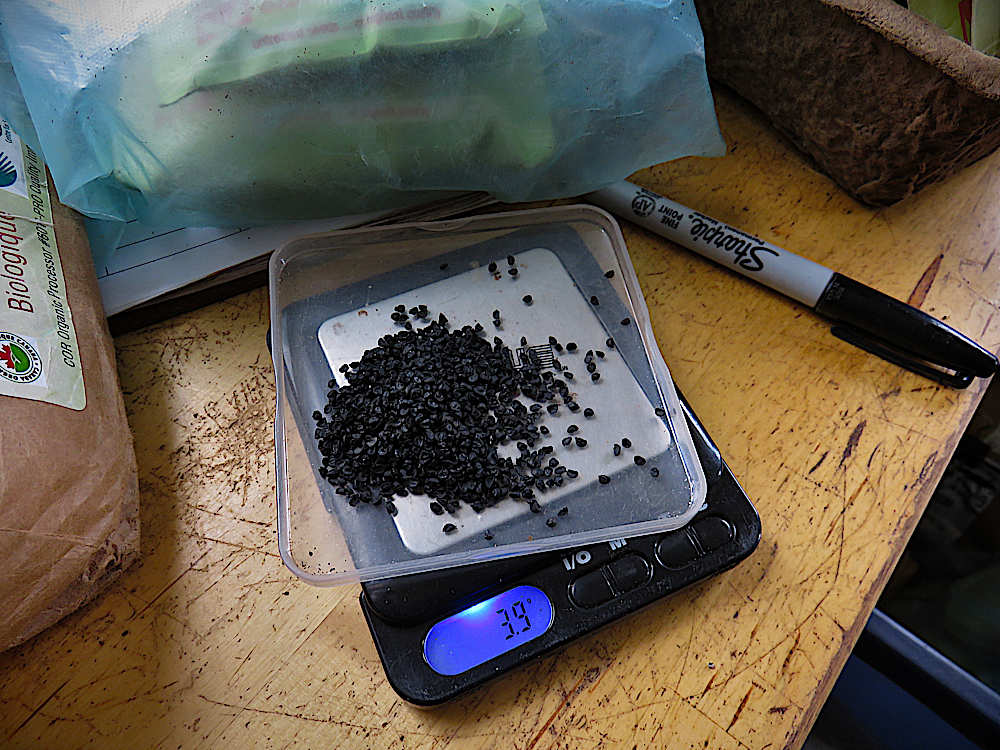
Mixing a small batch of green onion seed, half fresh from this year, half from years ago and no longer viable. Why? The mix of dead and alive seed makes it easy to spread quickly, getting good coverage and not having to thin out a bunch of seedlings that pop up too close together. Works when seeding by hand, as I’m going to do with these, or with seeders that tend to drop a lot of seed, like the Planet Jr. and the Earthway!
Spinach taking shape
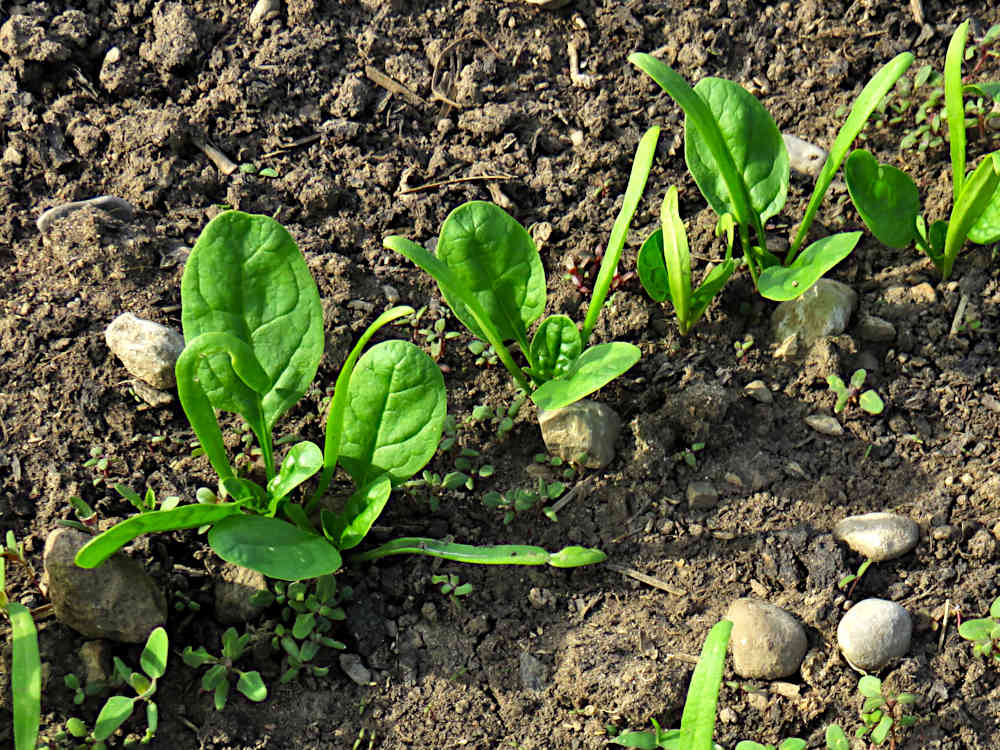
A perfectly germinated tiny section of a tiny row. Eleven days after our last look at the spinach, it’s definitely made some progress. It already looks good enough to eat!