
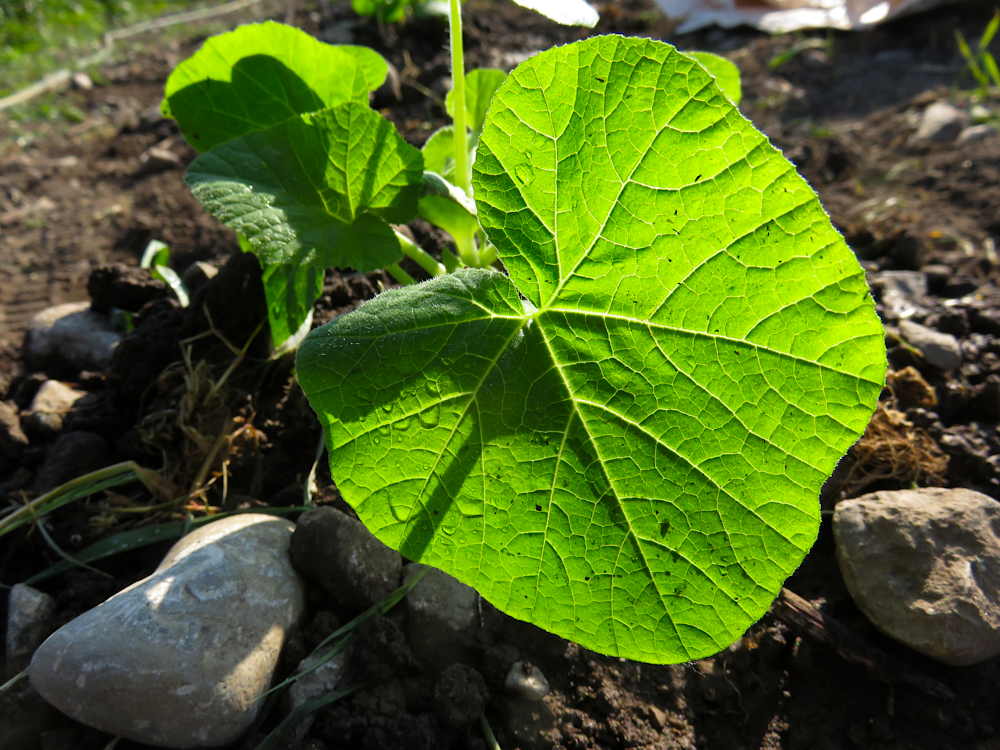
Broad, fast-spreading, richly green winter squash leaves, especially in their first few weeks, are kind of the emeralds of the vegetable patch. They’re poster plants for healthy garden growth. Unfortunately, that charm is hidden under row cover until they get well-established, to protect them from cucumber beetles. At flowering time, the cover comes off so bees can feed and collect pollen, and pollinate in passing all those future butternut and acorn squash. Here, with the cover pulled back for hand watering and a bit of weeding, you can see how squash do a great job of self-weeding by creating lots of shadow that keeps the competition down!
Month: June 2025
Attack of the leek moth
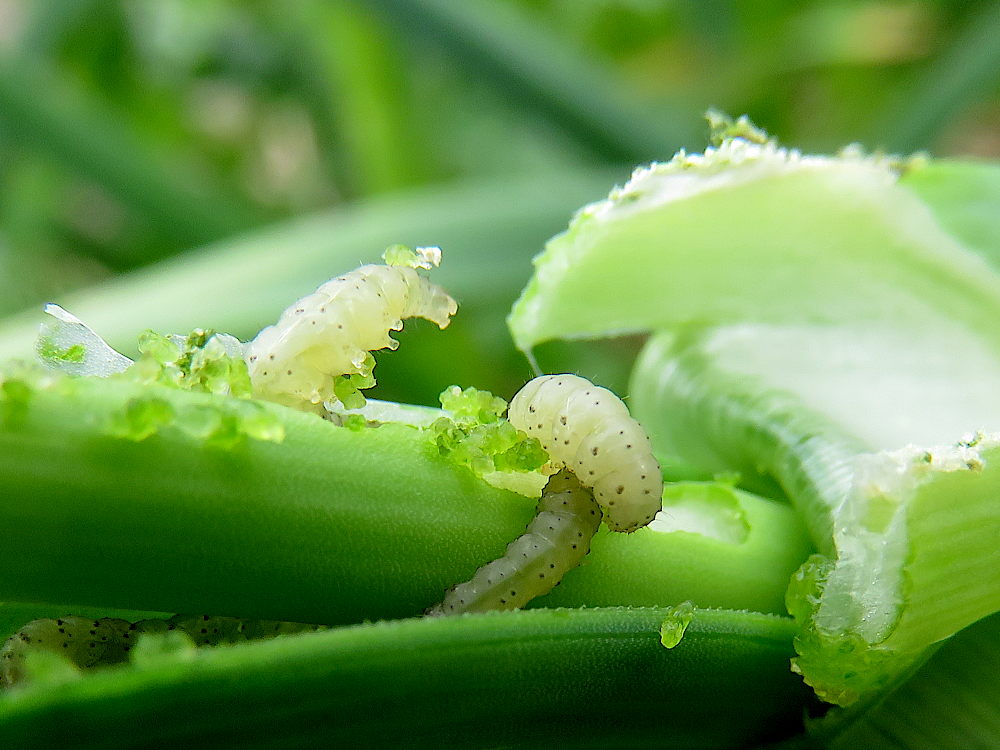
Checking for scapes today, only a couple of days after the last all-good garlic check-in, and found absolute carnage thanks to a leek moth invasion. For years, I’ve heard about these voracious leaf devourers ravaging alliums—garlic, onions, leeks—in the general region, but they’d never shown up here. Until now. After hours of hand picking and squishing, the situation may be somewhat under control.
FACT-FINDING: I did a bit of quick research to get the bigger picture. Leek moths (Acrolepiopsis assectella) are nocturnal, operating in full darkness. They overwinter in plant debris, emerge and mate when the temperature gets up to around 50°F/10°C. There are usually three generations a year, around here in mid-May, June and July. The first generation grows up (fast, in around 3 weeks) and starts laying another round, and so on.T hat means, in unusually warm or cold weather, there could be more generations per year, or less. Each female has around 100 eggs, lays them singly not in clusters, usually on the underside of leaves near the base of the plant (but, naturally, look EVERYWHERE!). There’s of course lots more, but that’s what I need to know for veg protection—garlic under row cover (and it would be pretty safe to uncover them during the day).
Garden vs the hungry hordes

Much of veggie farming is playing garden defense. Yesterday’s garlic surprise attack was handled as an immediate emergency action, by hand-picking larvae before they could really tunnel in. The other no-chemicals approach is row cover, which seems to be laid out on more crops as each season. (More words to follow.)
Tomatoes just want to root
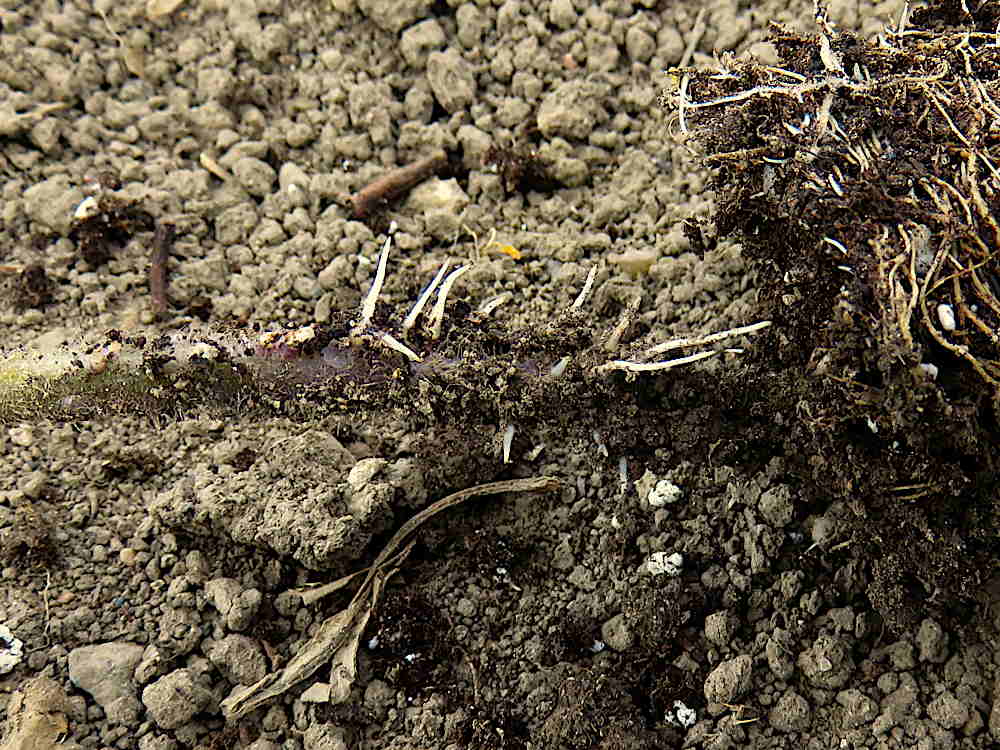
Most of us don’t spend much time at all looking at plant roots. Meanwhile, the things going on underground are quite wondrous. Take this humble tomato seedling, demonstrating a special power: adventitious rooting—a catchy way of saying they can grow new roots from their stems. Tomatoes, potatoes and peppers, all relatives from the nightshade family, have this ability. And? Well, if you have leggy tomato transplants, stretched from too much time indoors in tiny plug sheet cells, this ability allows for a neat trick. You can dig a little trench instead of a hole and lay the seedling on its side. Then, bury the root ball and most of the stem, gently curving up the last bit. Ta-da, a sturdy little transplant. I did this for a few leftover tomatoes two days ago. Today, I found one snapped off—wind? rabbit?—so I pulled it, revealing roots that had already started pushing out. It’s just another little bit of all that goes on in the hidden part of the garden!
Brassicas waiting in the wings

Another wave of brassicas, mostly cabbages and cauliflower, are getting a little big as they wait indoors under lights. In recent years, decent fall weather has extended a whole extra month from what used to be. So I’ve been planting later to extend the harvest. (More text to come…)
Leek moth invasion update!
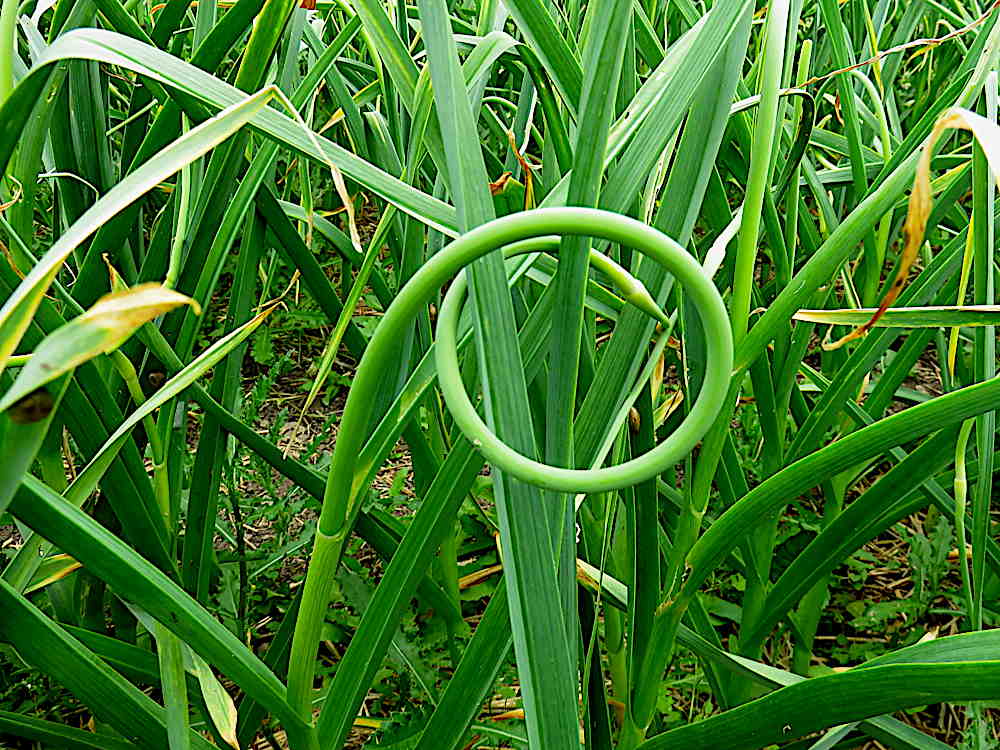
Here we are, a week after leek moths invaded the garlic, gazing at a healthy scape. If you’re not familiar, scapes are the curling tips that emerge as the garlic gets close to harvest. They’re also clearly a favorite target of the moth larvae: they chew their way in and start tunneling down. All of the attacked scapes had to be snapped off, right as they were emerging. Happily, many also survived. Snipped when tender—they get woody if left too long—scapes are filled with a full, delicious garlic flavor, a preview of the garlic to come. Let your imagination decide how to use them! (It’s also said that removing the scapes directs more plant energy to making the bulbs bigger, though I haven’t seen that for myself.) As for the bulbs and the leek moths, this is my first encounter, so we’ll only know for sure if all that hand-picking and scape snipping worked when the garlic comes out next month.